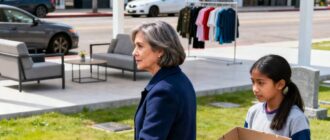
Six-fifteen every morning, the porch light at 214 Hartwell Lane clicked off, and Marisol Reyes slipped out the side door before the coffee maker even finished its cycle. Diane Kowalski heard the screen door bang from her bedroom in the back of the house and lay there counting the seconds until the Honda's engine turned over in the driveway.
She'd married her son Tyler's wife into this family eight months ago, and she still hadn't figured her out. Marisol was polite at dinner, helped clear plates without being asked, laughed at Tyler's terrible jokes — but there was this other version of her, the one who vanished for two, three hours most mornings and came back with her eyes red-rimmed, smelling faintly of antiseptic soap, offering nothing.
Diane came from Bakersfield stock, three generations of almond farmers who said what they meant at the dinner table. Marisol's people were from a two-bedroom apartment above a laundromat in Fresno, and Diane had decided early on — maybe too early — that a girl who grew up with that little polish underneath her must be hiding something now that she had access to more.
The town of Millbrook wasn't big. Diane knew the bank teller, the mail carrier, half the regulars at the Denny's on Route 9. She could've asked around. Instead she watched. She noticed the way Marisol's phone buzzed at 5:45 sharp, an alarm she silenced before it finished its first note. She noticed the gas tank dropping by a third every few days on a car that barely left the block otherwise. She noticed, one Tuesday, a folded pamphlet sticking out of Marisol's tote bag, and when she fished it out after Marisol left for the "gym," her hands went cold: a brochure for something at St. Agnes Medical Center, the kind of trifold thing they hand out in waiting rooms.
Her mind went where mothers-in-law's minds go. An affair. A pregnancy she was hiding from Tyler. Something shameful enough to require secrecy, forty minutes before sunrise, every single day for two weeks straight.
She didn't say anything to Tyler. He worked nights at the distribution center off I-40 and slept through most of these mornings anyway. So it fell to Diane, alone at the kitchen table with her cold coffee, to decide what to do with the dread building in her chest.
On a Thursday in late September, she made a decision. She told her book club she wasn't feeling well, skipped it, and instead sat in her Buick two houses down from her own driveway, parked behind the Millers' oak tree, watching. At 6:12, Marisol backed out and turned left toward Route 9. Diane followed at a distance, her hands sweating on the wheel for the first time in years.
The Honda didn't go toward Fresno, or toward any motel, or anywhere Diane had imagined. It pulled into the visitor lot at St. Agnes Medical Center — the same hospital from the pamphlet — and parked in the same spot it must have used a dozen times before, judging by how Marisol didn't even glance at the signage.
Diane parked three rows back and watched her daughter-in-law walk through the automatic doors, badge already in hand like she belonged there. That stopped Diane cold. A badge meant she wasn't a patient. A badge meant a schedule, a routine, something she'd built.
She waited twenty minutes, arguing with herself the whole time, before she went in after her.
The woman at the reception desk in the pediatric oncology wing recognized the description before Diane finished it. "Oh, you mean Miss Marisol? She's up on four, in the family lounge. She comes in most mornings before her shift starts at the diner — reads to the kids who can't sleep, sits with the ones whose parents can't get time off work." The woman smiled, the kind of smile that assumed everyone already knew. "She's been doing it since her little brother was a patient here, years back. Never misses a day if she can help it."
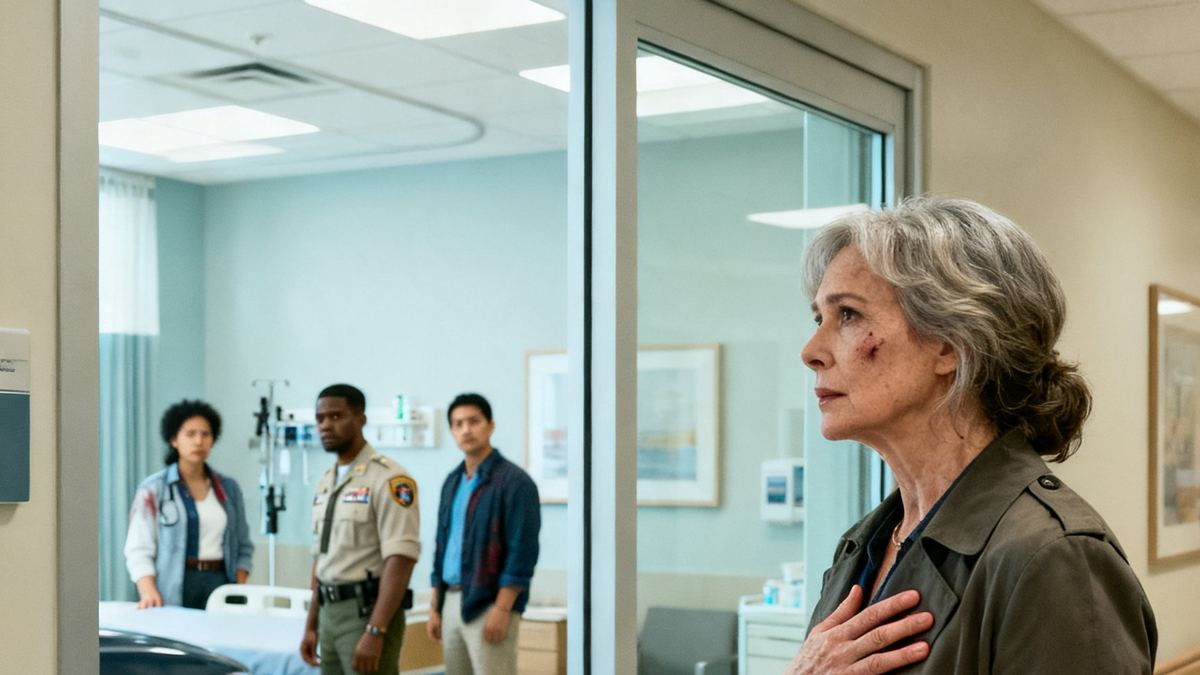
Diane stood in that hallway with the smell of hand sanitizer and floor wax thick in the air, a vending machine humming somewhere behind her, and felt something crack open in her chest that had nothing to do with relief and everything to do with shame. She thought of the pamphlet she'd stolen out of Marisol's bag and shoved back in wrong-side-out. She thought of every morning she'd lain awake building a case against a girl who was reading Dr. Seuss to a six-year-old with a port in his chest.
She found her on the fourth floor exactly where the receptionist said, sitting cross-legged on a beanbag chair, a boy no older than seven asleep against her arm, a paperback of Charlotte's Web open on her knee. Marisol looked up and went pale — not caught in a lie, Diane understood now, just caught in something private she'd never meant to explain to anyone, least of all a mother-in-law who'd never once asked a real question.
"I didn't want it to be about me," Marisol whispered, easing the sleeping boy onto a pillow. "Tyler doesn't even know the whole story. It's not something you bring up at Sunday dinner."
Diane didn't say sorry there, in front of the boy, in front of the nurses' station. She waited until they were both in the parking lot, the September sun finally cutting through the morning fog, and she said it plainly, the way her father used to say things at that Bakersfield dinner table — no dressing it up. "I followed you today. I thought the worst of you for two weeks, and I was wrong, and I'm ashamed of myself."
That evening she didn't stop at an apology. She drove to her lawyer's office in downtown Millbrook before it closed and asked Gerald Finch, who'd handled her late husband's estate, to draw up a standing quarterly transfer — four thousand dollars every three months — directly to the St. Agnes Child Life Fund, the program that covered gas money and lost wages for parents sitting bedside instead of working. She signed it Thursday afternoon, the ink still wet when she photographed the first page and texted it to Marisol with one line: *For the families who can't get time off.*
She also did something smaller, something only Marisol would understand the weight of: she gave her the spare key to the house — the one that had sat in a kitchen drawer for eight months, never offered — and told her the porch light would stay on for her from now on, however early she needed to leave.
Tyler found out everything three days later, sitting across from his mother and his wife at that same kitchen table, and all he could manage was, "Eight months and you never told me you did this," which made Marisol laugh for the first time all week, the real kind, not the tired kind she wore coming home from those mornings.
Diane still gets up early some Thursdays now. Not to follow anyone. She drives Marisol to St. Agnes herself, waits in the cafeteria with a cup of the burnt coffee nobody complains about, and reads the newspaper until it's time to bring her daughter-in-law home.