I was nine the last time I saw my father order pancakes he never finished.
We were at a diner on Cherry Street in Tulsa, a Sunday in October, the kind of morning where the light comes in sideways through the blinds and lands on the syrup bottle like it's trying to tell you something. My mother, Renee, was home with a sinus headache. It was supposed to be just me and Dad — our thing, every other Sunday, since the divorce papers had been filed eight months before.
He ordered coffee, black, and a short stack. I ordered chocolate chip pancakes because he let me get away with things she wouldn't. The waitress — I remember she had a name tag that said DONNA and a pen tucked behind her ear — refilled his cup twice.
Then he checked his watch. Said he had to make a call. Walked out to the parking lot with his phone against his ear, and through the window I watched him get into his Silverado and pull out onto the street. I sat there with a fork in my hand for eleven minutes before Donna came over and asked if everything was okay, hon.
He never came back for the check. He never came back, period.
My mother didn't cry in front of me that day. I know now that she cried plenty — I found out later from my aunt Pam that she sat in her Corolla in the church parking lot for two hours before she could make herself drive home, because she didn't want me to see her face like that. But in front of me, she made grilled cheese and asked if I wanted to watch the Thunder game, like it was any other Sunday. Like the floor hadn't just dropped out from under both of us.
That's the thing nobody tells you about a father who walks out: the mother doesn't get to walk out too. She doesn't get to decide it's not working for her and disappear into a new apartment across town with a new woman named Kayla, which is what my dad did, eleven months later, with barely a phone call to explain it. My mother worked the front desk at a dental office on Yale Avenue, forty hours a week, and came home to make dinner and check my homework and sit through parent-teacher conferences alone, in a folding chair that always had an empty one next to it.
I used to wait by the window on the Sundays that were supposed to be his. I'd have my shoes already on. Around noon I'd stop watching the door and start watching the phone instead, waiting for it to at least ring with an excuse. Some Sundays it did. Most, it didn't.
By the time I was fourteen, the visits had thinned to birthdays, and not even all of those. He sent a check for my sixteenth birthday instead of showing up — four hundred dollars, folded into a card with a cartoon dog on it, no note. My mother watched me open it at the kitchen table. She didn't say anything ugly about him. She never did, not once, not even when I was old enough to ask her to.
What she did instead was show up. Every single time. She drove me to marching band practice in a Corolla with 190,000 miles on it because we couldn't afford a new one. She sat in the bleachers at every game, rain or shine, with a thermos of coffee and a blanket for my little sister. She co-signed my first apartment lease at twenty-two even though it meant she'd have less cushion in her own account if something went wrong. She never made me feel like I was a burden for needing her that much.
At nine, in that diner on Cherry Street, I thought I'd learned that love leaves — that people you trust can stand up from a table and not come back. For years, into my twenties, I carried that into every relationship without knowing it: flinching when someone was five minutes late, assuming silence meant someone was already halfway out the door. It never once occurred to me to flinch at my mother, who was in the room the whole time, refilling a thermos.
Last spring, she called to tell me my father had reached out — he was sixty-one now, recently divorced from Kayla, apparently wanting to "reconnect." He wanted my number. He wanted, he told her, to make things right.
She gave me the choice. She always did that — never told me how to feel about him, never poisoned it, even when she had every right to. I thought about it for two weeks. Then I called him back myself, and I told him I appreciated him reaching out, but that I didn't need what he was offering anymore. I told him the debt he thought he owed me had already been paid — just not by him.
I hung up, and I drove to my mother's house in Broken Arrow that same afternoon. She was in the kitchen, and I found the shoebox where she still keeps things — report cards, ticket stubs, the birthday card with the cartoon dog she'd apparently kept all these years, four hundred dollars still folded inside it, never spent. I took the old check out, and I wrote her one of my own instead — for exactly that amount, four hundred dollars, made out to Renee — and I taped it to her refrigerator where she'd see it every morning with her coffee.
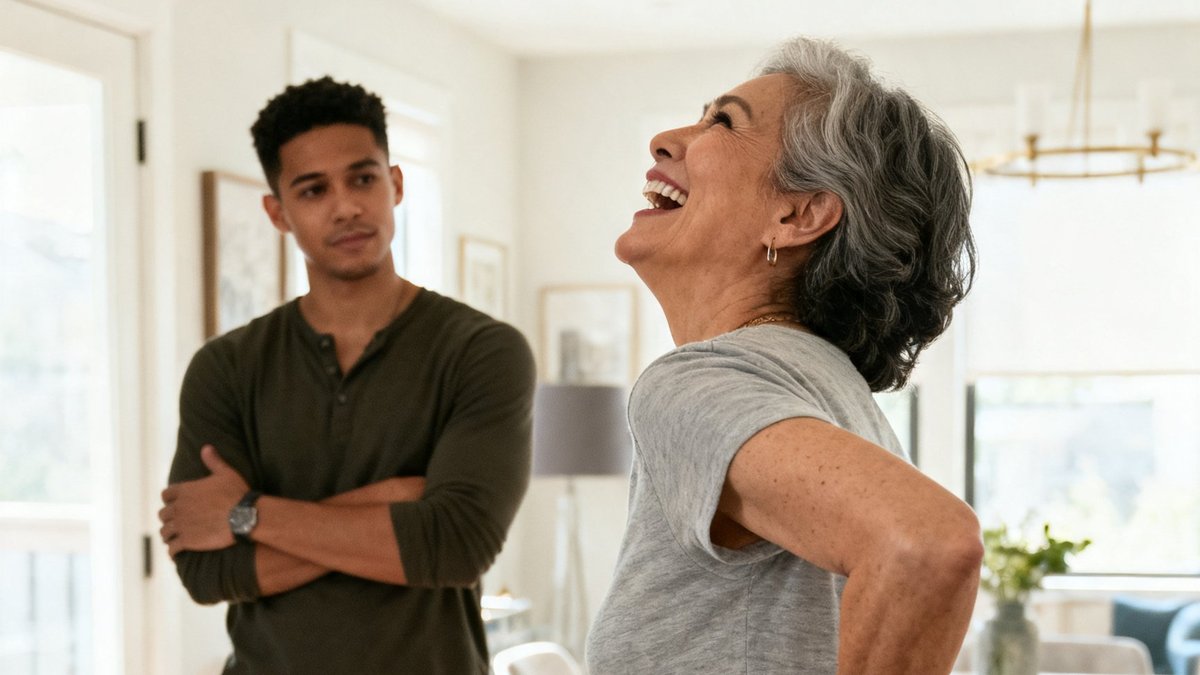
She left it there for three days, right next to the magnet shaped like Oklahoma her sister brought her from a work trip. On the third morning I came by to find it gone, and Renee at the counter pouring coffee, laughing at me, telling me I was being ridiculous, that she didn't need repaying for being someone's mother — and pulling the check out of her back pocket to hand it back to me, still folded, still uncashed.