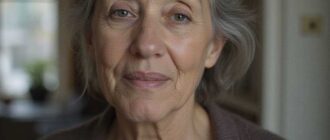
The woman stopped me beside the reduced shelf at Dunnes.
I had two tins of soup in my basket, a loaf of brown bread, and a packet of tea bags I had chosen only because they were on offer. I had just sent €4,600 to my sister’s husband for the sixth month in a row.
Six months of payments.
Six months of saying no to everything else.
No new shoes.
No weekend away.
No dentist appointment.
No heating some evenings unless the house had gone properly cold.
All because my younger sister, Aoife, had cancer.
At least, that was the sentence that had ruled my life since Christmas.
“She needs the private drug, Maeve,” her husband Conor had told me that first night. “The consultant says it’s her best chance. I’m doing what I can, but we’re drowning.”
Aoife had been crying too hard to speak.
I did not ask enough questions then.
I heard the word cancer, and the girl inside me took over—the girl who had buttoned Aoife’s school coat, cut her toast into triangles, and sat awake with her when Mam was in hospital.
Aoife was my sister, but she was also my first responsibility.
So I paid.
The first transfer came from our savings.
The second from the money I had kept aside to repair the roof.
The third came after I sold Mam’s chain.
By the fourth, my husband Tom stopped arguing and began watching me with a quiet sadness that hurt more than anger.
“You’re not saving her if you’re letting Conor keep you away,” he told me one night.
I snapped at him.
“You don’t understand.”
“No,” he said, standing by the sink, holding an unpaid electricity bill. “I understand too well. You’re so afraid of losing Aoife that you’ve stopped noticing how strange this is.”
I hated him for saying it.
Not because he was cruel.
Because some part of me knew he was right.
Aoife was always too tired to talk. Conor answered her phone. Conor replied to my messages. Conor decided when I could visit.
The last time I drove to their flat in Cork, he let me in for twelve minutes.
Twelve minutes with my own sister.
She was lying in a small back bedroom, a scarf tied around her head, a blanket pulled up to her chin though it was warm outside. There was a plastic cup on the locker, three pill bottles without pharmacy bags, and a framed picture of us as children on Tramore beach.
I sat beside her and touched her cheek.
“Aoife, it’s me.”
Her eyes opened slowly.
“Maeve?”
The way she said my name frightened me. Not weak. Not just sick.
Lonely.
“I’m here,” I whispered.
Her mouth trembled.
“I’m sorry.”
“For what?”
She glanced toward the door.
Before she could answer, Conor stepped in.
“She’s had enough.”
I looked at him.
“I’ve been here ten minutes.”
“And you’ve upset her.”
Aoife’s fingers found mine beneath the blanket. She squeezed once.
A warning.
Or a plea.
I did not know which.
And because I was terrified of making her worse, I left.
That became my greatest shame.
The woman in Dunnes knew my face before I knew hers.
“Maeve O’Connell?” she whispered, gripping her shopping bag like it might save her.
“Yes?”
“You’re Aoife’s sister?”
My stomach turned.
“Has something happened?”
She looked over her shoulder. Her lipstick had bled a little at the corners, and her coat was buttoned wrong, as if she had dressed in a hurry.
“I’m Eileen. I live across the landing from them.”
I forgot the soup. Forgot the shop. Forgot the people trying to pass behind us.
“Tell me.”
Eileen stepped closer.
“Your sister isn’t getting what you’re paying for.”
The shop lights seemed suddenly too bright.
“What?”
“And he’s told her you stopped helping. He told everyone you refused to send another cent.”
The basket slipped from my hand. One tin rolled under the shelf.
Eileen caught my arm.
“Don’t go there alone. Please. I heard him last night. She was crying, asking why you hated her. He said, ‘Because sick people become a burden.’”
My throat closed.
“No.”
“I’m sorry,” she said. “I should have spoken sooner. But I was scared of him. Men come to the flat. They argue. He owes someone money. Last week Aoife knocked on my door when he was out. She could hardly stand. She asked if I had your number, then he came up the stairs and she begged me to pretend she’d only wanted sugar.”
I leaned against the shelf.
For six months, I had been emptying my life into Conor’s account.
For six months, Aoife had been lying in that flat thinking I had abandoned her.
Eileen took a receipt from her purse. On the back, she had written a name and number.
“This nurse came once. I found the card in the hall after Conor threw some papers out. Call her.”
I rang Tom from the car park.
When he answered, all I managed was, “I think you were right.”
He did not pause.
“Where are you?”
I cried then. Not gracefully. Not quietly. I cried like something inside me had finally split open.
By evening, Tom had driven me to Cork. We did not go straight to the flat. We went to the clinic named on the card. A nurse called Patricia listened to me in a small office with a blue chair and a box of tissues.
She could not tell me everything, but her face changed when I showed her the transfers.
“Your sister has missed appointments,” she said carefully. “And there have been concerns.”
“What concerns?”
She looked at Tom, then back at me.
“Control. Isolation. Medication not taken as directed.”
The word control landed harder than cancer.
The next morning, Patricia came with us. So did two Gardaí.
Conor opened the flat door in a T-shirt and bare feet. When he saw me, he smiled first. That awful, practiced smile.
“Maeve. You should have called.”
“I did,” I said. “For six months.”
His eyes flicked to the Gardaí.
Aoife was in the bedroom.
She looked smaller than I remembered, but when I walked in, something in her face woke up.
“Maeve?”
I dropped to my knees beside the bed.
“I’m here.”
Her lips shook.
“He said you wouldn’t come.”
“I came.”
“He said you were ashamed of me.”
“I was selling everything I owned to keep you alive.”
She stared at me as if her mind could not hold the sentence.
Then she began to sob.
Conor shouted from the hall, “She’s confused!”
Patricia opened the drawer by the bed and lifted out the tablets.
“These aren’t the medication prescribed last month.”
Conor went white.
Not pale.
White.
The truth did not come out in one dramatic confession. It came out in bank statements, missed appointments, forged messages, and empty pharmacy boxes kept for photographs.
Aoife did have cancer.
That terrible part was real.
But Conor had turned her diagnosis into a business. He had taken money from me, collected donations from people in their estate, and told Aoife that I had chosen my “comfortable life” over her treatment.
He had made her illness smaller than his greed.
And the worst thing in that home had not been cancer.
It had been the man standing between a sick woman and the people trying to love her.
Aoife did not get better overnight.
Real life is not that kind.
There were hospital days. There were forms. There were nights she woke crying because she dreamed Conor was at the door. There were days I looked at my bank account and felt sick.
But she came home with us.
Tom fixed up the small room under the stairs into a quiet sleeping space because she said big rooms frightened her. Our neighbours brought casseroles. Patricia helped us apply for treatment support. Eileen came to visit once and cried when Aoife hugged her.
“I should have helped sooner,” Eileen said.
Aoife held her hand.
“You helped in time.”
Months later, on a rainy Sunday, I found Aoife in my kitchen making tea. Her hair had started growing back in soft uneven curls. She was wearing Mam’s old cardigan, the one I thought I had lost years ago.
“I took it before Mam died,” she admitted, smiling through tears. “I wanted something that smelled like home.”
I wrapped my arms around her from behind and pressed my face into her shoulder.
“You were home,” I whispered. “I just couldn’t get to you.”
She turned and put a mug in my hands.
“No,” she said. “You found the door.”
That evening, Tom came in with a bag from the shop. He placed it on the table: fresh bread, butter, oranges, and the good tea.
Not the cheap one.
The good one.
I looked at him, and he shrugged.
“Thought the house deserved it.”
For a long time, I believed love meant sacrificing without question.
Now I know better.
Love is not blind obedience to fear. Love checks receipts. Love knocks again. Love believes the weak whisper under the loud lie.
I nearly lost my sister while paying to save her.
But one frightened neighbour spoke the truth in a supermarket aisle, and that truth cracked open the walls around Aoife.
Some people survive because medicine reaches them.
Some survive because someone refuses to stop looking.
And some survive because one ordinary woman, with shaking hands and a guilty heart, finally says:
“No. Something is wrong here. And I am not leaving without her.”