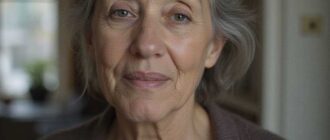
When my fiancé heard the doctors say I might not live long, he didn’t break down beside me. He packed.
We had been planning our wedding for eleven months. The hotel in Bath was booked, the roses had been ordered from a florist my mother swore was “worth every penny,” and my father had paid the deposit for a reception large enough to feed half our village and several relatives no one even liked.
My dress was hanging in the spare room under a white cover. Every time I passed it, I touched the fabric through the plastic and imagined walking toward Tom while everyone smiled.
Then came the scan.
Then the second opinion.
Then the consultant folded his hands and said there were treatments, yes, but no cure.
I remember turning to Tom in that quiet hospital room. He looked at the floor. Not at me. Not once.
That was the first warning.
The second came the following Sunday, when I found him in the hallway with his coat on and a suitcase at his feet.
“I can’t watch you disappear,” he said.
There are sentences that cut so cleanly you don’t feel the wound until later.
I stood there in my slippers, still wearing the cardigan his mother had bought me for Christmas, and asked, “So you’re leaving before it happens?”
He cried. I’ll give him that. He cried very well.
But he still left.
For a week, I did not answer messages. My mother canceled nothing because she was too frightened to touch the phone. My father walked around the house as if speaking too loudly might break me. Everyone waited for me to say the wedding was off.
Instead, on the eighth night, I sat at the kitchen table with a cup of tea gone cold and thought, why should I lose that too?
The illness had taken my future.
Tom had taken my trust.
Why should they take the one beautiful day I had left on the calendar?
So I did something foolish.
I searched online for performers, event hosts, actors — anyone who might be willing to stand at the front of a room and pretend, just for a few hours, that I had not been abandoned.
That is how I found James Hart.
His profile photo was awful. Bad lighting, crooked collar, serious expression. Under “experience,” he had listed school theatre, voice-over work, and “willing to travel.” He was cheaper than the others by a painful amount.
I sent him a message before I could lose courage.
I told him I was ill. I told him my fiancé had left. I told him the wedding was paid for and that I wanted one final day where people did not look at me like a tragedy.
His reply came at 6:12 the next morning.
“I’ll come,” he wrote. “But only if you agree to one condition.”
I expected him to ask for more money. Or payment upfront. Or permission to leave after the ceremony.
Instead, his condition was this:
“No pretending you are fine.”
I stared at the words.
A minute later, another message appeared.
“I’ve watched people spend their last strength making everyone else comfortable. I won’t help you do that. If I come, you get to be exactly as you are.”
That was the strangest offer I had ever received.
And the kindest.
We met in a small café near the railway station. Rain tapped the windows. I arrived ten minutes late because I had been sick in a bin outside Boots and had to fix my lipstick with shaking hands.
James stood when he saw me.
Not halfway. Fully.
As if I were someone important.
“You must be Anna,” he said.
“You must be out of your mind,” I replied.
He laughed, and the sound startled me.
Over tea and a shared slice of Victoria sponge I barely touched, I learned he wasn’t really an actor anymore. He worked part-time at a hospice, helping run music afternoons for patients. Acting jobs paid extra when rent was tight.
“My mum died there,” he said quietly. “After that, I couldn’t leave.”
I looked down at my cup.
“I’m sorry.”
“So am I,” he said. “For what happened to you.”
No dramatic pity. No careful voice. Just simple truth.
The week before the wedding, James came to meet my parents. My mother opened the door looking ready to dislike him. Ten minutes later, she was feeding him stew. My father asked him three sharp questions, then disappeared into the garage and returned with a suit that had belonged to my older brother.
“He never wore it,” Dad said. “Still has the tags.”
James accepted it like it was a medal.
On the morning of the wedding, I woke to pain in my ribs and panic in my throat.
I nearly called it off.
My mother sat beside me on the bed and brushed my hair slowly, hiding the thin places with little pins.
“You can still stop,” she whispered.
“I’m tired of stopping,” I said.
By four o’clock, the hotel ballroom glowed with candles. Guests murmured behind closed doors. Some knew Tom had gone. Some didn’t. A few had come for gossip; you could feel it in the air, sharp as perfume.
James waited at the front in my brother’s unworn suit.
When the doors opened, everyone turned.
I walked alone.
No one gave me away because I was not property changing hands. I was a woman arriving at the only day I refused to surrender.
Halfway down the aisle, I saw Tom’s parents. His mother covered her mouth. His father stared at his shoes.
James’s eyes stayed on mine.
Not my wig.
Not my too-thin wrists.
Me.
When I reached him, he whispered, “Breathe first. Then we’ll ruin everyone properly.”
I almost laughed.
The registrar looked terrified.
Before she could begin, I faced the room.
“I need to tell you the truth,” I said. “Tom is not here because he chose not to be. I was diagnosed with an illness that may take my life, and he decided he couldn’t stay. That is his choice. This is mine.”
The ballroom went silent.
“I chose not to cancel today. Not because I needed a husband at any cost. Not because I’m pretending this is normal. I chose this day because I wanted one room where my life was not whispered about behind my back.”
My voice cracked.
James reached for my hand. I let him.
“This is James,” I said. “He was supposed to be paid to stand here. But he refused to let me buy kindness. So instead of wedding vows, we’re making witness vows.”
The registrar blinked.
My father cried openly.
James turned toward the guests.
“I promise,” he said, “that Anna will not be treated like a sad story while she is still alive to tell her own. I promise that if she needs to sit, we sit. If she needs to leave, we leave. And if anyone here feels uncomfortable, they may use that discomfort to become better.”
A sound moved through the room — not applause, not yet. Something deeper. Something breaking.
Then my mother stood.
“I promise too,” she said, her voice shaking. “No more pretending at Sunday lunches. No more saying ‘you look well’ when we mean ‘we are frightened.’ I promise to be frightened honestly.”
After that, people rose one by one.
My cousin promised to drive me to treatment on Tuesdays.
My old school friend promised to stop sending cheerful nonsense and start showing up with soup.
My father promised to stop fixing gutters and start sitting beside me.
By the end, it was not a wedding.
It was a room full of people learning how to love without running.
And then the doors opened.
Tom stood there.
Wet from the rain. Pale. Too late.
“Anna,” he said, “please.”
Every head turned.
He walked toward me like a man entering a church after the prayers were over.
“I was scared,” he said. “I made the worst mistake of my life.”
I looked at him and saw the man I had once chosen. I also saw the empty hallway, the suitcase, the coat, the way he had looked relieved once the decision was made.
“I was scared too,” I said. “But I didn’t get to leave my body at the door.”
His face collapsed.
“I still love you.”
“No,” I said gently. “You loved the version of me that made your life look beautiful. You didn’t know what to do with the version that needed help standing.”
He started to cry.
This time, I did not comfort him.
James did not touch me. He did not speak for me. He simply stood close enough that I knew I would not fall.
Tom left quietly.
The rest of the evening was imperfect and wonderful. I ate three bites of cake. I danced sitting in a chair while James spun my little niece around until she squealed. My father gave a speech that made no sense and ended with him hugging me so tightly I complained about my ribs.
Near midnight, James walked me outside. The rain had stopped. The stones shone under the hotel lights.
“Do you regret it?” he asked.
I looked back through the windows at the people still talking, crying, laughing, finally telling the truth.
“No,” I said. “For the first time since the diagnosis, I feel alive.”
That was two years ago.
The illness is still here. Some days it is loud. Some days it waits quietly in the corner like an unwelcome guest. I have lost hair, weight, sleep, plans. I have also gained mornings I didn’t expect, letters I was too proud to ask for, and love in forms I never recognized before.
James never left.
At first, he came on Thursdays with groceries. Then on Mondays for hospital appointments. Then on all the days in between because, as he put it, “your kettle is better than mine.”
Last spring, I asked him why he stayed.
He looked at me as if the answer was obvious.
“Because you’re still here.”
There was no grand proposal. No perfect ring. Just a walk along the river, my scarf flying into his face, both of us laughing so hard I had to sit on a bench.
He took my hand and said, “Would you like another impossible day?”
And I said yes.
Not because I believe love cures everything.
It doesn’t.
But love can sit beside the hospital bed. Love can learn medication schedules. Love can hold a bowl when you are sick and still look at you like you are the most beautiful woman in the room.
Tom left because he saw my ending.
James stayed because he saw me.
And that is the difference between being chosen for a wedding and being loved for a life.