**The Girl in the Will**
The first page of the will had a name I didn't recognize: Morgan Rae Haskell.
The rest was worse. Walt's entire estate — forty-seven acres, a white farmhouse, two barns, and a rusted Case IH sign bolted over the pole barn — went to her. My husband got one paragraph. It said Derek had already taken everything from that estate he ever contributed, which was nothing.
I sat at the kitchen table in our two-bedroom apartment off Bethel Road, the envelope from the law firm in Circleville in my hands, and tried to make it fit the last three years.
I married Derek when I was twenty-seven. His second marriage. His first wife, he told me, died in an accident. No kids. His father didn't come to the courthouse. Didn't want to meet me. His mother had died when he was young. I let it go.
Then Cole was born. Derek kept saying the baby looked like his dad — same jaw, same dark eyes. When Cole turned one, I told Derek we needed to drive down to Circleville and see Walt. I didn't know what their fight was, but a man should meet his grandson.
We bought a fruit basket at Kroger in Grove City. A bottle of bourbon. A little wooden train. We took Derek's F-150, Cole's car seat strapped in the back. Derek didn't say a word the whole drive down US-23. I should have known.
Walt's place sat at the end of a gravel lane, past a weed-filled ditch and a row of fence posts leaning into the field. The farmhouse needed paint. A Deere tractor, faded, sat under a lean-to. The screen door hung on one hinge.
Walt came onto the porch before we'd even parked. He looked at me, then at Derek, then at Cole in the car seat. He didn't wave.
He let us in. The kitchen smelled like coffee and the damp wool of old work gloves. A small TV on the counter showed the noon farm report — corn and soybean futures. On the wall, a calendar from the Pickaway County Co-op, flipped to the wrong month.
"Before you all get comfortable," Walt said, "there's something you need to know." He looked at Derek. "You want to tell your wife, or should I?"
Derek put his hands in his jacket pockets. Didn't answer.
Walt poured himself coffee from a blue enamel pot. "Your husband has a daughter," he said. "Morgan. She's seventeen. Her mother died when she was three months old. Derek wanted to put her in the state system. My late wife and I fought for custody. We raised her." He set the pot down. "He hasn't paid a dime of child support. Seventeen years. Not one dime."
I turned to Derek. "You told me you didn't have any kids."
He shifted his weight. "It was a long time ago."
"Seventeen years isn't a long time," I said.
Walt looked at Cole in my arms. "I don't want to know your son," he said. "Not because of him. Because of the man who made him. You wanted a daughter gone. Now you show up with a fruit basket."
The back door opened. A tall girl in muck boots came in, a wire basket of eggs in one hand. She stopped when she saw Derek.
"Oh," she said. "It's you."
She turned to me. "I don't have a brother. And he's not my father. So don't think you can come down here and play happy family."
She walked through the kitchen and up the stairs.
Walt put his coffee cup in the sink. "You can go now."
A month later, the envelope from the law firm arrived. I read the will three times. Then I sat in my car in the parking lot of the vet clinic in Clintonville, engine off, and did the math.
We'd been renting for six years. First a one-bedroom off Henderson Road, then the two-bedroom on Bethel for the last three. At $1,175 a month — I did the numbers on the back of a gas receipt — we'd paid about $83,000. We had nothing to show for it. Derek made $51,000 a year at the warehouse. I made $38,000 as a vet tech. We'd never save a down payment.
The farm was right there. Forty-seven acres. I wanted it. I wanted to stop writing a check every month to a landlord who raised it two percent every year.
I called the lawyer in Circleville whose name was on the will. He said contesting it would cost a retainer of ten thousand dollars. He also said we'd probably lose. Derek had abandoned the child. The will had been drafted twice, notarized, witnessed. The court doesn't mind a man leaving his land to the granddaughter he raised, he told me.
While I was looking for a shoebox of tax receipts, I found a folder in the hall closet. Inside: a child support order from the Franklin County court, filed years before I met Derek. It was yellow at the edges. The monthly amount had been set at $280. In the corner, a handwritten note from a caseworker: "No payments received."
I sat on the floor by the closet and read it twice. Seventeen years at two hundred eighty a month. I did the math on my phone. Fifty-seven thousand, one hundred twenty dollars. He'd sent zero.
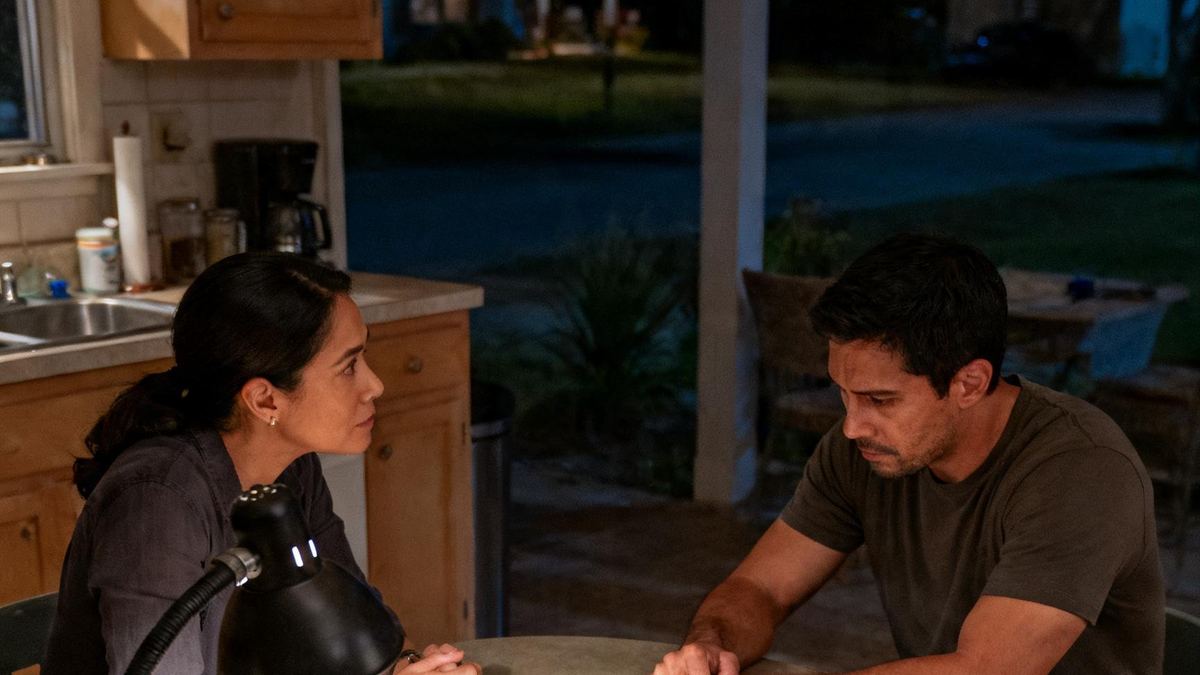
That night, I put the folder on the kitchen table. Derek came home from his shift at seven, steel-toed boots off at the door, his badge still on his belt. He saw the folder. His face went hard.
"Where'd you get that?" he said.
"It was in the closet." I pointed to the line about zero payments. "Fifty-seven thousand dollars, Derek. You never sent her a dollar."
"She wasn't my problem," he said.
"She was three months old when her mother died. Your father raised her because you wouldn't. You told me you didn't have kids. You let me drive down there with a fruit basket like we were starting something." I set my phone down next to the folder, the calculator still open. "What else haven't you told me?"
He pulled a chair out and sat down across from me, elbows on the table, and for a while he didn't say anything. Then: "Her mother and I weren't together when Morgan was born. I was twenty-two. I didn't know how to be anybody's father. I told myself Dad would handle it, and he did, and after a while it was easier to just — not think about it. Then I met you and it was easier still to say I didn't have any."
"Easier for who."
"For me." He said it flat, no apology in it. "I'm not going to sit here and tell you I'm sorry in a way that fixes it. I'm not sorry enough. That's the truth."
I looked at him — the same jaw Cole had, the same jaw Walt had — and understood that the man across the table wasn't going to become someone else because I'd found a folder. Whatever I'd been waiting three years to see, this was it.
"I'm not contesting the will," I said. "I'm not spending ten thousand dollars I don't have to fight a seventeen-year-old for a farm you never once mentioned owning half of. And I'm not raising Cole in a house where his father thinks not thinking about a person is the same as not owing them anything."
"So what, you're leaving."
"I'm thinking about it. I want you paying that fifty-seven thousand dollars regardless of what I decide. Morgan's owed that whether we're married or not." I stood up and put the folder back in its place, squared the edges against the closet shelf like it mattered where things sat. "You can start with a lawyer of your own. Not mine."
He didn't argue. That was its own answer.
I filed for divorce in October. I kept the folder — made a copy for my own lawyer, sent the original back to Derek's, and let the Franklin County court sort out the arrears the way it should have seventeen years earlier. He started paying, garnished straight from his warehouse check, because the state doesn't ask twice.
I didn't go back to Circleville that fall, or through the winter. But in March, Cole's second birthday coming up, I wrote Morgan a letter — not Derek, not Walt, just her — and told her I was sorry for showing up the way I had, and that I didn't expect anything from her, and that if she ever wanted to meet her brother when he was old enough to remember it, the door was open on my side, no fruit basket required.
She wrote back in May, four lines on notebook paper. She said Walt was doing okay. She said the co-op calendar was still on the wrong month because nobody had the heart to change it. She said she wasn't ready to meet anybody yet, but she wasn't opposed to it either, not anymore.
That was enough. I didn't need the farm. I needed to know that somewhere past that gravel lane, a girl who'd raised herself out of her father's absence was doing fine without him — and that I'd stopped standing in the spot he used to occupy, waiting for him to become a different man than the one who'd sat across my kitchen table and told me the truth for the first time.