My name is Linda Kowalczyk, I'm sixty-one, and I've worked the front desk at the Sandpiper Inn in Destin, Florida for eleven years. I've seen my share of things — drunken arguments, forgotten IDs, kids wandering off between the pool chairs. But that Wednesday in August, when the thermometer by the entrance read ninety-four degrees and the lobby air conditioning wheezed like an old truck engine, I saw something I won't forget.
The Bauer family checked in on a Sunday. Room 214, pool view, two adults plus a daughter, twenty-eight years old, named Marley. They'd paid up front with a card — a week in mid-August, breakfast included, two hundred and forty dollars a night for two, plus extra for Marley. The father, Frank, runs an auto body shop back in Scranton, Pennsylvania. The mother, Diane, used to teach middle school math. Nice people, though you could tell right away something was off between them — maybe just exhaustion from fourteen hours in the car, maybe something else.
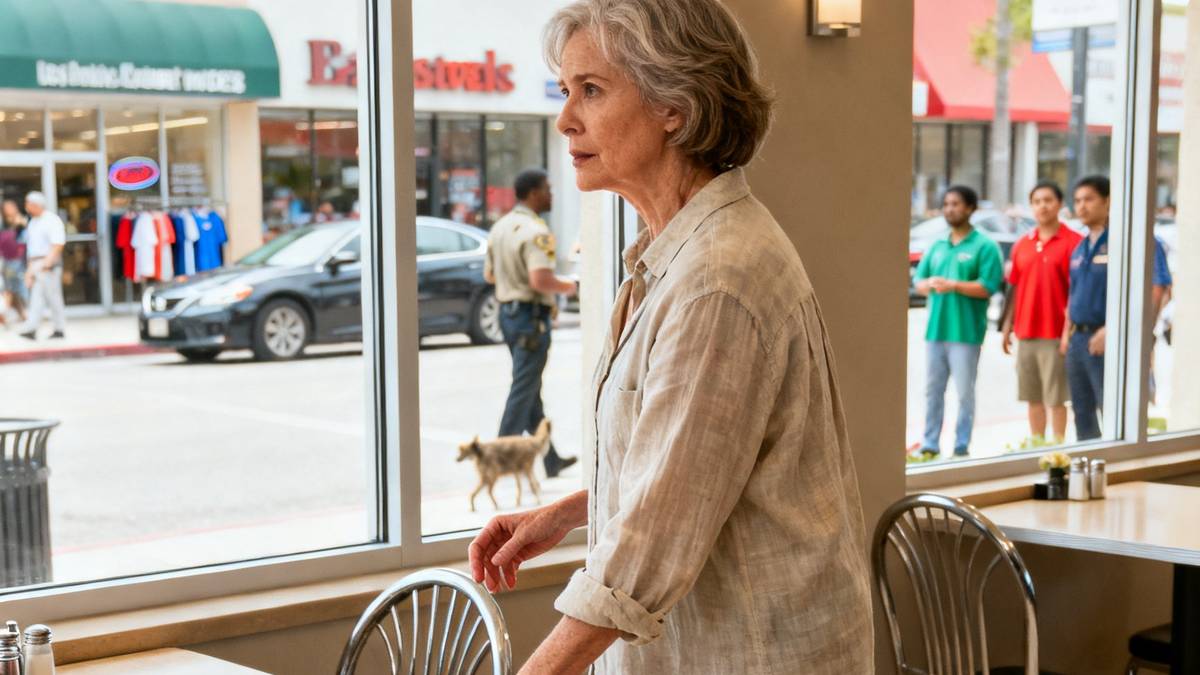
On Wednesday, their third day, they came down to breakfast separately. Marley first, alone, in an oversized t-shirt, phone glued to her ear. She sat at a table under the fake potted palm, near the coffee station, and didn't touch her plate for twenty minutes. I came by with a pitcher to refill water and caught a fragment: "Mom, I know it's your money, but you promised… that was supposed to be for my wedding, not for Dad's shop repairs."
I wasn't trying to eavesdrop further. I went back behind the desk because a shuttle had just pulled in with new guests from Birmingham, and I had key cards to hand out. But out of the corner of my eye I saw Diane walk into the restaurant ten minutes later — alone, without her husband — sit down across from her daughter, and set an envelope on the table. Plain, white, a Wells Fargo logo peeking from the corner.
I don't know what was inside that envelope. But I know Marley opened it, read something, and stood up so fast the metal chair clattered backward loud enough for half the restaurant to hear. The woman at the next table, the one with a toddler in a high chair, jumped in her seat.
Later, after everything happened, I pieced the story together from scraps — because in this job you pick up information whether you want to or not, and guests talk like the front desk clerk is part of the furniture. Diane had been saving money for over a decade in a separate account, hidden from her husband, specifically for her daughter's wedding. A hundred and thirty-five thousand dollars, built up from private math tutoring she did on the side after school hours, plus a small inheritance from her own mother. Marley had known about that account for years — it was their secret, mother and daughter, the foundation for the girl's future once she finally found the right guy.
A month before the Destin trip, Frank had stumbled across a bank statement — left in a kitchen drawer with old bills while he was hunting for the car registration. His shop was in trouble: he'd lost a lawsuit over a bad bumper repair, a collections notice had already arrived, and two of his lifts were about to be repossessed. He begged his wife to give him the money, even part of it, to save the business — a business that also employed two mechanics with families of their own. Diane hesitated. She brought the envelope with the account documents on vacation, maybe to have time to think it over, away from her husband's daily pressure.
That Wednesday morning, she must have made her decision. And apparently she had — because inside the envelope, as I later learned from the housekeeper who cleaned 214, was a printed transfer confirmation: seventy thousand dollars wired to the shop's account that very morning at six a.m., from the hotel's guest computer, before breakfast even started.
Marley stood by the overturned chair for maybe ten seconds. Then she said, loud enough that I heard it from behind the desk: "So you picked his shop after all. Again." And she walked out of the restaurant, leaving her mother alone at the table with the envelope and an untouched croissant.
I saw them apart for the rest of the day. Marley spent the afternoon on the beach alone, never going back for sunscreen — she borrowed some from a couple from Atlanta on the next lounge chair, as the beach attendant, Katie, told me later. Diane sat at the pool bar with a glass of white wine she never drank, just turning the stem between her fingers, watching the water. Frank never left the room at all — he ordered lunch delivered upstairs, which costs an extra eight dollars at our hotel, and that day he paid in cash, in small bills, like he was counting every dollar.
Around nine that evening, after the sun dropped behind the pier and the string lights along the boardwalk snack stands started coming on, Marley came back to the hotel. She didn't go to her parents' room. She walked straight up to the front desk and asked if I could help her book a flight home for the next day — alone, without her parents, from Northwest Florida airport back to Scranton, connecting through Charlotte. Her shoulders were sunburned and her voice was completely steady, like she'd already worked everything out on the beach.
I asked if she was sure, since there were still four paid nights left. She said yes, that she had something she needed to take care of. She didn't explain further, and I didn't ask. In this job you learn where your role ends.
The next morning, Thursday, Marley left by taxi for the airport at seven-thirty, before her parents came down for breakfast. She left a note under their door — I saw it because the housekeeper asked me to confirm it belonged to room 214 before she slid it under. I didn't read it, of course, but the envelope was addressed by hand, in big letters: "For Mom and Dad."
Frank and Diane stayed at the hotel three more days, through Sunday. They barely spoke, ate separately or in silence, but there was no shouting, no scene between them — just the quiet of two people who understood they'd lost something more important than a shop or a bank account. On checkout day, Diane came up to me at the desk and asked if our hotel had a rewards program for guests who came back every year. She said it in a tone like she wanted something in her life to stay fixed, predictable, safe.
I didn't hear the rest of the story until three weeks later, when Diane called the front desk asking whether she'd left some documents in our hotel safe. I think she really just wanted someone to talk to, because the call lasted twenty minutes, way longer than checking a safe deposit box would take. I could hear a spoon clinking against a mug in the background — she must have been sitting at her kitchen table, stirring coffee she wasn't drinking, the same way she'd turned that wine glass by the pool.
Her late mother-in-law's house in a small town outside Scranton had sat empty for years, and the family had quietly fought over who'd inherit it. The grandmother, before she passed, had signed it over to Marley through her lawyer — already settled before the Destin trip, though nobody but mother and daughter knew. Marley, once back home, went straight to a real estate agent and put the house on the market. She sold it a month later for two hundred and ten thousand dollars — a small three-bedroom, needed work, but close to downtown.
She didn't give her father a dime for the shop. She told her mother over the phone — and Diane repeated it to me word for word, her voice caught somewhere between pride and grief — that if Dad needed money to save the business, he could sell the lifts before the bank took them, or take out a loan against the shop like any business owner does when things get rough. But she would never again touch the money her mother had put aside for seventeen years for something that was supposed to be Marley's own start in life.
With the two hundred and ten thousand from the house sale, she bought a one-bedroom condo in Scranton for a hundred and fifteen thousand, paid in full, no mortgage. The rest, around ninety-five thousand, she left in an account that this time only she herself knew about.
Diane went quiet on the phone for a moment, then said one more thing before we hung up: that for seventeen years she thought she was protecting her daughter by saving that money in secret. She didn't add anything else. I just heard her set the spoon down on the saucer.
Frank's shop survived in the end — he sold the lifts, took out a personal loan to cover the lawsuit debt, and let one of his two mechanics go. I don't know if the Bauers will ever come back to our hotel in Destin. The key to 214 hangs on the board behind me now, with all the others, and out the window the pool sits empty, because the season's over and nobody bothers skimming the leaves off it anymore.