The hallway bulb had been dead since March, and I’d done nothing about it. Naomi used to give me a gentle reminder every few days, never a demand—just a low voice saying, “Hey, we’re still stumbling in the dark over here.” By June, she stopped saying anything at all. I’d get home at ten, eleven, sometimes later, navigate the entry by phone screen, and tell myself she’d accepted that I was too busy to deal with it.
But she hadn’t accepted it. She’d just stopped expecting me to do anything.
I’m Caleb. Architect, partner at a firm downtown Portland. My life was a blur of client meetings, site inspections, and dinners I couldn’t skip. Naomi worked as a librarian at the Central Library, a place she loved with its moss-green reading rooms and the smell of old paper. She used to leave sticky notes on the bathroom mirror—things like “Lunch in the fridge” or “Your mom called”—and I’d read them while shaving, already rehearsing the day’s arguments about setback variances. By August, the mirror was bare, and I didn’t notice until October.
It crept in small at first. A missed dinner. A Saturday farmer’s market visit I’d promised and then swapped for a conference call about load-bearing walls. She’d say, “It’s okay,” and I’d believe her. Her texts thinned to logistics: “Milk’s gone.” “Your mom called.” Then nothing. I’d come home and find her already asleep, a paperback open on the nightstand, her side lamp carving a warm oval across the pillow. I’d slide in, relieved there was no interrogation about my schedule, no heavy sighs. I mistook her acceptance for peace.
It wasn’t peace. It was a withdrawal, executed with such precision I didn’t even see the walls going up. The joint calendar in the kitchen—a big dry-erase grid with blue for her, orange for me—told the whole story. By late summer, the blue squares had multiplied: pottery class, book club, trivia night with her friend Jenna, a weekend hike at Forest Park. The orange squares were nearly gone, and none of the blue ones said “Caleb+Naomi.” She’d stopped putting me in the equation.
I told myself she was busy, that we were just in a groove. I told myself everything was fine.
One Thursday in October, a client meeting got canceled last-minute. I left the office at 5:15, walked out into the usual Portland drizzle, and hopped the MAX home. I got off at our stop, cut past the house with the overgrown rosemary bush that always reminded me of my grandmother’s kitchen, and opened our front door. The hallway was black—that dead bulb—but the kitchen light was on.
And I heard her laughing.
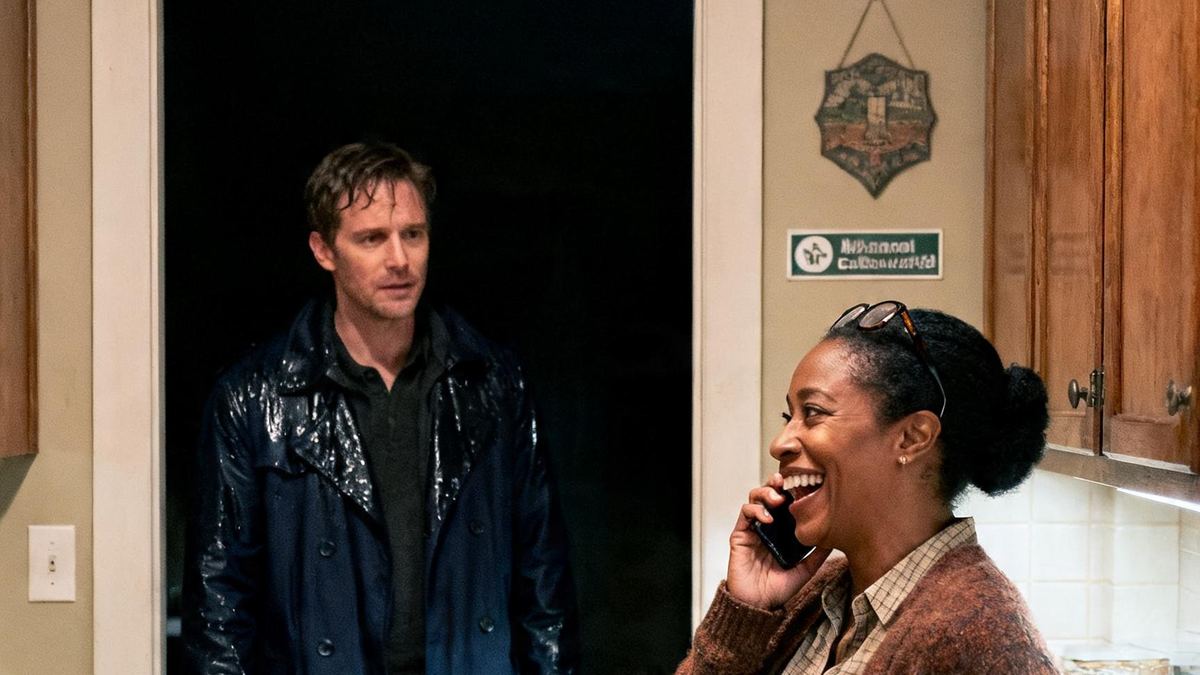
Not the tight, polite laugh she’d give my anecdotes these days. This was a wild, unguarded belly laugh that tipped up at the edges and bounced off the walls. She was on the phone, and her voice was so alive I barely recognized it.
“—and then the raccoon just looked at me, like I was the one trespassing, waddled off with my whole bag of granola. I tell you, Jenna, I stood there on the patio in my robe at six in the morning thinking, ‘This is my life now.’” She laughed again, pure and easy.
I stayed in the dark hallway, didn’t move. My jacket was still wet from the drizzle, and I could feel a cold drip sliding down my neck. But I didn’t take it off. Jenna from book club. Nothing suspicious. But the sound—her laugh, the way she let it out without reining it in—stopped me like a hand on my chest. Naomi used to tell me about her mornings. I’d nod, scrolling through work emails, mumble “uh-huh,” and she’d taper off. Now a thieving raccoon got the story I should have been there for.
Then she added something that made my fingers tighten on the doorframe. “Honestly, it’s kind of a relief. I don’t even check my phone anymore. If Caleb’s late, he’s late. I used to feel like the whole house would hold its breath till the key turned. Now I just… live.”
No anger. Just fact. She’d freed herself from hoping, and it sounded lighter than anything I’d given her in years.
I walked into the kitchen. Naomi leaned against the counter, phone pressed to her ear, a mug of peppermint tea steaming beside her. She saw me, and the laugh lines around her eyes didn’t vanish, but they stilled a fraction. “Jenna, I’ll call you tomorrow. Yeah, about the glaze class. Bye.” She set the phone down.
“You’re early,” she said. Flat, like a weather report.
“Meeting got scratched.” I wanted to cross the room and kiss her cheek, but I felt like a visitor who’d used the wrong entrance. She didn’t move toward me.
“Okay. I made chili. It’s in the pot.”
I didn’t go to the stove. “You were laughing.”
“There was a raccoon. It was funny.” She lifted the mug, expression unreadable.
“Not just the raccoon. You said you don’t wait for me anymore.”
Naomi took a sip, and I watched her set the mug down, her fingers staying on the rim for a second longer than needed. “I stopped waiting. That’s accurate.”
“When?”
She thought for a moment. “The week your big project launched and you missed my birthday dinner. I had the cake and candles and a whole plan. You texted at nine-thirty saying you were stuck. I ate a slice by myself and went to bed. Next morning, I realized I wasn’t even surprised.” She said it without blame, the way you state that it’s raining.
I flinched. I’d promised to make that up to her and never did. “Naomi, I’m sorry. I’ve been an idiot.”
She didn’t pick up the mug again. Her voice stayed level but the words came out wobblier than I expected. “Sorry’s just a word, Caleb. You’ve said it. For months I told you I was lonely. You’d promise to do better, and you would—two days, maybe three. Then the next deadline would hit, and I’d be eating alone again. I can’t… I can’t keep running on that.”
I wanted to defend myself with timelines and project reports, but she was right. I didn’t reach for my phone. I just stood there with my wet jacket still dripping on the linoleum. “I heard you just now, talking to Jenna, and I realized I haven’t heard that laugh in… a long time. That’s on me. I want to fix it.”
She looked at me then, and I saw something flicker—a trace of the Naomi who used to leave little notes in the margarine dish, who once drove across town in her pajamas to bring me the lunch I’d forgotten. But her answer came carefully. “Fixing it means staying home even when there’s no canceled meeting. It means being here when it’s boring, when I’m just rambling about raccoons and glaze colors. Can you do that, actually?”
“Yes.”
She didn’t crack a grin. She just gave a small dip of her chin and handed me a bowl. “Start by eating the chili. It’s been on the stove since six.”
That evening we sat at the kitchen table and talked about small things—the library’s broken copier, the neighbor’s new dog that howled at the recycling truck. The words were clumsy in places, full of pauses I didn’t try to fill with a screen. I just stayed there, and the silence that used to press on me like a weight just sat there, feeling a little less heavy.
Three months later, change didn’t arrive in a single, dramatic sweep. It came in daily choices. I fixed the hallway bulb—a three-dollar job from Fred Meyer—and that evening Naomi looked at the light, then at me. She didn’t say anything, but she left a mug of tea on my nightstand without asking if I wanted it. I set my phone to “Do Not Disturb” from six to nine p.m. I came home for dinner even on nights that meant I’d be on the laptop at the kitchen table until midnight. I asked about her pottery class, about the raccoon she’d told me about—the one that kept raiding the patio—and about the odd patrons who argued over the Dewey Decimal system. Sometimes she’d hesitate before answering, testing whether I was actually listening, and I made sure I was.
Last Saturday, I woke to the smell of pancakes. On the fridge, pinned under a magnet shaped like a tiny book, was a new grocery list. At the bottom, in familiar handwriting, she’d written: “Maple syrup—the good kind. Love you.”
I took the note off the fridge, read it twice. My thumb smudged the “Love you” a little. The magnet clattered to the floor and I left it there for a second before picking it up. I folded the note carefully and put it in my shirt pocket, the paper stiff against my chest.
The hallway light was on. I hadn’t thought about it in weeks—it was just part of the evening now. In the kitchen, Naomi flipped a pancake onto a plate and said, “Syrup’s not on the table.”
“I know,” I said. I was already reaching for my coat.