“Sit down.” His voice was flat, emptied of anything resembling warmth. The young woman in the glittering gown held his gaze and didn’t flinch.
“Does she still pull your strings?” she asked quietly.
The slap came fast and loud. It cracked across the ballroom like a gunshot, and every head turned. Crystal glasses froze mid-air. Painted lips fell open. The elite stood in their tailored silence and watched.
A single tear traced its way down her cheek.
The matriarch smiled the way only truly cruel people smile — slowly, with satisfaction.
“You don’t belong here.” Her voice was velvet wrapped around a blade. “You’re an embarrassment to this family. Leave.”
The room assumed it was over. They saw a girl undone — humiliated, dismissed, erased. Just another casualty in a dynasty that had been crushing people for generations.
They weren’t watching her hands.
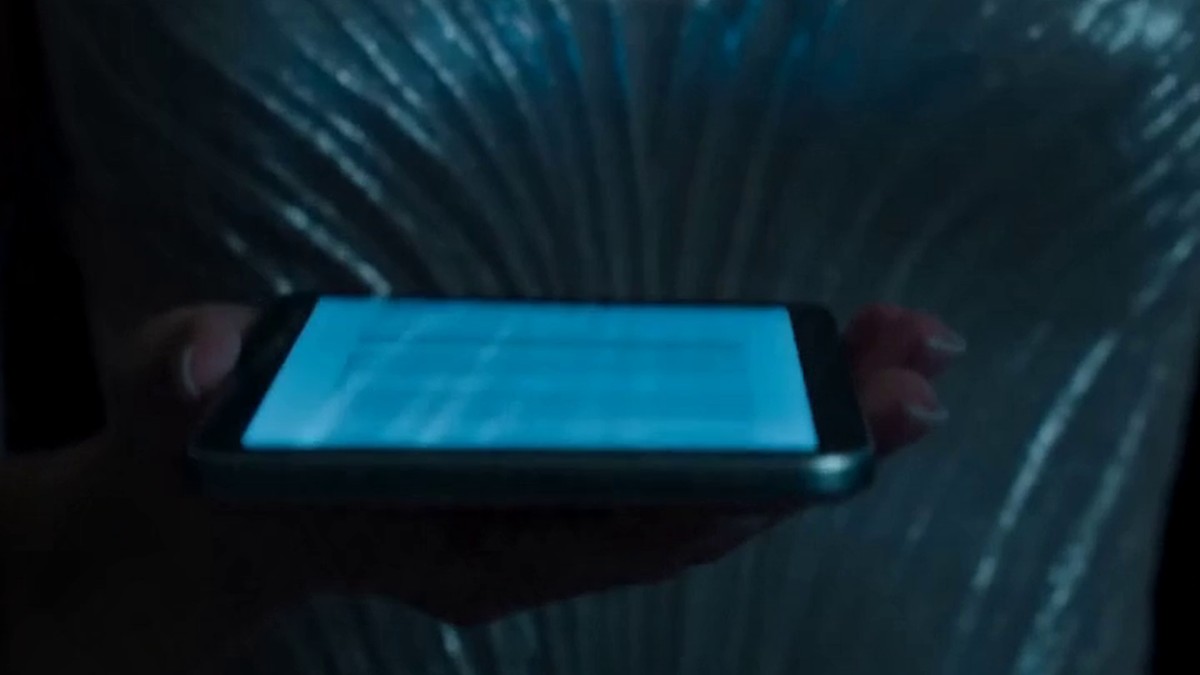
The screen in her palm glowed soft and damning in the chandelier light. Financial records that were never supposed to surface. Property transfers that existed only in shadows. Legal documents buried so deep they were practically entombed.
The tear wasn’t grief. It wasn’t surrender.
It was a clock hitting zero.
She wasn’t here to beg for a seat at their table. She was here to burn the table down — and she’d spent years building the match.
Her lips parted into a smile that had nothing to do with warmth. It was the smile of someone who had already won before the game began.
The matriarch thought she’d broken her.
She’d only given her a reason to finish it.
The silence in the room stretched thin as piano wire.
Then she spoke.
“Mrs. Vane.” Her voice carried no tremor, no apology. Just the clean, surgical confidence of someone who’d rehearsed this moment ten thousand times in the dark. “I was hoping we could do this quietly. But you’ve always preferred an audience.”
She raised the screen and let it breathe.
The documents scrolled slowly — not rushed, not frantic. Deliberate. The way you lay cards down when you know every hand at the table.
Property deeds registered under shell companies in the Cayman Islands. Six of them, linked through three layers of dissolution to Vane Meridian Holdings. Wire transfers dated the same week the Alderton family’s construction company collapsed — the company that had employed four hundred people, the company that Constance Vane had publicly mourned while privately devouring.
Then the last document. The one that changed the shape of the room.
A signed agreement. A name at the bottom that made two men near the back wall go very still.
Senator Hargrove’s face turned the color of old wax.
He had been smiling twelve seconds ago.
“That’s fabricated.” Constance Vane didn’t move. Her voice had lost its velvet and found something rawer underneath — not fear, not yet, but the first hairline crack in a façade that had survived thirty years of careful construction. “Whatever this creature has told you, whatever she’s paid someone to manufacture —”
“I didn’t manufacture anything.” She took one step forward. “You did. I just followed the paper.”
The room was not breathing.
These were not ordinary people — they were judges and senators, board chairs and benefactors, the architecture of an entire city’s upper world. They had seen scandals arrive and be neutralized over canapés. They understood how power functioned. They understood, most of all, the etiquette of looking away.
But nobody was looking away.
“Her name was Claire Alderton.” Her voice dropped — not soft, but low, the way a river sounds just before it floods. “She was twenty-nine. She’d worked as a site manager since she was twenty-four. When the company folded, she had eleven days to find new work before her insurance lapsed. She had a daughter. She didn’t find work in time.”
Constance Vane said nothing.
“I know because she was my mother.”
The crystal glasses were still. The painted lips were still. Even the chandelier seemed to hold its light differently, the way a theater holds its breath before the final act breaks open.
The matriarch’s eyes moved — just barely, just a flicker — to the two men near the back wall. It was instinctive, automatic, the reflex of a woman who had never once faced a room without knowing there was an exit pre-arranged.
The men didn’t move.
One of them — the taller one, silver-haired, the one whose name was also on the documents — straightened his jacket and looked at the floor.
“Charles.” Constance’s voice was quiet now. Almost gentle. “Charles, say something.”
Senator Hargrove raised his eyes. Held them on her for a long moment. Then he looked at the young woman in the glittering gown.
“I’d like to see those documents,” he said.
It wasn’t absolution. It wasn’t heroism. It was a man reading the math of a room and calculating his position the only way a man like him knew how. But the calculation had turned, and it had turned against Constance Vane, and that was enough.
“You —” The word came out fractured. For the first time in decades, Constance Vane looked her actual age. “You would stand there and —”
“I would stand here,” he said, “and not pretend.”
The room shifted on its axis.
It was not a dramatic sound. No gasp, no murmur. Just the quiet weight of fifty people recalibrating — deciding, in the practiced way of the elite, which side of history to be standing on before the photograph was taken.
She crossed the floor slowly, the heels of her shoes striking a measured rhythm on the marble. She stopped three feet from the matriarch and did not look away.
Up close, she could see the architecture of the woman. The effort it took to hold that posture, to keep the jaw set and the eyes cold and the hands still at her sides. It was extraordinary craftsmanship, that composure. She’d spent years hating it. Then years studying it. Then years understanding that beneath it there was nothing — no warmth, no doubt, no private grief. Just the hollow machinery of a woman who had confused power with survival for so long she couldn’t tell them apart.
She almost felt something close to pity.
Almost.
“The documents go to the DA’s office tonight,” she said. “They’ve been expecting them. The accounts have already been flagged by two federal investigators whose names, unlike yours, have never appeared in a case file. This is not a threat. It is a calendar event.”
The cheek she’d struck still carried the faint red outline of the matriarch’s palm.
She touched it once, lightly, with two fingers. Not to hide it. To remember.
“My mother never got to see this room,” she said. “She never would have wanted to. She didn’t care about your table, Mrs. Vane. She cared about keeping her daughter warm. She cared about showing up to work on time. She cared about small, real things that people like you have never once had to think about.”
She lowered her hand.
“I’m not doing this for the table.”
She turned and walked toward the door. The crowd parted — not from courtesy, but from something older and more instinctive. The acknowledgment of a force that has already passed through and cannot be called back.
Behind her, she heard the sound of Constance Vane finally sitting down.
Not a collapse. Not a scene. Just the quiet, definitive sound of weight that could no longer hold itself up.
She didn’t turn around.
The night air outside the Vane estate was cold and clean and smelled like rain that had already come and gone, leaving the city washed and honest. She stood at the top of the stone steps and breathed it in — one long breath, held, then released.
Her phone lit up. A message from the investigator: *Package delivered. It’s moving.*
She looked up at the sky. No stars — the city swallowed them — but the dark was wide and still and she let herself stand in it for a moment without moving, without planning, without calculating the next step.
Her mother had loved the night sky. Had driven them an hour out of the city once, just once, to a field where the stars were visible and they’d lain in the grass on an old blanket and her mother had named the ones she knew and invented names for the ones she didn’t. She’d been eleven. She hadn’t understood yet what the word *precarious* meant in a life. She’d only understood warmth.
She understood it now in its absence.
And in its recovery.
She walked down the steps and into the dark, the glittering gown catching the last light of the doorway behind her, and she didn’t look back — not because the past was gone, but because she already knew exactly what it looked like.
She’d been carrying it the whole time.