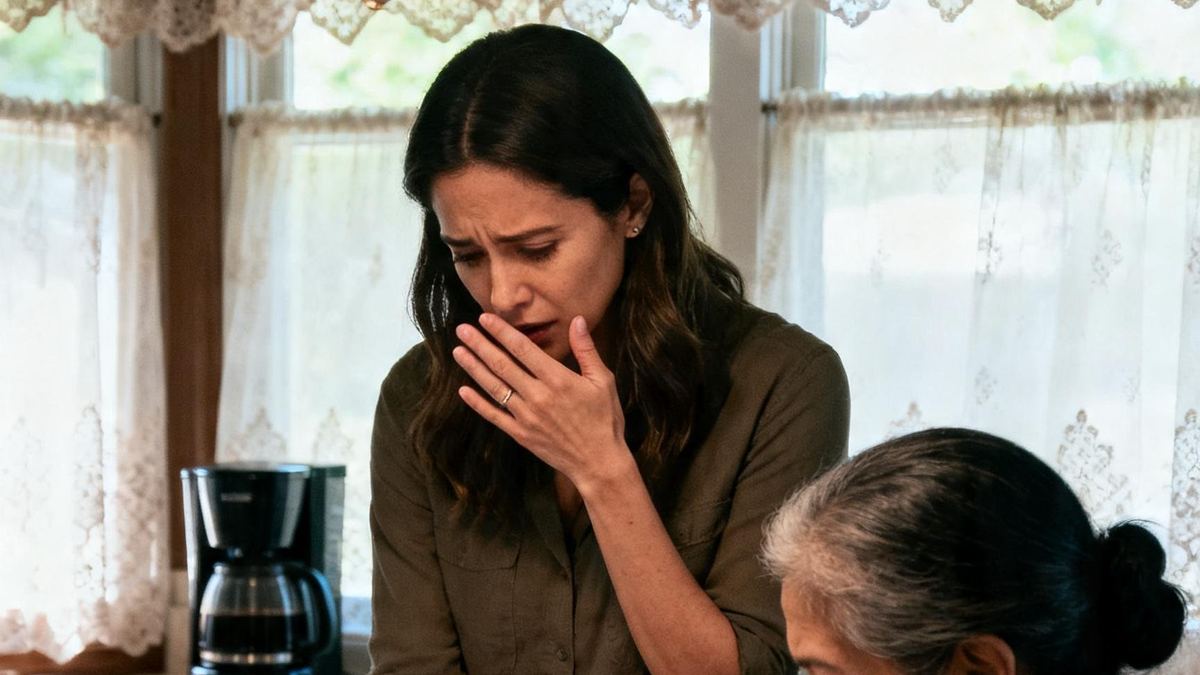
Nine days after Maeve Callahan moved out of the brick house off Hertel Avenue, her mother called about the electric bill.
“The notice says it was due last Friday,” Gail said. “They’re shutting it off Thursday.”
Maeve had a pot of water on the stove in her new walk-up on Richmond Avenue. The window above the fire escape looked out on a roof with a rusted air-conditioning unit. She turned the burner down but kept the phone against her ear.
“I didn’t live there when that bill came due,” she said.
“Since when do you stop paying because you don’t live somewhere?”
Maeve set the box of penne back on the shelf. “Since the account turned out to be in my name without my consent.”
A pause. Then Gail said, “You always told me family helps family.”
“I revised that policy.”
A month earlier, on the first weekend of October, Maeve had stood beside her Subaru Outback in the driveway of that same house. Four suitcases and a plastic bin of tax files were packed in the back. Behind her, through the open kitchen window, came the pop of a cork from a bottle of sparkling cider. The family in the dining room clapped.
“Now we can breathe,” Duane said.
“Don’t be ugly,” Gail said. “She’s still my daughter.”
Mason added, “She acted like she owned the place for years.”
Maeve didn’t turn toward the house. She just shoved the snow scraper farther into the back so the trunk would close. Down the block, a plastic skeleton swung from a porch railing, and a dog barked at a mail truck. Another round of laughter drifted out. Her sister Becca came through the side door, coat open, no shoes.
“You’re really going.”
“Would you stay if you heard what I heard?”
Becca had no answer. Maeve got in the car and drove toward Delaware Avenue without checking the rearview. Leaving didn’t feel like running. It felt like taking her name off a fire escape.
She had lived in that house since she was fourteen, after her father died of an aneurysm during a Buffalo snowstorm. Two years later, Gail married Duane Hartley, a big man with a hard handshake and a plan to open a barbecue spot on Niagara Street. He said he would protect them. Maeve believed that for too long.
By eighteen she was doing bookkeeping at a dental office on Bailey Avenue. By twenty-seven she was a controller for a trucking company on Grand Island, running payroll for forty drivers. She never missed a due date. That was the problem. Her reliability became the family business.
Duane’s truck insurance. Mason’s community college tuition. A new refrigerator after the old one died on the Fourth of July. The roof. Gail’s blood pressure medicine. The loan for Hartley’s Pit, the takeout joint with the smoker out back. The family always said the same thing: “Just until we get back on our feet.” They never got back, because Maeve always got there before the bill went to collections.
One week before she left, Duane asked her to find the registration for his pickup in the front hall desk. She opened the middle drawer and found a yellow folder with her name on the tab. Her first thought was old W-2s. Inside were photocopies of her driver’s license, pay stubs from the trucking company, credit card applications, and service contracts. The signatures looked like hers, except for the final e in Callahan. Hers ended with an upward flick. The copies ended flat, as if someone had traced the letter twice.
Duane appeared in the doorway. “Find the papers?”
“Not yet,” she said. She tucked the folder under a stack of bank envelopes and closed the drawer.
That night she checked her credit report. The first unknown loan appeared. Then a department store card. Two phone lines. A snowmobile loan. Vendor contracts for the restaurant. Her friend Jada Morrison, a legal aid attorney, reviewed the folder.
“This isn’t a mistake,” Jada said. “Somebody faked your signature.”
Maeve wanted to say it was bad bookkeeping. But the number kept climbing: 47 separate obligations. Total: $49,720. The newest was a credit application for $21,000, submitted three weeks earlier. Duane wanted the money to cover restaurant losses and pay down older debts. The collateral was the family house.
The house didn’t belong to Duane. After her father died, it passed to Maeve, Mason, and Becca. Gail had the right to live there, but a mortgage required all three signatures. Becca had been seventeen when the paperwork was filed. She never signed anything. Maeve canceled the application before the cash was released, froze the accounts she’d been paying, wrote letters to the creditors denying the contracts, and filed a police report for identity theft. Then she packed.
For the first week after she left, nobody called. Gail posted breakfast pictures on Facebook. Mason wrote that the “dictatorship of Perfect Maeve” was over. Duane hired a polka band to play outside the restaurant on a Tuesday, as if the missing direct deposits were a reason to dance. Maeve blocked the family group chat.
Then the overdue notices started. Electric. Gas. Two phones. The insurance on Duane’s truck. Invoices from the meat distributor. A voicemail from a collections agency about a snowmobile nobody in the family actually used.
Mason showed up at her apartment and pounded on the door until the chain rattled. She let him in but didn’t offer coffee.
“The meat company says we owe six thousand eight hundred dollars,” she said.
“I don’t owe them. You were handling it.”
“I handled it when the account was in my name. I never agreed to be your guarantor.”
“You could’ve said no.”
“That was always the problem. Nobody asked.”
He sat on the arm of the couch and rubbed the knees of his jeans. “I thought you’d care.”
“I care enough to let you figure it out.”
Gail called next. “The mortgage is behind. The truck got towed. The insurance lapsed.”
Maeve said, “Then Duane can pay it. Or you can open the mail for once.”
Gail went quiet. “You don’t have to be nasty.”
“I’m not the one who put your daughter’s name on a twenty-one-thousand-dollar loan.”
Gail had no answer for that.
A week later, Becca came over with two cups of Tim Hortons and dark circles under her eyes. Duane was blaming Gail. He said she knew everything. According to Becca, Gail knew Maeve paid a lot of things, but not about the fake signatures. That afternoon Duane threw a chair across the kitchen and shouted that without Maeve’s money the whole family was worthless. Becca had found a USB drive in the tool drawer of his workbench in the garage.
They met the next morning at a Tim Hortons on Delaware Avenue. Becca slid the USB across the table. It held scanned IDs, receipts, blank forms, and digital copies of Maeve’s signature, Mason’s, Becca’s. There were voice memos Duane had recorded to keep his plans straight.
“That girl always pays,” Duane said on one. “If she asks, we call it an emergency. Her mother will guilt her into it.”
On another: “Once the twenty-one thousand comes through, I’ll sell the house. The old lady won’t read the paperwork. The kids will fight over the scraps, and I’ll keep the business.”
Maeve didn’t feel angry. She felt the way you feel when you realize the man who promised to keep you safe had been practicing your signature the way other men practice their golf swing.
Jada handed the drive to the Erie County district attorney’s office. The court put a temporary hold on any sale or transfer of the house. When Duane got the notice, he demanded a family meeting for Sunday.
Maeve arrived with Jada and a notary public. Gail sat at the dining table, the same table where they had toasted her absence. She looked older, not just tired. Mason stood by the window with a peacoat over one arm. Becca kept a binder against her chest like it might block a bullet.
Duane stood in the kitchen doorway, arms crossed. “This is family business. Those two can wait outside.”
“Family business is exactly why I brought witnesses,” Maeve said.
“You ruined this house over some late notices.”
Maeve set a folder on the table. “Forty-seven notices. Forty-nine thousand seven hundred twenty dollars. That’s not late notices.”
Gail opened the folder and turned the pages. She recognized the electric bill from last winter and a car payment from the summer. Then she found a snowmobile loan she had never seen. A department store card with a balance of $3,112. A cash advance of $2,000. A credit application for $21,000 with the house as collateral, signed by three children, one of whom had been a minor.
Gail looked up. “Duane, did you do these?”
“I did what I had to keep the family afloat.”
“The house,” Gail said, “was their father’s house.”
“And their father left behind a dead car and an empty savings account.”
Maeve stepped between them. “Don’t use my father to excuse a felony.”
Becca opened her phone and played the audio. The speaker was small, but the words filled the room.
“Once the twenty-one thousand comes through, I’ll sell the house. The old lady won’t read the paperwork.”
Duane lunged for the phone. Jada moved into his path. “That recording is already with the DA.”
Two Erie County sheriff’s deputies knocked. They had a warrant for Duane Hartley, on charges of identity theft, forgery, and grand larceny. Duane’s face went the color of old snow. He turned to Maeve.
“Tell them it was a misunderstanding.”
“That was the deal my whole life,” Maeve said. “You created the misunderstanding. I cleaned it up.”
The deputies cuffed him. He said something over his shoulder about lawyers, but the door shut on the rest. Gail didn’t cry. She sat there looking at the closed door, both palms flat on the folder, as if she were pressing the truth into the wood.
Duane was charged with fourteen counts of fraud, forgery, and misuse of personal information. The mortgage was voided. The house went back to Maeve, Mason, and Becca. Gail kept the right to live there, but her name was no longer attached to any loan she hadn’t signed.
Mason closed the restaurant for two months. He sold his F-150, worked out payment plans with the meat distributor and the bun supplier, and started four morning shifts a week unloading produce at the Broadway Market. He had never understood what food cost before it landed on a plate. He sent Maeve a text: “Paid the first full invoice today. There are more. I started. Sorry for thinking sister meant lifeguard.” Maeve wrote back: “Sister means walking next to you, not carrying you.”
Gail began taking in alterations at the dining table. She repaired hockey jerseys and hemmed prom dresses. At first she blamed Duane for everything. Then one afternoon she told a neighbor, “I trusted the wrong man. But I’m learning to read what I sign.” The neighbor had come by with a coat zipper and stayed for tea.
Becca moved into Maeve’s second room on Richmond Avenue. She stacked her nursing textbooks on the radiator and earned a scholarship for her second year at Erie Community College. The two of them learned how to live without secrets, and without flinching at the sound of a cork.
Almost a year later, Gail called.
“I don’t need money,” she said before Maeve could speak. “I just want to know if you’ll come for Sunday dinner. Mason is making his Buffalo chicken dip. Becca is bringing something in a glass dish. You can say no.”
Maeve went. The house on Dauphin Street felt different, not because of the paint or the furniture. Everyone had stopped waiting for her to fix something. Mason served. Gail cleared the plates. Becca talked about a patient at Buffalo General. Nobody left a bill next to Maeve’s fork. Nobody asked her to look over a contract.
After the apple crisp, Gail brought out a bottle of sparkling cider and set it on the table.
“I know you don’t love that sound,” she said.
Maeve reached for the bottle. “I don’t mind it as much now.”
Mason raised a plastic cup. “Tomorrow I pay off the last supplier. After three hundred and forty days.”
Gail put her hand on Maeve’s arm. “We’re going to be okay.”
“For real this time,” Becca said.
Maeve took a sip. The house didn’t feel like a ledger anymore. It felt like a place she could leave.
When she got home that night, an envelope was waiting under her door. Inside was the recorded deed to a small condominium on Richmond Avenue, one block from her walk-up. She had bought it with her own savings, one signature. She set the deed on the kitchen table and opened her banking app. The old joint account, labeled “Family Emergency,” still had $2,300 in it. Maeve transferred the balance to a new account she named “Maeve, individually.” Then she closed the old one. The screen showed two words: Account closed.
She put her phone face down on the deed. Outside, the November wind moved through the elm, and somewhere a dog barked at a mail truck making the late run. The heat clicked on. She went to bed without checking to see if anyone had called.