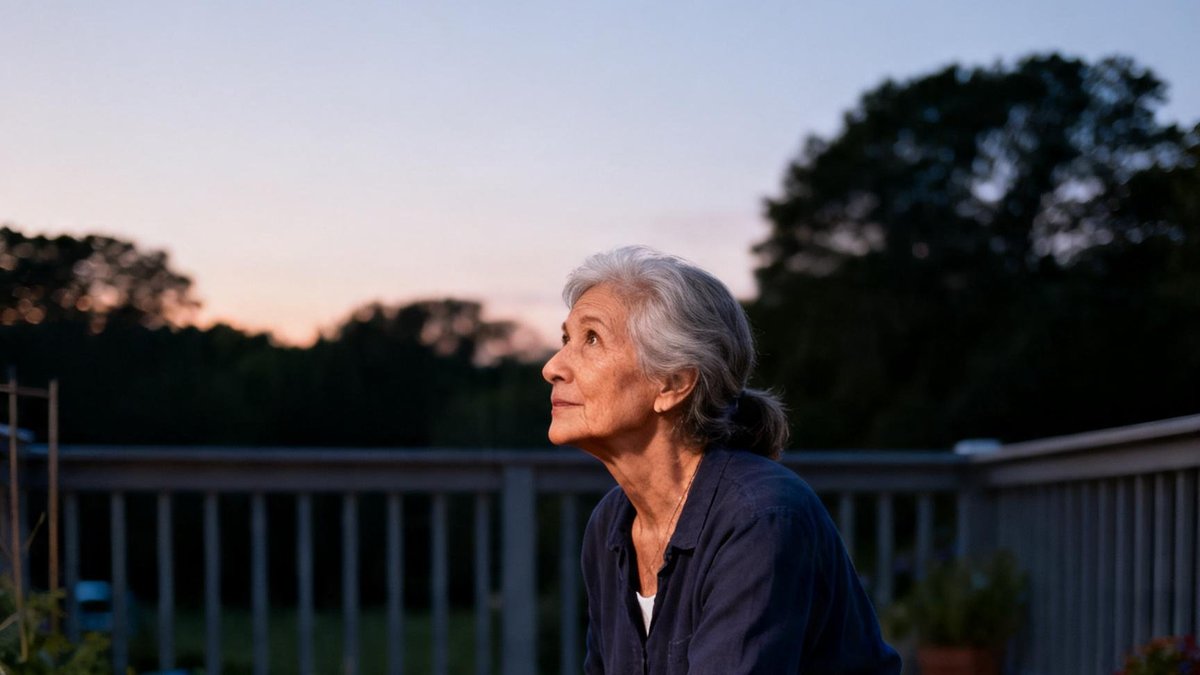
Elaine sat on her back porch, the evening mountain air cutting through the humidity just enough to make it bearable. She had a glass of sweet tea in her hand and a clear view of her garden, the rows of Albion strawberries catching the last light. She’d counted forty-seven berries blushing red that morning. Another two days and they’d be perfect. Not for jam, not for a church social. Just for her.
The window was open at the Henderson place next door. Rhonda’s voice carried through the screen, brassy and unconcerned about who might be listening.
“Troy, relax. She’s one woman. She can’t eat all that. The kids just graze a little, it’s not like she’ll miss a handful. Besides, she never locks her gate. If she cared, she’d say something.”
Elaine didn’t move. Her fingers tightened on the glass, the condensation dripping onto her knee.
So that was the family policy. Grazing rights. Her dead husband’s pension, her arthritic knees, her four years of building the soil with compost from the stables in Waynesville — none of it registered as work to Rhonda. Just excess.
By dawn the next morning, the garden told a different story. Every ripe berry was gone. Not a few — every one. The stems were torn, tiny sneaker prints pressed into the mulch, and a single green berry crushed near the chain-link fence. One of their brand. Down at Wilson’s Feed & Seed, Elaine didn’t waste time on rat poison or bitter sprays. She asked Arnie, the old man behind the counter in the John Deere cap, for something that would mark what was hers. He leaned in when she explained, then disappeared into the back. He returned with a small plastic bottle labeled *Concentrated Food-Grade Marker Dye — Blue*.
“Farmers use it to check their spray patterns,” Arnie said. “Harmless. Edible, technically. But straight? It’ll stain skin for a solid seventy-two hours. No soap, no scrubbing. Wear gloves.”
Elaine paid with a twenty-dollar bill and got change.
She mixed the solution Friday evening, watching the blue bloom in the sprayer tank like a science experiment. Rhonda’s kids were jumping on the trampoline, the father revving his F-150 in the driveway. Elaine walked her rows and misted every berry the color of a bruise. In the fading light, the blue vanished into the red.
Saturday morning, the garden was stripped again. Not a single ripe fruit remained.
Elaine put on a clean blouse, picked up a Mason jar she’d borrowed from Rhonda months ago, and walked next door. The Hendersons’ yard was too quiet. The trampoline sat empty. A beach towel lay abandoned on the grass. Rhonda was on the front steps, scrubbing at something in her lap with a wet rag and a bottle of dish soap. Her head snapped up when Elaine’s shadow crossed the gate.
“Morning, Rhonda. Brought your jar back.”
“Uh-huh. Set it down.” Rhonda didn’t meet her eyes. Her knuckles were raw.
Elaine took two more steps. “Where are the kids? Usually they’re raising the dead by now.”
The screen door banged. Jake, the seven-year-old, shot out onto the steps before he could be stopped. His mouth, his chin, the webbing between his fingers — all a deep, unnatural indigo, like he’d been tie-dyed at a carnival. His older brother Cody stumbled out behind him, his lips ringed in blue so dark they looked navy. From the hallway, sixteen-year-old Hayley yanked a hoodie over her head too late; her fingers left a blue smudge on the white fabric.
Rhonda jumped up, blocking their bodies with her own bulk. “They ate some candy! Those sour gummies from the gas station, the dye in those things is a menace.”
Elaine nodded. “Funny. Because I treated my strawberries with a food-grade marker dye. Completely harmless to anything that doesn’t steal them. But if you happen to eat a berry without washing it off first — well, the stain sets in for three days. Blue like that, exactly.”
Rhonda’s face went slack, then twisted. “You poisoned my kids! Troy! Troy, get out here!”
Troy stumbled from the garage, still holding a socket wrench. Before he could speak, two more neighbors appeared at the fence. Mrs. Patterson, who watched the whole street through her birding binoculars, and Don, a retired fireman who mowed his lawn twice a week. Rhonda launched herself toward Elaine, screaming about calling the sheriff, about getting her arrested.
Elaine didn’t move. She pulled the bottle of dye from her pocket and held it out to Don. “Read it.”
Don squinted at the label. “‘Food coloring. E133. Non-toxic. Safe for consumption.’” He looked at the blue boys. “Rhonda, how’d your kids eat Elaine’s strawberries if they were just having candy?”
Mrs. Patterson made a sound like a car backfiring. It was a laugh. “I told you last summer, Rhonda. I saw your boys in Elaine’s cucumbers. Your daughter stood lookout.”
The performance crumbled. Troy yelled at the kids to get inside, his face brick-red. He muttered something that might have been an apology before slamming the door. Rhonda stood alone on her porch, her rag dripping blue water onto the concrete, her mouth opening and closing with nothing left to say. The audience dispersed, Don tipping an invisible hat.
Elaine walked home. She shut her gate — the one that hadn’t been latched in four years — and slid the bolt. From her back pocket, she took out her phone. She’d already picked out what she wanted: a set of galvanized steel cable ties and a padlock with a combination code, all sitting in the checkout cart of a hardware site. She’d been waiting for a reason to spend the twenty-three dollars. She tapped *Place Order*.
Out on the deck, Elaine bent down and found the one cluster of berries that had been hidden under a leaf, too small and green for the raiders to notice in the dark. Three were still there. She bit into one, tasting the sun more than the sugar. Then she picked up her trowel and started loosening the soil for the next planting. The ground underneath was hers. It finally felt that way.