At our county hospital in Fresno, measles used to be something out of textbooks. A word from old photographs, from back when clinics ran vaccine drives out of school gyms and parents lined up with paper immunization cards. None of us expected to see it in person.
But we did. Pediatric unit, end of January, frost on the windows and the almond trees outside stripped bare in the parking lot. They brought in a boy, six years old, fever at 104, a rash spreading, and a cough so bad his mother couldn't keep him steady in her arms. Dr. Patricia Nakamura had the shift — thirty years in pediatrics. She still remembered measles from before the second dose of MMR became standard. She looked at the boy's skin and said it low, but everyone in the room heard her.
"That's measles."
The boy's mother, Danielle, sat in the chair by the bed. She was holding a stuffed dog the boy had let go of when the fever spiked. She wasn't crying. She just kept asking if it might be an allergic reaction instead. The child hadn't been vaccinated. One delay, then another, then someone at the daycare mentioned something about mercury and aluminum, and after that the appointments just never got made. It happens.
The first three days looked like a bad infection, nothing more. Oxygen, IV fluids, antibiotics for the bacterial complications, because measles can shut down the immune system for weeks at a time. The hallway smelled like hand sanitizer and the steam-table lunch cooling on a cart. On the wall across from the bed hung a crayon drawing of a snowman, signed "Tyler, age 6," brought from kindergarten the week before.
On the fourth night, the boy stopped recognizing his mother. It wasn't drowsiness — he looked straight through her. Then he started repeating the same sentence, slower each time. Dr. Nakamura ordered a spinal tap. Night settled over the ward, and the monitor's green light kept burning in the nurses' station.
"Encephalitis," she said in the morning. "From the measles."
Danielle stood by the window. Outside, snow had started coming down, fine and hesitant, like it couldn't decide. She asked if it would pass. The doctor didn't answer right away. She picked up a cup of coffee that had gone cold and set it back down on the counter, in the exact spot it had been.
"Sometimes it does," she said. "Sometimes it doesn't."
*Doesn't* hung in the room like a damp smell you can't air out. The boy was moved to the ICU. Sepsis, shock, his blood pressure dropped so fast the nurse had to call the anesthesiologist in the middle of the night. The chart listed three separate conditions, any one of which could have killed him on its own. Brain swelling. Systemic infection. Multi-organ failure.
I was on call in the ER that night. Not my patient, but you could hear the ICU through the hallway. Danielle paced outside the door, the stuffed dog's ear caught in her fist. She passed me twice. The second time, she asked where the vending machine was, because the cafeteria was closed.
On the fifth day, the boy stabilized. Not recovered — stabilized. Meaning he'd stopped dying that particular minute. He was on a ventilator, a catheter running, an infusion pump beside the bed feeding him medication to bring down the pressure in his skull. His mother sat next to him and combed his hair with a small comb she'd pulled from her purse. The comb was pink, with one tooth snapped off in the middle.
The doctor told Danielle that if the boy had gotten both doses of the vaccine, he wouldn't be in that bed. She didn't say it with blame. She said it the way you'd read a weather report — plain, no tightening around the mouth. Danielle didn't answer. She set the comb down on the nightstand, next to a half-finished bottle of water.
On day ten, Tyler opened his eyes. He stared at the ceiling and blinked. He didn't know his mother for two more days. Then, one morning, he said "water." One word. Danielle held the cup with the straw to his mouth, and her hand shook so hard the water splashed onto the sheets.
The boy left the hospital after three weeks, with a folder of discharge paperwork thick as a phone book. Ongoing neurology follow-ups, appointments with a pediatric psychologist, a list of prescriptions to fill. Physical therapy, checkups, developmental screening. Danielle signed the discharge papers. She read them twice. Then she folded the pages in half and tucked them into her bag, into the same pocket where the stuffed dog rode.
A week later, someone from the county health department turned up at the hospital — no, that's not quite right. Danielle went to the health department herself. She showed up at the vaccine clinic on Blackstone Avenue, in a building with peeling paint next to a bike shop. She brought Tyler in for his first MMR dose. He was scared of the needle. She held his hand and showed him something on her phone — a video of a cat knocking a cup off a counter.
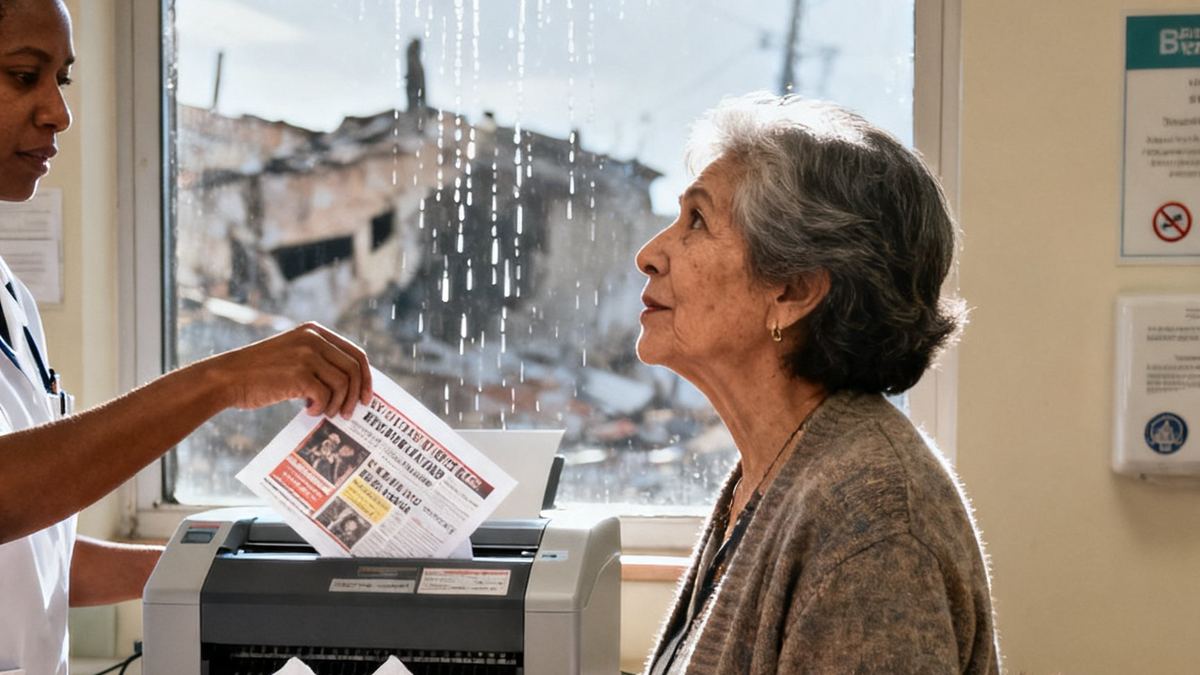
While the nurse entered the dose into the system and into the boy's immunization record, Danielle pulled a crumpled sheet of paper from her pocket. It was a flyer from the daycare, three years old. They'd pinned it to the corkboard in the cubby room. Something about how vaccinating against measles was a parent's choice, how medicine doesn't know everything. Danielle set the flyer down on the counter.
"Please get rid of this," she said.
The nurse looked at her, then at Tyler, who was working on a lollipop from the pharmacy downstairs. She took the flyer and fed it into the shredder. The machine whirred, and the room smelled like rubbing alcohol. Danielle said thank you. She walked out with the boy into a mild March thaw. Water dripped off the roofline. Tyler walked slowly, his left leg still not quite steady under him, and he held onto his mother's sleeve, the lollipop going soft and wet in his hand.