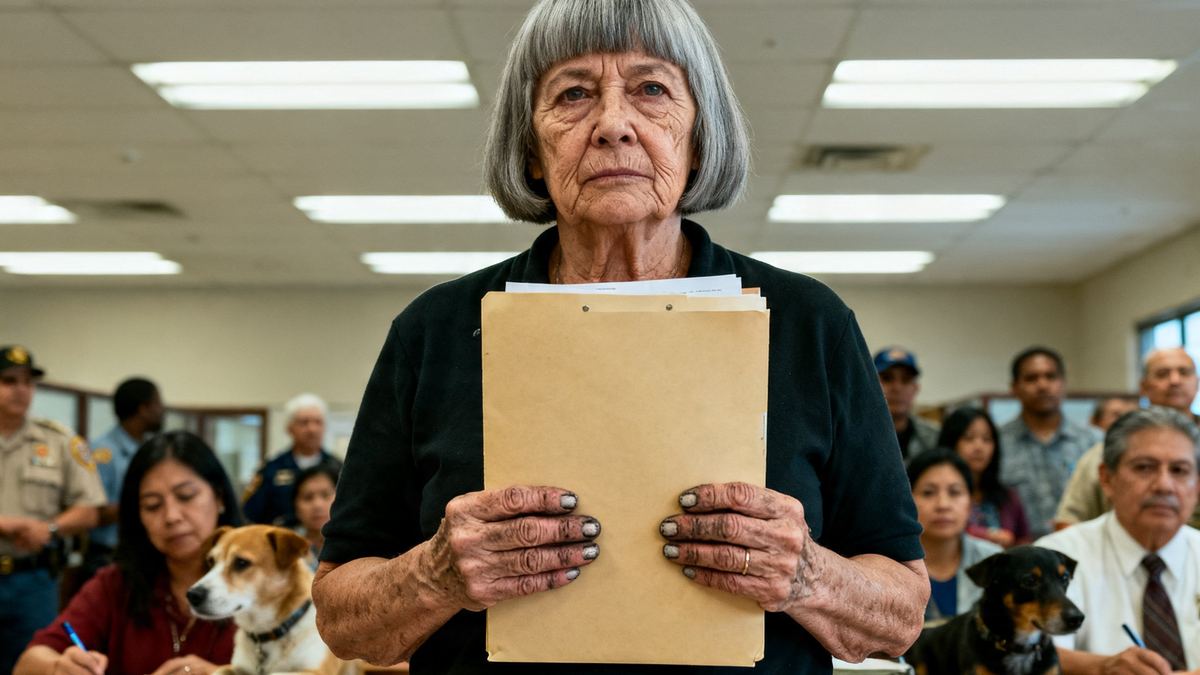
Ruth Callahan had run Bluegrass Blooms out of a converted barn on Route 62 for thirty-one years, and every one of those years had left a callus somewhere on her hands. She was seventy-four now, and she still opened the greenhouse at six every morning, before the Kentucky humidity turned the air into something you could wring out like a dishrag.
Her son-in-law, Tucker Beecham, had married her daughter Dana nine years back, and for most of that time Ruth had liked him fine. He was handy — could fix a busted irrigation line faster than anybody she'd hired — and when her hip gave her trouble two winters ago, he was the one who drove her to the orthopedist in Lexington without being asked twice.
So when Tucker suggested, over Sunday dinner in April, that he "take some of the paperwork burden" off her shoulders, she didn't think much of it. Dana was scrolling her phone. The dog, an old beagle named Clementine, was working over a chicken bone under the table. Ruth's late husband Walt had built that dinner table himself, out of reclaimed barn wood, and it still had a warp in the middle that made a fork rattle if you set it down wrong.
"Just the LLC filings," Tucker said. "The state paperwork. You've got better things to do than sit on hold with the Secretary of State's office."
She'd signed where he pointed. She always trusted the wrong things when they came dressed up as help.
It was Ruth's neighbor, a hairdresser named Pam Osei who ran the salon two doors down from the garden center's little farm stand, who noticed something first. Pam had stopped in one Tuesday in June for tomato starts and mentioned, almost as an aside while she was digging through a flat of Cherokee Purples, that she'd seen a real estate sign go up at the property line — one of those small aluminum ones stuck in the ground near the parking lot, easy to miss unless you were looking. "Thought you were selling," Pam said. "Congratulations, if so."
Ruth wasn't selling anything.
She drove straight to the county clerk's office that afternoon, her sun hat still on, dirt still under her nails from thinning the marigolds. The clerk, a younger woman with a nose ring who'd sold Ruth peonies at the farmers market more than once, pulled the filing without much fuss. Bluegrass Blooms LLC. Managing member: Tucker Beecham. Sole managing member, as of the previous November.
Ruth's name wasn't on it at all.
She sat in her truck in the parking lot for a long time after that, air conditioning off, windows down, listening to a mockingbird cycle through four different songs in the maple by the courthouse steps. She thought about the sixty-two thousand dollars she'd sunk into that new greenhouse roof in 2019. She thought about her husband Walt, who'd died of a heart attack in that same greenhouse in 2011, kneeling over a flat of impatiens, and how she'd kept the business running afterward because letting it go felt like letting him go a second time.
She did not call Tucker. She did not call Dana, either, not yet. She called a lawyer instead — Marcus Whitfield, whose office was above the diner on Main Street, and who she'd known since he was a boy delivering the Herald-Leader on a bicycle too big for him.
The confrontation happened on a Saturday morning at the garden center itself, in front of the register, with a customer's cart of hostas still sitting half-unloaded by the door. Tucker had come by to "check the irrigation timer," which Ruth suspected now had never really needed checking at all — just an excuse to keep a hand in things.
"I know what you filed," Ruth said. No preamble. She had the printed document from the clerk's office in a manila folder, and she set it on the counter between them, next to a rack of seed packets. "November fourteenth. You made yourself sole manager. Took my name clean off it."
Tucker's jaw worked for a second before words came. "Ruth, it was — that was supposed to be temporary, for the bank refinance. I was going to switch it back."
"Nine months isn't temporary." She didn't raise her voice. Behind him, through the screen door, she could see Clementine asleep in a patch of sun on the porch, twitching at some dream. "You knew exactly what you were doing when you had me sign it."
Dana appeared then, coming in from the parking lot with a bag of mulch under each arm, and stopped when she saw the folder on the counter. She set the bags down slow. "What's going on?"
"Ask your husband," Ruth said. "Ask him whose name is on the business your grandfather's tools are still hanging in the shed for."
Tucker reached for the folder. Ruth put her hand flat on top of it first.
Marcus Whitfield had already drawn up the correction — an amended filing restoring Ruth as sole managing member, plus something Tucker hadn't anticipated: a formal notice terminating the informal arrangement where Tucker handled the center's books and had signing authority on its business checking account at the credit union on Winchester Road. Ruth drove that notice to the credit union herself the following Monday, presented her ID at the teller window, and watched the branch manager remove Tucker's name from the account on the spot. She closed out the old joint access entirely and opened a new account with just her name and Marcus's paralegal as backup signer.
She didn't yell. She didn't cry either, though she thought about it once, alone in the greenhouse that Monday evening, standing where Walt had gone down thirteen years before. Then she picked up her hose and watered the dahlias, because they didn't care whose name was on anything — they just needed water by six or they'd wilt in the heat.
Tucker showed up at the garden center two days later, on a Wednesday, while Ruth was ringing up a woman buying six flats of impatiens for a church fundraiser. He stood by the register waiting his turn like anybody else, which Ruth found almost funny in a tired way.
"I can't access the account," he said, once the customer had gone. "The refinance paperwork's due Friday."
"Then you'd better call the bank and tell them the terms changed," Ruth said, and rang up the next customer's petunias.
He didn't come back after that. Dana still did — brought Ruth a casserole two weeks later, sat on the porch with her and didn't mention Tucker's name once, just picked at a loose thread on the porch swing cushion while Clementine sniffed around her ankles. Ruth didn't ask what was happening at home. Some things a mother lets a daughter bring to her in her own time, or not at all.
The garden center's sign still says Bluegrass Blooms, still has the same crooked apostrophe Walt painted on it back in 1994 that Ruth never got around to fixing. Every morning at six, she's still the one who unlocks the greenhouse, still the only name on the deed the county clerk keeps in a drawer three floors up from Main Street.