Travis McCready had been driving the big county-issue Silverado for Mayor Fontenot for five years, and in that time he’d come to believe he was practically the mayor himself. A handshake at the parish courthouse, a wink from the woman at the diner counter, and the knowledge that he could cruise down Main Street in Ville Platte with the window down and the radio on—that was living. His Aunt Lou, who’d raised him after his momma passed, would set supper out at six sharp and say the same thing every single night: “Travis, you thirty-one years old and still actin’ like a boy. Time you settled. That new teacher at the elementary, Miss Yvette—she’s got sweet ways. I seen her at church.” Travis would just spoon pepper jelly onto his biscuit and grin. “Aunt Lou, I got plenty of time for all that.” But Aunt Lou had a way of making a man feel like he was still barefoot in her kitchen getting his mouth washed out with soap. By the end of summer, he’d married Yvette.
Yvette was the kind of woman people called a blessing. She’d bring home papers to grade and still have a pot of red beans waiting, and she never said a cross word about his late nights. A year in, she gave him a son—Little Travis, they called him T.J.—and Travis loved that boy so much it scared him. Yvette, he never quite loved. She’d look at him across the table with her big brown eyes full of patience and hope, and it made his neck prickle. He couldn’t have told you why.
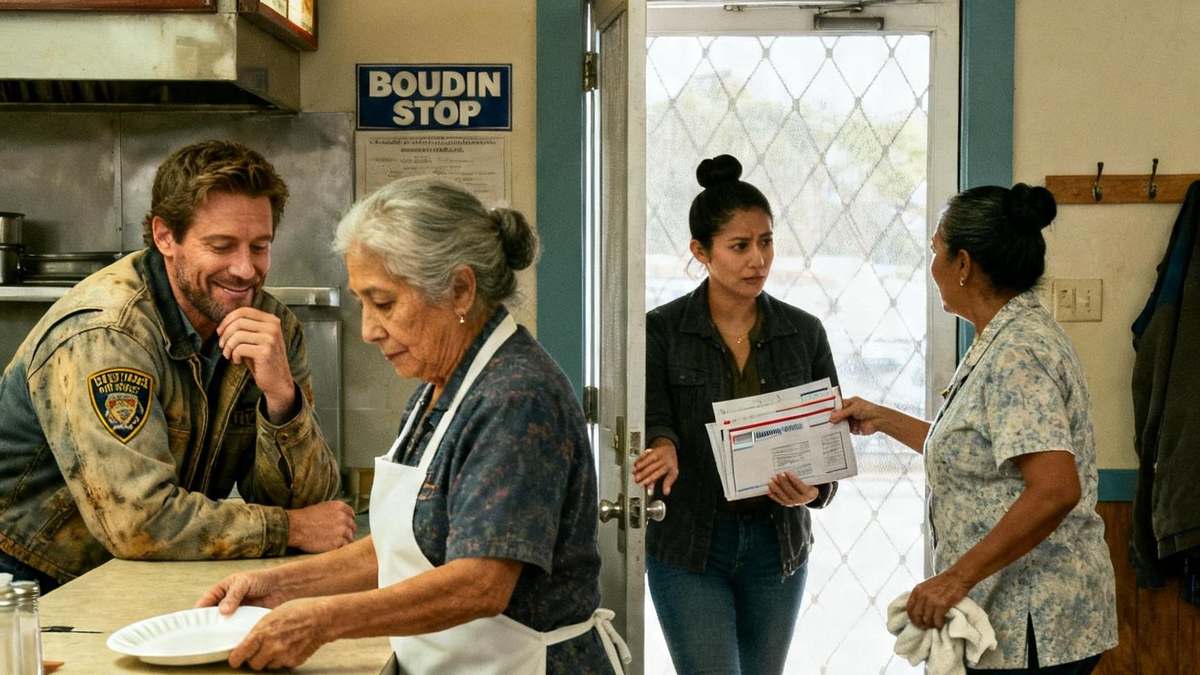
Then Coralee pulled into town. She took the day shift at the Boudin Stop out on Highway 10, and from the first minute he saw her leaning against the counter poking at her phone with nails like cherry Jolly Ranchers, he was done for. She’d laugh at everything he said, call him “T-Mac” like they’d known each other forever, and stuff extra cracklins into his bag. He started finding excuses to run errands for the mayor just to swing by that end of the parish. Soon enough he was spending Tuesday afternoons at her trailer on the far side of Chicot Park, leaving a thin trail of cologne and lies that Yvette pretended not to notice.
One evening he came home with a six-pack in him and a streak of Coralee’s glitter lotion on his neck, and Yvette met him in the laundry room. She spoke in that careful way she had: “Travis, I’m gonna ask you one time, and I want the truth.” He didn’t give it, not even close. He told her she was boring him to death, that he felt like he was already buried in this house, and he was leaving. She took a step back and her elbow cracked against the water heater; she bit down on a sound and didn’t let herself cry. That night she packed a single suitcase, lifted three-year-old T.J. out of bed still in his train pajamas, and drove to her mother’s in Baton Rouge. He found a note taped to the fridge: *I won’t beg. You made your choice.*
For a few weeks Travis rode a high. Coralee was all fire and freedom, and he told himself he’d finally grabbed the life he deserved. That high burned off the first morning he woke up on her pull-out couch and saw a colony of ants marching through a smear of chili on the coffee table. Coralee wasn’t much for housekeeping; she was even less for any talk about the future. When he suggested they might make things official, she filed her nails and said, “Let’s not ruin a good thing, T-Mac.”
Nearly a year passed in a slow unspooling. He came home early one Thursday—the mayor’s meeting in Lafayette got rained out—and found a rusted-out Dodge Ram he didn’t recognize in the driveway. He let himself in with his key and there was Coralee, leaning against the kitchen counter with a guy named Rhett, who wore a hunting vest and owned the new car wash in Mamou. Coralee didn’t blink. “Oh, honey. I been meaning to tell you. Rhett’s moving me out to a place with central air.” She had his things in a trash bag by the door, the way you bag up clothes for Goodwill.
He spent the next month at Aunt Lou’s, sleeping on a twin bed that still had the smell of mothballs, not saying much. Aunt Lou never did say *I told you so.* She’d just rock and watch her game shows and glance at him over her glasses with a kind of grave tenderness that was worse than any shouting. One afternoon she handed him a cold Dr Pepper and said, “She’s in St. Landry Parish now. Married a fella runs a dairy operation. Nice man—I heard it from the butcher.” Something in Travis’s chest collapsed and then tilted sideways. *Yvette.* Married. Couldn’t be. She had loved him once, hadn’t she? He could still see the way she used to set his plate down with two hands, careful, like serving him was an honor. That kind of thing didn’t vanish. He convinced himself if he just stood in front of her and said the words—*I was a fool, I’m sorry, come home*—she’d soften. She’d remember. She’d bring T.J. back and he’d be a husband again. It was a simple formula in his head: ask forgiveness, receive it, rewind the tape.
He borrowed Aunt Lou’s old station wagon because the Silverado didn’t feel right for this. Drove two hours west on back roads, chewing on two sticks of gum to keep his stomach down. He pulled up across the road from the address he’d gotten: a white farmhouse with a wide porch and a hanging basket of ferns that swung in the noon heat. The mailbox said *Broussard.* He cut the engine and waited.
A blue Ford F-250 with livestock trailer hitching behind it pulled up right as the church bells in town started ringing. A man got out—broad-shouldered, in a sweat-stained shirt and worn leather boots that had seen real work. He had a face that looked like he could fix anything. The man walked around and opened the passenger door, and Yvette stepped down. Travis’s hands tightened on the steering wheel so hard his knuckles went white. She wore a simple yellow dress, and her hair was pulled back with a bandana, and she was laughing at something he’d said. She looked lighter, less careful—the way people look when they haven’t had to explain their own existence for a long while.
The back door of the truck flew open and a boy jumped out holding a frog in both hands. T.J.—taller, dirt smeared across his chin, hollering at the top of his lungs. “Dad! Dad, look what I found down by the irrigation ditch!” The man crouched right down to squint at the frog, asking about its spots and where its momma might be, and T.J. was practically buzzing with joy. The man hooked an arm around Yvette’s waist, and she leaned into him the way a tree leans into good soil.
Travis sat in that station wagon with a mosquito whining somewhere near his ear and watched his son walk up the porch steps holding another man’s hand. He saw the man pull a loose thread off Yvette’s shoulder and drop it into the wind—a nothing gesture, the kind nobody thinks to do unless they’ve been paying attention every single day. The three of them disappeared into the house, and a minute later the kitchen light clicked on, a warm square of yellow in the afternoon glare.
He didn’t cry. He just cranked the ignition and pulled away, the radio crackling out an old George Strait tune he couldn’t stand anymore. A quarter mile down, a stray dog trotted out of the cane fields and he had to brake hard, the car shuddering to a stop while the animal crossed without looking back. He sat there with the engine idling, watching the dust resettle, and he understood something with absolute stillness: she hadn’t been waiting. She’d been living. And the boy who used to wrap his arms around Travis’s leg had already built a whole new world with a man who’d never broken his mother’s elbow against a water heater.
He thought about driving to the Boudin Stop out of habit, but Coralee wasn’t there anymore, and even the cracklins wouldn’t taste the same. So he turned east and let the road take him home to an empty kitchen and the sound of his aunt’s fan turning slow in the next room, a faithful old noise that asked no questions and offered no relief.