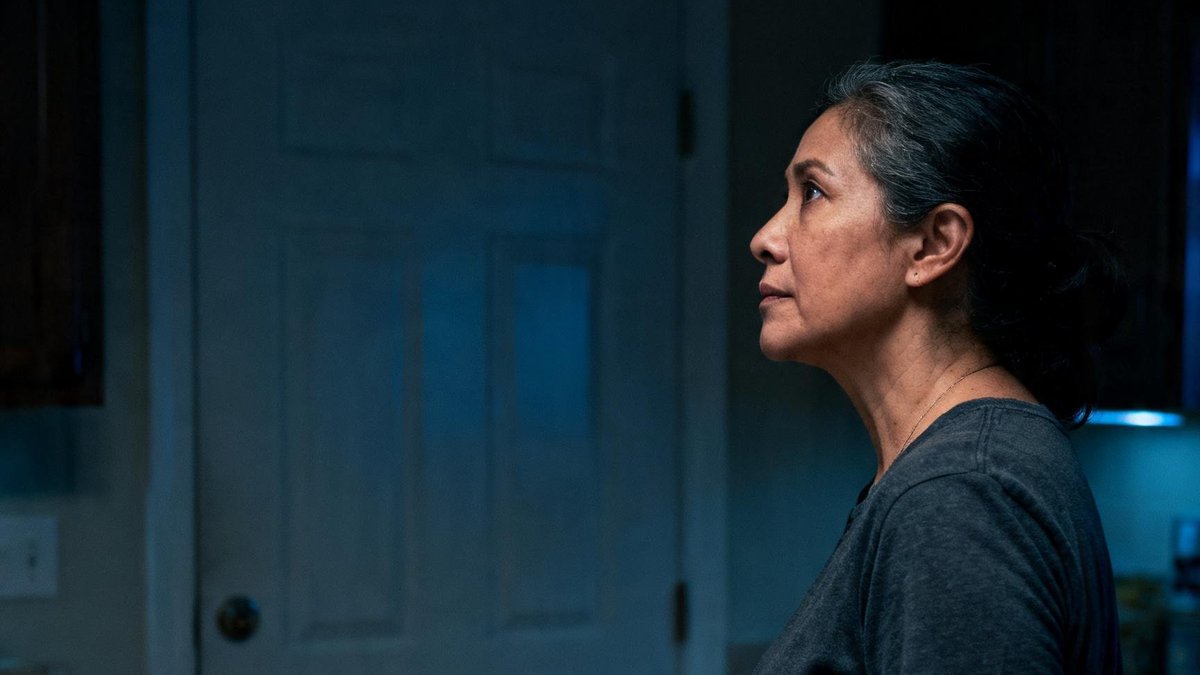
I was standing at my mother's kitchen sink, water running over a plate that was already clean, when my sister Megan said it. "God, do you have to make everything a tragedy? You're not the only one with a life, you know."
That was the moment. The rubber band inside me went slack. No snap, no drama. Just… done.
On the counter, a rotisserie chicken from Giant Eagle sat half-carved, next to a pot of noodle soup that had boiled over onto the stove. Mom was parked in her recliner in the living room, the volume on some daytime court show turned up way too loud. My brother-in-law Derek was leaning against the fridge, scrolling through DoorDash even though dinner was right there. Nobody looked up. Nobody said Megan was out of line.
I dried my hands on a dish towel that smelled like it hadn't been washed since the Obama administration. "I'm tired," I said, and the words came out flat. "I can't keep doing the cardiologist runs and the pharmacy pickups and covering your Target shifts when Hayley's daycare closes. I can't keep floating you three hundred bucks every time Derek's Uber income hits a pothole. I'm out of bandwidth. And money."
Megan raised an eyebrow, more amused than offended. "So we're supposed to just figure it out while you go have some kind of midlife meltdown?"
"Honestly?" she added, shrugging one shoulder. "Without the attitude, it'd be a whole lot easier around here."
Attitude. That's what she called me admitting, for the first time in two years, that I was exhausted.
My name is Kate Harper. I'm forty-four, divorced, living in a two-bedroom condo in the Squirrel Hill neighborhood of Pittsburgh. My son Caleb is at Ohio State, and I'm proud of him, but he calls maybe twice a month, and I'm not the kind of mother who guilts him into more. My ex-husband Trent lives in Austin now and Venmos exactly half of nothing. None of that is unusual. What's unusual is how slowly I handed my life away.
Mom's congestive heart failure diagnosis came three years ago. Megan was already drowning: part-time cashier at Target, a husband who kept "starting businesses" that were really just Craigslist flips, and a five-year-old with expressive speech delay. Somewhere along the line, I became the fixer. The one who took Mom to her appointments at UPMC Presby, who picked up her atorvastatin at the CVS on Forbes, who remembered that the copay for her echocardiogram was $87 and not a dime less. The one who'd swing by their rental in Greenfield with a bag of groceries and a Cartoon Network sticker book for Hayley and pretend I didn't notice the overdue bills on the coffee table.
At first, there was gratitude. "You're a saint, Katie." "What would we do without you." Then the texts became lists. No "please." No "if you have time." Just "Mom's out of Metamucil" and "Can you grab Hayley from the bus stop."
I remember last Thanksgiving. I showed up at Mom's at six in the morning with a twelve-pound turkey and a box of stuffing mix. I'd prepped the green bean casserole, the mashed potatoes, the cranberry sauce from actual cranberries because Mom used to like it that way. Megan arrived at noon, holding an Entenmann's coffee cake in its box, and said, "You're so lucky you work remote, you have all this free time."
Lucky. I work fifty hours a week as a senior bookkeeper for a construction firm. I'm a 1099 contractor, so if I don't log the hours, I don't get a paycheck. But sure, lucky.
For months, I'd been draining my savings. $150 here for a new radiator for Derek's minivan. $200 there for Hayley's occupational therapy copays. When Mom's Medicare Part D donut hole hit, I covered her Eliquis for three months straight—$480 a month. Nobody asked how I was managing. They just assumed I was.
The thing about living alone in your forties is that you can go an entire weekend without speaking to another adult. You can start talking to the Alexa, and then you start getting annoyed that Alexa doesn't ask how your day was. That's not a joke. That's what happened.
I hit my limit in late March, when my condo association slapped me with a special assessment for roof repairs. After my own bills, after the family "loans" I knew would never come back, I had $94 left for the week. I called Megan, and I kept my voice level. I said, "I need to pause the financial help for a while. I just can't swing it."
Silence. Then: "So you're dumping everything on us? That's cold, Kate."
She hung up. For the next four days, crickets. Mom didn't call either, which cut deeper than I wanted to admit. The woman who'd raised me alone after Dad left, who taught me to balance a checkbook and sing Fleetwood Mac in the car, was apparently fine letting me twist. On day five, I broke and drove over, terrified something had happened. And there I was, plate in hand, listening to my sister tell me I was playing the victim.
I didn't cry. Not then. I set the plate in the drying rack, picked up my keys from the counter next to a magnet from a long-gone pizza place, and walked out. The screen door slapped behind me—that same hollow aluminum sound from my childhood.
For two weeks, I didn't go back. My phone lit up with calls, then texts, then a different tone. "Are you seriously this petty?" "Mom needs her blood pressure meds—you know she can't walk to the pharmacy." "Hayley's been asking for Aunt Kate." That last one landed like a fishhook. I sat on the floor of my hallway that evening, back against the coat closet, and just sobbed. I loved that kid. I loved Mom. I didn't want to abandon them; I just needed to stop being invisible.
Then Mom called. I almost didn't answer, but her name on the screen—Evelyn, with a photo of her holding a pie at a church bake sale—made me swipe right. Her voice was smaller than I remembered. "Katie… that thing you do on the phone, with the CVS thingy? The e-script. I can't figure out how to order the refill. It says my password is expired and I don't know what a two-factor thing is."
I could have walked her through it. I didn't. I said, "I'll come over. But we need to talk. Just us."
When I got there, it was almost dusk. The living room smelled of Vicks VapoRub and mothballs. Mom was in her recliner, a half-empty mug of tea on the side table, the television muted on Jeopardy! I sat on the ottoman and took her hand, and I said it plainly: "I will help you with medical stuff. I will take you to the cardiologist and I'll manage your prescriptions. But I'm not the family bank. I'm not Megan's backup nanny. I'm not on call 24/7. And if you can't see me as anything besides the person who makes it easy for everyone else, I can't keep doing this."
She sat with that a long time. The old grandfather clock in the corner ticked. Outside, a neighbor's pit bull barked at a squirrel. Then she said, "I guess I got used to you always fixing everything. It was easier than noticing what it was doing to you."
It wasn't an apology. But it was the truth. And I could work with truth.
With Megan, things are frosty. The last time we spoke, she said, "You're different now. Harder." I didn't disagree. I'm not harder—I'm just no longer soft in the places they used for a cushion.
I took an extra bookkeeping contract with a small brewery in Lawrenceville. I opened a separate savings account and labeled it "Yosemite 2026." Three weeks ago, I bought the plane ticket—one-way to Fresno, coming back whenever I feel like it. $312 on Southwest.
Tonight the confirmation email is still open on my laptop, the little confirmation number sitting there in bold like it's daring me to close the tab. I don't. I pour two fingers of the Woodford Reserve I've been saving since Christmas into a juice glass because I never bought proper rocks glasses, and I carry it to the window. Squirrel Hill is quiet, porch lights coming on one by one down the block. I take a sip, set the glass on the sill, and finally shut the laptop.