He Called Me Dead Weight Before Opening My Grandfather's Will
I had a wooden spoon in a pot of wedding soup when the front door opened at ten to seven. I knew it was trouble because Shane never came home that late unless the service department had kept him. I knew it was bigger trouble because two pairs of heels followed him up the porch steps.
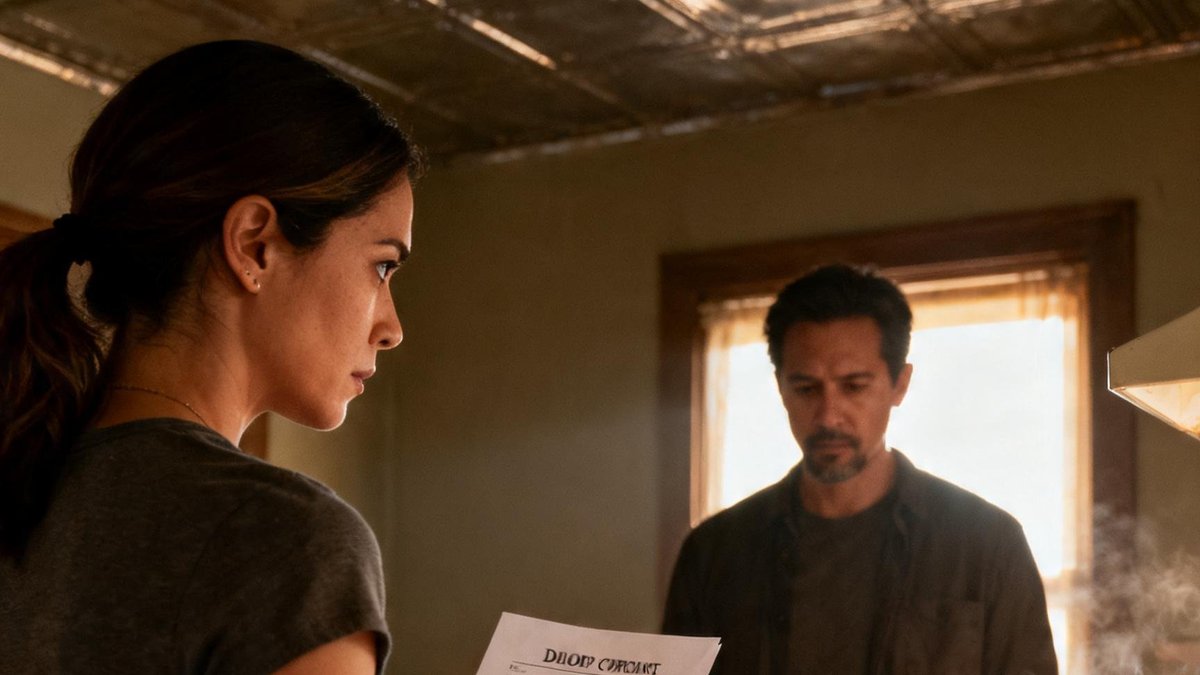
Our house on West 47th Street still had the original tin ceiling in the kitchen and a radiator that clanked like a man with a walker. Through the screen I could hear Mrs. Kowalski's Pomeranian losing its mind next door. That dog hated Shane's mother.
Lorraine came in first, unbuttoning a mink jacket even though it was October and sixty degrees. She smelled like gardenias and judgment. Behind her, Shane's sister Tessa kicked off a pair of ballet flats that cost more than my last paycheck.
Shane did not take off his boots. That was the tell.
"Don't get comfortable, Mom." Tessa dropped into the chair by the window and made a face at my couch. "This place still smells like cabbage and old carpet."
I set the spoon on the spoon rest shaped like a chili pepper—the one my grandfather bought at a flea market up in Ashtabula County—and turned down the burner. The soup kept bubbling anyway.
Shane crossed his arms. "I can't do this anymore, Marissa."
"Do what?"
"Us. You're dead weight. I need someone with ambition, someone who brings something to the table."
Tessa examined a piece of hair. "He found someone, actually. She works at KeyBank. Has a condo in Crocker Park."
Lorraine clapped her hands together, her gold bracelets ringing. "Thank God. I thought I'd die before I saw you come to your senses. Five years of that woman dragging you down."
I untied the apron. I did not throw it. I folded it into a square and set it on the counter. My hands were steady, and that steadiness surprised me more than anything Shane had said.
"Say something," Shane said.
"What do you want me to say?"
"That you'll pack your things and be out by the weekend."
I walked to the bedroom. I heard Tessa behind me: "We can help you find boxes, if you need. The liquor store on Fleet puts them out on Tuesdays."
Our bedroom had a closet with a sliding door that never shut right. On the top shelf, inside a gray safe box, I kept a manila envelope I'd been carrying around for four days. It had come from the probate court downtown. I hadn't opened it in front of Shane because I wanted to see how he'd behave without the help. I had my answer.
I took the envelope back to the kitchen.
"Before you file," I said, "read this."
Shane snorted. "What, a past-due bill? Did you bankrupt us?"
"Open it."
He ripped the flap. A single page fell out, along with a business card from a law firm in Shaker Square. He read the first two lines, then read them again.
"What?" Lorraine stepped closer. "What is it? Student loans? I knew it."
Tessa took the page from his hand. She read out loud like it was a teleprompter: "Notice of inheritance… a four-bedroom house on Edgewater Drive in Lakewood… a lakefront cottage in Geneva-on-the-Lake… an investment account with a balance of two million three hundred thousand dollars…" Her voice went up on the last word.
The room got silent except for the soup. Then the radiator let out its usual knock, like a second opinion.
Lorraine sank into a chair. Her face did something I'd never seen from her: she swallowed air.
Shane's face rearranged itself into something he probably thought was charming. It wasn't. "Marissa, babe. That's… I didn't know your grandpa had money."
"He didn't," I said. "He had a used-car lot in Parma that he sold in 2009. He bought one rental property at a time. You used to call him a hoarder because he kept newspapers in the garage."
"That's—I didn't mean—"
Tessa kept turning the page over, looking for a catch. "Two million three hundred thousand. Cash."
"And the houses," I said. "The cottage is on two acres. The Lakewood house has a view of downtown."
Shane put his hand on my arm. I looked down at his fingers like they belonged to a stranger. "We can fix this. I was just tired. The dealership was brutal this month. We can go to marriage counseling. We're a family."
"Five years," I said. "Five years of your mother asking what my grandfather left me. Five years of your sister calling me a Goodwill model. And you never once said, 'Leave her alone.'"
Lorraine's voice came back, thin and hungry. "Legally, you're married. He's entitled to half. There's something called marital property, honey."
I reached into the envelope and took out a smaller folder. Inside were four things: a signed lease for an apartment in Ohio City, a notarized copy of my grandfather's will, a cashier's check for the first month's rent, and a completed divorce complaint with my signature at the bottom.
"I had my attorney draw this up this week," I said. "Grandpa left everything to me as separate property. In Ohio, inheritances don't get split in a divorce unless I mingle them. I haven't. There's no joint account. No joint deed. The car in the driveway is in my name."
Shane's hand fell to his side. "You planned this."
"I planned for the day you showed me who you were. Today was that day."
I picked up a pen from the counter—the one from the credit union with the chewed cap—and set it on top of the divorce complaint. "Sign. Or don't. My lawyer will file at nine in the morning either way. He has a process server scheduled for the dealership at ten."
Tessa demanded, "You can't do that. He gets a lawyer, he can fight. You can't just take everything."
"I'm not taking anything from him," I said. "I'm leaving the house we shared. I'm leaving the furniture. I'm leaving the soup."
Lorraine's hand shook as she pointed at the cashier's check. "How much is that?"
"Eighteen hundred and fifty," I said. "First month and security deposit. I paid it this afternoon."
Lorraine looked at the check like it was a rotten thing. "You're going to need help managing all that. Shane is good with money. Let him—"
I shut the folder. "Let him find the woman from KeyBank. I'm not management material. You said so."
I picked up my apron, walked to the door, and unhooked my keys from the peg shaped like a cat. I left the house key on the counter. The rest went in my bag.
Shane called after me as I opened the screen door. "Marissa. Please. We can be reasonable."
The Pomeranian next door started barking again, high and shrill. I stepped onto the porch, and for a second I caught the smell of rain, wet leaves, and somebody's chimney smoke from down the street. I started my car—Grandpa's old Buick Regal, the one with the cracked driver's seat—and drove down West 47th toward the shoreway. I did not turn around.
The envelope stayed on the table behind me. So did the pen. So did the marriage.