They buried my husband on a Thursday, and by Friday afternoon his children had already divided his life into neat little piles.
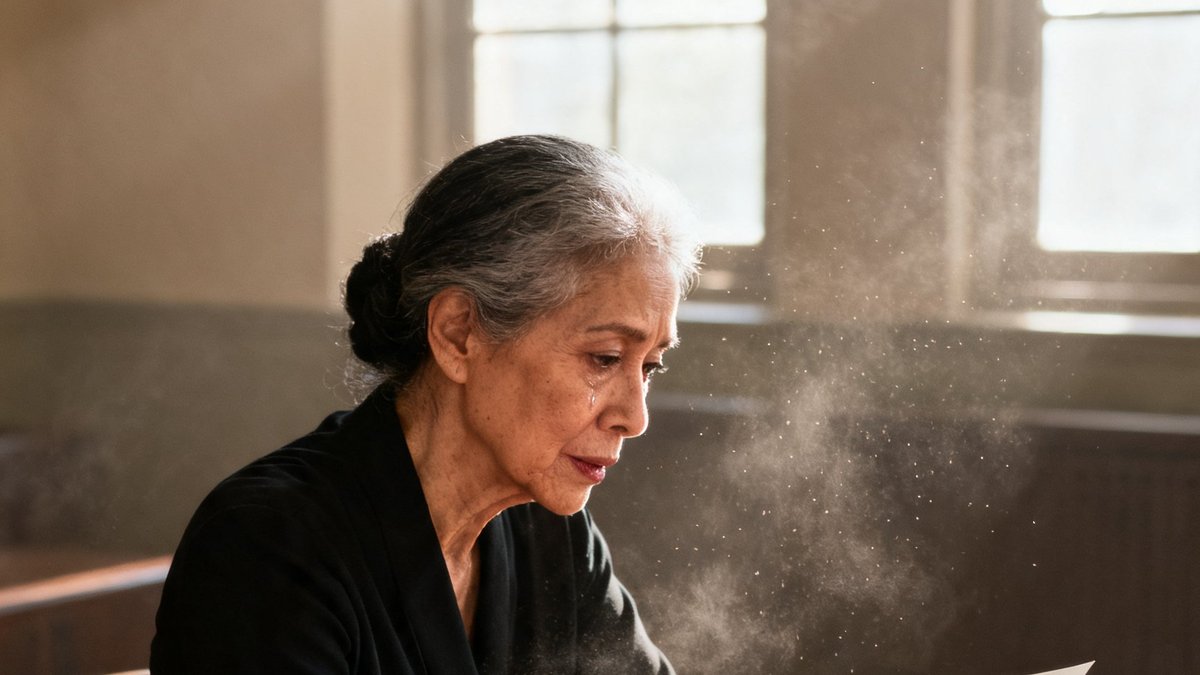
I sat in a folding chair in the lawyer's office in downtown Phoenix, Arizona, with my hands folded in my lap like a woman waiting for a bus. My stepdaughter, Brittany, got the condos in Scottsdale. My stepson, Connor, got the dealership and the classic cars. Together they split the land in Flagstaff, the investment accounts, the mineral rights—everything.
And me?
A single envelope. Thin. Cream-colored. The kind you'd stuff a birthday card into if you didn't care much about the person.
"Open it," Brittany said, and her lipstick was perfect, and her smile was worse.
I opened it.
A one-way ticket to Costa Rica.
No letter. No explanation. No key. Just a boarding pass with my name on it and a departure date three days out.
"Costa Rica's peaceful," Connor said, leaning back in his chair like he'd just closed a business deal. "Perfect for someone your age."
He said it softly. That's what cruel people do. They speak softly so that if you flinch, you look like the unreasonable one.
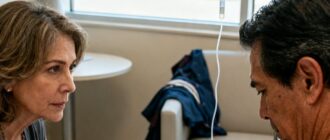
I was seventy-two years old. I'd been married to their father, Edwin, for thirty-one years. Not a long marriage by some standards, but long enough to watch his hair go gray and his hands start to shake over his morning coffee. Long enough to learn which side of the bed he favored when his back went out. Long enough to hold a plastic cup to his lips in the oncology ward while his children were "too busy" to fly in. For eight years, I bathed him, fed him, turned him in the bed when his body forgot how to move, and sat up altering hems at the kitchen table until two in the morning to cover the cost of medication his own kids couldn't be bothered to help with. And when he died, they flew in like vultures with luggage tags.
The will was ironclad. Edwin had set it up years ago, and every asset went to his biological children. Every asset except me. The wife gets a plane ticket and a pat on the head.
What bothered me most wasn't the money. It was the way they smiled. Not because they were grieving. Because they'd won.
The night before Edwin passed, he grabbed my wrist with those bony fingers and pulled me close. His breath smelled like the inside of an old house. "Don't judge by the size of the box," he said, low, almost nothing. "The smallest packages hold the most."
At the time, I figured it was the morphine talking.
That night after the lawyer's office, I sat alone in the house we'd shared for three decades. The air conditioning kicked on with a rattle. The clock on the mantel ticked loud as a hammer. I turned the ticket over in my hands. Costa Rica. Edwin and I had never talked about Costa Rica. Not once. We'd talked about fishing in the Gulf, about renting an RV and driving to the Grand Canyon, about things we'd do "someday" when the medical bills stopped coming. Costa Rica wasn't on any list. It made no sense. And yet something kept me from throwing that ticket in the trash.
Maybe it was grief. Maybe it was stubbornness. Maybe it was the last living cell in my body still believing Edwin Morales hadn't spent thirty-one years beside me just to mock me from the grave.
I packed a single carry-on. Three dresses. My mother's rosary. Our wedding photo. Four hundred and sixty dollars I'd stashed in a coffee can under the sink—I counted it twice, like it might have changed.
Before I left for the airport, I opened Edwin's nightstand drawer, more out of habit than hope. And there it was. A photograph I'd never seen before. A much younger Edwin, maybe thirty, standing next to a man who looked so much like him it made my chest ache. Green mountains behind them. Low clouds. On the back, in handwriting I knew as well as my own:
*Edwin and Samuel. Costa Rica, 1978.*
Samuel.
I must have read that name a dozen times before I put the photo in my carry-on.
The flight was long and cold, the way airplanes always are when you're sad. I wore black the whole way. By the time we touched down in San José, the humid air outside hit me like something alive. I stood in the terminal, seventy-two years old, alone, holding a ticket that made no sense and a photograph of a man I'd never heard of. My stomach hadn't settled since Phoenix. For one honest second I thought about turning around, getting back on the plane, going home to whatever was left of my life. But home wasn't mine anymore. The will had seen to that.
I pushed through customs, my hands slick on the handle of my suitcase. And that's when I saw him.
A man in a pressed navy suit stood just beyond the arrivals gate, scanning the crowd. He didn't check his phone. He didn't look confused. He stood like a man who'd been told exactly what time to arrive and exactly who to look for.
Our eyes met.
He walked straight toward me, weaving through the throng of tourists and taxi drivers, and stopped a respectful distance away.
"Mrs. Teresa Morales?"
His English was clean, only a trace of an accent. I nodded, not trusting my voice.
"My name is Daniel Rojas. I've been instructed to bring you to your husband's property."
My husband's property. I nearly laughed. As far as the will was concerned, my husband's property belonged to Brittany and Connor. All of it. Every last acre.
"What property?" I asked.
Daniel tilted his head slightly, like a man confused by the question. "The house in Atenas," he said. "You didn't know?"
I didn't answer that. I just followed him to the car.
The drive took about an hour. We climbed out of the city and up into the mountains, past coffee plantations and roadside fruit stands, the air cooling with every switchback. Daniel didn't talk much, which I appreciated. My mind kept snagging on the same three things—the photograph, the name Samuel, a house my husband had never once mentioned in thirty-one years of sharing a checking account, a bathroom, a bed.
We turned off the main road onto a narrow gravel drive lined with flowering trees—heliconias, Daniel called them, bright red and shaped like lobster claws. At the end of the drive stood a two-story Spanish colonial, white stucco with a red clay tile roof and a wide veranda looking out over the valley. Not a mansion. Not even particularly modern. But settled, like a house that had been waiting on someone.
Daniel parked and looked at me in the rearview mirror. He didn't say what he was probably supposed to say next, that I could go on in. He just sat there.
"Who found you?" I asked. "Who told you I was coming?"
"A lawyer here in San José," he said. "Your husband's attorney has been managing the property for eleven years. He received instructions from Mr. Morales to wait until after his death, then contact the beneficiary."
Beneficiary. I turned the word over like a coin I didn't recognize.
I didn't open the door yet. "Are you going to tell me what's inside that house, Daniel? Or do I find out the way I've found out everything else this week? By accident?"
He turned in his seat and looked at me with something close to sympathy. "Mrs. Morales, I don't know everything. I was only told to bring you here and give you this."
He reached into his jacket and produced a small brass key, old, worn smooth around the edges. He set it in my open palm.
"It unlocks the study on the second floor," he said. "I was told, specifically, no one else is to go in there. Only you."
I closed my fingers around it. Still warm from his pocket. The porch light flickered on, and for a second I thought I saw movement behind the front window. A shadow, then nothing.
I got out of the car.
The front door was unlocked. The house smelled of lemon polish and something underneath it, green, like rain on dirt. The furniture was draped in white sheets, but not the way abandoned things look. More like something set aside carefully, the way you'd cover a tray of food before a guest arrives.
I didn't stop in the kitchen or the living room. I went straight for the stairs. The wood groaned under me, step by step. At the top, a narrow hallway led past two bedrooms and a bathroom to a door at the far end. The study.
I used the brass key. The lock turned with a click so clean it sounded almost like a word.
Inside, the room was small and square. A heavy wooden desk sat in the middle, and on it, a black iron box no bigger than a cigar box, with a combination lock. Beside it, a sealed envelope with my name in Edwin's handwriting.
I sat in the desk chair. The leather was cracked and creaked under me.
The envelope first. I tore it with my thumbnail. One page, folded twice. The hand was steady, careful, not the shaky scrawl of his last months. He'd written this years ago.
*Teresa, If you're reading this, then I'm gone and you've done what my children never could: you followed the breadcrumbs. I'm sorry for the secrecy. I couldn't let them know. They would have taken it from you. The combination is our wedding date, the day you changed my life. Forgive me for all the silence. Forgive me for all the years. Everything in the box is yours alone. Use it. Live it. And when you're ready, go see Samuel. He knows. He's been waiting to meet you for a long, long time. — E*
I read it three times before the words stopped moving on the page. Our wedding date. November 14. I spun the dials. 1-1-1-4.
The lock popped.
Inside was a small leather-bound ledger and a photograph. This one was different from the one in Edwin's nightstand—Samuel older here, laughing at something off-camera, a man's arm slung around his shoulders. Edwin. Younger in this picture than I'd ever known him, looser, like a man just off a long shift and finally home.
I opened the ledger. My hands left damp marks on the pages. Most of it was in Spanish, but I could make out enough. Dates. Amounts. Property deeds. Bank account numbers. At the bottom of one page, in English, almost an afterthought:
*Everything I am, I leave to Teresa. She is the only one who ever saw me.*
The amounts were more than I could hold in my head at once.
I sat with the ledger open on my lap while the light in the room went from gray to nearly gone. He'd hidden a fortune in Costa Rica. Not from the government. From his own children. From the same smiling faces in that lawyer's office in Phoenix.
One more thing in the box, tucked beneath the ledger in a thin plastic sleeve: a second boarding pass, dated six years before his death. Phoenix to San José. Attached with a paper clip, a receipt from a hotel called the Don Carlos, and a business card for a lawyer named Marco Jiménez—the same name Daniel had mentioned.
Edwin hadn't just been hiding a house. He'd been coming here. While I was home sewing hems or standing at the stove making soup he was too sick to eat, he'd been on a plane.
I set the ledger down on the desk. Picked it back up. Set it down again, squared with the edge of the desk, like that mattered.
He'd chosen me. Not them. Me.
I stayed until the room went fully dark, then walked down and called for Daniel.
"I need to see this lawyer," I said. "Tomorrow morning."
Daniel nodded. "I'll arrange it."
I didn't sleep. I lay in one of the sheet-covered bedrooms listening to frogs, insects, once a monkey somewhere far off. The house wasn't mine yet, not on paper. But it sat around me like something holding still.
The next morning Daniel drove me into San José—loud, bright, buses and exhaust and vendors selling mangoes and fried plantains off carts. We climbed three flights of stairs to a small office that smelled of coffee and old paper.
Marco Jiménez was a short man with thick glasses. He stood when I came in and motioned to the chair across his desk.
"Do you understand what your husband left you?" he asked.
"I understand he left me something," I said. "I don't understand why he didn't just tell me."
Marco took his glasses off, cleaned them on his shirt, put them back on. "He was afraid," he said.
I waited.
"Not of you," he said. "Of them."
He slid a folder across the desk. Land titles. Bank statements. A last will and testament filed in Costa Rica, superseding the one in Arizona. Simple, absolute. Everything Edwin owned in this country—the house in Atenas, a coffee farm in the central valley, a small portfolio of investments—belonged to his wife.
I set the folder down without finishing it. "This man in the photograph," I said, sliding it across to him. "His brother?"
Marco looked at the photo a long moment. Set it down gently, like it might crack.
"Not his brother," he said.
I waited again. The ceiling fan ticked overhead.
"His son."
I didn't say anything for a second. Then: "Edwin didn't have a son. He had Brittany and Connor. That's all."
"Samuel is from before he moved to the United States," Marco said. "A relationship he had when he was very young, here in Costa Rica. He never told his children in Arizona about him. He never told Samuel about them, either. He left when Samuel was a boy. He carried that, I think, for forty years."
I stared at a water stain on the ceiling. Another whole life. While I'd been worrying over mortgage payments and hospital co-pays, he'd been flying down here to try to fix something I never knew was broken.
"He made arrangements for the two of you to meet," Marco went on. "Only after his death. He was afraid of what his children would do if they found out—about Samuel, about the money. They would have fought it. Likely won."
"So he hid it."
"He hid it."
That afternoon, Daniel drove me to a small house outside Alajuela, painted yellow, a red picket fence, bougainvillea crowding the walk. A stocky little mutt with one floppy ear barked from behind the gate. I stood there holding a Tupperware of empanadas I'd bought at a roadside stand, not sure what else you bring to something like this.
The door opened.
Samuel was in his mid-fifties, with Edwin's eyes—same shape, same deep brown. He looked at me like a man meeting someone he'd only ever seen in a photograph he'd studied too many times.
"Teresa?" His voice cracked on the second syllable.
I nodded.
He hugged me before either of us said anything else. Not a polite hug. I stood there in his arms in the doorway with the dog barking at our feet and the empanadas going soft in the plastic container, and I hugged him back.
We sat in his backyard afterward, coffee in chipped ceramic mugs, the dog collapsed across both our feet. Samuel told me about his mother, who'd died young. About growing up without a father, then finding Edwin again late in both their lives. "He wasn't perfect," Samuel said. "But he tried. At the end, he tried."
I told him about my years with Edwin. The good ones and the hard ones. The cancer. The hems I'd sewn until my fingers cracked and bled at the seams. The way Brittany had smiled handing me that plane ticket.
Samuel listened the way people listen when nobody has ever really listened to them.
When I stood to leave, he walked me to the gate. "Are you staying?" he asked. "In Costa Rica?"
I looked at him. Edwin's eyes in a face I'd never seen before that day.
"Would you like to see the house?" I said. "I think it's yours as much as mine."
I didn't go back to Phoenix.
I called a lawyer instead—not Marco, but a woman in Tucson named Patricia Kellerman who handled cross-border estate disputes. I explained what I could of it. She took the case on retainer. I wired her the first payment from an account Marco helped me open, my hand shaking on the pen when I signed the transfer form.
Then I called Brittany and Connor from Samuel's living room phone, the dog's head heavy on my lap.
I told them about the Costa Rican will. The house, the farm, the investments, the trust. I told them their father had another son they'd never known existed, and that this son had spent the last six years getting to know their father while they were busy living comfortably on his dime.
The silence on the line was the most satisfying sound I've heard in years.
Then Brittany's voice, tight: "You're lying. There's no Costa Rica will. The lawyer in Phoenix said—"
"Read the documents," I said. "I'll send them. Registered mail, signature required."
"You can't—"
"I already have."
Connor got on then, his voice gone low and careful in that way that used to scare me. "Listen, Teresa. You don't know what you're doing. You're seventy-two years old, in a foreign country. You need to think long and hard before—"
"I've thought for thirty-one years," I said. "It's your turn now. Call me when you're ready to be civil. Or don't."
I hung up and sat there a minute with my thumb still on the button, like I expected it to ring back.
That was seven months ago.
Brittany and Connor have hired two different law firms since. Filed motions in Arizona and Costa Rica both. Left voicemails I've mostly deleted without finishing. None of it has moved a single dollar. The Costa Rican assets sit in a trust Edwin set up long before he got sick, naming Samuel and me as sole beneficiaries. Patricia says they've spent something over a hundred and forty thousand dollars in legal fees chasing it. She thinks they'll keep going. I think she's right.
I still sew. Baby quilts now, for a children's shelter outside San José. I sell them Sundays at the market in Atenas and give away what they bring in. My hands still ache by the end of a session, same as ever, though it's a different kind of ache.
Samuel comes for dinner Tuesdays. He always brings dessert, insists on it, won't let me argue him out of it. Last week it was a pineapple upside-down cake, a little burnt on one edge, and I told him about the night before Edwin died—the whisper in the dark, the bony fingers on my wrist.
"The smallest packages hold the most," I said again, mostly to myself.
Samuel looked at the brass key sitting on the table between the coffee cups, where it's lived since the day I brought it down from the study.
Neither of us said anything else about it. The dog snored under the table. Out past the veranda, the valley was going the color of the inside of an old penny, and I got up to cut us both another slice of the cake.