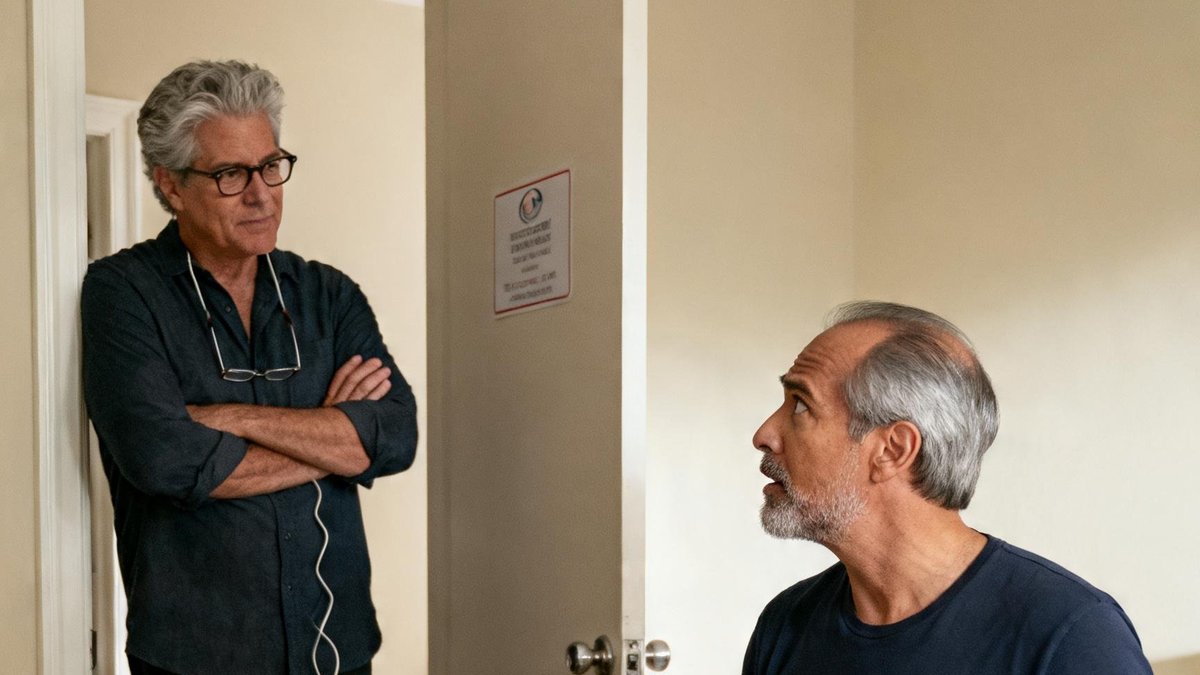
Bill packed his bag on a Saturday morning, and that was the part that stung the most—the calmness of it, the way he folded his jeans into perfect squares. He’d never folded a pair of jeans in his life. I stood in the doorway of our bedroom watching him, and he didn’t look up.
“I’m taking the Roku,” he said, rolling up a charging cord.
“Take it.”
“And the camping gear from the garage. The Coleman stove, the tent.”
“Bill.”
He finally looked at me. His face had that expression people get when they’ve made a big decision and practiced the speech. “Susan, I’ve met someone. I’m fifty-four. For the first time, I feel like I’m truly awake.”
He said it like he was reading from a card, and I thought of all the times I’d re-folded his laundry, the two years I worked overtime when his startup tanked, the three a.m. phone calls with his mother before she passed. Twenty-two years of marriage, a daughter halfway through UT Austin, and a mortgage we’d finally refinanced last spring after I landed that bonus.
“Her name is Chandra,” he added. “She teaches breathwork and authentic movement.”
I nodded. If I’d opened my mouth, something jagged would have come out, and I wasn’t going to give him the satisfaction. He lifted his suitcase and walked out. His Honda Civic backed out of the driveway and turned left toward South Congress, and I just stood there on the porch in the October heat, the air thick with cedar pollen and the sound of a neighbor’s chihuahua losing its mind.
For three days I didn’t cry. I pulled every can of paint from the garage and touched up the baseboards, the doorframes, the spot behind the refrigerator that hadn’t seen daylight since we moved in. My next-door neighbor Marta leaned over the fence on day two and said, “Susan, it’s ninety-three degrees, why are you out here with a roller?”
“Baseboards,” I said.
“In October?”
I didn’t explain. Then I cleaned out the pantry, threw away expired quinoa and four jars of pickled jalapeños Bill had bought at a farmers’ market and never opened, and scrubbed the shelves with vinegar. The kitchen smelled like a deli for hours.
On the fourth day my daughter Emily called. “Mom, Dad texted me. He said he’s ‘reclaiming his authentic self.’ What’s that mean?”
“It means he moved in with a woman named Chandra who teaches people how to breathe, sweetheart.”
Emily was quiet for a second. “Breathing? Dad? The man who got winded pulling the trash cans up the driveway?”
“Yeah.”
She gave a low laugh, and it was the first sound I’d made all week that didn’t feel like play-acting. “Mom, how are you doing?”
“I organized the spice rack alphabetically.”
“Oh no. That bad.”
Emily knew me better than I knew myself. When things go wrong, I don’t drink, I don’t binge Netflix, I clean and I cook. When Bill’s father died, I made twelve quarts of chili verde and froze them in deli containers. Bill ate it for months, said it was the best he’d ever had, and never once asked why I’d made so much.
“You want me to come home? I can skip a couple of classes.”
“No, Em. Seriously. I’m fine.”
I wasn’t fine, but a twenty-year-old doesn’t need to carry her mother’s heartbreak on top of her sophomore year.
A week later, Bill scrubbed me from his socials. Every photo from Lake Travis, the trip to Big Bend, Emily’s eighth-grade graduation, the Christmas I gave him that hand-tooled leather guitar strap—all gone. In their place were new posts: Bill in linen pants, sitting cross-legged on a bamboo floor. Bill holding a crystal against his forehead. Bill with his eyes closed, palms pressed together, captioned: “Grateful for this vessel and its journey. I release all attachments that no longer serve my highest good.”
I stared at the screen. My Bill, who once asked me what a “chakra” was and then forgot the answer three times. Who said essential oils smelled like a head shop. Who couldn’t meditate for ninety seconds without checking his phone for Spurs scores.
My coworker Jenna from accounting saw the posts too. She slid into my office with two tacos from the truck on East Sixth and shut the door. “Okay, you’ve got to see this. He posted a video doing something called ‘ecstatic dance.’”
“I don’t want to see it.”
“Too late, I’m sending it. He’s wearing a sarong.”
I watched the video. It was twelve seconds of Bill twirling in slow motion in what looked like a converted warehouse, arms out, eyes shut, and I felt something crack open in my chest—not grief, exactly. Humiliation, I think. As if twenty-two years of building a life with someone had been so unbearable that he had to annihilate himself and come back as a character from a wellness retreat brochure.
At work I held it together. I’m a senior accountant at a midsize construction firm, and it was Q4 close, everybody screaming about outstanding POs, one vendor threatening a lien. I ate dry granola bars at my desk. On Thursday, Jenna sat down across from me in the break room and pushed a container of mac and cheese into my hands. “You haven’t eaten real food in four days. Eat this, then we’re going to happy hour.”
“I don’t want happy hour.”
“I didn’t ask.”
I ate the mac and cheese. It helped.
The call came on a Sunday morning, about a month after he left. I was sitting on the back patio, watching the sprinkler chug across the brown grass, when my phone lit up with Bill’s name. I let it ring twice.
“Hello.”
“Hey, Susan.” His voice was different—not the confident tone from his Instagram stories, but the one he used to have when he’d lost a client and needed to borrow from our emergency fund.
“What’s up?”
“So, listen. I’ve got a… situation.”
I waited.
“Chandra’s studio is expanding. She’s opening a second location over by Mueller, and there’s a gap in the renovation budget. She put in all her savings, and I contributed what I could, but we’re about five thousand short.”
I laughed. Not a polite laugh. A sharp, airless bark that startled a grackle off the fence.
“Bill, you left me a month ago. You deleted every picture of us. You told our daughter you were finally living your truth. You post videos of yourself swaying in a sarong, and now you’re calling me on a Sunday morning to ask for five thousand dollars for your girlfriend’s yoga studio?”
A pause. “It’s not like that. Chandra’s vision is bigger than just a business. It’s about creating community, healing energy—”
“Bill.”
“What?”
“No. I’m not giving you money.”
“But I’ll pay you back. Chandra says once the new location is up, cash flow will triple within six months. The demand for sound baths alone—”
I hung up and sat there with my heart thumping in my ears. It wasn’t anger, not exactly. It was the clarity of seeing the whole thing laid out like a spreadsheet—the man I’d built a life with had turned into someone who thought he could walk out, reinvent himself, and then come back for a withdrawal.
Emily called two days later. “Mom, Dad asked me for money. Two thousand dollars. For a ‘sacred space.’ What is that?”
“It’s a yoga studio, honey. Did you give it to him?”
“Mom, I work fifteen hours a week at a coffee shop. I told him absolutely not.”
“Good.”
“He got all huffy and said I wasn’t supporting his journey.”
“His journey can take the bus.”
She laughed, and I felt a little lighter.
A week later, I got a call from a number I didn’t recognize. The woman on the other end sounded young and nervous. “Is this Susan? Bill’s ex?”
“Who is this?”
“My name is Tessa. I used to manage the front desk at Chandra’s studio. I quit yesterday.” She paused. “I thought you should know—Chandra does this. She finds men who are going through something, midlife, lost, whatever. Makes them feel seen. Then they put money into the studio. Your husband is the fourth one I know of.”
I sat down on the edge of my bed.
“The fourth?”
“There was a guy from Houston who gave her forty thousand for a retreat center that never opened. A retired dentist from Dallas sold his boat. Another one cashed out his 401(k). Once the money runs out, she tells them they have unresolved blockages and cuts them loose. It’s a cycle.”
I thanked her and hung up. Then I called my lawyer and filed for divorce. The house had been in my name since we bought it in 2008, and the deed was clean. Bill had never argued about it because he said it felt like a “headache” to worry about paperwork. Now I knew it was the one gift his laziness ever gave me.
Bill found out about the filing from a process server at the juice bar where he’d been working part-time. He called me, voice cracking. “Susan, what the hell? I thought we could handle this like adults.”
“How’s that?”
“Sit down, talk it through, figure out what’s fair.”
“Fair,” I repeated. “Bill, you left. You moved in with a woman you’d known for six weeks. You tried to get money from our daughter. You don’t get to talk to me about fair.”
“I didn’t mean for any of this to happen.”
“I know. But it did.”
He was quiet. I could hear his breathing, the way he used to sound when he realized he’d messed up a bid and had to tell his boss. Then he said, “Tessa called you, didn’t she?” I didn’t answer. “She’s lying. She’s bitter because Chandra let her go. She’s trying to poison people.”
“Goodbye, Bill.”
I blocked his number, unblocked it later only for emergencies with Emily, and stopped checking his social media altogether.
In November, I took Jenna up on her offer to try a beginner’s pottery class at a studio in East Austin, a block from where the old tamale place used to be. The clay was cold and gritty, and my first three bowls collapsed into sad little puddles, but by the fourth week I made something that held its shape. I glazed it the same shade of blue as the hill country sky in spring. It sat on my kitchen windowsill next to a struggling succulent, and every time I looked at it, I remembered that my hands could still make things.
In December, Emily came home for winter break. We were eating breakfast tacos from the H-E-B down the street when she said, “Dad texted me. He said things with Chandra ‘didn’t work out’ and he’s sleeping on a friend’s couch in Round Rock.”
“That’s hard,” I said, because it was.
“He also said he misses ‘the life we had.’ He didn’t say he wanted to come back, but…”
“But you can hear it.”
She nodded. “Mom, what are you going to do if he shows up?”
I tore off a piece of tortilla. “Nothing.”
“Nothing?”
“I’m not his safety net, Em. He’s a grown man. He made a choice. If he needs a place to live, I’ll send him the number for an apartment locator. If he wants forgiveness, he can have it—but that doesn’t mean I’m giving him a key.”
She watched me for a long moment, then took a bite of her taco. “You’re different than you were before.”
“No, I’m not. I just stopped pretending everything was fine when it wasn’t.”
Then, on a gray January afternoon, I ran into Bill at the Central Market on North Lamar. I’d stopped in for a bag of coffee and a loaf of sourdough, and there he was near the bakery, clutching a basket with a box of frozen taquitos and a single bottle of beer. He’d lost weight, and his shirt wasn’t the kind you put on to impress anyone—just a faded polo with a stain near the collar.
He saw me and his whole body went still.
“Hey, Susan.”
“Hey.”
We stood there while shoppers pushed carts around us. He looked tired, the skin under his eyes smudged gray, and for a second I felt the old reflex—the urge to ask if he’d been sleeping, if he needed anything. I didn’t.
“I was going to call you,” he said.
“Don’t.”
“I just wanted to say I’m sorry. I was an idiot. I let her get in my head, and I threw away…”
He trailed off, looking at the taquitos in his basket like they might finish the sentence for him.
“You don’t have to say it, Bill.”
“I know. I know I don’t deserve—”
“It’s not about deserve.” I shifted the bag of coffee in my hand. “It’s that I’m not the same person who stood in the bedroom doorway watching you pack. You made your choices. I made mine.”
His jaw tightened. He looked at me like he was searching for a crack, some sign that I’d soften. But I didn’t. I just stood there, the way I’d stood in my pottery class holding a lump of clay, waiting to see what shape would come out of it.
“Take care of yourself,” I said, and I walked past the pastry case and toward the checkout line.
The automatic doors opened onto the parking lot, and the winter air hit my face. The sky was that pale January blue, and I got into my car, turned the key, and sat there for a minute with the radio off, just breathing. I didn’t drive home right away. I pulled into the H-E-B down the road, bought a pint of Blue Bell Homemade Vanilla, and ate a few spoonfuls in the front seat before I started the engine.
The ice cream was cold and good, and the rest of the afternoon stretched out ahead of me, empty and mine.