The first thing Leo said when we got home from the hospital was, "That's not my sister."
He stood in the doorway of the nursery, his small hands gripping the frame like he was holding onto a cliff. I was still in a fog of painkillers and exhaustion, the birth a blur of bright lights and voices that didn't belong to me. I tried to laugh it off. "Sweetie, of course she is. You've been waiting for her for months, remember? You helped paint the room."
He didn't move. His eyes, the same deep brown as his father's, were fixed on the bassinet with an intensity that made the hair on my arms stand up. "She doesn't smell like our house. She smells like… the woman in the green hallway."
I had no idea what he meant. I kissed his head and sent him to the kitchen for juice, chalking it up to the jealousy every parenting book warned about. The baby — we'd named her Sophie — was just a pink, scrunched-up bundle of need, and I was too drained to do anything but feed her and sleep.
But Leo wouldn't let it go. The next morning, he came into our bedroom before Jason was awake. He climbed onto the bed, his voice a whisper so quiet I had to lean in. "Mommy, at the hospital, when you were asleep, I went to find the bathroom. I saw Daddy give a fat envelope to a lady who was crying. And she had a baby in a blanket, and Daddy took it, and then we went home."
I looked at him and tried to line up the words with anything real. A fat envelope. A crying woman. Jason had been with me in the recovery room the whole time, hadn't he? But I'd been in and out of consciousness, and there were gaps. Long, empty stretches where the ceiling tiles floated above me and I couldn't remember a single face.
I told myself Leo was five. He mixed up dreams and reality. He'd watched a movie about spies last week. But that afternoon, while Jason was out picking up a prescription, I sat down at his laptop. He'd left it open, and the screen showed a calendar notification for a wire transfer: $20,000 to a Tanya Kostova, dated the day of the delivery. My fingers went cold on the trackpad. I searched his messages and found a thread with the same name, filled with lines like *she doesn't suspect anything* and *the money's already moving, just keep your mouth shut about where the baby came from.*
The floor dropped away. I scrolled up, piecing together the shape of it while my hands kept working the keys like they belonged to someone calmer than me. My baby — the one I'd carried for nine months — had been stillborn. I'd been told there were complications, that I'd lost consciousness, but Jason had kept the truth from me while he made a deal in the corridor with his mistress, a labor-and-delivery nurse on a different floor. Tanya had a newborn nobody was coming to claim — a girl surrendered hours earlier by a teenage patient too frightened and too poor to keep her, the paperwork still sitting in an unlocked file. For twenty thousand dollars and a promise of silence, Jason had taken that baby, forged the paperwork to make her ours, and laid her in my arms while I was too drugged to know my own name. Our own daughter — I would learn later — had been quietly cremated by the hospital under Tanya's falsified authorization, the record altered to read *deceased infant, remains released to family*, a lie stacked on a lie so no one would ever come looking.
I didn't confront him right away. I called my brother, a police officer in Evanston, and he came over with two detectives. When Jason walked through the front door with a paper bag from the pharmacy, he found me sitting on the couch with the laptop open and a uniformed man beside me. His face crumpled before he said a word. He didn't even try to lie. Just sank into the armchair and started talking about the pressure of his family's inheritance clause — his grandmother's trust required that we bring a child into the marriage within two years, biological or adopted, or everything would pass to his cousin. He'd panicked, he said, when the delivery went wrong. He couldn't face losing both a daughter and the trust in the same night, so he'd paid Tanya to make the loss disappear. As if replacing a dead child with someone else's living one was an act of mercy instead of the second crime of the night.
The arrest happened that evening. Jason was charged with conspiracy and trafficking in children; Tanya was picked up at her apartment in Skokie an hour later. The police found the falsified hospital records, the burner phone with their arrangement, and an envelope in Tanya's kitchen drawer holding $8,000 in cash — the rest of the $20,000 already spent or moved before they got to her.
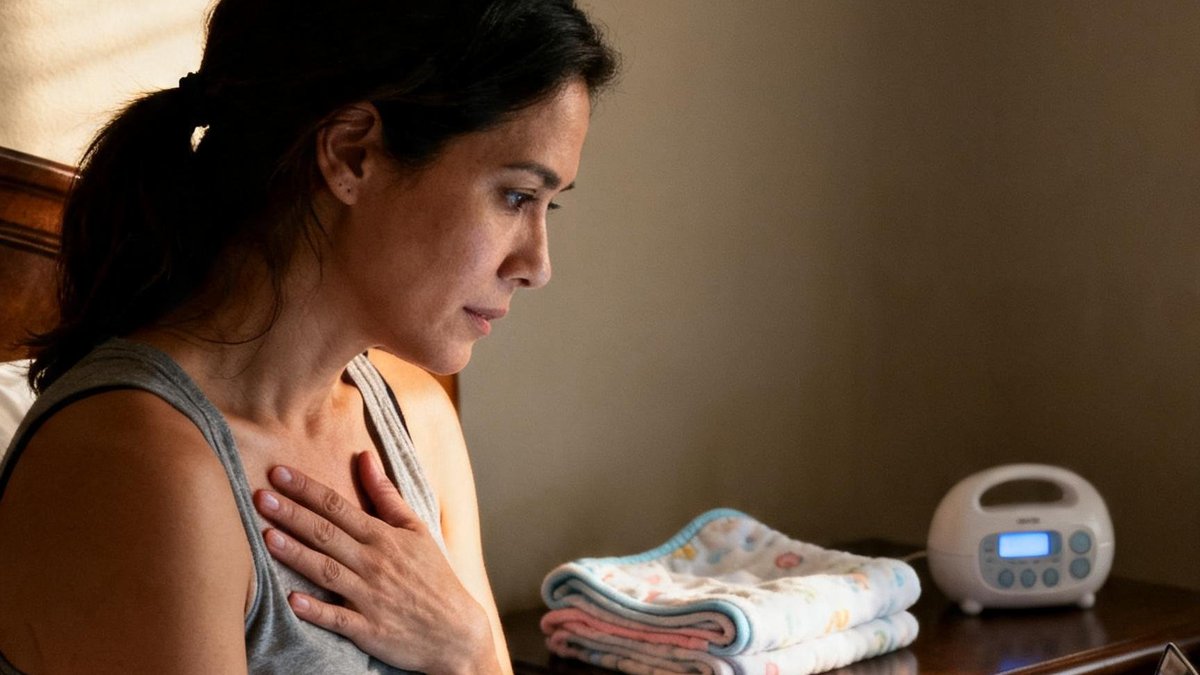
I stood in the nursery that night, alone, the baby sleeping in the bassinet. My daughter, but not the daughter I'd carried. The little girl my son had known on sight for a stranger in his house. I picked her up and held her against my chest, and she rooted for warmth, a reflex that had nothing to do with me yet. I thought about the almost-weight of the child I'd never get to hold, the one whose ashes I hadn't even known to grieve.
Most people would have called a lawyer the next day. I did that too, but not for the reason anyone expected. At nine o'clock on a Wednesday morning, I walked through the revolving door of the Cook County Family Court building with Sophie in a car seat carrier and Leo's hand in mine. My brother had tried to talk me out of it. "You don't owe anyone anything, Maya. That child isn't yours. Let the state place her." But I'd watched Leo kiss the top of her head that morning, his lips barely brushing the wispy dark hair, and I knew what I was going to do.
I sat down in a hard plastic chair in the clerk's office and filled out the petition for adoption. Name of petitioner: Maya Ann Chen. Name of child: Sophie. I wrote in my address, my occupation, my relationship to the minor — none, legally, but that was about to change. I attached the police report, the corrected hospital records, and a letter from the social worker recommending that I be allowed to retain custody pending the termination of Tanya's parental rights. The filing fee was $347.50. I slid my debit card across the counter and the clerk, an older woman with reading glasses on a chain, took it without a word.
She stamped the stack of papers twice, handed me a copy, and said, "Hearing's in sixty days. You'll need a home study." I nodded and clipped the pages into a folder I'd brought. Then I walked back out into the November wind off the lake, pulled the blanket tighter around Sophie's carrier, and she opened her eyes and looked at me — not at the stranger who'd handed her over for cash, not at the man who'd bought her, but at me.
I didn't say anything dramatic. I just adjusted the strap on my shoulder and started walking toward the L station, the folder tucked under my arm like a shield. Leo asked if we could get hot chocolate, and I said yes. The truth hadn't been hidden any longer; I'd taken it out and put my name on it, right there on line 24, in black ink that wasn't going anywhere.