The dream was always the same. Not quite a nightmare—worse. A memory.
I’m on a narrow bed in a room so white it hurts my eyes. A woman in scrubs is holding out a bundle, and this time, in the dream, I reach for it. My fingers close around the blanket. I feel weight. I feel warmth. Then I wake up alone in my own bed in Portland, my heart hammering against my ribs, my face wet.
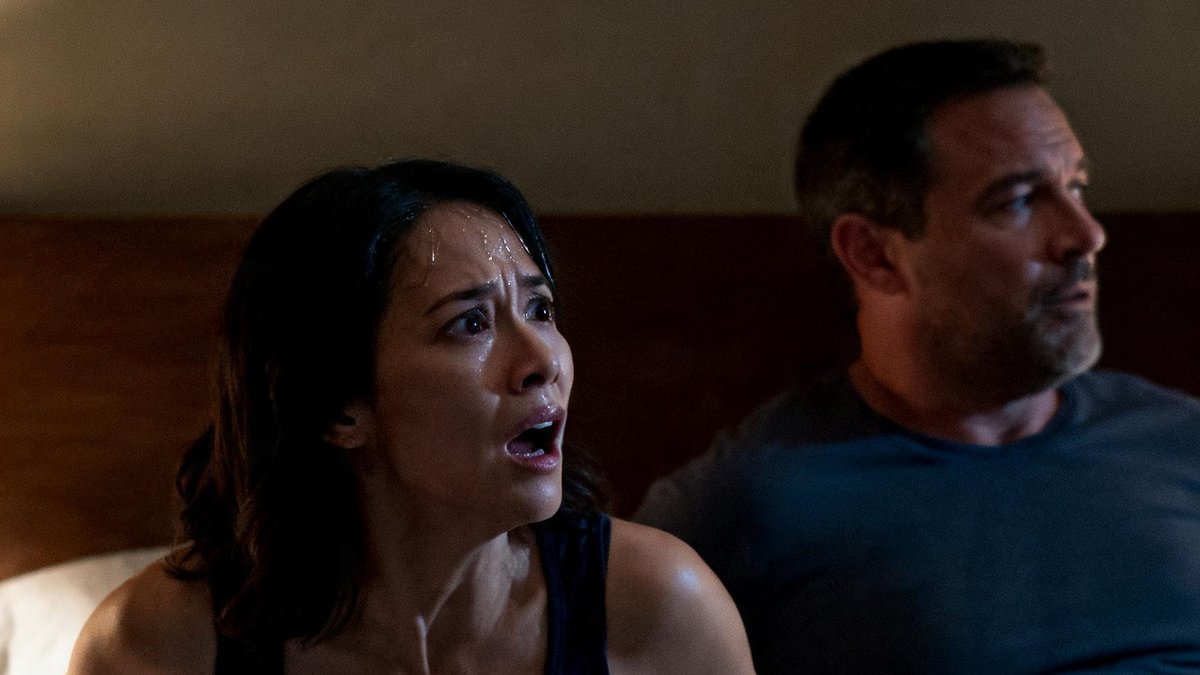
This last time, I screamed.
Mark jolted awake next to me, his hand finding my back in the dark. The guy has a sixth sense for machinery—can rebuild a Subaru engine from memory—but his face right then, half-lit by the streetlight through the blinds, was pure panic.
“Claire. Hey. What’s going on?”
I couldn’t lie. Not anymore. Fourteen years of marriage, four rounds of failed IVF, and the distance that had settled between us like a crack in the foundation… it was all tied to this one thing I’d buried.
The story came out in pieces. Shaking, fragmented, my hands twisting the hem of the duvet.
My sophomore year at the University of Oregon. A guy named Travis from my Econ class who ghosted the moment I told him, transferring to a school in another state before the first trimester was over. The cold fury of my parents, who presented it not as a choice but a math problem: a baby equals no degree, no future, no life. *You made this mess, now clean it up.*
The labor happened six weeks early. I didn’t even understand what was happening until a nurse with a kind, tired face was standing over me in the recovery room, holding a baby girl.
My daughter.
“She’s perfectly healthy,” the nurse had said. Not harsh, but insistent. “Ten fingers, ten toes. You can still change your mind, hon.”
There was another woman in the next bed. Her name was Maggie, and she’d just lost her own son during a premature delivery the day before. She lay there in a silence that swallowed everything, her eyes swollen, her skin the shade of old dishwater. She hadn’t looked away from the wall in hours. I could hear her breathing—these shallow, ragged inhales, like she was trying not to shatter.
The nurse tried one last time, pushing the bundle closer. The baby wasn’t crying. Just looking up at the ceiling with those unfocused, dark-blue newborn eyes.
“She needs you,” the nurse whispered.
And I said… the worst thing.
“I’m not her mother. I don’t want to be. Please, just take her.”
I said it to the wall, because I couldn’t look at the baby. Because if I saw her, I knew I’d break. So I made myself a block of ice. I listened to the nurse’s footsteps retreating. I signed the papers without reading a single word. I checked myself out a day later and pretended it had never happened. An error deleted. A life I didn’t ruin.
Mark didn’t say a word while I talked. When I finally stopped, shaking, he got out of bed. My stomach dropped. Here it comes—the judgment, the door closing, the end. But instead, he pulled on his jeans and grabbed his laptop.
“Okay,” he said, his voice gravelly. “We’re going to need to start with hospital records from twenty years ago. What was the name of the woman in the bed next to you?”
He was a man who fixed things. And in his mind, this was just the biggest fix he’d ever been handed.
It took nine months. We hired a private investigator in Eugene, a former cop who looked like he subsisted entirely on black coffee and regret. His retainer was nine grand—more than my first car, a ’94 Civic that barely ran—and I didn’t care. I’d have handed over our retirement savings. Mark joked I’d probably hand over his left kidney, too. I told him his kidneys were probably shot from all the IPA.
The PI’s report landed on our kitchen island on a Tuesday morning. I remember the smell of burnt toast, the drizzle against the window, the coffee cup that sat untouched for four hours. Mark got to it first. He tore the envelope, skimmed the pages, and then his whole body went still. The color drained from his face.
“Claire,” he said, and his voice had a tremor I’d never heard, not even when we’d lost the last IVF cycle. “The adoptive mother… it was Maggie Cahill. The same Maggie. Your roommate.”
The words hit me like a physical blow. I snatched the report, my hands shaking so badly the paper buckled. There it was, in cold black type: Margaret “Maggie” Cahill, having lost a premature son, had pursued an emergency placement through a private agency. The paperwork showed the same hospital social worker, a Dorothy Kim, had overseen both the loss of Maggie’s son and the placement of the newborn. A closed-file, in-hospital transfer. No waiting list. My daughter—our daughter—had been carried from my arms into the embrace of the woman who had wept silent tears not six feet away from me.
I read that name three times, my palm pressed flat on the counter. Then I walked to the sink and poured my untouched coffee down the drain. My chest felt like someone had poured cold concrete into it. I’d thrown my baby away, and a woman in the next bed, hollowed out by loss, had caught her. That wasn’t some noble thing. It was two disasters canceling each other out.
Mark knelt in front of me, took my ice-cold hands. “Hey, look at me. This doesn’t change anything we decided. We can stop. We can walk away right now.”
But I couldn’t. The ruin was the point. Only by walking into it could I ever hope to rebuild. I looked at the photo of Alex pushing Joe in the wheelchair, her jaw set like she was already a decade too old, and I couldn’t swallow. Travis—I’d looked him up once on Facebook years ago; he was in Phoenix, selling solar panels, with a picture of a yellow lab and a wife who looked nothing like me. I closed the report.
Maggie had passed away from a brain aneurysm three years earlier. The girl—her name was Alexandra now, Alex for short—was nineteen years old. She was living in a scuffed-up apartment complex in Albany, about fifty-eight minutes south of us according to the GPS, and she was the sole caregiver for Maggie’s husband, a man named Joe. Joe had MS. He was in a wheelchair. Alex was working doubles at a Dutch Bros and finishing her associate’s degree online.
I studied the photo again. This skinny girl with dirty-blonde hair scraped into a bun, dark circles under her eyes, pushing an older man in a wheelchair through a parking lot. There was a familiarity in the angle of her jaw, the shape of her eyebrows.
It was like looking into a trick mirror at my eighteen-year-old self—before the fear and the spinelessness became a permanent part of me.
We drove down the next Saturday. The Willamette Valley was a gray-green blur outside the window, and I couldn’t stop my leg from jittering. Mark reached over and put his hand on my knee, just held it there, steady.
The apartment complex was on a street lined with leaf-bare maples. Boxy, beige, with a rusted playground no one used. We were standing by the rental car, trying to figure out what our opening line was, when the building’s front door banged open.
A girl was backing out, gripping the handles of a wheelchair. She bumped the wheels down the concrete step with practiced ease, grunting a little. The man in the chair had a shock of white hair and a thin, sharp-boned face, his hands resting on a tartan blanket across his lap.
“Got it, Pops?” she said, a little out of breath. “Told you I’d get the ramp welded this weekend.”
“You’ve been saying that for six months, Al,” the man—Joe—rasped, but he was smiling.
Then she looked up and saw us. The smile vanished. Her whole body went on guard, shoulders squaring, a hand moving to the back of the chair, claiming ownership.
“If you’re from the county,” she said flatly, “you can turn right back around. He’s not going into any assisted living facility. I’m of legal age, and I’m his guardian.”
I opened my mouth, but the prepared speech dissolved on my tongue. How do you introduce yourself to a child you abandoned? *Hi, I’m the coward who traded you for an Econ degree.*
Mark saved me. He always does.
“We’re not from the county,” he said, his voice calm and easy. He has this way with a wrench and with people—a steady, no-bullshit energy. “We’re… old friends of Maggie’s. Sort of distant family. We’d lost touch and just found out what happened. We wanted to see if you guys needed any help.”
Alex’s eyes narrowed. Bullshit detector on high alert. But Joe had gone very still in his chair. He was staring at me—not at Mark, at *me*. His gaze was milky, but there was a sharp intelligence behind it.
“Claire?” he said.
My blood turned to ice.
The name hit the sidewalk between us like a stone. Alex’s head whipped from her dad to me. “You know her?”
“Your mom,” Joe said, his words labored but precise, “talked about an old friend named Claire. A long time ago.” He was lying. I could see it in the tightening of his jaw. “From the hospital,” he added, almost under his breath.
Alex’s eyes narrowed further. “Funny. She never mentioned a Claire. And Mom told me about every nurse, every visitor—said she wanted me to know who’d been good to her.” She looked at me, and for a second her gaze went sharp, like she was doing mental math. “It was nineteen years ago,” Joe said, his voice fraying. “She might not have.”
She grunted, maybe not convinced, but she let it hang. The suspicion cooled into a weary sort of acceptance, the look of a person too exhausted to fight off a potential ally. We ended up inside their apartment, which smelled like liniment and old books and the faint, sweet burn of a vanilla candle. The kitchen was small, the cabinets cheap laminate, but it was spotlessly clean. There was a twin mattress made up on the floor of the living room. Alex’s. The only bedroom was her dad’s.
Looking at that mattress, something in my chest crumpled.
We explained we wanted to help. No strings, no payback. Just a random act of kindness from a ghost of the past. Alex refused three times, point-blank. It was Joe who broke the deadlock.
“Alexandra,” he said, his voice carrying the ghost of a drill sergeant’s command, “you haven’t bought my pain meds in seven weeks because they’re two hundred dollars out of pocket. You sold your laptop. You’re drinking gas station coffee for dinner. Let the woman write a check, for God’s sake.”
She crumpled into a kitchen chair, her back still rigid, tears welling up but not falling. “Fine.”
We did more than write a check. The check I wrote that day was for a thousand—Mark told me to make it fifteen hundred, but I didn’t want to scare her off. He rolled his eyes and said I was nuts.
Mark, a man who’d never met a problem he couldn’t solve with the right tool and enough time, paid off the three months of backed-up rent—twenty-seven hundred—and the electrical bill. I bought groceries—actual food, fresh fruit and decent bread and salmon fillets—and booked Joe an appointment with a neurologist at OHSU, a guy I’d researched for weeks.
On a wet Wednesday, I was sitting at their kitchen table, helping Alex sort through a pile of Joe’s insurance paperwork. She was muttering about deductibles and in-network nonsense, her brow furrowed. I reached over to point out a specific code on the form, and my sleeve brushed her arm.
She didn’t pull away.
It was such a small, stupid thing. The warmth of a person who didn’t recoil from my touch. I had to excuse myself to the bathroom and sat on the edge of the tub for a solid five minutes, pressing a hand to my mouth.
We found them a two-bedroom condo in a new building in the Pearl District, close to us, with wide doorways and a roll-in shower. We got Joe enrolled in a physical therapy program, and Mark, over a series of weekends, built custom oak ramps that looked like furniture instead of medical equipment. Alex watched him hauling lumber, a strange, shy look on her face—like she’d never seen a man do something just to be useful, just to be kind.
One afternoon she handed me a Dutch Bros cup without asking—a 911 Rebel, extra shot. “You look like you need it,” she said, and went back to taping boxes. It was the first thing she ever gave me. I held that cup like it was made of glass.
A few weeks before the move, she caught me looking at her in the rearview mirror when I was driving them to an appointment. “What?” she said, her tone half-annoyed. I just shook my head. She twisted around, pulled out her phone, and snapped a selfie, then flipped the screen so I could see. “Look. You’ve got the same jawline as me. Weird, right?” My heart stopped. She laughed, a short, surprised sound. “Whatever. Probably just the light.” She turned back to the window, and I forced myself to breathe.
She never asked why we were doing it. And I never told her.
One night, late, after Joe’s first successful round of aggressive treatment—he’d stood up with a walker for thirty seconds, his legs trembling but holding—we were all crammed into their living room, eating greasy takeout pizza off paper plates. The news was playing in the background, and some story came on about a high school girl winning a science fair.
“I did one of those once,” Alex said, licking grease off her thumb. “Built a volcano. It exploded all over Mrs. Timmons’s desk. Mom laughed her head off.”
It was the way she said “Mom.” Not a title, but a full, loving memory. A whole person.
I looked at Joe. He was staring at me, his mouth tight. Then he turned his head to the window and didn’t say anything. The silence spread out like a dropped glass. He never gave me a nod, never let on. We just sat there.
On Saturday mornings, Alex and I go to the Portland Farmers Market together. We argue about which honey is best and she buys her dad weird pickled things he’ll never eat. I told her pickled okra was a crime; she bought two jars just to prove a point. Last week, we were walking back to the car, our arms full of paper bags, and she let out a long breath that misted in the cold air.
“You know,” she said, not looking at me, “I used to have this dream when I was little. That there was someone else out there, someone who’d just… show up one day. Weird, right?”
My throat closed. I couldn’t speak.
She bumped my shoulder, a casual, affectionate gesture. “Anyway.” She shrugged. “I guess it wasn’t a dream.”
We got in the car. The gray Oregon afternoon filtered through the windshield, the river glinting to our left. A song came on the radio, some Mariah Carey thing from the ’90s, and she started humming along, tapping her fingers on the dashboard. I saw the photo then: a sun-faded snapshot of Maggie, hair blowing, holding a baby up to the camera like she was showing off the world’s best prize. It was tucked into the air vent above the console, the clip loose. We hit a pothole on Burnside, and the picture wobbled, the string catching the light. She kept humming. I turned onto the Morrison Bridge and didn’t say a word.