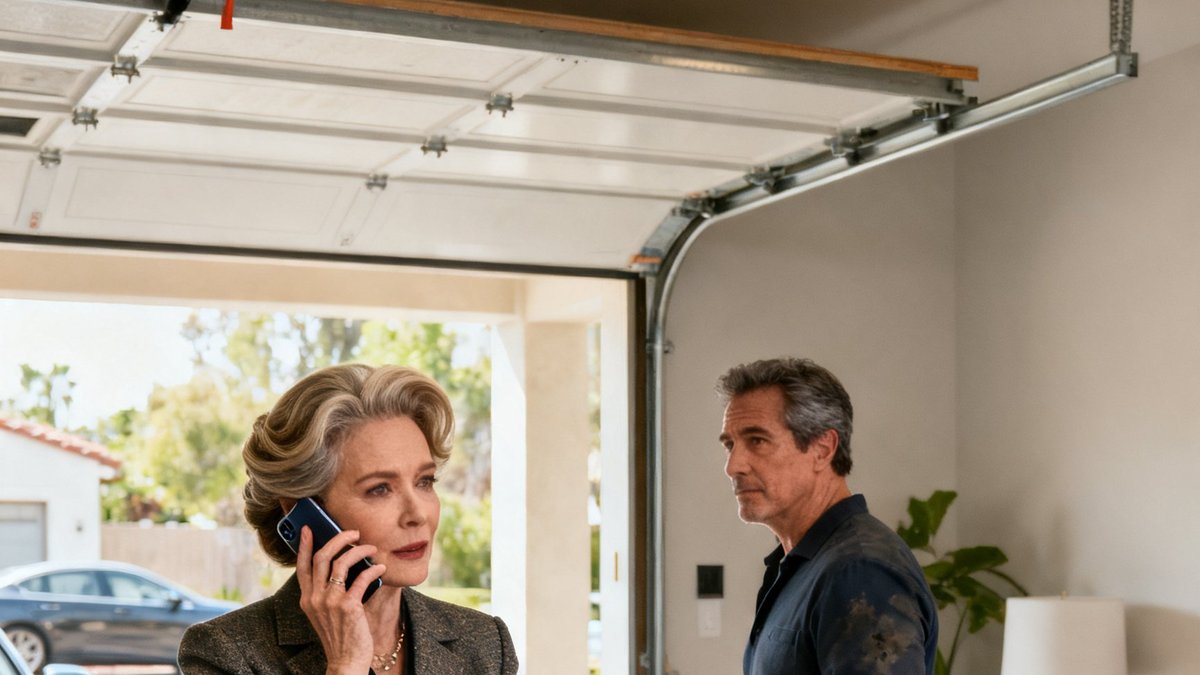
Marisol Vance had a rule nobody in her family understood until they lived it: never book a Wednesday. Wednesdays belonged to the apartment on 30th Avenue, to the record player her husband Desmond kept in the corner like an altar, to their son Théo sprawled on the rug doing homework he'd pretend was finished.
She sold out arenas under the name most people knew her by — a stage name, four syllables, printed on a marquee in Las Vegas that year. At home she was just Marisol, burning rice because she'd gotten distracted mid-verse, and Desmond would scrape the pan and say nothing, because some battles weren't worth fighting.
They met on a film set in Queens in the spring of 1990. She was thirty-six, freshly out of a relationship that had left her hollowed out, living out of a suitcase in a mid-town hotel because she couldn't stand the thought of going home to an empty place. He was cast as the villain — some low-budget thriller nobody remembers the name of now — a man who, on camera, made her skin crawl. Off camera, he made her laugh so hard she choked on a French fry at the diner they went to after wrap.
They married on September 14, 1991, at a small hall in Woodstock, New York — folding chairs, a minister who'd known Desmond's mother, and forty guests eating sheet cake off paper plates. No press. She'd insisted. Every year since, whatever city she's playing, she flies home the night before the fourteenth so she can wake up in the Astoria apartment instead of a hotel.
Théo arrived seven years later, October 3, 1997, at Lenox Hill Hospital. Marisol was forty-three, and postpartum depression crept in around month three — thick and wordless, the kind of silence that made even the record player feel like an accusation. She turned down a summer stadium tour that year without telling Desmond first; he found out from her manager, who'd called the garage looking for someone to talk sense into her. Desmond didn't say a word about the money they didn't make, not then and not for the eleven months after, when the mortgage got tight enough that he took on weekend repair jobs he used to turn down. But something shifted between them that winter — a wariness, a habit of checking with the other person before deciding anything that touched money, that neither of them ever fully unlearned.
They fought plenty over the years — real arguments, dishes rattling, Marisol once throwing a wooden spoon that left a dent in the cabinet they never fixed. But money was the one subject that could shut Desmond down entirely, go quiet and flat in a way that scared her more than yelling ever did. Fame paid the mortgage. It never got a seat at the table, and Desmond made sure of that the same way he made sure the oil got changed every three thousand miles: routinely, without discussion, as a matter of principle.
Théo grew up between two households that never once made him feel like a bill. He went through a punk phase at fourteen that made Desmond wince and Marisol secretly proud. He learned to fix a carburetor before he learned to drive. And he learned, without anyone teaching him outright, that asking his parents for money was a door nobody in the family opened.
Théo is twenty-eight now, working as a sound engineer in Nashville, and last spring — three weeks before his parents' wedding anniversary — he called his mother with a request that broke that unspoken rule for the first time in his life. He needed forty thousand dollars: a down payment on a duplex he wanted to buy with his girlfriend, plus first and last month's rent on a studio space he was trying to lease before someone else grabbed it. He asked for it fast, almost angry with himself for asking at all, and told her twice that he'd pay her back, like she might think otherwise. Marisol said she'd call him back. She didn't say when.
She sat with it for two days before she said anything to Desmond, because she already knew, from twenty years of watching his jaw tighten at the word *money*, that this wasn't going to be simple. When she finally brought it to him at the kitchen table, he didn't look up from the transmission he was rebuilding, pieces laid out in rows like something surgical.
"Make it a loan," he said. "He needs to know we think he can pay it back. That's the whole thing."
She argued with him for a full hour — said it felt cold, said forty thousand dollars with paperwork attached might read to Théo as his mother keeping score, might read to *Desmond* like she was buying her way out of an old argument he'd never let go of. Desmond didn't budge, and something in his voice went thin and hard, the same flatness she remembered from that winter after the tour she'd turned down. "You want to just hand him a check because it's easier for you," he said. "Don't make this about being easy." She snapped back that easier had nothing to do with it, and he said fine, then do it your way, and got up and walked out to the garage without another word.
He didn't answer his phone that night. Or the next.
Marisol called her lawyer anyway, on the third day, and had the papers drawn up the way Desmond wanted — a loan, five percent interest, ten-year term — not because he'd won the argument in any way she could point to, but because the silence had made something clear to her that the hour of arguing hadn't: this was never really about a check. It was about whether she still trusted him to have a say in how their son was raised, twenty years after a tour he'd let her walk away from without a fight. Getting the paperwork right wasn't a concession. It was an apology, in the only language he'd fully hear.
She had the folder ready three days before the fourteenth, and Desmond still wasn't picking up.
On the morning of the fourteenth — their anniversary, the one day in the calendar year she never worked — she didn't wait to wake up beside him in Astoria as she had every year since 1991. She drove straight to the garage in Long Island City instead, breaking her own rule for the first time in two decades, because she had no idea, pulling into that lot, whether he'd even let her through the door. She carried the manila folder with a cashier's check already inside, made out in Théo's name, and the loan agreement clipped on top. Desmond was under a Kawasaki, boots sticking out from beneath it, and for a long moment after her car door shut, he didn't slide out.
When he finally did, he didn't say happy anniversary. He looked at the folder in her hands and said, "That the paperwork?"
"Five percent, ten years," she said. "Nothing that'll embarrass anyone at Thanksgiving."
He wiped his hands on a rag that used to be a T-shirt and didn't take the folder right away — just looked at her, long enough that she started rehearsing what she'd say if he told her to leave it on the workbench and go. Then he reached out, and she felt her own hand loosen around it before she'd decided to let go.
"You didn't have to make it a contract," he said, quieter now.
"I did, actually," she said. "It's not a gift. He's got to build something that's his." She waited a beat, then added, "And I needed you to know I heard you. All the way."
He didn't answer that directly. He just held the folder open on the workbench, between an oil filter and a coffee mug that said WORLD'S OKAYEST MECHANIC, and reached for his phone. That was the part that mattered to her — that it come from him, that Théo hear his father's voice say the number out loud, not a lawyer's, not hers. He dialed right there in the garage doorway, grease still under his nails, and when Théo picked up and started to say thank you, Desmond cut him off. "Talk to your mother, she did the paperwork," he said, and handed her the phone.
Marisol stood in the doorway of the garage her husband had rented for thirty years, listening to her son's voice crack on the other end. She didn't cry. She just said, "Don't be late on the payments, I still check my own bank statements," and meant it as a joke, and meant it completely seriously, both at once. Then she looked at Desmond, who was already reaching for his keys — three days of silence broken, the folder closed on the bench between them — because it was Wednesday, and whatever else the day had turned out to be, it still belonged to the three of them.