They gave me a pen that didn't work. The woman at the front desk—Michelle, her tag said—handed me another one, a blue Bic with the shelter's name printed on the side, and I signed without reading what I was signing. My name is Susan Kelly. I am forty-seven years old. I gave away two dogs on a Tuesday in March, and I drove home with the windows down in forty-two-degree rain, letting it hit my face so I wouldn't turn around.
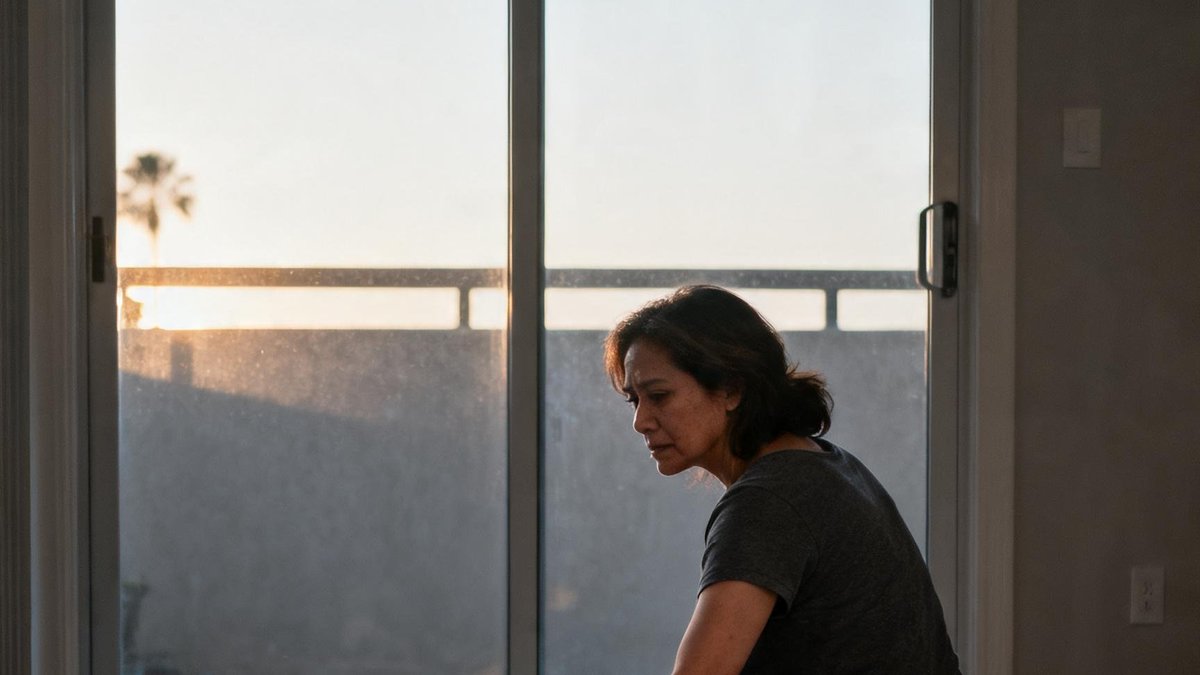
The apartment on Nora Avenue was the same as I'd left it four hours earlier. Dishes in the sink. The clock above the stove blinking 12:00, the way it has for three years. The landlord's orange tabby sitting on the fire escape, watching me through the glass like he knew something.
The dog beds were still in the corner by the sliding glass door. Buster's bed—an eight-dollar garage-sale find on Garland Avenue, flat on one side where he always slept. Trixie's blanket—baby blue, from the Goodwill on North Division. I sat down on the floor between them. I didn't cry. I don't cry. My mother didn't cry either. She just got very still, and then she did what needed to be done.
Here's the thing nobody tells you about giving up a dog. You think you're going to feel relief. You think the weight will lift. But the weight just changes shape.
Let me back up.
Eleven years ago, I married a man named Robert. Six months into the marriage, he bought Buster a training collar—the kind with blunt steel spikes that point inward, meant to pull against the dog's neck when he strains at the leash. Robert said it would teach Buster "respect." He put it on and he never took it off. Not once. Not in six years. The adjustment screws rusted shut. The leather rotted against Buster's skin. I tried to cut it off twice with kitchen shears. The second time, Buster yelped, and I stopped, and Robert said I was too soft. He said that about a lot of things.
Robert left four years ago. No note, no forwarding address. He left the mortgage and he left the dogs. The bank took the house back within eleven months. The dogs and I moved into this apartment on Nora Avenue—the one the landlord swore didn't allow pets, until his wife met Trixie and changed his mind.
I worked the graveyard shift at the Kellogg's plant on East Mission, folding cereal boxes on the line—$14.75 an hour. Weekends, I sold Mary Kay to women in the church basement on Indiana Avenue. I had forty dollars in my checking account the week Buster started limping.
The vet on Francis Avenue said his ACL was torn. Surgery would run $1,200. Trixie had demodectic mange—the red itch that makes a dog scratch until the skin bleeds—and the treatment was $200 a month for six months. I sat in that exam room and did the math in my head over and over, and the numbers never once came out in my favor.
But it wasn't only the money. It was the collar. Every time I looked at Buster's neck, I saw Robert's hands tightening those screws. I saw the years I'd spent in that house, waiting for a good moment to leave and never finding one. Buster couldn't understand symbolism. He just wanted the thing off.
The shelter said they had tools to remove the collar. They had medicated baths for Trixie. They had volunteers who walked dogs twice a day. I told myself—and I believed it, I actually believed it—that surrendering them was the last good thing I could do. The most loving choice available to a woman with forty dollars and a car that needed new brake pads.
So I made the call. I loaded them into the Honda Civic—Buster in the front seat with his head on my hand, Trixie in the back, shaking. I drove to the shelter on North Biancamano Street. I filled out forms. I signed. I walked out and never looked back.
The shelter posted their photo three days later. I wasn't looking for it. That's a lie. I checked their Facebook page every morning at 5:15 a.m., sitting in the parking lot at the plant, eating a granola bar and scrolling with my thumb. And there they were. Buster and Trixie pressed together in one kennel, like two spoons in a drawer. The caption read: "This bonded pair came in together and we've never seen two dogs so devoted to each other. Both need medical care. Both need a hero."
"Both need a hero." I read that line fourteen times. I wasn't their hero. I was the one who put them there.
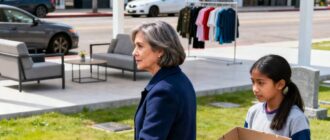
But here's what I did, and I need this written down so someone knows. On my next day off, a Tuesday, I drove back to the shelter and parked across the street. I sat there for forty-five minutes. A volunteer walked a tan dog around the side lot. A young couple went in and came out carrying a cat carrier. The woman from the front desk—Michelle, with the blue Bic—walked to her Subaru with a brown paper lunch bag, got in, and drove away.
I didn't go inside. I couldn't. But I had an envelope in my purse, a credit union envelope, the kind they give you for deposits. Inside it was a cashier's check for $612—every dollar I'd saved for the Mary Kay inventory I was never going to buy. The memo line said: "For Buster's collar removal and Trixie's skin treatment. They like the blue blanket."
I sat in the car for twenty more minutes. Then I got out, walked to the front door, and slid the envelope through the after-hours drop box—a metal box painted blue, with a slot at the top. The envelope hit the bottom with a sound I still hear at odd moments. A paper thump against cold metal.
Three weeks later, the shelter posted another photo. Buster, his neck bare, sitting up straight. Trixie beside him, fur growing back in patches. The caption said: "An anonymous donation covered their medical costs. This pair is still waiting, but they're healing together."
I closed the laptop. I went to work. I made $147.50 that night folding cereal boxes. When I got home at 5:30 in the morning, the dog beds were still in the corner. I didn't cry. But I moved them, one inch to the left. Because that's what you do when you can't fix anything—you adjust the things you can reach.
Every Tuesday since, I put twenty dollars into a new credit union envelope. It's not much. But it's mine. And when the envelope is full—when there's enough to cover the adoption fee and the first vet visit and a bag of the good food—I'm going to walk into that shelter on North Biancamano Street and I'm going to ask for Buster and Trixie by name.
Not because I deserve them. I don't. But because the collar is off. And for the first time in eleven years, that's not a thing Robert did. That's a thing I paid for.