The key to storage unit number 14 hung on a nail by the back door, untouched since the funeral. Four years it had been there, its little blue tag faded to a color I couldn’t name anymore. I passed that key every morning on my way to put the coffee on, and every morning my eyes went right to it, then right past it, like you do with a scar. The kids—my daughter Tammy, my son Michael—they saw it differently. To them it was a bill that came every month, $127.50 with tax, for a concrete box that held nothing but scrap.
Hank had bought the Beetle in nineteen seventy-two, a month after he got home from his Navy tour in the Pacific. It was sky blue, a 1971 Super Beetle with a sunroof, and he’d paid eight hundred dollars cash from his Navy pay. We took it straight to Folly Beach that first Saturday; he drove in his flip-flops, and I sat sideways on the passenger seat with my bare feet on the dashboard, the wind whipping my hair into knots. When the glovebox door fell off on the way home, he just laughed and said, “It’s got character.” That was Hank.
After the boys moved out, the Beetle became his project. He had it up on jack stands in the driveway for three summers in a row, replacing the fuel lines, rebuilding the carburetor, sanding rust off the running boards. Then the cancer came, fast and mean, and the car got towed to a storage unit out on 17, behind a self-storage place with a faded billboard that still advertised air-conditioned units.
Tammy started in right after the memorial service. By now, four years on, she’d gotten blunt: “Mama, you’re throwing away money on that unit. It’s been sitting in there for four years already, it’s rotted through. Sell it for parts, get what you can.” Michael was gentler but just as practical. “Dad wouldn’t want you burdened with it,” he said, handing me a mug of coffee like that softened the thing he was actually asking me to do: cut up the last thing Hank ever worked on and sell it off piece by piece.
I didn’t have a counterargument that made sense to them. What was I supposed to say—that the Beetle still had Hank’s old Braves cap on the passenger seat, and that throwing that cap away would feel like throwing his hand away? That the smell inside, even through the mildew, still had a trace of the Pine-Sol he used to wipe down the dash every Sunday? So I said, “I’ll think about it,” and then did nothing. The bill came, I paid it. The key stayed on its nail.
The Saturday after Thanksgiving, my grandson Tucker came barreling into the kitchen. He was fifteen then, all elbows and a thatch of brown hair that hadn’t seen a comb since his mother stopped chasing him with one. He was eating a leftover biscuit over the sink, dropping crumbs on the linoleum, when he said, “Mawmaw, Dad told me Grampa had an old Bug in a storage shed. Does it still run?”
I nearly dropped the dish I was drying. Michael had been talking about it. Of course he had—probably the same way Tammy talked about it, as a cautionary tale about clutter and stubborn old women. But Tucker’s face was lit up like he’d found treasure. “Does it have the original engine?” he asked. “Is it a Super Beetle? Those have strut suspension, you know. Way better handling.”
I did not know. What I knew was that Tucker had been reading car restoration forums since he was twelve, and that the only thing that got him to shower before noon on weekends was a trip to the pull-a-part yard in Summerville with his buddy’s dad.
“It’s a ’71 Super Beetle,” I said. “But nobody’s turned the key in a long time.”
“We should go check on it.” He was already wiping his hands on his jeans. “Right now. Please?”
I took the key off its nail. It felt lighter than I remembered. We drove in my old Camry down Highway 17, past the shrimp docks with that sharp, marshy smell of pluff mud the low tide kicks up, past the Piggly Wiggly, past the billboard for the storage place where the “air-conditioned” part had peeled off to reveal “conditioned” in letters from two decades earlier. Unit 14 was the second from the end, its roll-up door stained with a long rust drip.
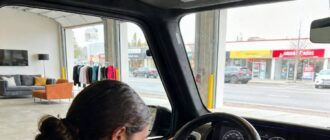
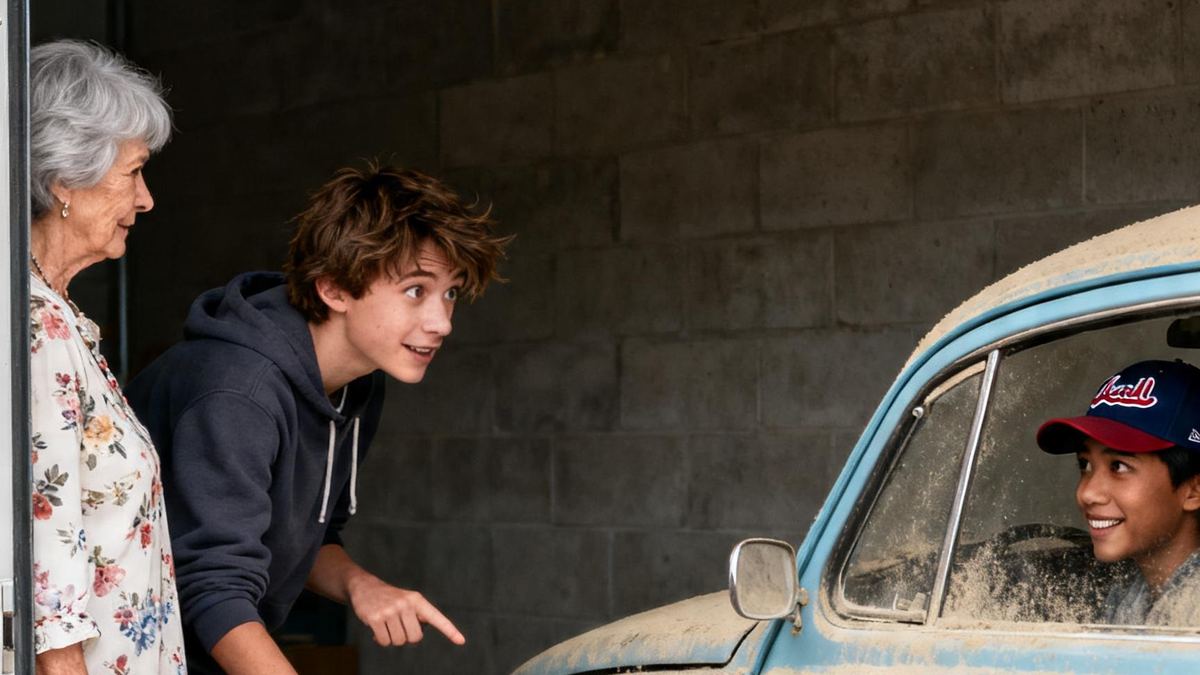
The door squealed up, and there it was. The Beetle was sitting on four flat tires, covered in a gray blanket of dust so thick you could write your name in it. The blue paint looked like chalk. But the sunroof was still popped up an inch—Hank always left it cracked to keep the inside from baking—and through the windshield I could see the Braves cap, exactly where he’d left it, the red “A” gone pink from sun. Next to it on the dash was a cassette tape, its orange label unmarked. Hank’s road trip mix, the one he’d taped off the radio in 1978 and guarded with his life.
Tucker didn’t say anything for a full thirty seconds, which for Tucker was a geological age. Then he ducked under the door, ran his hand along the front fender, and said, “The pan is solid. Mawmaw, the floor pan is solid. You know what that means?” He turned to me, and I saw it—the same light Hank got when he’d figured out a timing issue. “This isn’t a parts car. This is a restoration.”
I wanted to tell him it was hopeless, that I was sixty-seven years old and didn’t have the first idea about carburetors, that his mother would kill me for filling his head with dreams of a rust bucket. But what came out was, “What do you need?”
He needed a socket set, a can of penetrating oil, and a Saturday morning bus pass. And me. He needed me to sit on an overturned pickle bucket while he worked, to hold the flashlight, to dig through boxes of bolts at the junkyard, to bring pimento cheese sandwiches and a thermos of sweet tea that I’d balance on the old workbench Hank had bolted to the wall.
Every Saturday at nine, Tucker would roll up on his bike—he wouldn’t let his mom drive him, said it was his thing—and we’d go through that door together. The first month we just cleaned. Tucker vacuumed out enough dust to fill a pillowcase. I wiped down the dash with Pine-Sol, the same brand Hank used, and when the smell hit me I had to step outside and fuss with the mailbox I didn’t have. The cap and the cassette I left where they were, but Tucker moved the cap onto the rearview mirror. “So Grampa can see where we’re taking her,” he said.
By Christmas, the engine was on the floor of the unit. Tammy called on New Year’s Day. “Mama, Tucker says you’re letting him tear apart that car. That thing’s a death trap. And where’s he getting the money for parts?”
“He mows lawns,” I said. “And I’ve got a little put aside.”
“For what?” Her voice got tight the way it does when she’s holding back a lecture. “You don’t even have a driver’s license anymore.”
She was right. I’d let it lapse after the cataract surgery. But I wasn’t planning on driving it—not the way she meant. I was planning on being there while Tucker turned the key. That was the whole thing.
In February, we found a guy out on Johns Island who had five Beetles in his yard and sold us a used distributor for twenty bucks. Tucker turned it over in his hands like it was a holy relic, and on the way back in the Camry he said, without taking his eyes off the part, “Grampa had a good ear for timing. Dad told me he could set a carburetor by sound alone.” I hadn’t heard anyone talk about Hank’s hands in years. Not like that, like they’d done something that mattered.
The engine came alive on the second Saturday in April. Tucker had spent the morning reconnecting the fuel lines, his knuckles bleeding in three places, and when he slid into the driver’s seat and turned the key, I was standing at the open unit door with a fire extinguisher I’d bought at the hardware store. The starter groaned, coughed, and then the little flat-four engine caught, chugging like a sewing machine with an attitude. The whole car shuddered, and out of the speakers—which Tucker had rewired the week before—crackled the first bars of “Wouldn’t It Be Nice” from Hank’s old tape, the Beach Boys tinny but clear, the sound bouncing off the concrete walls.
Tucker looked at me with a grin so wide his ears moved, and I didn’t even try to stop the tears. I clutched the extinguisher and let them come.
By May, the Beetle was roadworthy—new tires, brakes that actually stopped, a sunroof that slid open without scraping paint off the roof. Tucker had left the long scratch on the passenger door, the one Hank put there trying to squeeze past a dumpster at the Piggly Wiggly in 1985. “It’s history,” he said. I ran a thumb over the scratch, letting the gesture say what words couldn’t.
The Volkswagen club meet was in Hampton Park, down in Charleston, on a Saturday with the kind of lowcountry heat that makes the live oaks sweat. Tucker and I drove there ourselves—me in the passenger seat, him behind the wheel with a learner’s permit he’d gotten the week before, his dad following in his truck because he still didn’t trust the brakes. The park was full of Bugs: yellow ones, red ones, one painted like a ladybug. A man with a graying ponytail and a “Keep the Beetle Alive” t-shirt was judging the engines, peering under decks with a flashlight.
Tucker parked us next to a fully restored ’63 ragtop and immediately started explaining our vacuum advance setup to a pair of middle-aged guys from Augusta. I wandered off to get a lemonade from a stand, and when I came back, the judge was squatting by our car, running a finger over the scratch on the door.
“This thing got a story,” the judge said. Not a question.
Before I could answer, Tucker appeared at my elbow, grease still under his nails. “It’s ours,” he said, jerking his thumb from himself to me. “Mine and my grandma’s.”
The judge grinned, wrote something on his clipboard, and moved on. I stood there with my lemonade cup sweating into my hand. Our Beetle. Not Grampa’s, not Dad’s, not a dead man’s car. Ours.
Michael found me a few minutes later, leaning against the hood with the sun on my face. He had two hot dogs from the vendor, and he handed me one without speaking. Then he said, in a voice so low I almost missed it, “I’m sorry about the parts thing.”
I bit into the hot dog. It was cold in the middle, and the bun was soggy. “What parts thing?”
“When I said you should sell it.” He wouldn’t look at me; he was watching Tucker explain the carburetor to a kid who couldn’t have been older than ten. “I didn’t get what you were holding onto. I thought it was just a car.”
I didn’t answer, because there was nothing to say. He rested his head on my shoulder for a second, which he hadn’t done since he was five years old, and then Tucker hollered that we’d won “Best Survivor,” and the moment broke.
The drive home was slow. The Beetle labored up the Ravenel Bridge in third gear, the engine singing at a pitch that said Please don’t make me do this again, the sunroof open and the cassette playing something Hank had recorded off the radio in the Carter administration. Tucker hummed along, one hand on the shifter, his dad’s truck a steady shadow in the side mirror. I sat with my purse on my lap and my hand resting on the Braves cap, and I didn’t need anyone to tell me what I was feeling. I had a thermos of sweet tea and a boy who’d brought a car back from the dead, and somewhere back home, the key to unit 14 was still swinging from its nail on a breeze I hadn’t left behind at all.