I tucked the note under Renee’s plate before she sat down. She was busy telling Eli that pecan wood would’ve been a better choice than mesquite. Her husband, Cole, came through the side gate with nothing but a beach towel and a can of sunscreen. It was 106 degrees in Tucson on the Fourth of July, and the heat coming off the block wall was enough to make the pool look like a mirage.
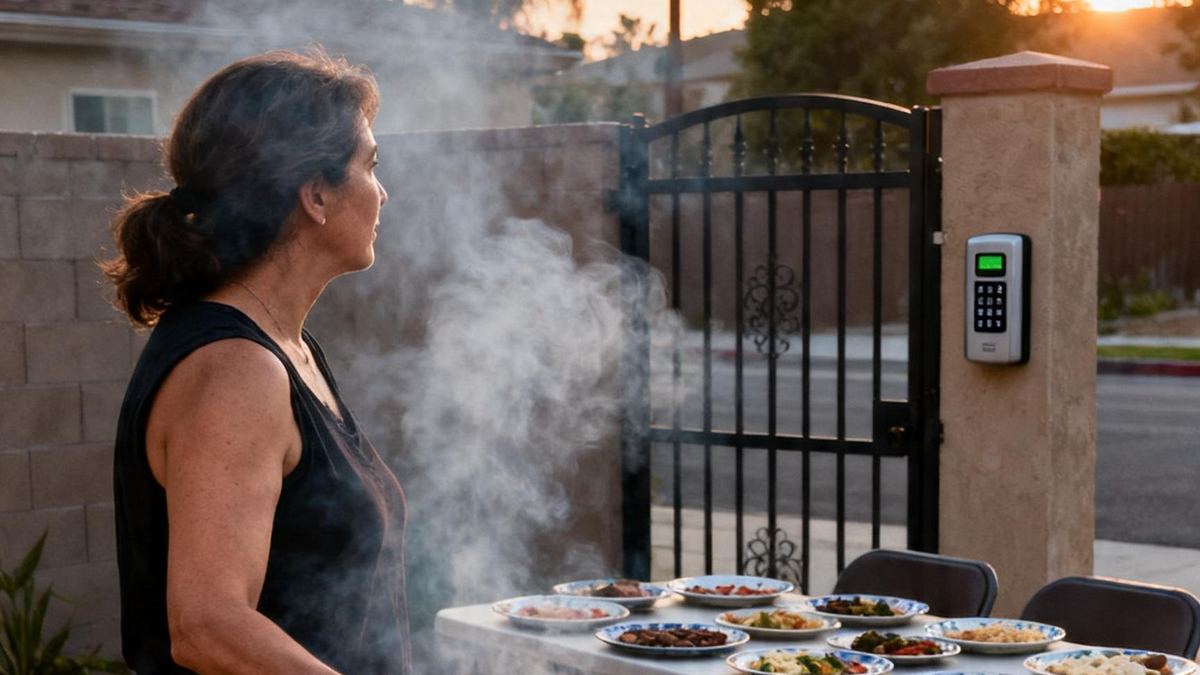
Our old swamp cooler had been grinding behind the utility room all morning, doing more rattling than cooling. The neighbor’s dog, a little brown mutt named Pico, had been barking at a roadrunner on the back fence since noon. I remember that because I was out there at 5 a.m. taking the cover off the smoker, and Pico was already at it. The mesquite smoke had settled into everything by the time I put the potato salad on the table.
For five years I’d done the Fry’s run. Fired up the smoker before sunup. Scrubbed the pool, filled the coolers, bought the paper plates, and cleaned the ketchup out of the patio chair cushions. Every year, someone promised brisket or watermelon or a dozen brats. Most of them showed up with sunscreen and an appetite. Last year, Renee brought half a bag of stale tortilla chips and told me the store was out of dip.
The note under her plate said:
Promised contribution: brisket, 12 hamburger buns, watermelon.
Status: not here.
Your share if you’re not bringing anything: $64.
You can Venmo me before the last beer.
Renee flipped the plate over and read it twice. Her face went the color of the paprika in the rub. “Is this a joke?”
“Not even a little.”
I picked up the salad tongs and used them to point around the table. “There’s one of these under every plate. For five years, you all tell me you’ll bring something. You show up with empty hands and then leave with foil packets of whatever’s left. I’m done running a food bank out of my garage.”
Nobody said a word. Cole reached under his plate, unfolded his note, and read it. His part was $42. He set the paper down next to the chips like it was a piece of bad steak.
“You’re flipping out over forty-two dollars?” he said.
“No. I’m flipping out over five years.”
Eli tried to stop me. He put a hand on my arm and said, “Tess, let’s not.”
“No. Last Fourth, I cooked for two days. You handled the guests. And your brother fell asleep in the hammock with a plate on his chest. After everyone left, me and my sister were out here at midnight picking hamburger buns out of the grass. Not next year. Not again.”
Out front, my sister Mara had already backed her Subaru up to the side gate. The tailgate was open and a cooler of ice sat in the back. That was the plan we’d made on the phone the night before. She’d texted me at 5:12 that morning: “Car’s ready. Don’t lose your nerve.”
I walked one bag at a time through the side gate. The extra racks of ribs. The uncooked brats. The watermelon I’d bought at the Fry’s on 22nd. Two cases of Modelo. The good ice chest. I set them in Mara’s car and closed the hatch.
Then I leaned in through the kitchen window. “Anyone who brought something is welcome to follow us over to Reid Park. The rest of you can order pizza.”
For a minute nobody moved. Renee kept looking at the note in her hand like the number might change. Cole had his arms crossed. One of the kids asked if they were still getting s’mores. Nobody answered him.
Mara honked twice. I got in the passenger seat. We drove down the gravel alley with the tailgate rattling and didn’t look back.
Eli called that night after the park closed. I expected him to chew me out. Instead he said, “You want to know what Cole did after you left?”
I waited.
“He opened the garage fridge and asked where the brisket was. No apology. No ‘maybe we should help out more.’ Just where the brisket was.”
“And you said what?”
“I told him to check the Fry’s on Broadway.”
That made me laugh. A bark, one syllable. It echoed off the tile in the kitchen.
“I should’ve backed you up,” he said. “I didn’t because I can’t stand being the bad guy at family stuff. But they weren’t coming to see us. They were coming for the free food.”
“Yeah,” I said. “That’s called having a cook, not a cousin.”
I didn’t sleep much that night. The house smelled like mesquite and cheap cologne. Someone had left a wet towel on the living room couch. I picked it up, folded it, and put it in the bag for Goodwill.
The next Saturday, I took the old guest list off the fridge. Ten names. I crossed out four of them with a black Sharpie—Renee, Cole, and their two kids. Then I sat down at the kitchen table, opened Venmo, and sent Renee a request for $1,275. The note read: “Five years of empty hands at $255 per year. You can decline it. That just means the gate code changes.”
She called ninety seconds later. I let it ring. When the voicemail icon popped up, I played it on speaker. Her voice was high and tight. “You are really out of your mind, you know that? It’s a barbecue, not a lease.”
I typed a reply while she was still leaving the message: “Exactly. A barbecue. Not a charity.”
Then I blocked her number and changed the gate code to 1864, the year Arizona became a territory.
The next Fourth of July, we had eight people in the backyard. Every single one of them had a dish in their hands and a drink in the trunk. Renee drove by around 6:00, slowed at the side gate, and punched in the old code. The lock buzzed and stayed shut. She sat there a second, then drove off toward Broadway.
I didn’t chase her. I turned back to the smoker, checked the brisket, and put another log of mesquite on the fire.