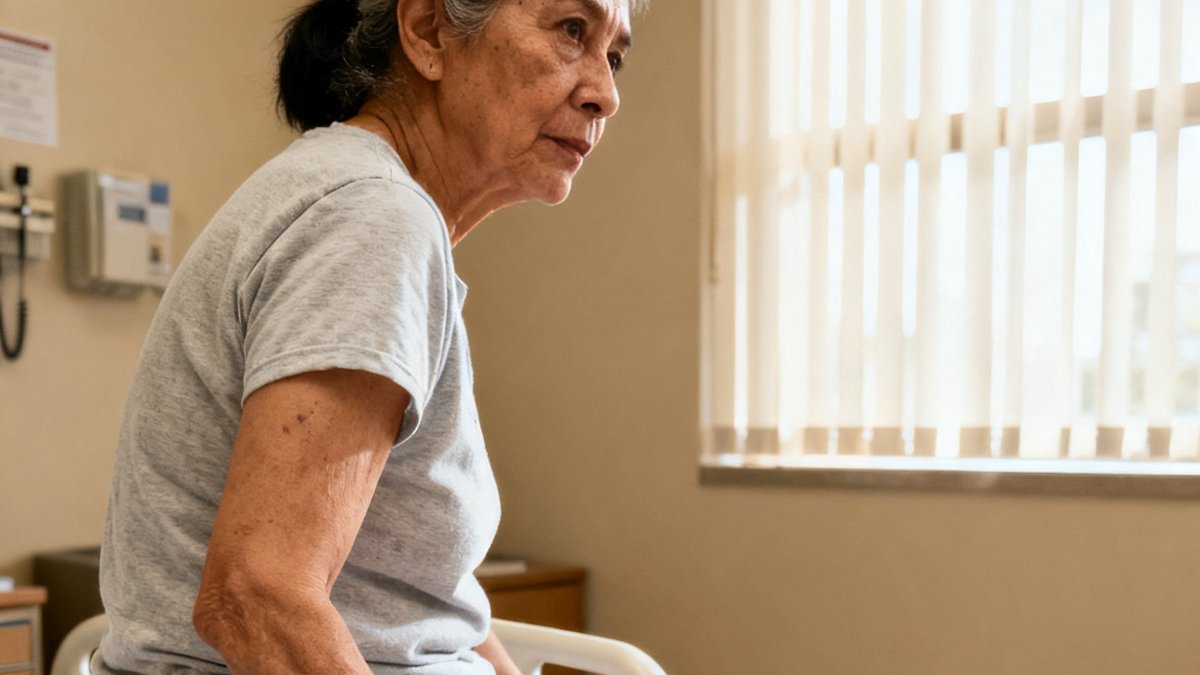
Diane Foster made decisions the way she'd been trained to make them for twenty-two years as a hospital pharmacist: check twice, verify the dosage, never rush. Friends teased her about it — even picking a restaurant took her three phone calls and a spreadsheet. But Diane had learned that carefulness wasn't the same as coldness. It was how she'd kept people alive on a hundred night shifts. It was how she'd survived a brutal divorce at thirty-four without losing the house. And it was how, at forty-one, she'd finally let herself trust Marcus Dell.
They'd been together four years. Marcus ran a small contracting business outside Sacramento, the kind of guy who fixed her leaky faucet on their second date and never made a big deal out of it. He was steady. Or she'd thought so.
The morning of the wedding, Diane woke at 5:40 a.m. in a rented cottage at Cedar Hollow Ranch, a reception venue tucked into the oak hills east of town. Through the window, the grass was still silver with dew, and somewhere a rooster she hadn't expected was making an absolute racket. She could smell bacon from the kitchen where the caterers had already started prepping, and under it, faintly, the eucalyptus some previous guest had left burning in the bathroom.
She'd planned every piece of this day herself — the folding chairs arranged under the old oak, the mason-jar centerhieces, the playlist that started with Fleetwood Mac because that was Marcus's mother's favorite. Not because she needed perfection. Because she wanted proof, in physical form, that the life she and Marcus were building was real.
On the nightstand sat a small velvet box. Inside was her mother's wedding band — not flashy, just a thin gold circle with a single worn garnet. Her mother had worn it thirty-six years before handing it to Diane in a hospital room, two weeks before she died. "Wear this on a day you need to remember exactly who you are," she'd said.
Diane was still holding the box when her phone buzzed. A text from Marcus's sister, Renee, who was supposed to be three hours away picking up the groom's tux from the dry cleaner.
*Call me. Now. Don't tell anyone yet.*
Diane's hands didn't shake. That was the strange part — she'd later tell people the pharmacist in her took over, the part of her that stayed level when a patient's numbers crashed. She stepped onto the cottage porch, barefoot on the cold wood, and called.
Renee's voice came out in pieces. She'd gone to Marcus's apartment that morning to grab his cufflinks, the ones their father had left him. She still had a key from watering his plants. And she'd found him there — not alone. A woman named Katrina, who Diane vaguely recognized as someone from Marcus's gym, was asleep in his bed, and Marcus's truck was still in the driveway because, as Renee put it, "he never even bothered coming to the venue last night to help set up like he told you he was doing."
"He's still there," Renee said. "I told him I was calling you. He said — Diane, he said to tell you he needs time to talk it through before you jump to conclusions."
Diane looked out at the oaks, at the white folding chairs already lined up in rows, at a caterer wheeling a cart of champagne flutes past the barn. One hundred and forty guests would start arriving in five hours. Her aunt from Fresno was already en route. The photographer had texted asking about first-look timing.
She didn't cry on the porch. She went inside, sat on the edge of the bed, and opened the group text she'd created three weeks earlier for wedding logistics — twelve people: her maid of honor, the venue coordinator, the caterer, the DJ, her father. She typed one message: *Wedding is cancelled. I'll explain later. Please help me get the word out before people start driving.* Then she called her maid of honor, Priya, and said four words: "He's not who I thought."
By 9 a.b., Priya and Diane's father were at the cottage. Her father, a quiet man who'd sold insurance for thirty years and rarely raised his voice, asked only one question: "Do you want me to go find him?" Diane said no. She didn't want a confrontation staged for an audience of florists and caterers. She wanted facts, in order, the way she always did.
She drove to Marcus's apartment herself, alone, at 10:15, still in yesterday's sweatpants. Katrina had already left. Marcus was sitting at his kitchen table in the shirt he was supposed to wear that afternoon, unbuttoned, a mug of cold coffee in front of him.
"It's not what you think," he said, standing.
"Renee saw her leave your bedroom two hours ago," Diane said. She didn't raise her voice. "Tell me what I'm supposed to think instead."
He didn't have an answer that held together. He talked about stress, about cold feet, about a "mistake" that had "just happened" — as if a woman materializes in your bed by accident. Diane let him finish. Then she asked the only question that mattered to her: "How long?"
Six months. Since before he'd proposed.
Diane went back to Cedar Hollow, where the caterers were already breaking down the chairs at her instruction, boxing up food that would go to a shelter in Roseville instead of feeding wedding guests. She paid the vendors in full from the joint wedding account — an account she and Marcus had opened together, funded almost entirely by her savings, $31,000 of it. That was the number she'd remember for years: thirty-one thousand dollars, the exact cost of a wedding that never happened, money she'd earned running overnight shifts in a hospital pharmacy.
Marcus called that evening, then the next day, then three days after that. He wanted to "talk it through," wanted a second chance, said Katrina meant nothing. Diane didn't return the calls. Instead, on the following Tuesday, she drove to the bank they'd used for the joint account and closed it — the remaining $4,200, split by the actual contribution records she'd kept, the way she kept every record. She had the bank print a cashier's check for Marcus's share and mailed it to him with no note.
Then she called an attorney, not because there was a fight to win — there was no marriage, no shared deed, nothing legally tangled — but because Marcus's name was still listed as an emergency contact on her health insurance and life insurance policies from when they'd moved in together. She spent an afternoon in a beige office off Fair Oaks Boulevard filling out change-of-beneficiary forms, replacing his name with her sister's. The clerk stamped the last form at 4:50 p.m., and Diane watched the ink dry before she stood up.
She kept the ring. She never gave Marcus the chance to see her wear it on the day it was meant for. Six weeks later, on a Sunday afternoon with no guests and no chairs under any oak tree, she put it on herself, alone in her kitchen, and wore it to work the next Monday — on her right hand, where it still sits now, a decade of night shifts later, the garnet a little more worn than it used to be.