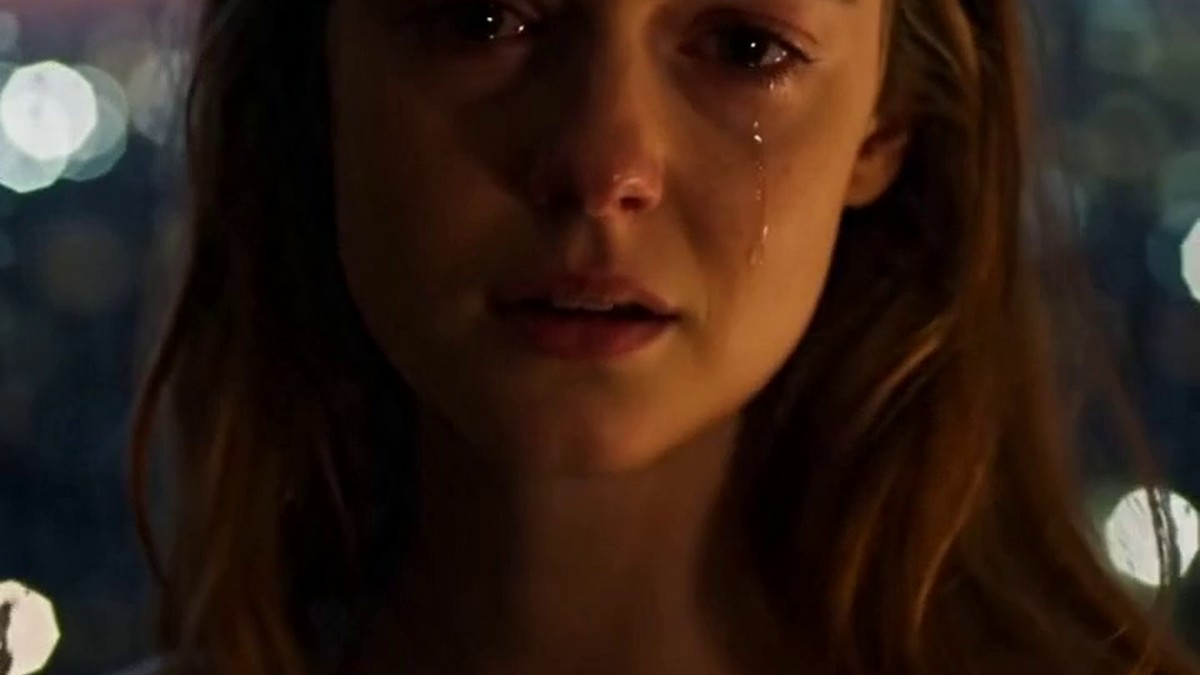
One turn meant the night might pass in silence. Two turns, she could breathe — cautiously, partially. Three turns and her body moved before her mind caught up, hands lifting the good glasses off the low shelf, tucking them somewhere safe. It was a reflex by now. Like flinching.
Outside, the rain had arrived ahead of schedule, dragging the city's lights into long amber smears down the window glass. Elena stood at the bedroom window still wearing her coat, a single suitcase resting against her left leg. It wasn't even close to full. Twelve years of a life, and the only parts worth saving fit inside one bag with a zipper that kept sliding open.
Her phone lit up on the sill. His name.
Third call in ten minutes.
She watched it ring. Watched the screen go dark. And then, in the black glass, her own face appeared — hollowed out by the glow of wet streetlights. A woman she recognized the way you recognize someone from an old photograph. Familiar, but distant. Not quite real.
A car door shut hard somewhere below. She knew his footsteps the way you know a scar by touch — without looking, without thinking. The small hesitation on the landing. The drag of his shoe across the mat. For twelve years that sequence had been a weather forecast. It had told her everything about how the hours ahead would feel.
Tonight it told her nothing.
Because tonight she had finally made the call. The one the neighbors had whispered about for years, hands pressed to the wall between their apartments, eyes down when she passed them in the hall. The two officers were idling just around the corner, parked where he couldn't see them from the street.
She turned from the window.
Picked up the suitcase.
Stood in the center of that room where so much had happened, and said the words out loud — not for anyone, just to hear whether her own voice would hold:
*"It's finally over."*
Her hands were shaking. She hadn't expected that.
Then the key found the lock downstairs.
One turn.
Two.
On the third —
The door didn't open right away.
That was new.
In twelve years, she had never known him to hesitate at the threshold. He came in the way weather comes in — all at once, filling every corner before you've had time to close the window. But tonight there was a pause. Long enough that she heard him breathing through the door. Long enough that her fingers tightened on the suitcase handle until the bones in her knuckles went white.
Then the door swung open and Marcus stepped into the hallway light.
He looked smaller than she remembered. That happened sometimes — some trick of expectation versus reality, the way a room you haven't visited in years turns out to be narrower than memory kept it. He was still broad in the shoulders, still wore that particular set to his jaw that had once made her think *strong* before she understood that strength and force are not the same word. But something about the tilt of his head when he saw her standing there, coat on, suitcase at her side — something shifted in him. Like a system receiving bad data. Like a man who had run a thousand simulations and hadn't thought to run this one.
"You're dressed," he said.
"Yes."
He looked at the suitcase. His eyes did the calculation she'd watched them do so many times — assessing, measuring, deciding how much pressure the moment required.
"Where are you going, Elena?"
Her voice came out steadier than her hands. "Away."
The word dropped into the apartment like a stone into still water, and the ripples moved through him visibly. A flush starting at the collar. The jaw tightening. She had read this body like a text for twelve years, and she was reading it now — not in fear, exactly, but with the cold focus of someone who has already made their decision and is simply waiting for the paper to be signed.
"Away," he repeated. Not a question. Something closer to testing whether the word had weight.
"I called the police, Marcus." She said it flat and clean, the way you say a fact you have rehearsed until the emotion burned off and only the truth remained. "They're outside. Around the corner on Clement. Two officers. I have their badge numbers in my phone."
The flush deepened. Then something strange happened — something she hadn't predicted in any of the thousands of ways she had imagined this night. His eyes went wet.
"Elena—"
"Don't."
"You don't have to—"
"I said *don't*."
He moved toward her. One step. And her phone was already in her hand, already lit, already showing the call log — Officer D. Reyes, twelve minutes ago, two minutes and forty-three seconds. She didn't raise it like a weapon. She just held it where he could see the screen.
He stopped.
The rain against the window filled the silence between them. She watched him stand there in the hallway of the apartment where she had spent twelve years learning to make herself smaller, and she felt something she hadn't expected to feel — not triumph, not even relief. Something older and quieter. The particular exhaustion of a person who has been holding something up for a very long time and has finally, finally been allowed to set it down.
"You were going to leave without telling me," he said. His voice had changed. The calculation was gone. What was underneath it was uglier and simpler and somehow less frightening than the calculated version — just a man who was afraid of what he was about to lose. Not her. She understood that now. What he was afraid of losing was the version of himself that her presence had allowed him to maintain.
"I'm telling you now," she said.
"This is—" He pressed a hand to his forehead. "Elena, whatever you think—"
"I don't think. I know." She picked up the suitcase. "I know the difference between one turn and two turns and three turns. I know what the glasses mean and what the silence means and what it means when you park on the far side of the street instead of in front of the building. I have known all of it for twelve years and I am done knowing it."
He crossed the room.
Fast — the old speed, the speed that had once made her freeze in place the way a small animal freezes when it has no other option left. Her body started the flinch. The reflex. The one she had trained into herself without meaning to.
But her feet didn't move.
She stood in the centre of that room — the room where so much had happened, the room she had memorised in all its terrible detail — and she stood still while he came toward her, and she hit the call button on Officer Reyes' number, and she said clearly and without drama:
"He's inside. You can come up."
Marcus stopped two feet from her. Close enough that she could see the individual lines around his eyes, the ones she used to think were from laughing, before she understood they were from something else entirely. He looked at her the way people look at a landscape that has changed without warning — a road that was there yesterday and isn't there today.
"You're really doing this," he said.
"I already did it," she said. "Ten minutes ago. When I was still standing at the window."
The buzzer rang.
He turned toward the door. Turned back. His hands were open at his sides — she noticed that, filed it away, another data point in a language she was already learning to stop speaking.
"Elena—"
"Don't make this harder than it is," she said. And then, because it was true and because she had earned the right to say it: "I don't hate you. I just can't stay here."
Heavy footsteps on the stairs. The specific knock of law enforcement — not loud, but completely certain of itself, the kind of knock that does not consider the possibility of going unanswered.
Marcus looked at the door.
She watched his face go through several things in quick succession. She watched him choose, finally, to be the version of himself that could walk to a door and open it, because the other version — the one that had lived in the three-turn nights — that version had nowhere left to go. She had taken the room away from it. She had done that by standing still.
He opened the door.
Officer Reyes was compact and unhurried, her partner a full head taller behind her left shoulder. She looked past Marcus directly at Elena, with the careful, practised neutrality of a person who had done this enough times to know that the most important thing was not to add noise to an already loud room.
"Ms Elena Vasquez?"
"Yes," Elena said.
"We're ready whenever you are."
—
The rain had eased by the time they reached the bottom of the stairs.
She walked out first, the suitcase in her right hand, the zipper that kept sliding open already slid open — and she didn't fix it. She'd fix it later, in a different hallway, in a different place. The cold air hit her face and she stood on the front step for a moment, just breathing. The wet street reflected the streetlamps in long amber lines, the same ones she had watched from upstairs, the same city in the same rain. But the glass was no longer between her and it.
She heard Marcus' voice behind her, low and measured, answering Officer Reyes' questions. She didn't turn around. She had spent twelve years turned toward that apartment, that door, that sound. She was finished with that direction.
She walked to the street.
She had a friend named Carolyn who lived twenty minutes east and had left the light on. She had a bag that wasn't quite full. She had a voice that had held — not perfectly, not without shaking, but held.
She had said *it's finally over* to an empty room, and it had been true.
She flagged a cab. She got in. She watched the building slide past the rain-streaked window and out of frame, and she did not look back at it, and it was not because she wasn't afraid — she was still afraid, her hands were still not quite steady in her lap — but because she had already said goodbye to it the only way it deserved. Quietly. Finally. Without asking permission.
The cab moved east through the amber city.
Elena Vasquez looked forward.