She didn’t yell it. Didn’t throw anything. Just set her mug down on the counter with a soft clink, wiped a drip of coffee with her thumb, and said it like she was reading a weather report.
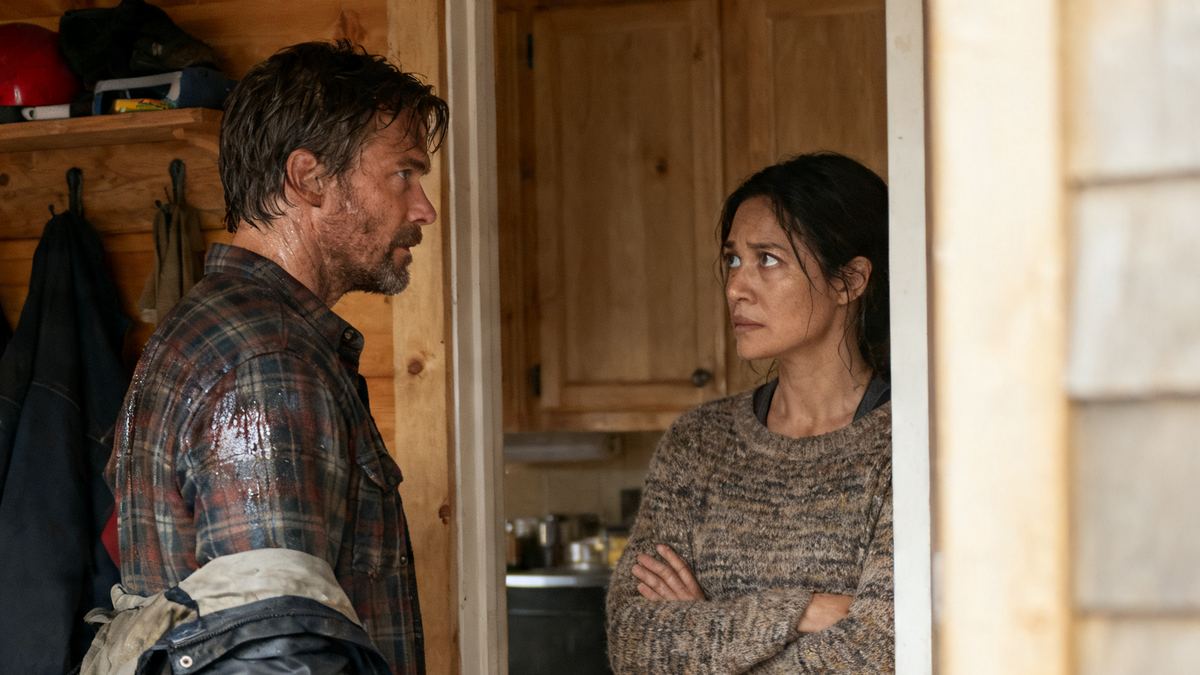
“Jake, if you walk out that door for that dog, don’t bother coming back.”
I froze in the mudroom, one arm already in my rain jacket, keys in hand. The rain hammered the porch roof in that steady October rhythm — the kind that settles into the bones up here in the Cascades. Meg stood in the kitchen doorway, arms crossed, not angry so much as emptied out. The kind of exhaustion that’s been marinating for years, not days.
“Meg, he’s out there in this. I can’t just—”
“Half the strays in the county are out in this. You gonna bring every one of them home to a six-hundred-square-foot cabin?”
“Not half. One.”
She turned away, staring out the window at the pines blurring in the downpour. A log shifted in the woodstove, throwing a flicker across her face. I’d loved that face for seven years. Right then, I couldn’t read it at all.
I found him that morning behind the dumpster at Mike’s General Store, a couple miles down the gravel road. I’d gone to grab a loaf of sourdough and a coffee. He was wedged under a broken pallet, so soaked you could count every rib through the matted grey fur. Not a whimper. Not a wag. Just a set of yellow eyes tracking me with the weight of every human who’d ever kicked him away.
I walked past him. Honest. Got my coffee, chatted with Mike about the weather, and was halfway to the truck when my boots turned around.
He hadn’t moved. Still a heap of fur and bones under the pallet, rain streaming off his nose. I crouched about ten feet back, tore off a chunk of bread, and set it on the wet pavement. It took five minutes for him to slide forward on his belly, flinching every time a drop hit his ear. He’d been beaten somewhere — that flinch told the whole story. When he finally took the bread, he didn’t chew, just swallowed it whole and looked at me with nothing in his eyes but a silent, trembling “please don’t hurt me.”
That was the moment. Not the mudroom. Not the fight. Right there in the back alley, with the mountain fog hanging low and the rain beating a tinny song on the dumpster lid.
I walked into the cabin sopping wet and started washing my hands. Meg knew something was up before I opened my mouth.
“There’s a dog behind Mike’s,” I said. “Hurt. Starving. Living under a pallet.”
She was stirring a pot of soup, didn’t turn around. “And?”
“I want to bring him home. Clean him up. Feed him. Just for a while, see if he makes it.”
The spoon stopped. “Jake, we just got this place sealed up for winter. I’m pulling double shifts at the clinic. You’re hauling firewood for the rental cabins till dark. Who’s gonna nurse a sick mutt?”
“I’ll get up earlier.”
“You? You hit snooze four times before your feet hit the floor.”
She wasn’t wrong. I grumbled something about trying harder, but she just shook her head.
“In two weeks, you’ll lose interest. And then what? We’ll have a half-feral dog tearing up the cabin, and I’ll be the one cleaning up the mess. We can’t afford the vet bills, Jake. We’re already stretched thin.”
We went back and forth for an hour. She listed every rational reason — the lack of space, the cost, the fur on the one good couch, the fact that I’d never stuck with anything long-term. And she was right about a lot of it. I didn’t have an answer for half her points. All I had was that husk of a dog staring up at me from under a pallet.
“Are you even listening?” she finally asked.
“I’m listening. And I’m still going.”
That’s when she gave the ultimatum. Just like that, flat and final. She wasn’t testing me. Meg never said things she didn’t mean. I’d fallen for that about her — her spine of steel.
I zipped up my jacket, grabbed a rope leash from the truck, and closed the door behind me.
It took forty-five minutes of sitting in the rain to get him to trust me enough to touch. I talked to him about dumb stuff — the pinecones, the way the creek was rising, how the cabin had a warm fire and a rug he could sleep on. Eventually, he laid his dripping muzzle across my knee, and I scooped him up. He weighed maybe twenty pounds. Should’ve been fifty.
When I got back, Meg was gone. A note on the kitchen table, two sentences in her neat handwriting. I didn’t keep it. Her truck tires had left fresh tracks in the mud.
That first night, we slept on the bathroom floor. He wouldn’t enter the main room — too open, too terrifying. He just lay on an old towel, shivering every time a log crackled. I named him Grant, after the mountain peak that loomed over town. It felt right — quiet, sturdy, waiting for someone to look up.
The next two weeks were brutal. Grant wouldn’t eat if I was watching. He’d cower if I lifted a hand to grab my mug from the shelf. If I moved a broom, he’d flatten himself to the floorboards like a soldier under fire. The vet bills burned through the emergency savings we’d set aside for a new woodshed. I picked up weekend shifts splitting wood for the resort up the hill, and when that still wasn’t enough, I sold my grandfather’s fly rod. I didn’t sleep much.
But every night, when the howls from the ridge echoed across the valley, he’d inch closer to my side of the mattress. And every morning, his eyes were a little less hollow.
A month in, he bolted through the door to greet me when I came home. Not belly-crawling — bounding, ears flopping, a rusty bark that sounded like an engine turning over. Three months in, he discovered the couch and claimed it like it had always been his. Six months, and the ribs were gone. His coat came in thick and brindle, with a white blaze on his chest that caught the morning light. One ear up, one down, a permanent look of polite confusion.
We hiked the ridge trail every dawn before my shift. He’d flush grouse from the underbrush and spin in circles like a pup half his age. Summers, we’d camp by the lake, and he’d stare down the loons with a seriousness that cracked me up. When I sat on the porch with a beer, he’d drop his head on my boot and sigh, a long, contented exhale that said more than any words.
It’s been two years now. I saw Meg once, at a booth in the town diner. She was with someone new. I gave a nod; she gave a small wave. No hard feelings, not really. She got the life she wanted, and I got this.
There were nights, especially that first winter, when I’d sit by the stove and wonder if I’d lost my mind. Seven years, gone. Over a dog. A flea-bitten stray I’d never met before that morning. But the more I turned it over, the clearer it got. She didn’t leave because of Grant. She left because ultimatums are what you reach for when the well’s been dry for a long time. Nobody forces the person they love to choose between them and a suffering creature if the foundation is solid. Grant was just the excuse she needed, maybe the one I needed too.
I didn’t lose a partner that night. I chose to answer the kind of love that doesn’t come with conditions. There’s a difference, even if it looks the same from the outside.
Right now, he’s sprawled on the rag rug by the fire, one paw twitching through a dream. He knows the rumble of my truck from a mile down the switchback road. He knows the exact hour the sun hits the porch chair, and I find him waiting there every afternoon. He looks at me the way no one ever has — without “if,” without “or else.” Just a quiet, steady presence that stitched up a hole I didn’t know I had.
When the rain comes down hard on the roof, he lifts his head and watches me, tail thumping once. I scratch behind that one crooked ear. And I know, without a single doubt, that I’d choose him all over again.