Jake spotted the blood before he saw the animal. A dark trail zigzagging through the fresh powder on the ridge, small crimson pools where the creature had paused to gnaw at its own leg. He followed for half a mile, his Remington slung across his shoulder, but he wasn’t hunting. Not today. It was late November, the light already dying behind the Bitterroot Mountains, and he’d just been checking his trapline when the tracks began.
The wolf had dragged itself into a hollow under a fallen pine, front paw mangled in the rusted jaws of an old leghold trap some idiot had left behind. It lifted its head when Jake crouched low, yellow eyes glassy and half-lidded, and bared its teeth—no real threat, just a reflex. The blood kept dripping. Then the wolf’s head dropped into the snow and its breathing went shallow.
“Ah, hell,” Jake muttered.
He worked the trap open, hands shaking from the cold. The wolf didn’t flinch. Dead weight. Jake stripped off his jacket, wrapped the animal in it, and carried it back to his truck. He laid the wolf across the passenger seat on an old moving blanket and saw one eye crack open as he started the engine.
“Don’t bite me, alright?” Jake said. “We’re gonna get you fixed up. Just hold on.”
The wolf’s nose twitched at the smell of coffee cups and shotgun shells. Then the eye closed again.
—
Dr. Patel didn’t even blink when Jake stumbled through the doors of the Bigfork animal clinic with a hundred and twenty pounds of wolf in his arms. The receptionist screamed, and the guy with the Labradoodle clawed his way out the front door like his pants were on fire. By the time the vet nurse got the exam room cleared, the lobby was empty except for a tipped-over chair.
“What’ve you brought me now, Harris?” Dr. Patel sighed, already pulling on gloves.
“I found him on the north slope. Trap got his front right. Lost a lot of blood.”
“Put him here. I’ll sedate him. You’re paying for this?”
“Just do it.”
They got the wolf under, extracted the rusted metal, cleaned the shredded tissue, stitched him up across three different layers, and bandaged the leg so tight it looked like a cast. Dr. Patel said the joint might survive if infection didn’t set in. Jake sat in the corner and watched the wolf’s chest rise and fall. Sometime around midnight, the sedation wore off and the animal lifted its head, tried to stand, and collapsed again. Jake gave him water from a bowl and the wolf lapped it slowly, eyes fixed on him the whole time.
“You’re staying at my place,” Jake said. “My wife’s gonna kill me.”
—
He was right.
Sarah stood on the porch of their little A-frame with a flashlight and a look of pure fury. “Is that a—Jake, what the hell is that?”
“He’s hurt.”
“That’s a goddamn wolf.”
“I know what he is.”
“You know our daughter lives here? You think I’m letting a wild predator into my house?”
Before he could answer, eight-year-old Lily pushed past her mother’s hip, still in her unicorn pajamas, bare feet on the cold wood. She saw the giant grey animal bundled in the back of the truck, bandaged and shivering, and her face did something that wasn’t fear. She walked right up to the open tailgate, grabbed the wolf’s big head in both hands, and pressed his muzzle against her chest.
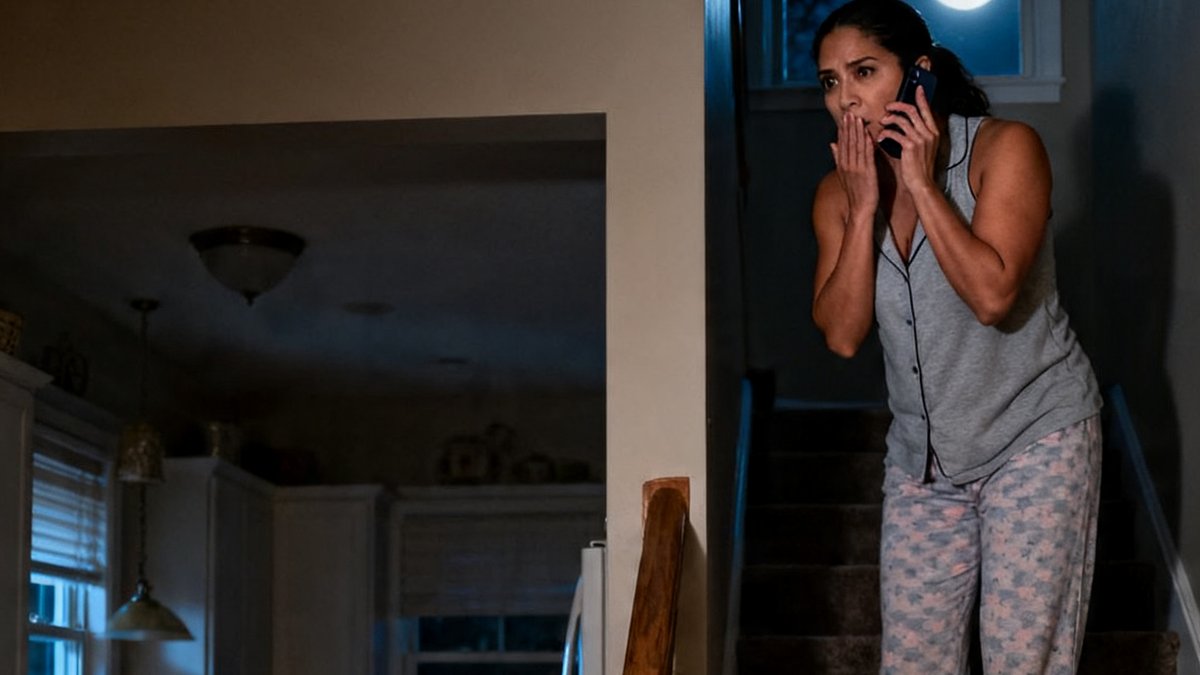
“Careful!” Sarah shrieked, and her hands flew to her own face.
But the wolf just squinted, blinking like a near-sighted old dog, and let out a tiny, confused whimper. Then his tongue rolled out and he licked Lily’s chin.
Sarah froze. The wolf squinted at the beam of her flashlight, ears tucked back. She dropped her hands and stepped closer. When she crouched down, the wolf pushed his head into her palm and sort of shrank as if to say, _I’m not a problem, I swear._
“My puppy,” Lily declared, wrapping her arms around his neck. “His name is Mochi.”
Jake paused. “Why Mochi?”
“Because he’s soft and squishy and I love him.”
Sarah looked at the wolf, then at her daughter, then at the bandage soaked through with old blood. She pressed her lips together and went inside. She came back with an armful of old towels.
“You’re sleeping in the mudroom,” she told the wolf, “and if you so much as growl at my cat, you’re out.”
The wolf, as it turned out, was terrified of the cat.
—
It took about six weeks for Mochi to heal. Lily fed him scraps of roast chicken and read him chapter books while he lay on the tile floor with his heavy head on her lap. He got stronger, filled out, grew into a coat so thick and grey the neighbors started calling him “the ghost dog.” Jake walked him down the gravel road every evening, and every dog for three blocks either went silent and hid behind its owner or tangled the leash around the nearest tree trying to bolt. But cats? Cats figured out in two days that Mochi was a pushover. A big tabby named General Tso from next door used to sit on the fence and swat his nose whenever he passed. Mochi would yelp and scramble behind Sarah, who’d charge out waving a broom and hollering, “Get out of here, you fluffy psychopaths!” The cats scattered, Sarah patted Mochi’s head, and he’d trot back inside with his tail doing a slow, contented sweep.
He never barked. Never once. The only sounds he made were soft, high-pitched whistles when he was happy and a deep, rumbly groan when he wanted attention. His eyes were strangely human—pale amber, and if you looked into them long enough you felt like someone was listening. Lily insisted he could understand every word. Jake wasn’t sure she was wrong.
—
The break-in happened on a Tuesday in January. Jake was in Missoula for a two-day timber auction. Sarah and Lily had gone to bed early, and the house on the ridge was quiet except for the wind. Mochi slept in the living room on his favorite rug.
Around 2 a.m., the back door splintered.
Two men with ski masks and crowbars stepped into the kitchen. They didn’t expect much—old appliances, maybe a gun safe, some jewelry. They damn sure didn’t expect the massive grey shape that launched itself from the darkness.
Mochi hit the first intruder chest-high, and before the man could raise the crowbar those jaws closed around his neck like a steel trap. One hard shake, and he was gone. No scream. Just the thud of a body hitting the linoleum. The second man yelled something, dropped the crowbar, and sprinted out into the frozen yard. Mochi crossed the porch in two strides, kicked up a sheet of snow, and caught him thirty yards from the treeline. He leaped, drove the man face-first into the ground, and his teeth found the base of the skull. The vertebrae gave with a sound like thick ice cracking. Then the night went still.
Sarah found Mochi standing over the second body, his muzzle dripping red, his whole body trembling. She pulled Lily behind her and said, in a voice she barely recognized, “It’s okay. It’s okay, baby. Stay behind me.”
The first sheriff’s deputy arrived twelve minutes later. He got one look at the scene and called for backup, animal control, and his supervisor. They formed a semicircle around the wolf, rifles raised, and Sarah could see the decision forming in their eyes.
“We’ve got to put him down,” the sergeant said. “He’s killed two people.”
Lily broke away before anyone could grab her. She threw herself in front of Mochi, wrapped her arms around his bloody neck, and screamed, “No! You can’t! He’s my dog!”
Mochi didn’t move. He just stood there, head low, and made a soft, keening sound into Lily’s hair.
“Hold your fire!” the sergeant shouted. “Nobody shoot!”
They called in a wildlife specialist who put a tranquilizer dart into Mochi’s hindquarters. He went down easy, eyes still on Lily until the sedative dragged him under. They loaded him into a cage in the back of a van and drove off, and Sarah held her sobbing daughter on the cold gravel until the sun came up.
—
The county wanted him euthanized. No question. A wolf that killed humans couldn’t be let back into the world. They told Sarah it would happen in three days, maybe less. She sat in the empty living room that afternoon and stared at Mochi’s rug. Then she opened her laptop and typed. She didn’t plan anything. She just wrote what happened—the trap, the rescue, the months of gentleness, the nights Mochi guarded her daughter’s bed, the cats, the stupid broom, the way he ran from a chihuahua named Beans. She ended with: _If they kill him, they’re killing the best of us._ She posted it on Nextdoor and the local community page. By morning, it had been shared eighteen thousand times.
A reporter from the _Great Falls Tribune_ called. Then a segment on the Bozeman NBC affiliate. Then the story hit Reddit, and the comments blew up. Two days later, a pro bono legal team from an animal rights organization in Denver reached out. When the county said a wolf wasn’t entitled to legal representation, the lead attorney just smiled and said, “Watch us.”
The Saturday before the scheduled euthanasia, nearly sixty thousand people gathered on the capitol lawn in Helena. They held signs with Mochi’s photo—Lily’s drawing of him in a flower crown, printed and blown up—and chanted, “Hero wolf!” The governor’s office issued a statement asking for patience. The police department was caught between a public relations nightmare and a statute. A court date was set. Lawyers prepared arguments. Jake and Sarah got calls from state senators. The whole thing turned into a circus, and at the center of it, a wolf sat in a concrete kennel at the county animal facility, waiting.
—
But the trial never happened.
The night before the hearing, three people in black balaclavas cut the fence at the animal shelter’s outdoor run. They sedated no one. They just opened the kennel door, clipped a lead to Mochi’s collar, and walked him out. A white van with no plates was waiting on the service road. By the time the morning shift arrived, the kennel was empty and the nation was waking up to news of a vanished wolf. The police issued a standard statement about an active investigation, but when reporters asked if they were actually looking for the animal, the sergeant on duty just shrugged and said, “We’re following all leads.” Nobody believed him.
Mochi resurfaced two weeks later in a remote Forest Service cabin up on the Canadian border. The ranger, a grizzled old friend of Jake’s named Vern, had already followed the saga, and when the van pulled up in the middle of the night, he just opened the door and said, “Heard you were coming. Got a moose steak in the fridge.” Mochi stepped out, sniffed Vern’s hands, and leaned his whole weight against his leg.
—
That spring, Jake and Sarah closed on a beat-up little cabin half a mile from Vern’s place. Nothing fancy—wood stove, creaky porch, a view of a lake that froze solid until May. Lily decorated Mochi’s bed with pinecones and glitter. She rides him through the meadow now, bareback, her arms wrapped around his neck while he lopes through the wildflowers at a gentle, rolling pace. He’s put on another twenty pounds. His eyes are still that strange, knowing amber, and he still hides behind Sarah when a cat crosses his path.
The case in the county got quietly buried under paper. The men who broke into the house turned out to have a lengthy record, and public pressure made it easier to lose the paperwork than to fight it. No one talks about euthanasia anymore.
On summer evenings, when the sun sets behind the mountain and the first stars come out, Lily sits on the porch with Mochi’s head in her lap. She hums songs she makes up on the spot. Mochi closes his eyes and lets out one of his little whistling sighs. In the kitchen, Sarah pours iced tea and watches them through the window.
“You’re a goofball,” she whispers to no one. “A giant, grey goofball.”
Mochi’s tail gives a slow, sweeping thump against the wooden steps.