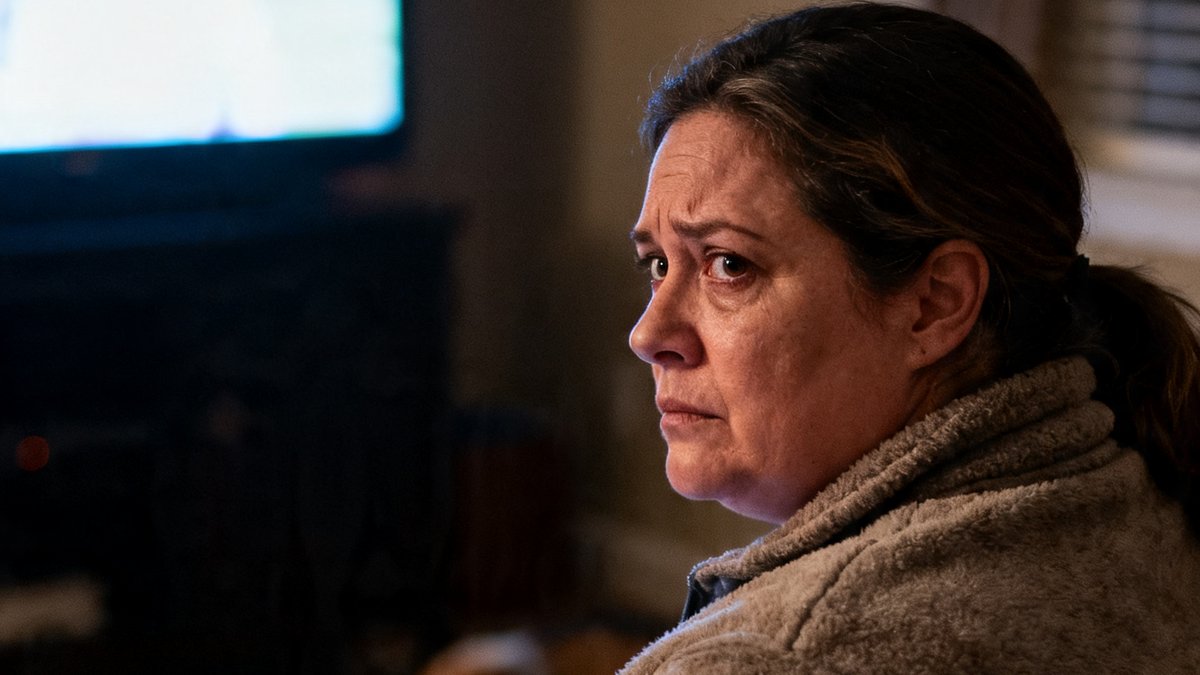
The buzz of my phone ripped through the quiet of our Park City living room at half past midnight. Outside, the Wasatch Range was a wall of black against a star-scoured sky. I was curled up on the leather sectional, still wearing my fleece from the afternoon grocery run, a half-eaten bowl of stale Cheerios on the cushion beside me. The TV played a documentary about octopus intelligence I’d already seen twice. My five-year-old, Leo, was a warm, heavy weight upstairs, dreaming of ski school.
I glanced at the screen. A text from a number I’d never saved, but one I’d unfortunately memorized. Zoe.
She was my husband Dylan’s “head of brand strategy” at his outdoor apparel startup. A twenty-five-year-old with a trust fund she couldn’t touch until thirty and a laugh that always sounded like she was performing. For the last year, she’d been a constant, irritating static in the background of our lives. Dylan called her his “secret weapon” for the business. Work dinners in Salt Lake that ran until 2 a.m. A “vital” trade show trip to Barcelona. A sudden need to “test the new gear” on a heli-skiing trip in British Columbia that I wasn’t invited to.
I opened the message.
It was a photo. Dylan was asleep on his stomach, his arm thrown across a crisp white sheet, his face half-buried in a hotel pillow. The window behind him framed the jagged, iconic peak of Mount Timpanogos. We’d honeymooned at that very resort, the Sundance Mountain Resort, ten years ago. He wasn’t wearing his wedding ring. Zoe was curled beside him, wide awake, a champagne flute in one hand and her phone in the other. Her smile was a brilliant, vicious slice of triumph.
Under the photo, she’d written: *He stays for the kid, not for you. Do us all a favor and stop pretending you still matter.*
I didn’t cry. A strange, numb stillness settled over me, that moment when a fever finally breaks. For months, I’d felt the terrain shifting under our marriage—the late nights, the whispered calls, the new, dismissive way he’d started saying my name. “Nora.” He’d made me feel like I was the unstable one, a paranoid wife who couldn’t understand the pressures of scaling a business. I’d started to believe him.
But this photo wasn’t a flickering doubt. It was a high-beam headlight of pure, undeniable truth.
It woke me up.
My fingers, perfectly steady, moved to my contacts. I searched for a name I’d only ever used once, to send a digital holiday card. Margot Whitfield-Chen. Zoe’s mother-in-law. Her husband, Christopher, was a quiet, serious cardiac surgeon I’d met twice at company functions. I remembered Margot from Dylan’s launch party—a sharp-eyed woman in architectural jewelry who ran a massive charitable foundation.
I typed a message, attaching the photo: *Margot, I’m so sorry to reach out like this at this hour. I just received this from Zoe. She’s with my husband. I thought, before I take any next steps, you and Christopher should know who your son is really married to.*
I hit send. The whoosh of the message felt like opening a window after a week of stale air.
Three minutes later, Margot responded. *Nora, don’t respond to her. Don’t call Dylan. Are you and Leo safe?*
*Yes. We’re home.*
*Good. Christopher is standing right here. He’s calling the Sundance to have my son added to the room’s folio. I’m calling you.*
Before I could process her words, Dylan’s face flashed on my screen. I let it ring until it died. It buzzed again. I silenced it. A message from Zoe screamed: *YOU BITCH. WHAT DID YOU DO?*
Margot’s call came through a minute later, her voice a lifeline of cold, brisk efficiency. “Nora, Christopher and I have suspected something off with their finances. Our family’s legal counsel notified me last month that Dylan had been using her for ‘personal portfolio advice’—without our knowledge. He set up a dummy account through one of her junior associates. I’m having my lawyers pull the records now. If you want to find something on your end, check his email and any cloud accounts synced to your home devices. Look for transfers to Z. Whitfield-Chen. I’ll send you the bank name.”
“I’ll find it,” I said.
“Good. Christopher is driving to the resort as we speak. My daughter-in-law’s trust fund depends on a moral turpitude clause. Let her feel the ground give way. Call a lawyer tonight.”
The line went dead. I stood in the dim hallway, my heart beating hard but steady. Then I walked into Dylan’s office. It smelled of cedar, coffee, and ambition. His desktop computer was still powered on, the screen dark but clearly never logged out. I tapped the keyboard, and his email opened. I searched the name Margot gave me: a small credit union in Provo. Two dozen results. I opened the latest—a monthly transfer confirmation for $15,000 to an account holder listed as Z. Whitfield-Chen. The first one was dated seven months ago.
My mouth went dry. I searched further, clicking through files and cloud folders. In a directory labeled *Brand Retreat Logistics*, I found a scanned lease for a furnished apartment in downtown Salt Lake City, signed by Dylan, with Zoe listed as the tenant. Then I found a single PDF, a one-page document titled “Callahan Outdoor Post-Marriage Asset Transfer Protocols.” It listed our house, our joint savings, and his company’s valuation, with his projected “net unencumbered equity” circled in red. At the bottom was a note: *Nora receives remaining marital debt. All equity transferred to new entity upon separation.*
I printed everything. The printer whirred in the unnatural quiet. I gathered the pages into a manila folder and slipped it into Leo’s diaper bag, a habit from when he was little.
I called my sister Holly, who didn’t ask questions, just said, “Come over. Now.” I woke Leo, told him we were having a sleepover at Aunt Holly’s, and he clutched his stuffed bison, Jax, and let me carry him to the car. At seven-fifteen the next morning, I sat across from Rebecca Steen, a divorce attorney my sister had used, in her Salt Lake City office. She looked through the pages while I stared at the wall clock. 7:41.
“This isn’t a divorce,” she said finally. “It’s a crime scene. The secret account, the lease, the asset transfer plan—he’s been laying the groundwork to claim insolvency and dump marital debt on you while he starts over with her. With Christopher Whitfield-Chen freezing the dummy account, we can tie this to misappropriation of investor capital. Do you want me to pull the trigger?”
My throat tightened. I thought of Leo’s small voice in the dark car asking if Daddy was coming. I thought of the house we’d bought with earnest, hopeful signatures. If I pushed this, Dylan might fight with every weapon he had. I might lose Leo half the time. I might have to sell the house anyway. But if I didn’t push, I’d lose everything anyway, and Leo would grow up with a father who thought this was an acceptable way to treat people.
I met Rebecca’s eyes. “Pull it.”
She nodded once, a tiny smile of professional admiration on her lips. “Good answer.”
Dylan called three times that afternoon. I let each go to voicemail. The first message was a controlled, furious whisper: “Nora, you need to call me right now. This is a massive overreaction and you’re going to destroy our family.” The second, two hours later, after the asset freeze hit: his voice was ice. “You think this is a game? You have no idea what you’ve started. Call me.” The third was just silence, then a click.
I saved every message and forwarded them to Rebecca. I didn’t respond.
Zoe showed up at the house two days later, in the freezing blue twilight. Her pearl-white Range Rover crunched to a stop, and I watched her through the doorbell camera: a frantic figure in a puffy designer coat, her face blotchy and red. She hammered on the door.
“Nora! You’ve destroyed my life! My marriage! My settlement! You and that witch Margot—you’re both insane! Dylan was right about you, you’re a frigid, boring control freak!”
I pressed the intercom. “Zoe. You’re being recorded. Leave now, or the next person you speak to will be a Sheriff’s deputy.”
She screamed an obscenity and stormed back to her car. I sent the video to Rebecca. Later that week, I learned from Margot that Zoe’s trust fund had been frozen pending a moral turpitude review. The $15,000 monthly payments from Dylan were her only real cash flow while she waited for her 30th birthday. He’d promised to leave me for her, and she’d grown impatient. Sending the photo was her way of forcing the end, a reckless, drunken bet that I was too weak to fight back. She was wrong on both counts.
Months passed in a blur of depositions, forensic audits, and cold, procedural order. The court finalized the divorce. Dylan’s company, collapsing under the audit findings and investor withdrawals, was dissolved. The secret assets were recovered, and my share was awarded in the settlement. I kept the house, for Leo. Dylan’s visitation was structured, supervised at first, and required a court-mandated psychiatric evaluation.
On his last day before moving to a rented condo in Murray, he came to pick up the final boxes from the garage. It was the first time we’d been alone face-to-face since that night. He looked smaller, older, the tan faded from his skin. He said nothing as he loaded the boxes into his beat-up Subaru. I leaned against the doorframe, arms crossed, and watched. The air smelled like cold concrete and pine.
He paused with the last box, a dusty crate of ski wax and old goggles, and met my eyes for a brief, flat moment. “I never thought you’d actually go through with it,” he said. His voice was quiet, almost curious.
I didn’t answer. There was nothing left to say that wasn’t just another lie from him or a speech from me. He got in the car and drove away without looking back. I walked into the empty garage and took down a framed photo from a shelf—our wedding day, on a chairlift, faces flushed with champagne and early sunlight. I felt a deep, quiet grief for the woman in the picture, the one who’d trusted the view he’d shown her.
That night, after I’d put Leo to bed, I stood on the back deck. The valley was a basin of darkness below a spill of stars, the snow on the peaks glowing faintly under a crescent moon. The house behind me was finally silent. No hum of a secret phone conversation, no waiting for the sound of a car that wouldn’t come until three in the morning.
I pulled out my phone, scrolled to the photo—Dylan asleep, Zoe’s triumphant smirk—and hit delete. The screen went dark and cold in my palm. I slipped the phone into my pocket and went inside, the ache in my shoulders loosening by one thin, bony notch.