The key turned in the lock at 10:47 p.m. The scent of Derek’s single-malt scotch and somebody else’s vanilla-vape perfume hit the foyer before he did.
I stayed on the living room sofa, laptop open, the glow of a spreadsheet on my face. He walked in, loosening his tie with one hand, a half-empty crystal tumbler in the other. A week ago, the board had named him Senior VP of Product at CipherTech, a move that put our family on the Scottsdale social map and put my husband’s ego on a rocket ship.
“Honey, I’m home,” he said, a smirk in his voice. He meant it as a joke. It landed like an insult.
“Late meeting?” I asked, not looking up.
“Celebratory drinks. The team launched the Phoenix beta today. I’m a king, Claire. A king needs his castle in order.” He set the tumbler down on a mahogany end table, leaving a wet ring, and walked over. He closed my laptop with two fingers. “Which brings me to you. My support staff.”
The word hit me like a paper cut. *Support staff*.
For seven years, I’d been the one who de-risked the global supply chain for a medical device company before I left to have our daughter, Lucy. Now I was five years and another kid later, my brain a filing cabinet for pediatrician appointments, the summer camp waitlist, and the exact temperature to roast a heritage-breed chicken. I’d traded ROI analyses for organic food co-op logistics. I knew the names of every mom in Lucy’s kindergarten pod, but I couldn’t have told you the current Fed interest rate to save my life. My MBA was collecting dust in a guest-room closet, right behind the holiday decorations.
The next morning, I found my opening. Over burnt coffee and a half-eaten avocado toast, I laid it out.
“Derek, I’m going back to work. There’s a program at ASU. A four-month certification in healthcare data analytics. Classes are Saturday mornings. Six hours a week. It’s perfect.”
He didn’t even look up from his phone, thumb scrolling through a pre-market report. “No.”
“What do you mean, ‘no’? It’s a conversation. I’m telling you, I’m doing this.”
He set the phone down, screen-first. The silence was sudden and sharp. “I mean no. It’s not a conversation. It’s a decision. I’m not spending my weekends playing Mr. Mom while you go find yourself. My job is nuts. The pressure is insane. Saturday and Sunday are my recovery days. I recharge so I can slay dragons on Monday. A chaotic house with two kids is not recharging. You want a hobby? Take up tennis. Join the club. I don’t care. But a real job? That’s a hard pass.”
“A hobby.” My voice was flat.
“Don’t twist my words. You have the deal of the century here. This house, the G-Wagon, the stupidly expensive espresso machine. What are you missing? A sense of purpose? Your purpose is raising healthy, successful humans. That’s the mission. Don’t lose the plot.” He popped the last piece of toast into his mouth, chewed, and walked out, the conversation officially terminated.
I cleaned the kitchen with surgical precision, my anger a cold, controlled thing. It wasn't about the Saturdays. It was about the lock he was trying to put on my future. A week later, I was doing the laundry — his laundry — when the lock’s true shape revealed itself. In the back pocket of his designer jeans, I found a receipt, crumpled and washed once. It was from a boutique hotel an hour north in Sedona. The date was stamped for a night he’d told me he was at a “critical off-site strategy session.” The charge was for a couple’s spa package. I had not been at a spa.
I sat on the floor of our walk-in closet, the receipt in my hand, the metallic smell of his dry cleaning filling the air. No tears came. Just a hard, crystallizing clarity. His whole life was a neatly optimized algorithm, and I was just a variable he needed to control. A wife with no income, a five-year gap on her resume, and two small children wasn’t a partner. She was a hostage. There was no escape, no threat of leaving. And he knew it. The Sedona spa day was proof he felt invincible.
The plan formed not with a bang, but with a spreadsheet.
First, the escape fund. I dug up old contacts from my LinkedIn account, which I had to reactivate with a password reset. I called an old colleague, Marcus, who was now a director at a rival healthcare tech firm in Tempe. I told him I was testing the waters, looking for a return path. He didn’t laugh. He sighed with relief.
“Claire, you’re a unicorn. People with your old-school manufacturing logic who can learn the new AI tools are impossible to find. I’ve got a six-month contract role, project-based, with a couple of remote days. The pay is solid. It’s not VP level, but it’s a life raft. You want it?”
I took it. I told Derek I was “taking a class” on the new generative AI tools. It was a lie wrapped in a truth he didn’t care enough to unravel. I cleared my history, set up a new email alias he didn’t know about, and started working during the hours both kids were in school and camp.
For three months, I lived a double life. During the day, I was analyzing patient outcome data. At 3:00 p.m., I shut the laptop, slapped on a smile, and became the snack mom, the homework helper, the perfectly dressed wife at his company’s mid-summer barbecue where he got an award for “visionary leadership.” He toasted his team, his voice echoing off the yard, calling them his “ride-or-die family.” He didn’t toast me.
The dam broke on a Thursday. My contract was up for a full-time renewal, which I’d accepted. I came home to find him in the kitchen, a bottle of Veuve Clicquot open, two glasses. The gesture was so unnerving I almost flinched.
“Big news,” he announced, popping the cork. “The CEO tapped me to open the Austin office. It's a brand-new city, clean slate. We can buy a real house, something with a pool and a view. You can design the whole thing. A fresh start.”
He said “fresh start” like he was offering me a gift.
“I can’t go to Austin, Derek,” I said, my voice steady in a way that surprised even me. “My job is here.”
He froze, mid-pour, the champagne bottle hovering. “Your what?”
“My job. The one I’ve had for three months. As of today, it’s permanent. Director of Clinical Data Analytics at Tempe Health Solutions.”
The glass he was holding slipped a fraction of an inch and met the edge of the marble countertop, cracking clean in half. A spray of champagne hit the floor. He didn’t look at it. His eyes were locked on me, flickering from confusion to a dark, gathering fury I’d never seen before.
“You’ve been working,” he said, the words slow and dangerous. “Behind my back. Lying to me.”
“I’ve been surviving behind your back.”
He took a step toward me. “You will call them tomorrow morning and quit. You will tell them it was a mistake, a family misunderstanding. And we will move to Austin as a family, or so help me, Claire, there will be nothing to move with. I’ll cut you off. The Amex, the bank cards, the car. All of it. I will freeze every account with my name on it before you can blink. You will be a single mother with no income, no credit, and a lawyer so expensive you’ll drown in legal fees before your first court date. You want to play this game?”
This was the moment. The threat he’d been holding, the ultimate play in his power game. The fear he’d been quietly cultivating for years. The air in the kitchen tasted metallic, like a storm about to break.
I didn't step back. I closed the foot of distance between us. “Do it,” I said, my voice barely a whisper. “Freeze them. Right now. Please. Because the moment you do, I file the papers. And not just divorce papers. I will subpoena every corporate credit card statement, every expense report you’ve ever filed. You think you can hide a charge for a couple’s spa in Sedona from a forensic accountant? My new boss, Marcus, is married to a woman who does exactly that for one of the Big Four firms. A Vice President spending company money on his mistress—that’s a termination offense, Derek. No golden parachute. No severance. No job in Austin.”
His face went pale. The fury was still there, but it was wrestling with something new: a precise, business-school-trained calculation of catastrophic downside.
“You’re bluffing,” he said, but his voice had lost its steel.
I picked up my cell phone and held it up, my thumb hovering over the contacts screen. “Try me.”
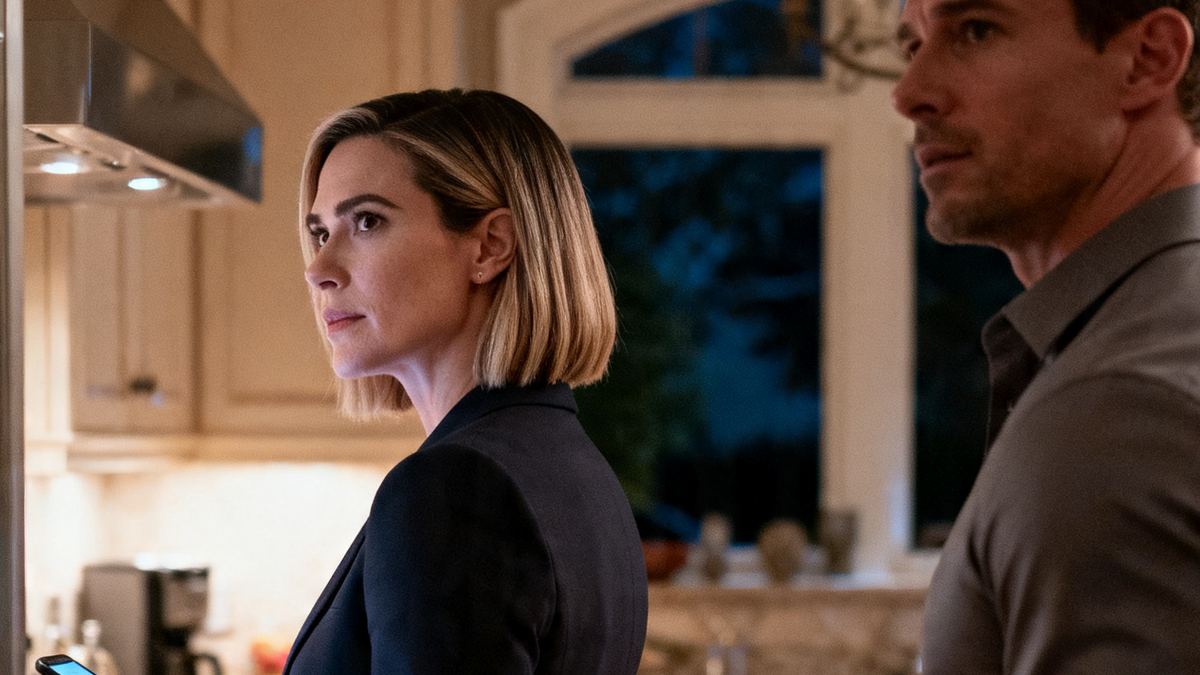
For the first time in our ten-year marriage, Derek had no retort. The king, the dragon-slaying visionary, just stood in his ten-thousand-square-foot kingdom, holding a broken champagne glass, his algorithm shattered. I walked past him, my heels clicking on the cold marble floor, and went upstairs to kiss my sleeping children goodnight.
A year later, and the chaos still has a different shape. Derek and I aren't divorced yet. He’s too smart to risk his career, and I’m too smart to leave without a meticulously finalized separation agreement that protects my new income and my pension. We’re in a grim little chess match of couples’ therapy and separate bedrooms, a state of mutually assured destruction. Last Tuesday, my morning meeting ran short and I came home early. I walked into the kitchen and found him at the sink, sleeves rolled up, his hands submerged in soapy water, scrubbing the remains of the kids’ mac and cheese off a pot. He was doing it wrong, water splashing everywhere, but he was doing it. He looked up, startled, caught in the act of a basic domestic chore that a year ago he’d have called my “mission.”
I didn’t say a word. I just poured myself a glass of water, leaned against the counter, and watched him. The clock on the stove ticked. The only sound was the splash of water and the clink of a clean pot hitting the drying rack. The view from my new office on the 18th floor is stunning, but this right here—watching a former king scrub a cheese-encrusted pot in silence—is a view nobody can take from me.