The cake hit me half a second later.
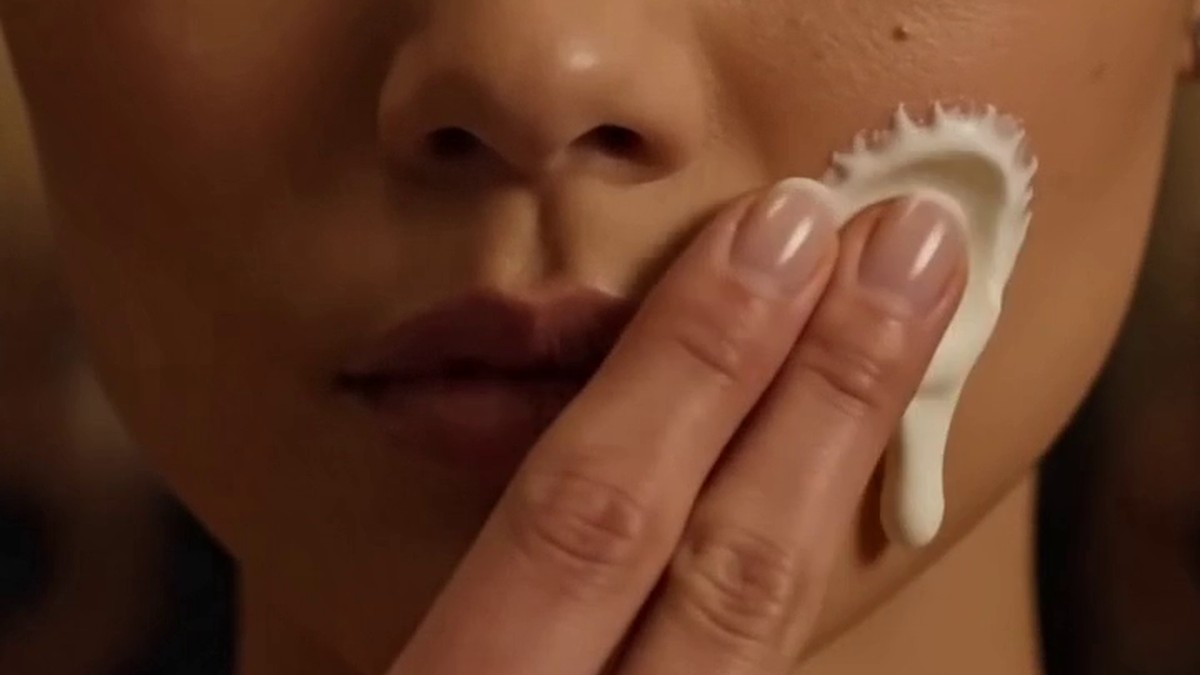
Cold frosting detonated across my cheek, dragging streaks of white down the front of my coral silk gown. Gasps tore through the Hamilton Foundation Gala like a current. The impact burned. I didn’t move.
No flinch.
No sound.
Not even a blink.
The grand ballroom turned to stone around me.
The string quartet stumbled over a note and lost it entirely. Crystal glasses hovered, forgotten, inches from parted lips. Every conversation dissolved beneath the blaze of the chandeliers as hundreds of the city’s wealthiest people turned to watch.
Eleanor stood a few feet away, devastating in crimson — a gown the color of her intentions. A champagne flute hung loosely from her fingers as she surveyed what she’d done.
She looked satisfied.
Triumphant.
Like a woman who had finally put the right person in her proper place.
Then came the laughter.
Cautious at first.
Then swelling.
Then vicious.
Phones climbed into the air from every corner of the room, hungry to catch my disgrace and feed it to the world before the frosting had even dried.
“Money has never once bought class,” Eleanor announced, her voice gliding clean through the crowd.
She moved closer.
“Some people simply never learn where they belong.”
The guests ate it up.
Of course they did.
To them, I was an anomaly. A woman who had materialized at elite gatherings without pedigree or explanation. Someone they speculated about in hushed tones but never bothered to understand.
I lifted two fingers and drew them slowly across my cheek, collecting frosting. I looked at it for a beat.
Then I let it fall onto the polished marble floor.
The soft, tiny sound was somehow deafening.
The laughter began to die.
I raised my eyes and fixed them on Eleanor.
Her smile was still there.
But behind it, something had shifted. Something small and structural, like a hairline crack spreading through the foundation of a wall.
Because I wasn’t performing the scene she’d written for me.
No tears threatening the corners of my eyes.
No heat rising in my face.
No trembling lip, no wounded retreat.
Just stillness.
And stillness, when someone expects you to shatter, is the most frightening thing in the world.
What Eleanor hadn’t been told — what not one person in that ballroom knew — was that this was never her territory.
It was mine.
Every chandelier blazing overhead. Every marble column rising to the ceiling. Every program, every initiative, every dollar the Hamilton Foundation had ever put its name on. Every scrap of influence these people had spent their lives cultivating.
It all breathed because of a single anonymous donor whose name had never once appeared in a press release.
Four point two billion dollars.
Quietly, deliberately, invisibly channeled into the foundation they toasted every year with their finest champagne.
A fortune Eleanor had made it her personal mission to guard.
A fortune she was absolutely certain belonged to someone else.
I took one slow, measured step in her direction.
The room went airless.
“You’re right,” I said quietly.
The words moved through the ballroom like smoke.
“Some doors are meant to stay shut.”
Eleanor’s grip tightened around the stem of her glass until her knuckles went pale.
A crack of uncertainty split open across her expression.
“But some doors,” I continued, “only exist at all because the people you dismiss built every single one of them.”
Confusion rippled outward through the crowd.
Whispers ignited.
For the first time all evening, Eleanor looked like a woman standing on ground she wasn’t sure would hold.
I reached slowly into my clutch.
Then the ballroom doors swung wide open behind me, the sound of them hitting the walls echoing off every marble surface in the room, and the man the entire room had been waiting for dropped to one knee the instant his eyes found mine.
Daniel.
He was still in his travel coat, collar undone, the kind of disheveled that only happens when a man has crossed three time zones in one day because there wasn’t a single hour left to waste. His eyes found mine across the entire length of that ballroom — through the chandeliers, through the crowd, through the frosting still cooling on my gown — and they didn’t waver for a second.
One knee. Both hands open.
No ring.
He didn’t need one.
The silence that followed was a different animal entirely from the one Eleanor had manufactured. That silence had been cruel and performative, designed to diminish. This one was structural. It rearranged the room.
“Vivienne.” His voice carried without effort. “I’ve been on four planes in thirty-one hours. I’m not doing a speech. I just need you to know that I know. Everything. All of it. And I’m still here. On the floor of your ballroom.”
*Your ballroom.*
He said it simply. As a fact.
The word detonated in slow motion. I watched it move through the crowd in a wave — confusion first, then recalibration, then the particular vertigo of wealthy people realizing they’d been standing in someone else’s house for years without knowing it.
I felt Eleanor before I heard her. The sharp intake of breath. The subtle shift of her heels on the marble.
“What,” she said — not a question, barely a word, more like the sound a structure makes before it gives — “does he mean by *your* ballroom?”
I didn’t look at her yet.
I crossed the space between me and Daniel in eight steps, reached down, and took both his hands. He rose. We stood close enough that I could see the exhaustion carved under his eyes and the absolute steadiness living behind it.
“You could have called,” I said quietly.
“You would have told me to stay home.”
“Yes.”
“That’s why I didn’t call.”
There was a beat. Something private inside something very public.
Then I turned.
Eleanor was still holding her champagne flute. It was the only thing anchoring her to the moment. The satisfaction that had lived so comfortably on her face forty seconds ago had been replaced by something rawer — not embarrassment, not yet, but the precursor to it. The moment before a person understands the full geometry of what they’ve done.
“Eleanor.” I kept my voice even. “Four years ago, when you sat on the foundation’s acquisitions committee and voted to reject the Meridian housing initiative — do you remember why?”
She blinked. The non sequitur landed like a step that wasn’t there.
“That — ” She straightened. “That proposal was underfunded and the provenance of the primary donor was unverified. It was a sound decision.”
“It was thirty-two million dollars,” I said. “That would have housed four hundred and eleven families. The provenance was unverified because I hadn’t decided yet whether I wanted my name attached to anything that would put me in a room with you.”
The flute slipped in her fingers. She caught it.
Around us, the room had completely stopped pretending to do anything else. No one was checking a phone. No one was reaching for a drink. Even the servers along the back wall had gone still, trays balanced at their shoulders like they were waiting for a verdict.
“I don’t know what game you think you’re playing,” Eleanor said, her voice edged sharp enough to cut. “But you cannot stand in this room and make claims —”
“Harrison.” I said the name to the air.
From the far side of the room, near the donors’ registration table, a man in a gray suit looked up. Late fifties. Reading glasses pushed up into his silver hair. The kind of unremarkable face that belonged entirely on purpose to a person whose job required he never be remembered.
He crossed the room with the unhurried authority of someone who had attended exactly this moment in his imagination for quite some time.
“Ms. Crane,” he said.
“Mr. Beaumont.” I turned slightly to include the room. “Harrison Beaumont. He’s been the silent legal administrator of the Hamilton Foundation’s primary endowment trust for eleven years. Harrison — would you like to introduce yourself to the board, or should I?”
Eleanor’s eyes moved to Harrison. Something in his expression told her everything before a single word left his mouth.
“The Aldenvale Trust,” he said, producing a leather-bound document folio from under his arm with the timing of a man who had carried it there for exactly this purpose, “was established in 2013. The trust’s sole beneficiary and directing donor is Ms. Vivienne Crane. The foundation’s operating endowment, its real property, its named initiatives, and its gala fund — including the venue you’re all currently standing in — fall under its jurisdiction.”
Somewhere near the bar, a glass met the countertop with a sound like punctuation.
Eleanor took a step backward. It was small and involuntary — the kind of step a body takes when the mind is still catching up.
“That’s not —” She stopped. Started again. “The foundation’s primary donor is a private institution. It’s always been —”
“Anonymous,” I finished. “Yes. I know. I made it that way.”
I let that sit for a moment.
“You’ve spent four years sitting on committees that controlled my money,” I said. “Making decisions about what was worthy. Who belonged. What doors opened and for whom.” I tilted my head slightly. “Do you understand now why I never introduced myself?”
The hairline crack I’d seen move across her face earlier had become something structural. Her jaw was set, but the set of it was defensive now, not powerful. The difference was everything.
“You could have said something.” The words came out smaller than she intended.
“I tried,” I said. “Three times. At the Ashford dinner in 2021. At the waterfront summit. And once, very directly, in the elevator of this building after the spring luncheon. Each time you spoke before I finished a sentence. Each time you decided who I was before I said a word.” I paused. “So I stopped speaking. And I let you believe whatever made you comfortable. And I watched.”
A long beat.
“Tonight you threw cake at me in front of four hundred people and explained that I don’t know where I belong. I thought it was time to clarify.”
Whatever Eleanor had planned to say next didn’t come. Her mouth opened, then closed. Her gaze moved across the room — searching for an ally, a familiar face, someone who might offer the traction she’d lost — and found only the particular blankness of people recalibrating their loyalties in real time.
The board chair, Gerald Foss, cleared his throat from somewhere to my left. He was seventy-three years old and had the practiced composure of a man who had survived forty years of boardroom catastrophes by choosing the right moment to speak and the right moment to be extraordinarily still. This, his posture said, was a moment for stillness.
Daniel’s hand found the small of my back. Steady. Unhurried.
I reached into my clutch again — the gesture I’d started before the doors had swung open and rearranged everything — and finished it. A single folded card. I held it out to Harrison, who took it without looking at it.
“That’s my formal introduction to the board,” I said to the room. “Long overdue. I’ll schedule a proper meeting with all of you next week. We have work to do.” I thought of the Meridian files I’d spent a year reconstructing in my mind. “Starting with a proposal I should have funded four years ago.”
I turned back to Eleanor.
The cruelty had completely left her face. What remained was something I hadn’t expected to feel anything about — something almost like grief. She was still beautiful in her red gown, still formidable in the architecture of her cheekbones and the lifelong precision of her posture. She had built something real in this world, in her own way. That wasn’t nothing. It just wasn’t enough to make what she’d done tonight acceptable.
“I don’t want your apology,” I said quietly, for her alone. “I want you to think about the thirty-two million. I want you to think about four hundred and eleven families. And I want you to think about how much ground you lost tonight because you decided who I was before I walked through the door.”
I left space for that. Then I turned away from her — not with fury, not with performance — simply turned the way you turn from something that no longer requires your attention.
The string quartet, bless them, chose that precise moment to find their footing again. A Brahms intermezzo climbed carefully into the air, filling the silence in the room like water finding its level.
Conversations resumed. Quietly at first, then with the particular energy of a room that has witnessed something it will be discussing for years.
Daniel leaned close. “You had that entire speech ready.”
“I had it ready for two years.”
“Were you waiting for her to throw something?”
I thought about it honestly. “I was waiting for her to give me a reason that was visible,” I said. “Something the room could see. Something that couldn’t be disputed or reframed or quietly explained away over drinks later.” I glanced down at the frosting still marking my gown. “She was generous enough to provide one.”
He laughed — a real laugh, brief and warm — and the sound of it loosened something I’d been holding in my chest since the moment the cake left her hand.
Gerald Foss materialized at my elbow with the quiet inevitability of a man who had decided which way the wind was blowing and adjusted his course accordingly.
“Ms. Crane,” he said. “I believe a proper introduction is in order.”
“I believe so too, Gerald.”
His eyes moved briefly to the frosting on my gown. A lifetime of diplomacy kept his expression neutral, but something shifted at the corner of his mouth.
“Remarkable evening,” he said.
“They usually are,” I said.
He offered his arm to lead me toward the board’s table at the far end of the room. I took it.
I looked back once. Eleanor stood where I’d left her, still holding her champagne flute, the room flowing around her like water around a stone. Someone would reach her eventually — an assistant, a friend, a careful acquaintance — and steer her gently toward an exit and a car and the privacy she’d need to reconstruct herself. She would recover. Women like Eleanor always did. But she would remember tonight. The room had seen her throw the cake, and the room had seen what I did with the stillness.
The chandelier light caught the frosting on the marble floor as I passed it — one small, pale mark where the moment had landed — and I didn’t look down at it again.
I kept walking.
The room opened ahead of me, all blazing light and the low architecture of power, everything I’d built quietly and deliberately across a decade of invisibility.
It had always been mine.
Tonight, it simply knew my name.