Margaret stood at her third-floor window, staring down at the same brown-and-white lump of fur that had been tormenting her for three years. The dog lay curled on a faded blanket near the entrance to the apartment building, one ear twitching in its sleep. Margaret’s jaw tightened. She grabbed her phone and dialed animal control for what felt like the hundredth time.
“Hello, I’m calling again about the stray in the courtyard of 241 Linden Street. Yes, the brown mutt. She needs to be removed immediately.”
The voice on the other end gave a mechanical promise to add it to the list. Margaret hung up, the uselessness of it all making her chest feel tight. Downstairs, she spotted her neighbor Susan pinning laundry to the line strung between two birch trees. Margaret stormed out.
“Susan, I swear, you and half the building keep feeding that animal. She thinks she owns the place now.”
Susan shook out a damp pillowcase and turned with the calmness of a woman who had heard this argument before. “Her name’s Lady, Margaret. She’s quiet, the kids love her, and since she’s been here the trash bags don’t get ripped open every night. What’s the harm?”
“The harm is I have a German shepherd! A purebred! I paid over two thousand dollars for her. I have her on a specialized diet, I schedule vet visits like clockwork. That stray just lounges around for free and everyone acts like she’s a saint.” Margaret’s voice pitched higher. “It’s not fair.”
Susan just looked at her. “Fair to whom? The dog didn’t ask to be born, and she certainly didn’t ask to be dumped at the subway station. The kids found her in a cardboard box, Margaret. They brought her here hoping someone would take her. No one did, so now she’s our collective responsibility. You could try a little of that.”
Margaret spun on her heel and marched back inside, the anger roiling in her stomach. From the corner of her eye, she saw Lady lift her head, dark eyes tracking her without malice, then drop back onto the blanket. In three years, the dog had never so much as growled at her.
Alma, Margaret’s shepherd, was due to whelp in two months. The pregnancy had been meticulously planned. She’d studied forums, consulted the breeder, and secured the promise that Dr. Harris, a renowned local vet, would be on call around the clock. “The sire is a working champion,” she told her friend on the phone, “these puppies will be exceptional.”
Labor began on a thunderous night in early June. Margaret sat on the floor of the whelping box, whispering reassurances as Alma panted and pushed. Five puppies arrived. Four of them squealed and wriggled straight toward their mother’s belly, tiny mouths latching on with fierce instinct. The fifth lay apart on the towel, barely moving.
“Why isn’t she cleaning him?” Margaret’s hands shook as she nudged the silent puppy closer. Alma gave him a cursory sniff, then deliberately turned her head away and focused on the rest of the litter.
Dr. Harris arrived thirty minutes later, his expression grave after a brief examination. “He’s extremely weak. The mother senses it—they often reject the runt to conserve energy for the others. His chances are slim.”
“We can hand-feed him,” Margaret insisted. “I’ll use a syringe, a bottle, whatever it takes.”
“Mrs. Calloway, he needs more than milk. He needs warmth, the stimulation of being licked, the constant contact. Puppies this young almost never survive without a nursing mother. I’m sorry.”
Margaret refused to listen. For three days, she barely slept. She held the puppy against her chest, fed him formula drop by drop with a syringe, massaged his tiny belly, and prayed. But he grew weaker, his skin looser over his ribs, his cries fading to barely audible mews. Alma ignored him like he was already gone.
On the fourth morning, a knock came at the door. Susan stood there holding a grocery bag with a bunch of parsley sticking out. “Listen, the lady on the fourth floor said Lady had a litter about a month ago. All her pups got adopted, but she might still have milk. You could try—just for a little while.”
The suggestion hit Margaret like a slap. “Are you insane? You want me to put my pedigreed puppy with that stray? That dirty yard dog?”
“I want you to save a life,” Susan said without heat. “But it’s your choice.”
She left. Margaret shut the door and sagged against it, her eyes drifting to the shoebox where the puppy lay barely breathing. The clock on the wall ticked. Late afternoon light slanted through the blinds. She hated what she was about to do, hated it with a fury that felt like glass shattering inside her chest.
Just before dusk, Margaret lifted the box and walked downstairs. Lady was in her usual spot by the entrance, chin resting on her paws. She raised her head when Margaret approached, tail giving a slow, uncertain thump-thump against the concrete. Margaret knelt, heart hammering, and set the box on the ground. She opened the lid.
Lady stood. She didn’t bark or back away. She stretched her muzzle forward and deeply sniffed the limp little creature, her nostrils flaring. For a long, suspended moment, nothing happened. Then Lady’s tongue came out—soft, deliberate—and licked the puppy’s face. Once. Twice. She looked up at Margaret, held her gaze, and then settled onto her side with a quiet sigh, exposing her belly. With her nose, she nudged the puppy toward a nipple.
The tiny shepherd squirmed, scenting the milk. He latched.
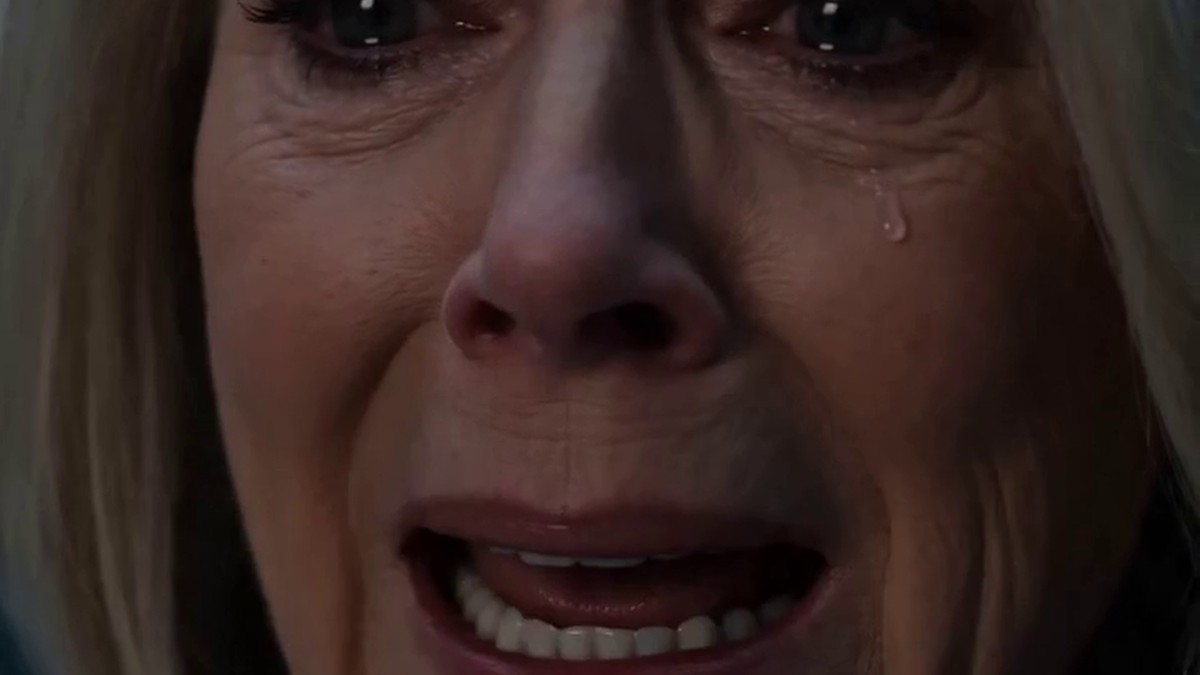
Margaret’s hand flew to her mouth. A sob she hadn’t felt coming broke free. She sank onto the low wall beside the entryway and watched the stray dog she had tried to evict for years cradle her puppy with infinite patience. Susan appeared from somewhere, wrapped a blanket around Margaret’s shoulders, and said nothing.
For two weeks, Margaret brought the puppy down three times a day. She started carrying down high-quality dog food for Lady, then a thick orthopedic mat, then a portable heater when the nights turned chilly. She sat on the pavement while the puppy nursed and talked to the mutt in a low voice, telling her about the litter, about the way Alma had rejected her own, about the fear that had hollowed her out those nights in the whelping room. Lady listened, one ear cocked, occasionally licking Margaret’s wrist as if to say, *It’s okay.*
The puppy gained weight. His coat thickened, his eyes opened, his paws grew impossibly large. At four weeks, it was impossible to tell him apart from his siblings. Margaret named him Lucky, because he was. She kept him.
That spring, something shifted permanently inside Margaret. She stopped calling animal control. Instead, she called a carpenter and had a sturdy insulated doghouse built, which she placed near the birch trees. She paid for Lady’s vaccinations and spay surgery out of her own pocket. When neighbors asked why, she said simply, “I owed a debt.”
The courtyard became a strange, beautiful sight: Margaret walking Alma on one leash and Lucky on another, with Lady trotting beside them without a collar, as free as air. People stared, but Margaret didn’t care. She’d learned the difference between worth and value.
Lady lived another eight years, graying around the muzzle but keeping her calm, gentle eyes. When she died one warm autumn morning, curled in her doghouse with a stuffed toy Lucky had given her, Margaret wept like she’d lost a sister. She knelt on the cold ground and pressed her forehead to Lady’s still-soft fur.
“Forgive me,” she whispered. “For every day I didn’t see you.”
The residents of 241 Linden Street gathered that afternoon. They planted a small cherry tree near Lady’s spot and mounted a plaque at its base: *Here rested Lady. The kindest heart in our courtyard.* Margaret stood apart from the crowd, hand resting on Lucky’s head, her throat too tight to speak.
She never forgot. She started volunteering at the county animal shelter every Saturday, scrubbing kennels, walking dogs, writing adoption profiles that made grown men cry. She paid for emergency surgeries for strays whose owners had abandoned them and fostered litter after litter of rejected puppies. When her son asked her why, she gave the same answer she always did.
“I’m repaying a lesson I learned the hard way. Kindness doesn’t need a pedigree. Sometimes the biggest heart beats in the chest of a dog who’s never had a home.”
Lucky lived to be fourteen, a loyal giant who still liked to nap in the old doghouse that smelled faintly of another dog. And every evening, when Margaret sat on her balcony watching the sunset, she could still feel Lady’s steady presence in the quiet of the courtyard, a permanent reminder that love has no breed, and that sometimes the best teachers have muddy paws and no pedigree at all.