She Tried to Evict the Yard Dog for Three Years. Then She Placed Her Dying Puppy in Its Paws.
The November air bit through Elaine’s cashmere cardigan as she knelt on the cold concrete, a shoebox trembling in her hands. Inside, the runt of her German shepherd’s litter barely moved, each breath a tiny, failing flutter. And before her, blinking up with amber eyes, was the scruffy brown dog she’d spent years trying to banish.
Three years of war. Elaine Morrison had moved into the Lake Oswego condo complex with her champion-line shepherd, Kaiser, and immediately deemed the communal yard a no-stray zone. The mutt, a wiry thing the neighbors called Pancake for the way she flattened herself onto the faded welcome mat, was an eyesore.
Every week, Elaine dialed Animal Control. She pitched formal complaints to the HOA, citing “sanitary concerns” and “property values.” She cornered Cheryl, the soft-hearted retired nurse across the breezeway, as she set out a bowl of kibble. “You’re encouraging her,” Elaine would snap. “That dog has no business here. She’s not even vaccinated. My Kaiser cost me three thousand dollars—I’m not letting some flea-bitten stray ruin his walks.”
Cheryl would just smile, tuck a strand of silver hair behind her ear, and say, “Elaine, Pancake’s the gentlest soul. She keeps the raccoons away and doesn’t make a sound. Let her be.”
But Elaine wouldn’t let her be. She saw Pancake as an impurity in her curated life—a living, breathing reminder that not everything could be controlled by pedigree or price tag. Every time she passed the mat, Pancake’s tail would thump once, twice, a hopeful drumbeat that only deepened Elaine’s resentment.
Then Kaiser’s pregnancy became the focal point of every waking hour. Elaine had spared no expense: a specialized whelping box shipped from Colorado, a reproductive vet on 24-hour call, a stud from a renowned working line in Montana. The puppies would be elite, and their sale would cover the investment and then some.
The labor began at two in the morning. Kaiser, panting and pacing, delivered five wet bundles into the world. Elaine wept with relief as the first four squirmed and squealed, rooting for milk. But the fifth lay apart, a tiny gray shape that Kaiser sniffed once before turning away.
“Why isn’t she licking him?” Elaine’s voice cracked. Dr. Lewis, the vet who’d rushed over in slippers, examined the pup with gentle hands. “He’s severely underdeveloped. The mother’s instincts are telling her to conserve energy for the strong ones. I’m sorry, Elaine, without constant maternal stimulation and warmth, he won’t last long.”
Elaine refused to accept it. She bought syringes, puppy formula, a heating disc. For three days, she dozed in the whelping room, dosing the tiny mouth drop by drop, rubbing his belly with a warm cloth. The puppy grew thinner, his mews fading to silence. Kaiser ignored him as if he were already gone.
On the fourth evening, Cheryl knocked. Through the screen door, she held a foil-covered casserole and a hesitant expression. “I heard about the little one,” she said softly. “Elaine, Pancake’s milk came in two weeks ago. The last of her puppies went to a new home yesterday. She’s still heavy with milk and fretting for something to nurse. I know it sounds crazy, but…”
“Absolutely not.” Elaine’s voice came out like a slap. “I will not degrade my purebred dog by letting a yard mutt nurse him.”
Cheryl didn’t argue. She set the casserole on the stoop and walked back into the dusk.
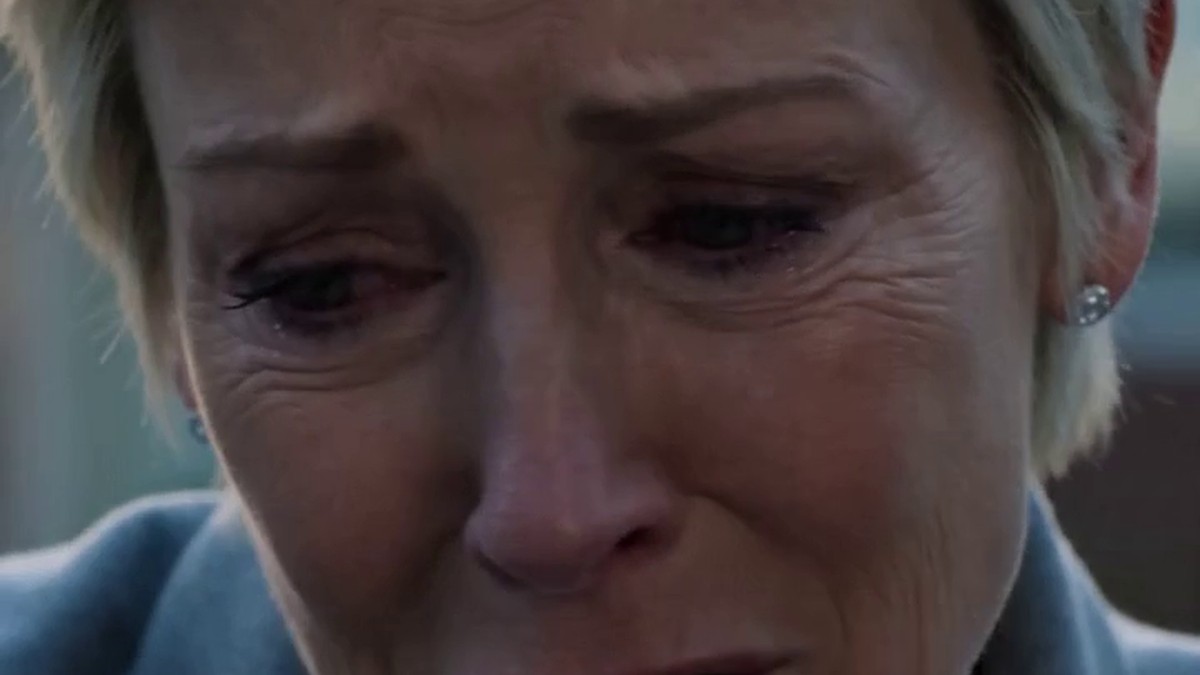
That night, the puppy’s breathing slowed so much that Elaine pressed her ear to his ribs to be sure his heart still beat. Sobbing, she bundled him into a shoebox lined with flannel and carried him down the stairs.
Pancake was in her usual spot on the mat, chin resting on her paws. When Elaine knelt, the dog raised her head, ears pricked forward. The box opened. A tiny, cold nose emerged.
Pancake leaned in. She smelled the puppy thoroughly, from his whimper to his twitching tail. Then she looked up at Elaine with a gaze that seemed to hold no memory of the years of shooing hands and angry shouts. Her tongue, warm and steady, began to bathe the pup’s face.
Elaine forgot to breathe. Pancake shifted, rolling onto her side with a soft grunt. Her teats were full. The pup, sensing warmth and the scent of milk, began to paddle with new purpose. He found a nipple and latched on with a desperate, greedy suction that made Elaine’s tears spill over.
“Well, I’ll be.” Cheryl had appeared silently, wrapped in a bathrobe. “That’s a miracle right there.”
Elaine couldn’t speak. The stray she’d tried to evict was now the only reason her puppy still had a heartbeat.
For the next two weeks, Elaine made the trip down to the mat three times a day. She brought premium wet food for Pancake, a fleece-covered orthopedic bed, even a portable heat lamp for the chilliest nights. She sat on the concrete, her tailored slacks forgotten, watching the mutt clean and nurse the pup with a tenderness that humbled her.
The puppy, whom she’d started calling Lucky in her head, plumped up. His eyes opened. His legs grew sturdy. By the time he could totter back to the condo on his own, Kaiser finally acknowledged him, sniffing him with a grudging acceptance.
Elaine never called Animal Control again. She had a small, insulated doghouse constructed near the building’s garden, with a plaque that read “Pancake’s Place.” She paid for the dog’s vaccinations and spay herself, and when the HOA sent a letter about the structure, she marched into the next meeting with a photo of Lucky healthy and a speech that left the board silent.
Lucky grew into a magnificent dog, a blend of his mother’s bold lines and some indefinable spark of resilience. Elaine kept him, selling the other three pups. On walks, the trio became a familiar sight: the regal Kaiser, the bounding Lucky, and the gentle Pancake trotting alongside as if she’d always belonged.
Pancake lived eight more years in that sunny spot by the breezeway. When she passed, the whole complex mourned. Elaine wept harder than she had at her own mother’s funeral, pressing her face into the old, frayed mat that still carried the dog’s scent.
At the small memorial Cheryl organized, Elaine spoke, her voice raw. “I spent years looking for value in papers and price tags. Pancake showed me that the greatest pedigree is a heart capable of loving without condition. I owe her a debt I’ll never repay.”
She kept that promise. Elaine now funds a mobile spay-and-neuter clinic and spends weekends at the county shelter, bottle-feeding orphaned litters. When people ask why a woman with two purebred dogs devotes her life to mutts, she tells the story of a cold night, a shoebox, and a stray who taught her that kindness doesn’t come with a breed standard.
And somewhere, in the corner of the yard, a plaque still stands: “Here lay Pancake—the best of us all.”