Forgotten in the Snow
The silence woke Nancy Harper before the alarm. The house was still heavy with the aftermath of Christmas Eve—crumpled napkins, candle wax dripped onto the mantel, the faint ghost of roasted turkey and cinnamon. She pulled on her robe and shuffled toward the kitchen, and then she remembered. Shadow. The dog’s bowl hadn’t been filled since yesterday afternoon. She hadn’t heard a single bark, a single whimper. Her chest tightened. She pushed aside the curtain and stared into the pale blue dawn. The backyard was a blinding sheet of fresh snow, the doghouse a dark lump half buried under drifts. And Shadow wasn’t on the porch. He wasn’t anywhere.
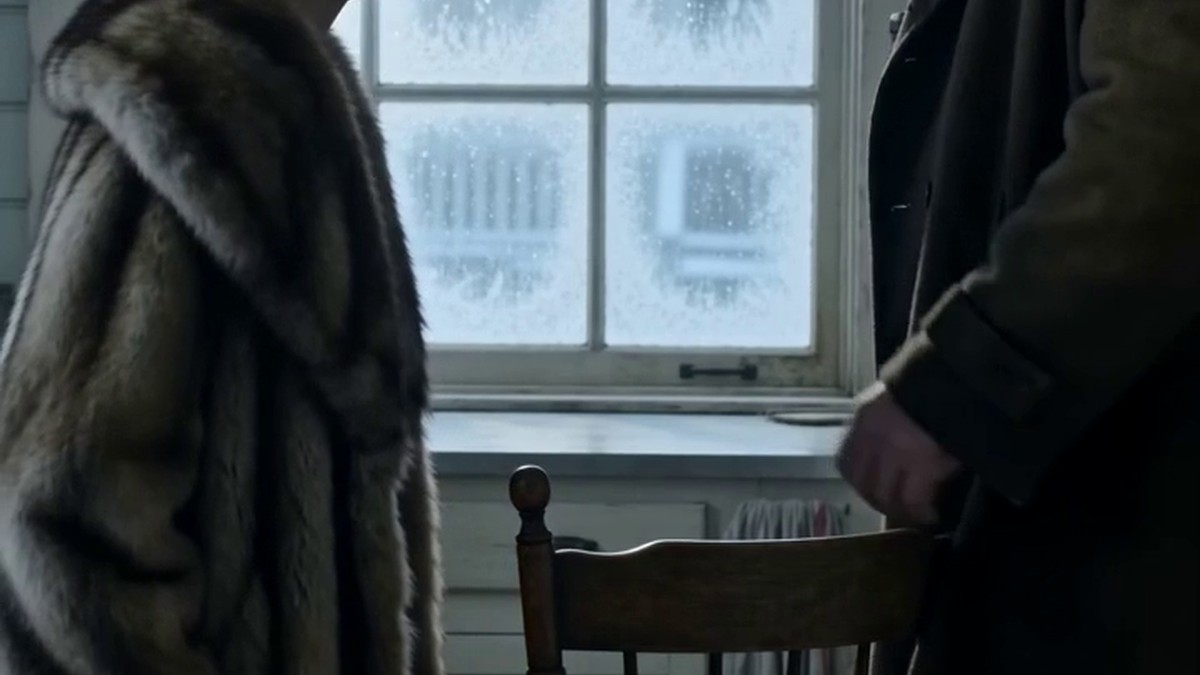
Nancy yanked on her husband’s old barn coat over her nightgown, shoved her feet into unlaced boots, and waded into the cold. The air stung her lungs. She called his name—first softly, then with rising panic. Wind swallowed her voice. The doghouse was empty, the straw frozen and still. She was already crying when she spotted the trail: small, messy footprints and the drag of a dog’s belly leading around the corner of the house, toward the cellar door. She followed, heart hammering, and there, tucked against the stone foundation in a pocket of still air, lay Shadow.
The big grey dog was curled so tightly he looked like a drift himself. And pressed against his chest, barely visible beneath the dog’s fur, was a small shape in red fleece pajamas. Connor. Her grandson. His cheeks were flushed with cold, but his breath came in tiny puffs. Shadow had wrapped himself around the boy like a living blanket, his nose tucked into Connor’s hair.
Nancy’s scream brought the whole house to its feet.
Twelve hours earlier, no one had been thinking about the dog. The Harpers’ farmhouse in Willow Creek, Vermont, was packed with the noise and warmth of an old-fashioned Christmas Eve. Their daughter Katie, her husband Mark, and six-year-old Connor had driven up from Boston in the middle of a snowstorm, and Bill Harper had spent the afternoon shoveling the driveway twice just to keep up. Inside, the kitchen became a battlefield of roasting pans and simmering cranberry sauce. Nancy darted between the stove and the dining room, assigning tasks, laughing too loudly, forgetting where she’d set her glasses. Bill hauled firewood and bottles from the cellar, his face ruddy from the cold each time he came in, stamping snow off his boots. Through the window, the grey shape of Shadow moved like a shadow itself, padding quietly from the fence to the porch and back again, waiting.
Shadow had come to them eight years ago, a nameless, shivering heap Bill had found in a cardboard box by the side of Route 12. The rain was coming down in sheets, and the puppy, one of a litter someone had tossed away, was the only one still breathing. Bill had meant to drop him at a shelter, but Katie, then a teenager, had cried and pleaded. So the dog stayed. He grew into a massive, silent creature the color of woodsmoke, with yellow eyes that missed nothing. They named him Shadow, and he lived in the yard, guarding the property, sleeping in a drafty shed beside the woodpile. Bill fed him morning and night, but no one ever invited him inside. He was a tool, not a family member—reliable but invisible. That’s just the way it was.
On Christmas Eve, the chaos swallowed every small routine. Nancy worked from dawn, barely sitting. The turkey came out perfect, the potatoes were mashed, the gravy smoothed. By the time everyone gathered around the table, the windows had gone dark and the snow had started again. Shadow’s bowl, a battered stainless steel dish on the porch, sat empty. Lunch came and went—she’d forgotten to fill it. Then dinner approached, and in the whirl of clinking glasses and boisterous toasts, no one glanced at the porch. Connor asked about the dog once, tugging his grandmother’s sleeve. “Can Shadow see the tree, Grandma? He’s alone out there.” Nancy had kissed the top of his head and said, “Later, sweetheart. Eat your supper.” And then the church bells rang ten, and everyone forgot.
The living room glowed with fairy lights and the warm fuzz of too much food. Bill brought out his guitar and everyone sang carols off-key. Connor fell asleep on the rug, clutching a new toy truck, and Katie carried him to the spare bedroom. The grown-ups lingered over eggnog, and the talk turned lazy, full of old stories. Outside, Shadow sat on the porch, snow building on his back like a second coat. He didn’t whine. He just watched the lighted windows, ears twitching at the bursts of laughter that leaked through the glass. His bowl remained a circle of bare metal in the dark.
Around two in the morning, the house finally settled. The last lamp clicked off. The snow fell thicker, and the temperature dropped hard, plunging toward zero. The old farmhouse creaked in the wind, and inside, everyone slept the dead sleep of celebration.
Connor woke up around three. The house was strange and silent, and through the window he saw the snow falling in fat, slow flakes. He wanted to see it up close. He wanted to catch one on his tongue, the way his mom had shown him when they arrived. So he slipped out of bed, pulled his coat over his pajamas, and tiptoed down the back stairs to the mudroom. The door to the yard had an old latch he could reach on his toes. He stepped outside, and the cold hit him like a fist. He laughed a little, sticking out his tongue, and the door swung shut behind him. The click of the latch was small and final.
Connor tried the handle. It wouldn’t budge. He pushed, pulled, called out, but the storm ate his voice. The snow quickly soaked through his slippers. He started to cry, small panicked sounds that vanished into the howl of the wind.
And then Shadow was there. The dog materialized from the white swirl, his grey coat blending with the blizzard except for the glow of his eyes. He didn’t bark. He simply pressed his heavy body against the boy, nudging him away from the door, away from the open yard where the wind cut like a blade. Connor stumbled, clinging to the dog’s fur. Shadow led him around the side of the house, to the narrow space beside the cellar entry where a tarp covered bales of straw and the foundation stones still held a ghost of warmth from inside. The dog circled, pawed at the straw until there was a nest, and then lay down with a grunt, pulling Connor against his chest with one massive paw. The boy’s sobs quieted. He buried his face in the dog’s neck and felt a steady, deep heartbeat. Shadow curled around him, tail covering the boy’s frozen feet, breath turning to steam in the little cocoon they shared. He didn’t move. He didn’t sleep. He just stayed.
When Nancy found them, the whole world seemed to compress into that one small, defiant pocket of life. Bill came running in his long johns and unlaced boots, Katie’s screams piercing the morning, Mark trying to lift the boy and the dog at once. But it was Bill who knelt first and laid a trembling hand on Shadow’s head. The dog’s eyes opened slowly. Frost had rimed his whiskers, and his body was so cold it seemed to crackle when he finally uncurled. He let them take Connor, then rose stiffly and looked at Bill as if to say, Is he safe now?
They carried Connor inside, wrapped him in quilts by the woodstove, fed him warm cider. His fingers and toes were pink and wiggling, no frostbite. He kept asking for Shadow. “He kept me warm, Grampa. He’s a good boy. Please let him come in.”
Bill Harper stood in the kitchen, looking at the empty bowl on the porch through the window, then back at the old grey dog still standing at the cellar door, waiting for permission. Something hard and long held inside him cracked. He pulled open the door.
Shadow stepped into the house as if walking on holy ground. His nails clicked on the floor, and he glanced at Nancy, then at Bill, as if expecting to be shooed out. Instead, Nancy knelt and buried her face in his cold fur, crying without shame. She carried that empty bowl inside, filled it with warm turkey broth and chunks of meat from the Christmas dinner, and set it by the stove. Shadow ate with the slow, disbelieving care of an animal who’d learned never to trust a full dish.
Katie, still shaking from the scare, sat on the floor next to her son and stroked Shadow’s ears. Mark, the son-in-law who’d always muttered about “that big mutt in the yard,” said nothing at all. He just watched.
Later that morning, when the stories had been told and retold, Bill sat by the stove with his coffee and the dog at his feet. He didn’t speak much—he never did—but his hand stayed on Shadow’s broad head. The dog’s tail thumped once, twice, against the floorboards. It was the first time in eight years they’d sat together like that, not as master and guard dog, but as something closer.
Years passed. Shadow’s muzzle went completely white, and he moved slower, but he never spent another night outside. His bed by the woodstove became a permanent fixture, thick with old quilts. Connor, growing taller each summer, would race through the door on visits and drop straight onto the floor next to the dog, telling him elaborate stories about school and the Red Sox. And when the family gathered again for Christmas, the turkey was carved and the eggnog poured, Shadow lay right in the middle of the living room, part of the chaos, his bowl never empty.
One snowy evening, when Connor was a teenager and the house was quiet, Bill came in from shoveling and found the dog asleep in the boy’s lap. He stood watching them for a long moment, then said to Nancy, “That dog earned his place a hundred times over. We were just too blind to see it.”
Nancy set two mugs of tea on the table and sat beside her husband. Shadow’s tail gave a lazy wag without waking. The fire crackled. Outside, the wind moaned, but inside, the bowl was full, and that was all that mattered.