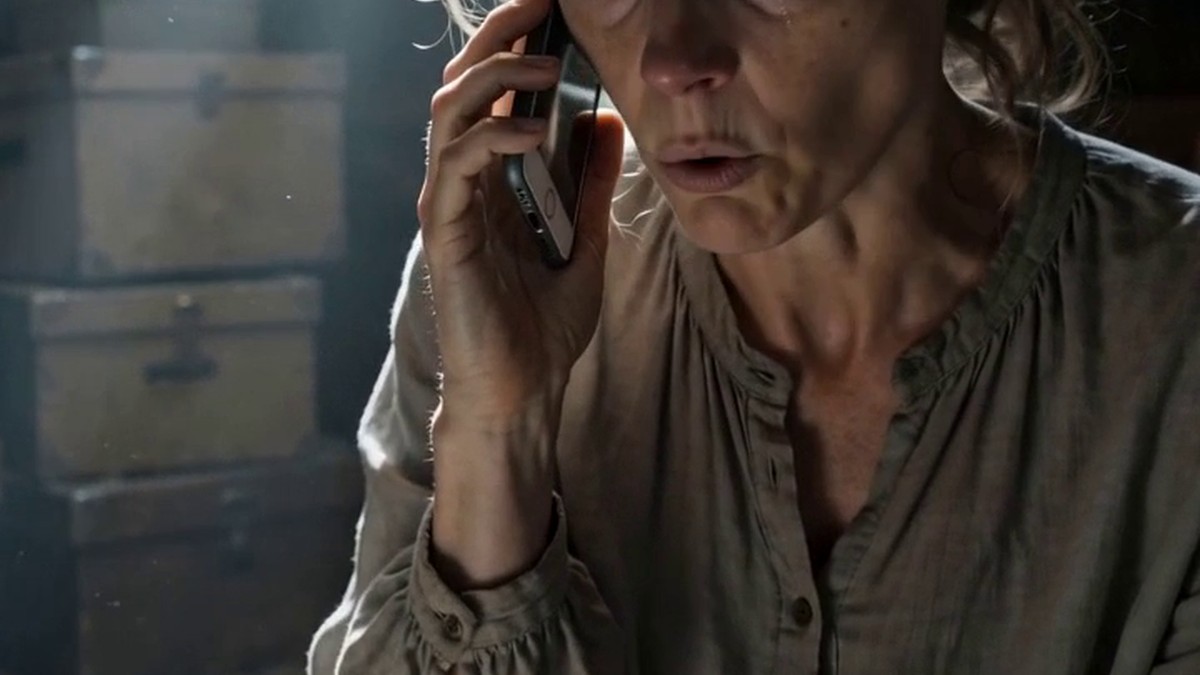
We Were Strangers After Mom Died—Then We Opened the Box She Hid for Us
After Mom, my sister and I became strangers so quietly that nobody noticed at first. We didn’t yell, didn’t break dishes, didn’t drag the house into court. But one afternoon I caught myself staring at her name on my phone, thumb frozen over the call button, and I couldn’t press it. The old easy things—What are you doing? What did you get the baby? Did Mom take her blood pressure?—had dissolved into silence. Between us stood Mom’s empty house, her things, mountains of unspoken resentment, and one terrible sentence I had spit out in anger and couldn’t take back.
My name is Emma, and I was forty-two that year. My younger sister Chloe was thirty-seven. We grew up in a creaking farmhouse outside Maple Creek, Ohio, where the porch sagged just enough to feel like home and a giant oak shaded the whole backyard. Our mother, Eleanor, was seventy-one when she passed. A quiet, sturdy woman who canned tomatoes every August, kept a row of herb pots on the windowsill, and said the same thing after every squabble we ever had: “Girls, you don’t tear at blood. It’s not a thread you can knot back up later.” Our father, Richard, died twelve years ago. After that, Mom seemed to harden, never wanting to ask for help, never letting us see her weak.
I lived an hour away in Columbus, working as a pharmacist. Married, two kids, a minivan full of grocery bags and good intentions. I drove out to Mom’s at least twice a week: brought her meds, checked her pressure, washed the windows before holidays, dug potatoes, or just sat with her in the evening when the empty house spooked her. Chloe lived in Cleveland, a single mom to her daughter Lily after a messy divorce. She worked as an accountant and didn’t visit as often, but when she did, her trunk was loaded: good coffee, a new robe, fancy hand cream, thick socks, cash tucked into a card. I saw those things, and a mean little voice in my head whispered, *Mom wasn’t waiting for packages. She was waiting for you.*
The first days after the funeral, we held it together. Neighbors streamed in with casseroles and quiet hugs. The house smelled of candle wax, damp wool, and the dried lavender Mom kept hanging above the kitchen door. When everyone left, the silence was so heavy you could choke on it. Her teakettle sat on the stove, still spotted with hard water. Her gray cardigan was draped over a chair. Her glasses and a worn devotional book lay on the nightstand. I couldn’t bring myself to move a single thing. It felt like if I did, she’d vanish completely.
The war didn’t start over money or property. It started over a pair of slippers.
I wanted to leave them by the front door, exactly where Mom had stepped out of them. Chloe said we needed to start clearing things out, little by little, or we’d “get stuck in the grief.”
“You say that like it’s easier for you to just cart everything away,” I snapped.
“It’s not easier, Em. I just think we have to keep living.”
“Living would have been a lot simpler if you’d been around more when she was still here.”
Chloe set the slippers back down, her face going blank in a way I’d never seen before. “So we’re finally getting to the point.”
“What, it’s not true?”
“What’s not true is that you were the only daughter.”
That’s when it all came apart. I brought up the late-night calls, the ER trips, Mom’s stubborn refusal to call an ambulance. Chloe fired back about how Mom always said, “Emma knows, Emma will come, Emma will handle it,” and how that made her feel like a stranger in her own childhood home. She told me that after her divorce, she had nobody to reach out to—she’d counted coins at the kitchen table and cried into the bathroom faucet so Lily wouldn’t hear. And instead of listening, I said the worst thing I have ever said in my life.
“Maybe it was just more convenient for you to love her from a distance.”
Chloe didn’t scream. She just looked at me, and I felt the cold of that look for weeks afterward. “You have no idea how I lived. But you’ve already made up your mind about me.” She grabbed her bag and drove away.
I thought she’d cool off and call. A week went by. Then another. We texted only about logistics: *Notary on Wednesday. Power bill paid. Spare key with Mrs. Drayer.* Every terse message was another brick in the wall we were building between us.
I found the old shoebox up in the attic. I was hunting for the deed papers the attorney had requested. The attic smelled of dust, dried apple slices, and mothballs. In the corner sat Mom’s cedar chest, and on top of it, a cardboard box tied with a faded blue ribbon. Across the lid, in Mom’s neat handwriting: *For my daughters. Open together when you’ve forgotten you’re sisters.*
My legs gave out. I sank onto a stack of old blankets and just stared at the words. She knew. She’d seen us coming—my bitterness, Chloe’s silence, the cold distance—years before it happened. I didn’t open the box. I pulled out my phone and called Chloe.
“I found something of Mom’s,” I said. “A box. It’s addressed to both of us.”
A long pause. Then, quietly: “Did you open it?”
“No.”
“I’ll be there Saturday.”
She walked in that afternoon looking drained, pale, wearing a dark raincoat and carrying a grocery bag. Inside were anisette cookies, Mom’s favorite, even though there was no one left to eat them. We sat at the kitchen table, the box between us. Neither of us touched the ribbon for a long time. Then Chloe said, “She always saw right through us.”
“Yeah,” I whispered. “Even when we couldn’t see ourselves.”
Inside the box were not deeds, not jewelry, not a hidden bankbook. There were two thick journals, a stack of old photos, the handmade birthday cards we’d given her as kids, a letter from Dad, a bundle of receipts, and a small envelope labeled *Don’t Divide the Love.* The first journal was about me. The second, about Chloe.
I opened mine with trembling hands and felt the weight of my mother settle right beside me. She had written:
*Emma has carried the world on her shoulders since she was a little girl. She thinks if she doesn’t hold it, everything will fall. But she never says when she’s hurting, and then she gets angry that no one saw it.*
Chloe read hers and the tears just fell. Mom had written:
*Chloe thinks she’s the second-best daughter. I failed her there—I used to say, “Why can’t you be more like your sister?” I meant to teach her, but I wounded her instead. My youngest isn’t cold. She just goes silent when it hurts.*
Then we opened the receipts. Chloe had been sending Mom money for firewood and prescriptions for almost two years. Mom had quietly hidden that from me, scribbling a note: *So Emma won’t think I’m complaining.* And I had left stacks of medication charts and doctor’s numbers on the counter; Mom had saved every single one. Under them she’d written: *One helped with her hands. The other helped from afar. Don’t measure love by the miles to the front door.*
Dad’s letter nearly broke us. He had written it when he was already sick:
*Ellie, if I go, keep our girls for each other. Emma will hold the house together—she can’t help it, it’s just who she is. Chloe will pull inside herself, afraid she’s a burden. Don’t let them ever convince themselves that your love wasn’t big enough for both of them.*
Chloe stood up and walked to the window. I braced myself for her to leave again. But instead she said, “I didn’t stay away because I didn’t love her. I stayed away because walking into this house made me feel like a guest. You knew everything. You did everything. You decided everything. I always felt like I was already too late.”
I didn’t defend myself. For the first time, I let the truth drop in the room between us. “And I waited for you to just *know* how hard it was. I never asked for help. I just collected resentments like stones. And then I threw them at you.”
Chloe turned back. “That thing you said… it hurt like hell.”
“I know. I’m so sorry.”
It wasn’t a movie reconciliation. Nobody fell into a sobbing embrace or made sweeping promises. We just sat at that table with cold mugs of tea, talking into the night. About Mom, about Dad, about how we both spent years carrying our own loneliness and believing the other had it easier. The house stopped feeling like a battlefield. It became a place where we were both loved again.
We decided not to sell it right away. Gave ourselves a year. Rented part of the yard to a neighbor to cover the utilities, and in the spring we planted marigolds by the front steps. Chloe took Mom’s gray cardigan because she said she needed to smell her sometimes. I gave it without a second thought. I kept the glasses and the journals, but I left them in the hall closet so Chloe could grab them whenever she came home. The box sits on the mantel now, always in sight.
Because sometimes you need to open more than boxes. You need to open the things you’ve kept sealed up inside your heart for years.
After Mom, Chloe and I did become strangers. Not because we stopped loving each other, but because we both swallowed our pain in silence and expected the other to guess. I know now that the hardest part of losing your parents isn’t dividing the estate wrong. It’s dividing love as if one person got more and the other got less. You can haul off furniture, sign over land, sell the house or keep it. But if you lose your sister to your own pride, no legal document in the world will ever bring her back.
Mom didn’t leave us a fortune. She left a cardboard box, a couple of notebooks, and the truth we’d been too afraid to speak out loud. And that’s when I finally understood: sometimes the real inheritance isn’t what stays inside the walls of a house. It’s the person you can still wrap your arms around before it’s too late.