The Boy Who Thought He Saw a Drowning
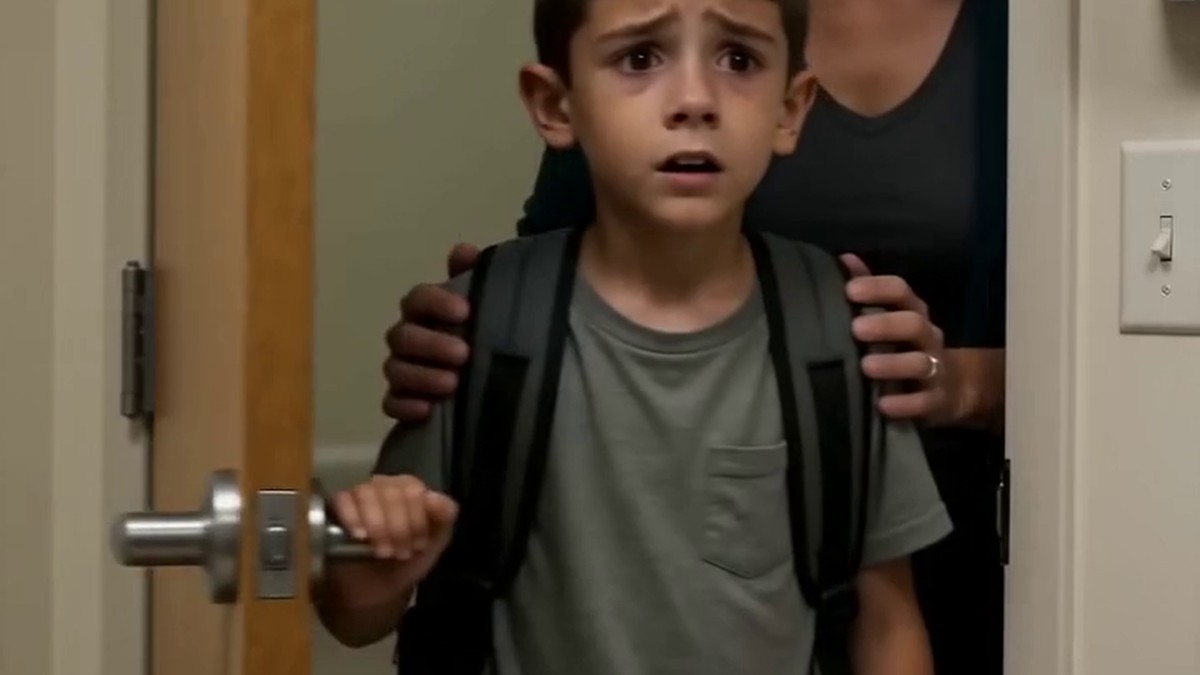
Caleb didn’t even take off his sneakers. He just blew through the front door, panting, backpack still bouncing on his shoulder, and shouted into the kitchen where his mom was chopping something at the counter.
“Mom! Ray from next door—he shoved that gray cat into a sack and drove off! I saw it move! It was still alive!”
Linda set down the knife. “Wait—what gray cat?”
“The one with the white chest! The skinny one that’s been living at his place since fall. He put it in a burlap sack and threw it in the truck. Mom, he’s gonna drown it. We gotta go.”
Linda had been a single parent for seven years, ever since Caleb’s dad chased a job to Texas and never came back. She’d learned to tell the difference between a child’s exaggeration and the genuine tremor that meant her son was holding onto something awful. This was the second one. She wiped her hands on her jeans.
“Caleb, sit. Maybe he was taking it to the vet.”
“In a sack? No carrier, just a sack that was jerking around. I was by the gate—his latch is busted, you know—and he came out with it. The sack was moving. He put it on the passenger seat like a bag of potatoes and took off toward the old highway. He’s headed to the river.”
The river was two miles south, past the cornfield and through a stand of sycamores. Caleb’s grandmother had told him stories about farm cats drowned in burlap when there were too many. He’d never quite shaken the image.
Linda’s mind was racing ahead. Ray Andersen was seventy-three, a retired machinist, widowed four years ago. He wasn’t the type to do something cruel. Since his wife passed, he’d mostly kept to himself—cutting his lawn, fixing his truck, listening to baseball on a crackling radio in the garage. When Linda brought him a casserole last Christmas, he’d said, “You didn’t have to,” in that low, rough voice, exactly like always. He didn’t seem capable of harming an animal.
But a sack that moves. A kid doesn’t make that up.
“Get in the car, sweetheart. We’ll go look.”
They took the old sedan, a Ford with a rattling muffler, and followed the route toward the river. Caleb stared out the window, scanning the roadside ditches and fields, as though the cat might have wriggled free. There was no sign of Ray’s rusty pickup. They reached the wooden bridge that crossed the slow, brown water. No truck. No man. No sack.
“He’s not here,” Linda said. “Maybe he went toward town.”
“Then we check town. Please.”
Linda stole a glance at her son. He was nine, small for his age, and his mouth was set in a hard line that looked too old for him. She turned the car around and took the longer way, past the grain elevator and into Brickton, the little town four miles over.
And there it was: Ray’s pickup, parked crookedly in front of the Brickton Animal Clinic, a low-slung brick building with a faded sign and a parking lot full of potholes.
Linda braked. “Stay here.”
“No. I’m coming.”
She didn’t argue. They walked inside together. The place smelled of antiseptic and wet dog. A receptionist glanced up, but Linda motioned toward the exam room door, which stood ajar. She could hear Ray’s voice inside, that gravelly rumble.
She stopped just outside, Caleb pressed to her side. Through the crack they saw the old man sitting on a stool, his back to them, facing the metal table. On the table lay the gray cat, utterly still, with a white patch on her chest that rose and fell with her breathing. She was alive.
The vet, a woman with a ponytail and steady hands, was running her fingers over the cat’s abdomen. A burlap sack—the same one Caleb had seen—lay crumpled on the floor, with holes cut into it and something soft inside.
“You brought her in a sack?” the vet asked, not unkindly.
“Don’t own a carrier. Never needed one. Poked air holes in it, put an old towel at the bottom so she wouldn’t slide. Didn’t want her thrashing around and hurting herself.”
Caleb’s breath caught. He gripped his mom’s hand.
The vet continued the exam, then straightened. “Ray, this cat isn’t sick. She’s pregnant. Probably a few weeks along. You’re going to have kittens.”
Ray pulled off his cap, rubbed his forehead, then put it back on. “Kittens? She stopped eating, started hiding under my workbench, crying at night. I figured she was dying. I thought—hell, I thought I was bringing her in to be put down.”
“No, she’s healthy. Just going to be a mother.”
The cat turned her head, squinting up at him, and made a soft, rumbling sound that vibrated through the stainless steel table. Ray reached out and scratched behind her ears. For a long moment, nobody spoke.
Caleb pushed the door open before Linda could stop him.
Ray turned, startled. “Linda? Caleb? What are you doing here?”
The boy’s face was flushed, his eyes wide. “I saw you put the cat in a sack. I thought… I thought you were gonna drown her. Grandma said people used to do that. I thought we had to stop you.”
Ray went very still. Then he slid off the stool, joints popping, and lowered himself to one knee in front of the boy. The cat kept purring.
“I’d never do that, son. Never. I was scared she was suffering. That sack was the only thing I had. I’d never hurt her.”
“I know. I know now. But the sack was moving and I just—I ran.”
Ray set a calloused hand on Caleb’s shoulder. “You did right. You see something wrong, you run and get help. If I’d been someone who meant harm, you and your mom would’ve been the only chance that cat had. You did exactly right.”
Caleb nodded, a little of the tension leaving his body. Linda leaned against the doorframe, something tight in her chest easing for the first time that afternoon.
On the floor beside the table sat a cardboard box Ray had loaded into his truck along with the sack. Inside it were a clean towel, a dish of water sealed with plastic wrap, and a small bag of cat food—the expensive kind, sold at the only store in Brickton that stocked it. He’d bought it the day before, planning ahead for whatever the vet might say.
They all drove back home in the deepening dusk, Caleb silent in the back seat, his mind working through things too big for an ordinary Thursday. When they pulled into the driveway, he climbed out and said, “Mom, can I go over to Ray’s when the kittens come?”
Linda looked at the old man’s house next door, where the porch light was still on, waiting for him. “If he says it’s okay.”
“He will,” Caleb said, with a certainty she didn’t question. Because in that exam room she’d seen something flicker across Ray’s face—something quiet and warm, as though he’d been looked at closely for the first time in a very long while.
The kittens arrived on a Saturday, three weeks later. Four of them, gray with tiny white markings, all blind and squalling. Caleb sat on the floor of Ray’s living room for an hour that evening, just watching. The cat, whom Ray had taken to calling Dottie, lay curled around them in a laundry basket lined with flannel.
Ray leaned in the doorway. “See that one with the white spot on his back? He’s gonna be trouble. Keeps trying to climb out already.”
Caleb smiled. “I like him.”
A week later, Ray fixed the gate latch. Caleb helped, holding the hinge while Ray tightened the bolts with a wrench. Linda brought over a jar of peach preserves and a new welcome mat for the porch. Ray kept saying, “You didn’t have to,” but he took them anyway, and the gate shut clean and tight after that, no more banging in the wind.
Caleb still walked through it every afternoon on his way from the bus stop. He’d open it, step in, close it behind him. The latch clicked like the period at the end of a sentence.
By the time the kittens were old enough to leave, Caleb had named the white-spotted one Bandit. Ray didn’t object. When the boy carried the kitten across the yard in a proper carrier that Linda had bought secondhand, Ray stood on the porch with Dottie in his arms. She watched her son go, ears flicking, then laid her head against Ray’s chest and purred.
And if you passed by that street at dusk, you’d see an old man sitting on his porch, a gray cat on his lap, and a boy next door with a kitten chasing butterflies in the lawn, while the gate between the two houses never stayed closed for long.