The gate at Petrovich’s place had been broken since the summer before last. The latch sheared off when he shoved it open with his shoulder, both hands wrapped around two sloshing buckets. After that, the gate hung crooked on one hinge, and at night the wind worked it back and forth like some invisible visitor too shy to walk all the way in. Petrovich didn’t mind. He had grown used to things falling apart and staying that way. Used to the fact that his wife had died three years ago. Used to his son calling once a month on a Sunday afternoon, the whole conversation lasting maybe four minutes. Used to the garden going wild with pigweed because his back wouldn’t let him bend and hiring help felt like a signed confession that he couldn’t manage.
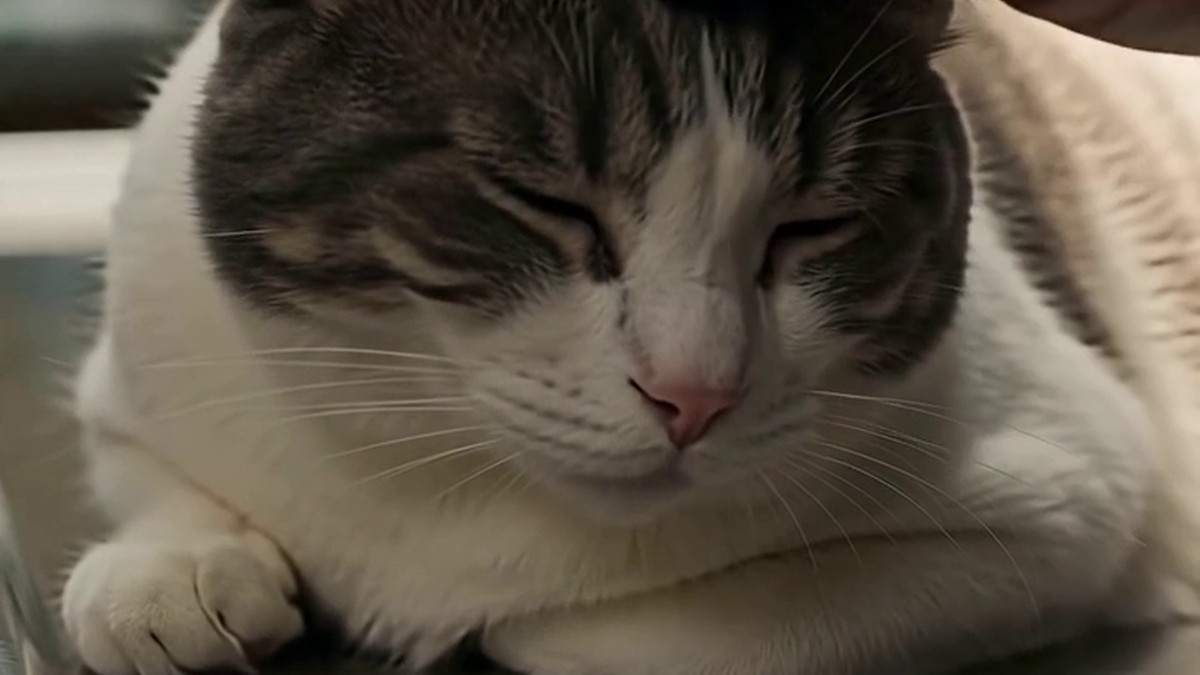
The cat arrived in September. She was gray, with a white blaze on her chest and one torn ear. She sat down by the front steps and stared at the door. She didn’t meow. She didn’t weave between his ankles. She just sat there like she had an appointment and was prepared to wait.
Petrovich stepped outside, looked at her, and said, “I barely got enough to feed myself.”
The cat didn’t leave. He went back inside, found a piece of boiled cod in the fridge, set it on a sheet of newspaper, and carried it out to the porch. She ate the fish, cleaned her whiskers, and sat down again in the exact same spot.
“Suit yourself,” Petrovich said.
By October, the cat was living in the house. Not because he ever invited her. One morning he swung the door open and found her curled on the mat in the entryway. Door had been shut all night, but he noticed the kitchen window latch wasn’t catching, and it made sense. He never fixed that latch.
The neighbor kid, Tyoma, walked past Petrovich’s place every day. Nine years old, third grade, coming home from school through the alley because it was shorter. The broken gate sat right on his route. Tyoma always glanced into the yard, not out of nosiness but because an old apple tree leaned over the shed in back, and in the autumn you could find small, sour yellow apples under it. Tyoma used to scoop them up and eat them anyway. The apples were gone now, but the habit stuck.
That Thursday, Tyoma was walking home and saw Petrovich standing on the porch holding a burlap sack. The sack was moving. Tyoma froze on the other side of the gate. The sack twisted, bulged, and something inside scrabbled with a sound like nails on wood. Petrovich didn’t see the boy. He walked across the yard to his car, an ancient Lada Niva caked in mud, opened the rear door, laid the sack on the bench seat, and went back inside.
Tyoma’s heart pounded the way it did when he sprinted, even though he hadn’t moved. He knew the gray cat with the white chest—she used to sit in the window and watch the street. Once he’d waved at her and she’d tilted her head, puzzled. Now she was in a sack. He knew what that meant. His grandmother had told him stories about people drowning unwanted kittens in a river. Not out of cruelty, she’d said, but because there was no one to feed them. She’d talked about it like it was weather, and Tyoma hadn’t slept until midnight, picturing a bag sinking into black water.
Petrovich came out again. This time he carried a cardboard box. He set it on the back seat beside the sack, climbed behind the wheel, and started the engine. The Niva coughed, shook, and crept out of the yard. Tyoma pressed himself against the fence. Petrovich drove past and never turned his head.
Tyoma ran home. His mother, Olga, stood at the kitchen counter chopping onions, her eyes red from the fumes. He burst through the door without taking off his backpack.
“Mom, Petrovich tied a cat in a sack and drove off!”
Olga put the knife down. “What cat?”
“The gray one with the white spot! She lives with him! He put her in a sack and put her in the car!”
“Take your shoes off, Tyoma. You’re getting the floor—”
“Mom! He’s going to drown her! Or dump her in the woods!”
Olga wiped her hands on a towel and studied her son. His jacket was half-zipped, his face so tight the skin barely held the bones. He wasn’t crying yet, but he was one breath away.
“Sit down, sweetheart. We don’t know where he took her. Maybe he’s going to the vet.”
“Nobody takes a cat to the vet in a sack! They use carriers!”
She had no answer for that, because he was right.
“All right,” she said. “I’ll talk to Petrovich when he gets back.”
“What if it’s too late by then?”
Olga untied her apron.
“Get your coat. We’re going.”
She wasn’t sure why she agreed. Petrovich had been their neighbor for twenty years. Quiet, handy, a retired mechanic who fixed neighbors’ broken things for next to nothing. Didn’t drink. Didn’t stir up trouble. After his wife died, he’d gone even quieter, like someone had turned his volume knob down a few notches. Olga brought him jars of jam every New Year, and every time he’d say, “You didn’t have to do that, Olya.” Then he’d take the jar. And the next year he’d say it again.
He didn’t look like a man who’d drown a cat. But the sack had moved. Tyoma had seen it.
Olga pulled the car out of the garage. Tyoma buckled into the passenger seat and stared out the window as if the cat might appear on the shoulder of the road. They had no idea where Petrovich had gone. Toward the river? The woods? The highway?
“The river,” Tyoma said with certainty.
“Why the river?”
“Because Grandma always said they went to the river.”
Olga turned toward the old river road. Not because she believed the grandmother stories, but because she had no other plan and Tyoma was watching her with the particular hope children aim at adults when they expect everything to be fixed.
The route to the river crossed a stubbled field, cut through a birch grove, and then dropped steeply to an old wooden bridge that nobody used in winter. The Niva was nowhere near it. Olga drove across anyway, then turned back.
“Go by Karpovka,” Tyoma said.
She took the Karpovka road, an eight-kilometer detour on asphalt. That’s where they found the Niva. It sat against the curb in front of a long, low building with a faded sign that read “Veterinary Station,” missing a few letters. A sheet of paper taped to the door flapped in the wind. Olga pulled over.
“Wait in the car.”
“No. I’m coming with you.”
She didn’t argue. Inside, the air smelled of bleach and the sugary scent that hangs in pharmacies. A woman in a blue smock sat behind the counter, writing in a ledger. Behind a closed door marked “Exam Room,” a man’s voice rumbled. Petrovich’s voice.
Olga moved toward the door, Tyoma gripping her hand. It was cracked open a few inches.
Petrovich was perched on a stool beside a metal table. The cat lay on a clean mat, gray coat, white chest, alive. A young vet in glasses pressed along her belly. The cat remained still, only the tip of her tail twitching.
“When did you notice?” the vet asked.
“Three days ago. She stopped eating. Then she hid under the trough and wouldn’t come out. I had to pull her free.”
“How’d you transport her?”
“In a sack. I don’t have a carrier. I punched holes so she could breathe and put an old sweater inside.”
The vet nodded, held a hand low on the cat’s abdomen, and paused.
“She’s not sick, Petrovich. She’s pregnant. Kittens, most likely three or four. She’s healthy. The birth should go smoothly.”
Petrovich pulled off his cap, rubbed his forehead, put the cap back on.
“Kittens?”
“That’s what I’m feeling. She’s not old. It’s a strong pregnancy.”
“I thought she was dying,” Petrovich said, his voice barely a murmur. “She wouldn’t eat. She hid. At night she’d make these little sounds, like she was complaining. I thought it was the end.”
The vet smiled. “Not the end. The opposite. A beginning.”
Petrovich looked at the cat. She turned her head and squinted at him, as if to say, *Figured it out, have you?* He reached over and rubbed her between the ears, once, twice. She flattened her ears and began to purr, the vibration humming through the metal table.
Out in the hallway, Tyoma stopped breathing. He had heard every word. Olga put a hand on his shoulder and felt the tension drain out of him, like a wire being unstrung. She pushed the door fully open.
Petrovich turned. Surprise flickered across his face.
“Olya? What are you doing here?”
Olga opened her mouth and shut it. The truth—*We thought you were going to drown the cat*—sounded too stupid and too cruel to speak.
Tyoma stepped forward.
“Petrovich, I saw you put the cat in the sack. I thought you were going to…” He couldn’t finish.
The old man’s expression shifted, something slow and complicated assembling itself behind his eyes.
“You thought I meant to kill her?”
Tyoma nodded.
Petrovich got up, crossed the room, and lowered himself to the boy’s level, his knees cracking. He didn’t wince.
“Tyoma. I wouldn’t. You hear me? Never would.”
“I know. Now I know.”
“The sack’s because I don’t have a carrier. She scratches when you hold her. In the dark bag, she stays calm. I put my sweater in there so it’d be soft.”
“I saw the bag moving and I got scared.”
Petrovich set his big, calloused hand on the boy’s shoulder.
“Good. That’s exactly what you ought to do when you see something like that. You were right to get scared. If it had been real, you’d have made it in time.”
The cat stopped purring and watched them like she understood every word. The vet kept writing in his file. Olga turned toward the window. Outside, the first snow was falling, fine and dry, and the light above the clinic’s entrance looked like a pale sun wrapped in white.
On the floor beside the exam table sat the cardboard box Petrovich had put in the car. It was open. Inside was a folded towel, a bowl of water covered with plastic wrap so it wouldn’t spill, and a small bag of cat food—the expensive kind sold only at one shop in their village, the one run by Aunt Lyuba. He’d bought it before he left.
They drove home in the dark. Tyoma sat in the back seat and didn’t speak, but he wasn’t asleep. He held himself the way adults do when they’ve run out of words but not thoughts.
“Mom,” he said as they neared the house, “can I go see Petrovich when the kittens are born?”
“If he doesn’t mind.”
“He won’t mind.”
Olga didn’t ask why he was so sure. She remembered how Petrovich had looked at the boy inside that clinic—not gratitude exactly, but something simpler and more essential. As if, for the first time in three years, someone had seen him up close instead of across a fence.
The kittens arrived nine days later. Four of them. Three gray and one white with a dark splotch on its back, shaped like an inkblot. Tyoma came over that evening. Petrovich opened the door without a word and let him in. The boy sat on the floor beside the cardboard box where the cat nursed her litter. He stayed there for half an hour, barely moving.
“That one’s got your energy,” Petrovich said, pointing at the white kitten. “A real troublemaker.”
“He’s just lying there.”
“Give him time.”
Petrovich fixed the gate. Tyoma helped—holding the hinge steady while the old man tightened the bolts. Olga bought the new latch, handed it over in a bag along with her annual jar of jam. Petrovich said, “You didn’t have to, Olya,” but he installed the latch that same afternoon. After that, the gate closed snug and still. No more wind working it open at night. And yet Tyoma came through it every day after school anyway. He’d open it, step inside, pull it shut, and the latch would click behind him like a period at the end of a sentence.
When the white kitten was old enough, Tyoma took him home. He named him Snowy. Petrovich heard the name, snorted once, and said nothing. He just stroked the mother cat where she sat on the windowsill, watching the boy carry her son across the yard. She tracked them all the way to the gate. Then she turned away, curled up, and closed her eyes.
—
A year buried Petrovich deeper into his silences. The cat still kept him company, but his back worsened, and the winter snows made the paths treacherous. Olga noticed he stopped coming out to shovel. She sent Tyoma over with soup, and the boy would bang on the door until the old man opened it, looking embarrassed but grateful. Tyoma never mentioned the soup; he just handed it over and asked if he could play with the cats. Petrovich always let him in.
Then one March morning, when the ground was a mess of mud and leftover ice, Tyoma came home from school and couldn’t find Snowy. The young cat had a habit of sunning himself on the porch, but he wasn’t there. Not under the bushes, not in the garage. Tyoma searched the yard and then the alley, his throat tightening. He remembered a burlap sack moving in Petrovich’s hands, and the memory, irrational now, made his heart race.
He ran to Petrovich’s place. The gate was latched but he lifted it and hurried into the yard. The gray mother cat was on the windowsill, her tail flicking. She meowed once, a sharp, insistent sound, and jumped down, leading him toward the tool shed.
The shed door was ajar. Inside, in the half-dark, Petrovich lay on the dirt floor, one leg twisted under him, his face gray as the cat’s fur. Beside him, Snowy was curled against his chest, purring so hard the sound filled the small space.
Petrovich’s eyes fluttered. “Slipped… couple hours ago. Can’t get up.”
Tyoma didn’t hesitate. He sprinted to the house, dialed the emergency number Olga had taught him, and then called his mother. While he waited, he grabbed a blanket from Petrovich’s couch and draped it over the old man, Snowy still pressing close. The mother cat sat in the doorway like a guard.
The paramedics arrived fast. They stabilized Petrovich, praised Tyoma’s quick thinking, and loaded him into the ambulance. Olga drove behind it to the hospital, Tyoma in the back seat with both cats in a carrier—Petrovich had insisted, mumbling from the stretcher, “Don’t leave ’em alone.”
The hip was fractured. Petrovich needed surgery and a long recovery. The doctors said if he’d lain in that cold shed much longer, things could have ended far worse. Snowy, they agreed, had kept him warm and alert.
After Petrovich came home, something shifted. Olga and Tyoma began visiting every evening. They brought meals, helped with the exercises, and Tyoma read aloud to him from adventure books while the two cats listened from their spot on the rug. Petrovich still said, “You didn’t have to,” but he said it softer, and sometimes his eyes grew wet when he thought no one was looking.
That summer, Tyoma built a ramp over the porch steps so Petrovich could manage with his walker. The gate, still closing with that same tight click, now opened every day for two cats, a boy, and a man who was no longer alone. The gray cat, wise and watchful, still claimed the windowsill. She’d seen it all: the sack, the fear, the misunderstanding, and the quiet choice to come inside when the door was open. She purred every time the boy walked through the gate, exactly as if nothing in the world had ever been wrong, and everything was exactly as it should be.