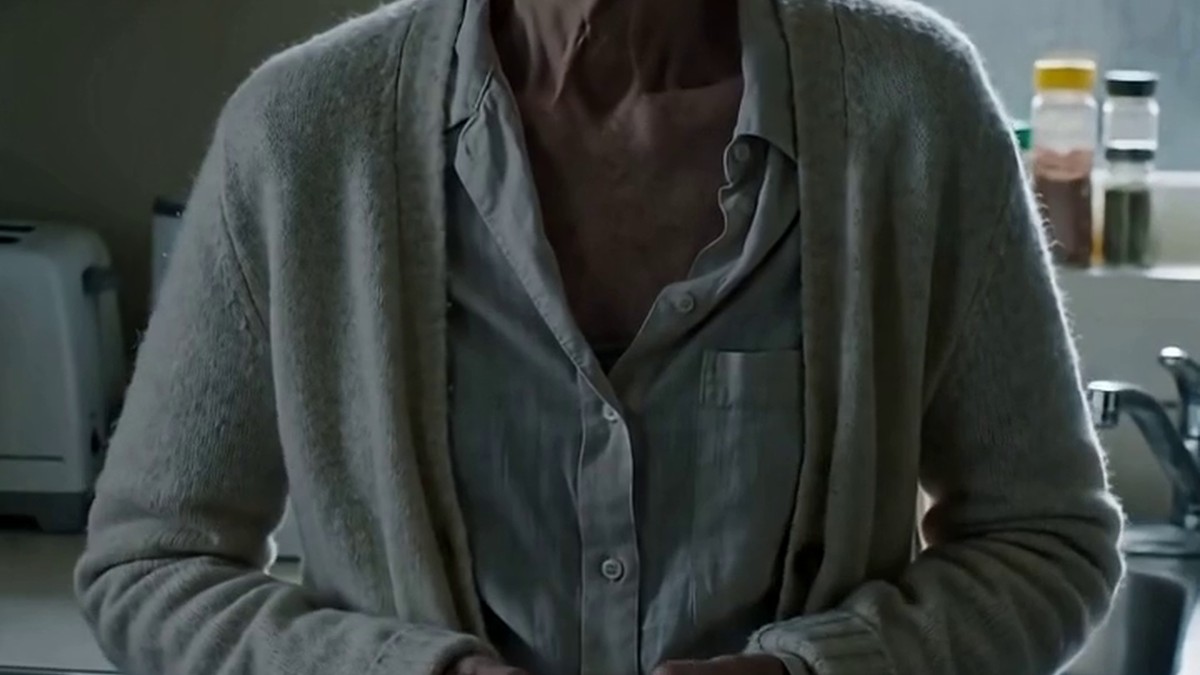
Margaret wasn’t living. She was just taking up space. Seventy-two years old, a cramped one-bedroom on the worn-out edge of a Midwestern town, a Social Security check that was gone by the twentieth of the month. And silence. Six months since Hank had slipped away in his sleep—no gasp, no rattle, just gone. She’d woken up to his hand stretched across the bed, still reaching for something he never caught. Their daughter, Natalie, flew in from Chicago for the funeral, stayed three days, left blood pressure pills on the fridge with a note: “Call if you need anything, Mom.” Margaret didn’t call. Natalie did, though, like clockwork every two weeks.
“Mom, how are you?”
“Fine.”
“Good. Love you.”
That was it. That was her whole world.
Margaret went to the grocery store. The pharmacy. Sometimes to the clinic, where they wrapped a cuff around her arm and told her to avoid stress. She wasn’t stressed. She wasn’t much of anything—just a piece of furniture, like the old coatrack in the hallway Hank always swore he’d fix but never did.
It was a gray November afternoon, the sky pressing down like a wet blanket, when she walked back from the doctor. Blood pressure was up again. The doctor had sighed, scribbled another prescription. Margaret shoved it into her pocket without reading it. Near the dumpsters behind her building, something stirred. A cat. Scrawny, patchy calico, one ear torn. It sat on the wet pavement and stared at Margaret—not begging, not pitiful, but measuring. Like it was deciding if she was the one.
Margaret walked on. The cat rose and followed. No meow, no darting ahead, just a silent shadow three steps behind. At the entrance to her walk-up, Margaret turned.
“Quit following me.”
The cat sat. Blinked. Stayed put.
Margaret went up to the third floor, shut the door, put the kettle on. She glanced out the window. Down on the bench by the entrance sat the same scruffy cat, motionless, watching the door.
The next morning Margaret opened her apartment door and nearly tripped. Curled up on the doormat, fast asleep, was the cat. How it got up three flights, she had no idea. But there it was, like it belonged.
“Well, what am I supposed to do with you?” Margaret muttered.
The cat cracked one eye, then closed it again. The answer was obvious.
Margaret told herself she didn’t let it in. She just put out a saucer of milk. She just left the door ajar because the radiators were blasting and the air was stuffy. And the cat just walked inside.
Margaret stood in the hallway and watched this skinny, pushy creature sniff the baseboards. Then the kitchen. Then the living room—and it stopped dead. Hank’s armchair. Old, sagging, armrests rubbed bare. The chair he’d sat in every evening, clicking the remote, saying, “Maggie, look at this nonsense.” For six months Margaret had walked around that chair like it was a grave. She couldn’t sit in it, couldn’t throw it out. It sat there like a hole in the room.
The cat jumped up. Circled the deep impression in the cushion, then curled into a tight ball, tail over its nose. And it purred. Margaret’s lips trembled. She wanted to yell, wanted to shoo it off, but her throat clamped shut and all that came out was a ragged whisper. She sank onto the couch and stared at the cat sleeping in her husband’s place.
“One night,” she croaked. “Tomorrow you go.”
Tomorrow didn’t come. Nor the day after. The cat stayed.
She named her Tasha. “Tasha, come eat,” she’d say, setting a bowl on the linoleum. Tasha ate, then looked up at her with that same measuring, quiet gaze—the look of someone who knew something Margaret hadn’t figured out yet.
A week later, Margaret bought cat food. The cheapest, yellow bag on sale. She stood in the pet store feeling foolish. The cashier, a young woman with silver nails, asked, “What breed?”
“Just a mutt. A stray that latched on,” Margaret grunted, and left without another word.
Then she bought a litter box. Then a real bowl, ceramic, because the saucer always spilled. Then a scratching post for nineteen bucks because Tasha had started shredding the corner of the couch, and the couch was the one decent thing Margaret owned. “Temporary,” she told herself. “It’s all temporary.”
But life was shifting, quiet and steady as water wearing down stone. She used to wake at nine and lie staring at the ceiling. Now she was up at seven-thirty because Tasha planted herself beside the pillow and simply waited—no meowing, just an unblinking patience that pulled Margaret out of bed. She’d shuffle to the kitchen, pour the kibble, switch on the kettle, and catch herself standing at the window for ten minutes watching the courtyard. Not thinking about her pressure, or her dwindling account, or Hank. Just watching.
Evenings changed, too. Before, she’d turn on the TV not to watch, but to fill the dead air with voices so she didn’t feel so alone. Now, Tasha would settle next to her on the couch, right against her hip, and purr—a small, steady motor. One night Margaret clicked the TV off. The silence wasn’t frightening anymore. A silence with a purr in it was a different kind of quiet.
She caught herself talking to the cat. Not baby talk—Margaret had never been one for that, not even with Natalie as a kid. Just talking, like to another person.
“Pressure’s up again. Doctor looked at me like I was already in the ground. Maybe I’ll stick around just to prove her wrong.”
Tasha blinked.
“Natalie called. Same old ‘How are you?’ What am I supposed to say? Before, it was nothing. But now…” She trailed off. Tasha butted her head against Margaret’s palm. Margaret fell silent, because her throat was tight again.
Her neighbor Betty stopped by for tea, saw Tasha, and threw her hands up. “Margaret! You swore up and down you’d never have a pet.”
“I still say it. It’s temporary.”
“Sure, temporary,” Betty snorted, eyeing the three bags of food, the ceramic bowl, the scratching post. “Very temporary.”
Margaret turned toward the window so Betty wouldn’t see the smile—the first one in half a year.
Then Natalie called. Margaret hadn’t planned to tell her about the cat; it just slipped out, because for the first time in forever, she had something to share.
“You picked up a stray?” Natalie said. “Well, at least it gives you something to do, Mom. Something to do.”
Margaret hung up and felt a hot, sharp flash of anger. Real anger. Not the stale, shapeless hurt she was used to—this was the kind that made you want to slam a fist on the table and scream, “Do you even understand?”
In December, everything went wrong. Tasha stopped eating. First just a little left in the bowl—Margaret figured she wasn’t hungry. Then the food sat untouched all day, hardening into a brown crust. Tasha lay in Hank’s chair, barely moving, breathing fast and shallow, as if she couldn’t pull in enough air.
“Hey, what’s going on?” Margaret knelt, peered into the cat’s eyes. Tasha blinked, then turned her face to the wall.
Something inside Margaret snapped. She’d never taken an animal to a vet in her life. Hank had a dog as a boy, but Margaret had never understood people who dragged their pets to doctors, spending money they didn’t have. “People can barely afford their own medicine,” she’d always said. She’d said it not that long ago. But here she was, clutching a cheap plastic carrier she’d bought on clearance for twenty-three dollars, stuffing Tasha inside. The cat didn’t fight. Didn’t scratch or hiss. That scared Margaret more than anything.
The animal clinic was a small, cramped place that smelled of antiseptic and wet fur. Margaret sat on a hard plastic chair, pressing the carrier against her knees, surrounded by young people with sleek dogs and cats in designer bags. She was just an old woman in a worn coat with a beat-up carrier holding a ragged-eared calico.
The vet was young, barely out of school, with glasses and tired eyes—Dr. Alan Parker, though he said, “Call me Alan.” He examined Tasha, felt her belly, and his face went still.
“What is it?” Margaret demanded.
“We need an ultrasound.”
He did it, gliding the wand over Tasha’s shaved side, frowning at the screen. Then he turned to Margaret, and his voice got gentle, the way you talk to someone you’re about to hurt. “There’s a mass in her abdomen. She needs surgery. Without it, maybe two or three months.”
“How much?” Margaret asked.
“Twenty-eight hundred dollars. That covers the operation, anesthesia, aftercare.”
Margaret nodded, picked up the carrier, and walked out.
Twenty-eight hundred dollars. Her entire monthly Social Security check. There’d be nothing left. She sat on a bench outside the clinic, the December cold biting through her coat, her fingers numb. Tasha lay in the carrier, still and quiet, just her eyes shining through the wire grate. Watching. Not pleading, just watching.
Margaret pulled out her phone and called Natalie. One ring, two.
“Mom, I’m at work, can it wait?”
“Natalie, I need help. The cat needs surgery. Twenty-eight hundred dollars.”
Silence. Then a sigh, and a voice that cut deeper than the winter wind. “Mom, are you serious right now? Twenty-eight hundred dollars for a stray cat?”
“She’s not a stray. She’s mine.”
“Mom. It’s a cat. Just a cat. If it dies, get another one. The shelters are full of them.”
Margaret shut her eyes. She saw Hank in that chair, clear as a photograph, flicking channels and saying, “Maggie, you are the stubbornest person on God’s green earth. Once you set your mind, you’d move mountains.” He’d said it so often she used to get annoyed. Now she’d give anything to hear it again.
“Mom? You there?”
“I’m here,” Margaret said. “Thanks, Natalie.” And hung up.
For three days she wrestled with it. Three days is an eternity when someone you love is dying in front of you. Tasha lay in the chair, wasting away like a candle, eating a teaspoon of food, barely drinking. The purring had stopped. Margaret sat on the floor on an old afghan and stroked the cat’s head with a feather-light touch. “I told you. You’re mine. So that’s that.”
On the fourth day, she was up before dawn. She dressed, walked to the bank, and stood in line to withdraw almost her whole month’s money. The bills felt fragile in her coat pocket, and she kept one hand pressed against her side, as if she were carrying something breakable. In a way, she was.
At the clinic, she laid the cash on the counter. Her hands were shaking—from cold or fear, she couldn’t tell.
“I’ve brought my cat in for surgery.”
Alan looked at the money, then at Margaret, then back at the money. He nodded and didn’t say anything extra. Just: “The outlook is good. If she handles the anesthesia, she should pull through.” If.
Margaret sat in the hallway again, on that same plastic chair, staring at the white wall. She tried to remember the last time she’d waited like this. Then it came: twenty years ago, in a hospital, while Natalie was in labor. She’d sat on a chair just like this, purse clutched to her chest, and waited for a cry. That time, it had ended well. A baby’s wail, and the world shifted.
The exam room door opened. A tired-looking vet tech in green scrubs stepped out. “Are you the owner of the calico?”
“Yes,” Margaret said, getting to her feet. Her knees cracked.
“Everything went fine. Your cat’s a fighter.”
Margaret nodded. She couldn’t speak. She just kept nodding until the tech touched her arm. “Hey, are you okay?”
“Yes. Yes, I’m okay.”
They brought Tasha out, wrapped in towels, groggy, with a shaved belly and a thin pink incision. Margaret took the carrier in both hands, held it close, and walked home.
For the first time, she set Tasha on the bed—on Hank’s side. The cat lay on her side, breathing evenly, the suture a delicate line. Margaret lay down beside her, rested her palm on the warm rise and fall of the cat’s ribs, and whispered, “You’re mine.”
Tasha healed slowly. The first day she barely lifted her head. Then she began to eat, tiny bites at a time. A week later, she walked to her bowl on wobbly legs and licked it clean. Margaret stood in the kitchen doorway, watching that ceramic dish gleam, and thought: this is happiness. Foolish, penny-pinched, four-legged happiness.
Margaret lived on oatmeal and potatoes. Betty came by every other day with a jar of soup or a bag of apples—“Oh, I made too much, take it off my hands.” Margaret knew there was no “too much.” She knew Betty counted every cent. But she took the food anyway, because pride was fine, but you still had to eat.
In late February, the phone rang. Natalie.
“Mom, check your bank account. I transferred twenty-eight hundred.”
Margaret was quiet. Then, “Why?”
“Because you spent your whole month’s money on that cat and didn’t tell me. Betty called.” A long pause. “I shouldn’t have to find out from your neighbor.”
Margaret closed her eyes. She couldn’t find the right words—there were too many, and none would come out. So she chose the simplest ones.
“Come see me, Natalie. Not for anything. Just come.”
Silence. A second, two.
“I’ll be there Saturday, Mom.”
Margaret hung up. She stood still for a moment. Then, for the first time since Hank died, she lowered herself into his armchair. The worn cushions gave, the seat a little too big for her now. Nothing broke. Tasha leaped onto her lap, butted her forehead into Margaret’s hand, and started to purr—loud and deep, the vibration thrumming right through her ribs.
Outside the window, snow was falling. Margaret sat and watched it, really watched it, because for a long time she had forgotten how to see.