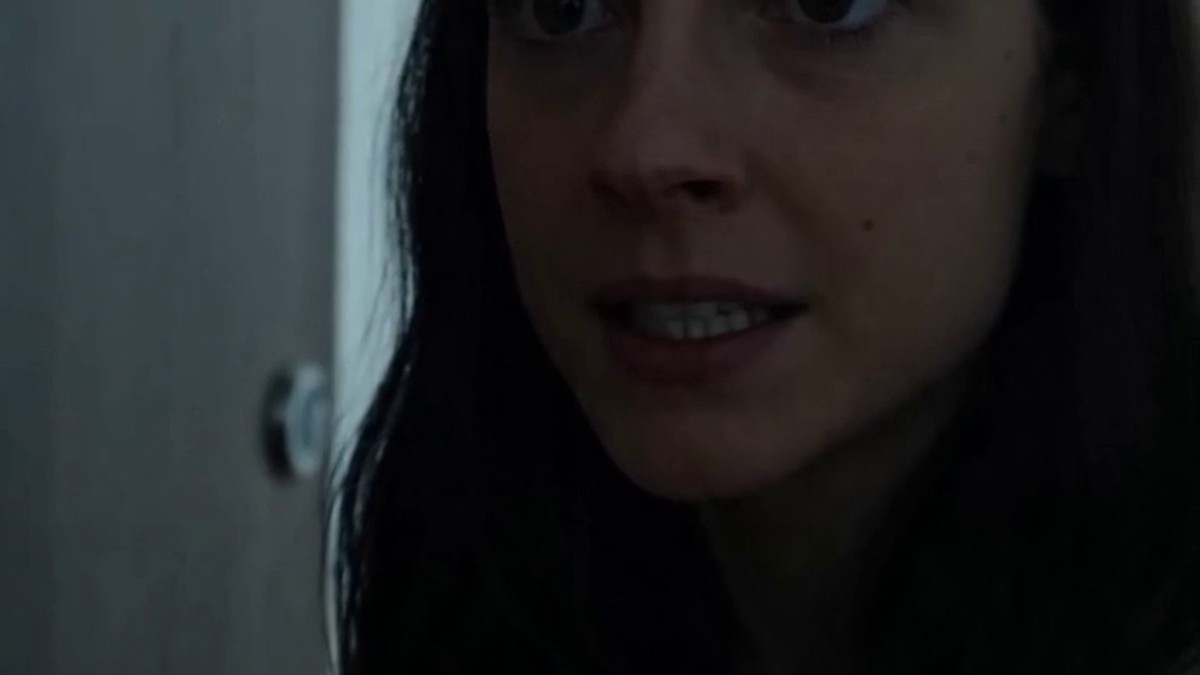
The key slid into the lock with ease. She didn’t even get to turn it.
The door swung open from inside.
A man she had never seen before stood in the doorway. He was wearing navy home pants and her oversized gray terry robe — the one that always hung on the hook in the bathroom. His hair was wet, like he’d just washed his face.
Over his shoulder, Elena could see her own entryway. A pair of unfamiliar men’s boots sat on the mat, and beside them — small children’s sneakers with velcro straps. From somewhere deeper in the apartment came a child’s voice:
“Dad, where’s my tablet?”
The man looked at Elena. Then at her suitcase. Then at the bag with the souvenir magnets and the tin of tea, the handles of which had been cutting into her fingers the whole ride from the cab. With a flat, routine courtesy that made her vision go dark for a second, he asked:
“Who are you here to see?”
The bag slipped from Elena’s hand and hit the floor. The tea tin clanged. The magnets rattled inside their little box. Several seconds passed before she even registered that her mouth was open and nothing was coming out.
After the overnight train, the missed connection, the cab ride with a half-asleep driver, and the broken elevator, she had wanted exactly one thing — a shower and some silence.
Instead, a stranger was standing in the doorway of her own apartment, wearing her robe, asking who she was there to see.
“This is my apartment,” she said quietly, in a voice she barely recognized as her own.
He turned toward the hallway and called out:
“Olya, there’s some woman here saying this is her apartment.”
That’s when it hit Elena like a shove straight to the chest.
He hadn’t mixed up the floor.
He hadn’t opened the wrong door.
*Some woman.*
In her own apartment.
Elena pushed her suitcase forward so hard it knocked against the threshold, and she stepped inside. The man instinctively moved back.
In the entryway, a hooded jacket that wasn’t hers hung from her chair. A toy car with one wheel missing lay near the radiator. An open bag of oranges sat on the shoe cabinet. From the kitchen came the smell of fried onions and meat patties.
Fried onions.
In her home.
Someone had been standing at her stove, cooking food, drying socks, walking around the apartment in her robe — and still had no idea that anything about this was wrong.
The woman appeared from the kitchen doorway.
She was around thirty-five, with a dish towel tucked into the waistband of her jeans, hair pulled back in a loose bun. She looked at Elena the way you look at a mistake someone else made.
“Can I help you?”
“You’re in my apartment,” Elena said. Her voice had gone very level. The kind of level that happens right before something breaks. “I live here. I’ve lived here for six years.”
The woman — Olya — glanced at her husband, then back at Elena with something that was almost pity.
“We signed the lease three weeks ago. We have the paperwork.”
“That’s not possible.”
“I’m looking at you, and I’m telling you — we have the paperwork.”
Elena’s hand found the door frame. She needed something solid. Behind Olya, through the kitchen doorway, she could see her own yellow curtains — the ones she’d hemmed herself one Sunday afternoon while listening to a podcast about the history of salt. The curtains she’d hung two years ago, still there, framing the window above her sink, above someone else’s cutting board and someone else’s pot of something that was starting to bubble.
“Those are my curtains,” Elena said, almost to herself.
Olya followed her gaze, then looked back. Her expression shifted. Not soft, exactly. But something in it loosened.
“Come inside,” she said. “Don’t stand in the doorway.”
—
The three of them sat around Elena’s kitchen table — her table, the one with the water ring on the left corner that she’d never managed to get out — and Olya produced a folder from the drawer under the window. The drawer where Elena kept takeout menus and batteries and a single birthday candle she’d been meaning to throw away for two years.
The folder was organized. Tabbed. The lease was printed on crisp paper with an agency letterhead: *Bright Keys Realty, LLC.*
Elena read it twice. Her address. Her apartment number. Her building. Signed by a landlord named Viktor Semyonovich Garbuzenko.
“Who rented this to you?” Elena asked.
“The agency,” the man said. He had settled into a chair with the weary patience of someone who had been dragged into a problem that was not his fault. “We paid the deposit, first and last month. We moved in on the second.”
“I don’t have a landlord named Viktor Semyonovich anything,” Elena said. “The building is managed by a municipal housing office. There is no private owner. There is no lease. I have a *registration*.”
Olya and her husband exchanged a look. The particular look that couples develop after years of shared difficulty — fast, wordless, conclusive.
“You should call the agency,” Olya said quietly.
—
The number on the letterhead rang four times and went to voicemail. Elena stood at her own kitchen window, looking down at the courtyard, at the same bench she looked at every morning, and listened to a cheerful recorded voice tell her that Bright Keys Realty was closed for lunch and would return her call shortly.
She hung up and called again.
Voicemail.
She searched the agency name on her phone. The website loaded slowly — a stock photo of a smiling family in front of a house, a phone number, an address on Tulskaya Street. Reviews on two platforms. Four-and-a-half stars.
She called the second number listed. A man picked up on the first ring.
“Bright Keys, hello.”
“I need to speak with someone about a fraudulent rental transaction,” Elena said. “My apartment was rented out without my knowledge or consent to a family who is currently living in it.”
A pause. Brief. Professional.
“I’m sorry to hear that. Can I get your name and address?”
She gave them. She heard typing.
“And what’s the name of the agent you worked with?”
“I didn’t work with anyone. I’ve never contacted your agency. I came home from vacation today and found strangers in my apartment.”
Another pause. Longer.
“I see. I’m going to need to transfer you to our dispute department.”
Hold music. Something vaguely Mediterranean. Elena pressed her back against the kitchen wall and counted the floor tiles. Twenty-four. Same as always.
Olya appeared in the doorway with a cup of tea. She set it on the counter near Elena’s elbow, without comment, and went back to the living room.
Elena stared at the cup. It was from her own cabinet. Her mug — the one with the chipped handle that she kept meaning to throw away and never did. Olya had made her tea in her own chipped mug.
Something about that almost made her cry.
The hold music cut off.
“This is Dmitri Alexandrovich from disputes. I understand you have a situation.”
—
His name, it turned out, was Kovalenko. The man who had listed the apartment. He was not employed by Bright Keys Realty — he had used their name, their logo, a cloned version of their website with one different digit in the phone number. He had done this, according to Dmitri Alexandrovich, at least four times in the past two months. Possibly more.
“You’re telling me this is a known scam,” Elena said.
“We became aware of it recently. We’ve filed a report with—”
“You became aware of it, and you didn’t warn anyone?”
Silence on the line. The kind of silence that is actually the sound of someone choosing their words for liability reasons.
“We’re cooperating fully with the investigation.”
Elena hung up.
She stood very still for a moment. Outside, a child in the courtyard was trying to ride a bicycle that was slightly too big for him. He kept listing to the right. His father ran alongside him, one hand barely touching the seat, ready to catch him.
She picked up the tea and drank it.
—
Olya had a cousin in law enforcement. She said this matter-of-factly, the way people state useful facts in a crisis, while spreading a tablecloth over Elena’s table that was not Elena’s tablecloth. Her name was Inna, she worked in economic crimes, and she owed Olya a favor.
“You don’t have to do that,” Elena said.
“We paid eighty thousand rubles to a con artist,” Olya said. “I very much have to do that.”
The husband — his name was Sergei, Elena had learned by this point, and he was a surveyor — had taken their son Kirill to the park. It had been a tactful exit. Kirill had not fully understood what was happening, only that the adults needed to talk about something serious, and had spent the last twenty minutes trying to show Elena a video on his tablet of a hamster running on a wheel.
She had watched it twice. It had helped, somehow.
Inna arrived at six o’clock. She was thirty, or looked it, with the unhurried manner of someone who dealt with worse things before lunch. She went through the documentation at the kitchen table with the same systematic calm that Olya had shown. She asked Elena for her registration papers, her utility receipts, photos she might have — anything timestamped, anything with her name and this address.
Elena pulled up six years of life on her phone. Grocery delivery confirmations. A birthday card she’d scanned before throwing away the envelope. A photo she’d taken of the view from this exact window during the one winter it had snowed properly — the courtyard white and quiet, the bench barely visible under the drift.
“That’s enough,” Inna said. “More than enough.”
—
They found Kovalenko in eleven days.
Not because the system worked with particular efficiency, but because Inna worked with efficiency, and she had two colleagues who owed her favors, and Kovalenko had made the mistake of running the same scheme under the same false identity in a city where databases talk to each other, barely, but enough.
Elena was at work when Inna texted her. Two words: *Got him.*
She sat at her desk for a full minute reading those two words.
Then she went to the bathroom, locked the door, and stood there for a while with her back against the cold tile, doing nothing in particular. Just breathing.
—
The actual confrontation — because there was one, because she asked to be there, because she had earned it — happened on a Thursday morning in a municipal building on Sadovaya Street, in a room with fluorescent lights and a table that wobbled on one leg.
Kovalenko was fifty-one. He looked ordinary. That was the thing she hadn’t expected. Not menacing, not slick. Just ordinary — a medium-height man with a gray cardigan and the slightly defeated posture of someone who had been caught doing something he’d half-expected to get caught doing.
He didn’t look at her when she walked in.
He looked at the table.
Inna was there, and a prosecutor she’d brought from the economic crimes division, and a lawyer Elena had hired after Inna had quietly suggested she should. The room smelled of instant coffee and old paper.
The prosecutor asked Elena to confirm her identity, her address, the timeline of events. She answered everything clearly and in order, keeping her eyes on Kovalenko.
He looked at the table the whole time.
Until the prosecutor asked him directly: had he known the apartment was occupied when he listed it?
He looked up then. His eyes went to Elena for just a moment — not quite meeting hers — and she saw it. Not remorse. Not fear. Something flatter and more honest than either. The look of a man who had done the math on other people’s lives and found the numbers acceptable.
“I didn’t think there would be complications,” he said.
Elena breathed through her nose, slowly.
*Complications.*
Six years of a life — the yellow curtains, the water ring on the table, the view from the window — reduced to a word he used for paperwork.
“There were complications,” she said. It was the only thing she allowed herself to say directly to him. Her lawyer touched her arm lightly, and she stopped.
It was enough.
—
Olya and Sergei moved out on a Saturday in August, into a legitimate apartment on the other side of the district. Kirill left the toy car with one missing wheel behind — whether by accident or design, Elena never found out. She put it on the windowsill.
Before they left, Olya hugged her. Briefly, firmly, the way women who have been through something unpleasant together sometimes do.
“I hope your shower is good,” Olya said.
“It’s excellent,” Elena said. “The water pressure is unreasonable.”
Olya laughed. It was the first time Elena had heard her laugh. It was a good laugh.
—
She took the shower she’d been waiting for. Hot, long, the kind that fogs up the mirror completely and makes the bathroom smell like eucalyptus and steam. She put on her robe — washed now, dried, hanging back on its hook — and stood at the kitchen window with a cup of tea that she’d made herself in the chipped mug.
The courtyard was quiet. The boy with the bicycle was not there.
The bench was.
The curtains were hers.
The water ring on the table was hers.
The view — the specific angle of evening light coming through that specific window, in that specific apartment, which she had lived in for six years and intended to go on living in — was hers.
She drank her tea. Outside, the first streetlight flickered on.
She was home.