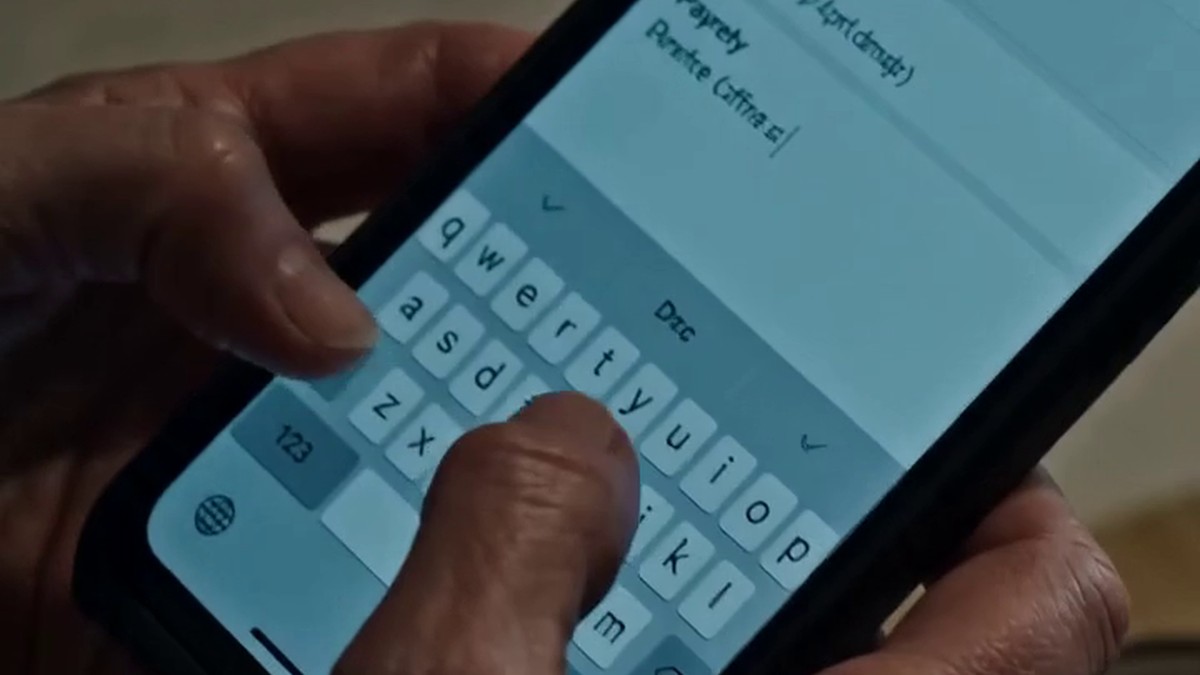
“The sea is canceled. My mother’s coming.” Leonid didn’t look up from his phone. Two days before our flight. I stood in the middle of the bedroom, an open suitcase on the floor, a swimsuit in my hand—new, tags still on. The first one I’d bought in seven years.
“What do you mean, canceled?” I asked, laying the swimsuit on the bed carefully, as if it might break. “The tickets are non-refundable. Two hundred and eighty thousand hryvnias, Leonid. That’s over seven thousand dollars.”
He rubbed the bridge of his nose and slumped onto the edge of the couch—his signature move whenever the conversation veered somewhere he didn’t want to go.
“What am I supposed to do? She already bought a train ticket. She’ll be here the day after tomorrow. I can’t tell her to turn around.”
We’d been married seven years. Seven years, and I had not taken a single vacation. Not to the sea, not to a sanatorium, not even a weekend trip to the next town. Nowhere. Our honeymoon—three days in Odesa—ended when Nadia Pavlivna called, breathless, claiming her blood pressure was spiking. We rushed home. I’m a pharmacist; I knew that 130 over 80 was perfectly normal for a woman her age. It didn’t matter. He insisted we go back. And that was the first time.
Every single time we planned a getaway, Nadia Pavlivna materialized like clockwork. Four times in seven years. I had started to believe it was a curse.
“Leonid,” I said, sitting beside him, trying to keep my voice even. “We saved for this trip for four months. I picked up extra shifts. Twelve-hour days. You saw how exhausted I was when I came home.”
“I saw,” he said, still staring at the screen. “But my mother comes first.”
I adjusted my glasses. My fingers slipped; my skin was cracked and raw from the antiseptic I handled all day. Eight years behind a pharmacy counter had turned my hands into sandpaper.
“First over what?” I asked.
“First over the sea, Oksana.” He finally looked at me. “She’s alone. She’s seventy-four. Don’t you understand?”
I understood perfectly. I understood that Nadia Pavlivna lived in Vinnytsia, in her own three-bedroom apartment, with a neighbor-friend who visited daily. She went to the market by herself, carried her own bags, and canned twenty jars of vegetables every winter. And I understood that each of her “visits” started with the same phone call to Leonid: “Son, I miss you. I’ll come for a week.” That week always stretched into two, then three. Once she stayed a whole month and only left because a pipe burst in her neighbor’s apartment.
“I’m not canceling,” I said, the words solid in my mouth. “You stay. Greet your mother. I’ll fly with Yaryna.”
He lifted his head as if I’d suggested something indecent. “Alone? Without your husband? Absolutely not. We’re a family. We go together or not at all.”
I caved. Just like all the times before. I folded the swimsuit, put it back in the closet, zipped the suitcase shut, and shoved it onto the top shelf. Two hundred and eighty thousand hryvnias burned. Non-refundable. Two days later, Nadia Pavlivna stood in our hallway with a heavy plaid bag and a plastic sack of homegrown cucumbers.
“Well, show me how you’re living,” she said, scanning the corridor. “These wallpapers need changing. Leonid, do you and your wife pay any attention to this apartment at all?”
She stayed three weeks. Within the first two days, she had rearranged my kitchen. Pots went to a different cabinet. Spices to another shelf. Cutting boards under the sink “for hygiene.” I worked twelve-hour shifts and came home to a house where I couldn’t find a single thing I needed.
“Nadia Pavlivna,” I said on day three, searching for my frying pan. “I have a system. It’s easier for me when things stay where I put them.”
She looked at me over her glasses—a heavy, downward glare even though I stood half a head taller. “You’re used to chaos. This isn’t a system; it’s a mess. Who keeps a frying pan next to the grains?”
“I do. Because it works for me.”
“Well, it doesn’t work for me. Or for Leonid. Right, Leonid?”
He sat at the table, eyes glued to his phone, shoulders slumped the way they always did when his mother called on him. “Mom… well, okay.”
“Okay” was the only word I got. Not “Oksana is right.” Not “Mom, this is her kitchen.” Just a limp little surrender.
On the fifth day, she went after the curtains. I’d bought them the year before—linen, a deep mustard yellow, chosen to match the armchair and cushions. Eight thousand hryvnias. I came home from work to find them folded on the chair. In their place, a thin white tulle she’d brought with her.
“What’s this?” I asked.
“Real curtains,” she said, tapping her fingers on the table. “Not rags. Mustard is a hospital color, not for a home.”
I stood still for three seconds. Then I took down her tulle, folded it neatly, and set it on a stool. I pulled my own curtains from the pile and started hanging them back up. My hands didn’t shake. Not this time.
“What are you doing?” Her voice dropped.
“Hanging my curtains,” I said without turning around. “I like them. This is my home. So the color of the curtains is my choice.”
The silence lasted maybe five seconds. Then she stood, walked into the hallway, and dialed her phone. I heard the muffled words: “Leonid, your wife is being rude to me. I’m not used to such treatment.”
Leonid came home early. He slammed the door so hard Yaryna flinched in her room.
“What did you do?” he demanded from the doorway.
“I hung my curtains.”
“My mother is upset! She brought those for us, she tried, and you didn’t even say thank you!”
I looked at him—at his broad shoulders, which were squared now because his mother wasn’t in the room. In front of her, he hunched. In front of me, he stood tall.
“Leonid,” I said. “I said thank you for the cucumbers. For the jam. For the pies. But I will choose the curtains in my own house.”
“It’s OUR house!”
“Then why does your mother make all the decisions?”
He didn’t answer. He rubbed his nose, turned around, and went to her.
That evening, Yaryna found me in the kitchen. Quiet, a textbook in her hands, as if she’d only come in for water.
“Mom,” she said. “He calls her. Before every vacation. I’ve heard him. He says, ‘Mom, we’re leaving on this date.’ And then she shows up. Every time.”
I set the kettle on the stove and listened to the water begin to boil. Not a coincidence. Not bad luck. A system. Four times in a row, a deliberate sabotage.
I took out my phone, opened my notes, and added it up. The honeymoon—120,000. Turkey, two years ago—190,000. Lviv, last spring—50,000. This one—280,000. Six hundred and forty thousand hryvnias. Over sixteen thousand dollars. All gone. And during those same seven years, Leonid had taken his mother to Truskavets twice, on joint savings. Both times, sanatorium vouchers. Our money.
I closed the notes and poured my tea. My hands were calm. The decision hadn’t fully formed, but something had already shifted.
A month after Nadia Pavlivna left, I invited my friend Halyna over for dinner. We worked together at the pharmacy; we’d known each other nine years. Leonid went to watch football at a buddy’s place. Yaryna was in her room. Wine, cheese, a real conversation—it was the most normal evening I’d had in months.
“So, how are you?” Halyna asked. “Where to this summer?”
“Nowhere,” I said with a smile I’d rehearsed a hundred times.
“Again?”
“Again.”
She shook her head. She knew. Everyone knew.
Then the doorbell rang. Nadia Pavlivna stood on the doorstep with a bag and a sack.
“Leonid said I should drop by, since you’re home alone,” she announced. “Decided to check on you. It’s been so long.”
It had been a month. She came in, saw Halyna, and sat down. I poured her tea—she didn’t drink wine and never missed a chance to disapprove of those who did. For ten minutes, things were almost normal. Then Halyna asked, “Nadia Pavlivna, do you travel?”
And off she went.
“Of course!” She straightened in her chair. “Leonid took me to Truskavets. Twice. Morshyn baths, massages, the mountains. Beautiful! And you, Oksana? Where have you been lately? I haven’t seen a single photo from you. Not anywhere?”
“No,” I said. “Nowhere.”
She turned to Halyna, explaining me like a disappointing child. “See? Young, healthy, and she never goes anywhere. Leonid offers, and she refuses. Her own fault. At her age, I had already traveled all over Crimea.”
Halyna looked at me. I saw her lips press into a thin line.
“Nadia Pavlivna,” Halyna said carefully, “Oksana doesn’t travel because she doesn’t want to.”
“Then why?”
Halyna fell silent, her eyes asking permission. I answered for myself.
“Because every time we buy tickets, you show up,” I said. My voice was steady. I wasn’t shouting. Just listing facts. “Four times in seven years. Our honeymoon—you called, we turned around. Turkey—you arrived the day before the flight. Lviv—the same. This year, the sea. Two hundred eighty thousand non-refundable. In total, six hundred forty thousand hryvnias. I did the math.”
Her fingers stopped tapping the table mid-motion. “What nonsense are you spouting?”
“I’m giving you numbers. Not accusations. Numbers. I can give you the dates, too, if you need them.”
Silence. Halyna stood, said she had to go. I walked her to the door. When I came back, Nadia Pavlivna was already dialing Leonid. Twenty minutes later, he stormed in.
“Why are you humiliating my mother in front of strangers?” He stood in the hallway, shoes still on.
“I didn’t humiliate her. I named the sums.”
“What sums? What are you talking about?”
“The six hundred forty thousand hryvnias we lost on canceled trips. Over our entire marriage.”
Leonid looked at his mother. She stood in the kitchen doorway, arms folded.
“Son,” she said. “It’s either her or me.”
“Mom…”
“She has to apologize,” Nadia Pavlivna cut him off.
Leonid turned to me. “Oksana. Apologize to my mother.”
I took off my glasses and wiped them on the hem of my blouse. Without them, everything blurred a little—Leonid, his mother, their shoes in the hallway.
“No,” I said. “I won’t.”
“Then I’m going to my mother’s,” he said. “Until you come to your senses.”
“Fine.”
He expected a different answer. I saw it in the twitch of his chin. But I stayed silent, and so did he. Then he grabbed his jacket and left. Nadia Pavlivna followed, leaving the bag of cucumbers in the hallway.
I sat on a stool in the empty kitchen. My legs ached from the shift—twelve hours behind the counter, and now this. But inside, a strange clarity had settled, like the sky after a thunderstorm.
He came back three days later. No apology, no conversation. He just walked in, hung up his jacket, and sat down to dinner. Nadia Pavlivna went back to Vinnytsia. But then the short sentences started. “Is dinner ready?” “Where’s my shirt?” “Pick up Yaryna.” I understood: he was punishing me with silence because I hadn’t apologized.
A week after that, I started putting money aside. A separate account, one he didn’t know about.
The year passed quickly. Yaryna turned sixteen, and I got her a foreign passport on my own. Leonid signed the consent form without even asking why. He didn’t care, as long as his mother wasn’t calling. In May, I bought two tickets—me and Yaryna. Antalya, a three-star hotel, nine nights. Paid from my secret account. Forty-seven thousand hryvnias, saved month by month. Refundable tickets this time; I’d learned.
I told Leonid, “Let’s go together. In June. I found a good deal.” He looked at me like I was speaking a foreign language. Then he nodded. “Alright. Let’s try.”
For two weeks, I waited. I packed suitcases, bought Yaryna new sandals and a sun hat. I picked up sunscreen at work with my employee discount. Four days before the flight, Leonid came home late. He sat at the table, placed his phone face-down—a gesture I knew too well. A phone face-down meant a call to or from his mother.
“Oksana,” he began, and I felt my fingernails dig into my palms. Not anger—anticipation. I already knew what he was going to say.
“My mother’s coming. We need to meet her.”
“When?” I asked.
“The day after tomorrow.”
Two days before the flight.
“Leonid,” I said. “Did you call her? Did you tell her we’re flying?”
He looked away. Rubbed his nose. And I knew. Yes. He had called her, just like the four times before, told her the date and the destination, and Nadia Pavlivna had bought her train ticket like a soldier following orders.
“She missed me,” he mumbled. “She’s seventy-four this year.”
“Seventy-four. Seventy-five in November.”
He waved his hand. “What difference does it make? She’s alone. We’re all she has. The sea isn’t going anywhere.”
And in that moment, I saw it all—the seven years, every single “the sea isn’t going anywhere,” every swimsuit with a tag still on, every suitcase I packed and put back, the 640,000 hryvnias, the twelve-hour shifts and the cracked skin on my hands.
“Okay,” I said.
Leonid exhaled. His shoulders dropped. He thought I had surrendered again. “That’s my sensible girl. I’ll call Mom back, tell her to bring her own bedding. We’re low on spare sheets.”
I nodded, walked out of the kitchen, and went straight to Yaryna’s room.
“Pack,” I said. “We’re flying the day after tomorrow.”
She looked up from her phone. “Mom, he said—”
“I know what he said. Pack your bag. Swimsuit, books, charger. I have your passport.”
She stared at me for a long moment. Then she smiled—the first real smile I’d seen in a month—and pulled out her backpack.
I returned to the kitchen. Leonid was on the phone with Nadia Pavlivna, discussing what sheets she should bring.
“Leonid,” I said. “I’m not canceling the tickets.”
He looked up. “What do you mean?”
“I mean I’m flying with Yaryna. You stay. Greet your mother.”
The phone went dead silent. I could imagine Nadia Pavlivna on the other end, frozen.
“You’re serious?” he asked.
“Seven years, Leonid. Not a single vacation. Four canceled trips. I work six days a week, twelve-hour days, and my hands are splitting open from antiseptic. I’m forty-eight years old. I want to see the sea.”
“And my mother? What do I tell her?”
“Tell her your wife went on vacation. For the first time in seven years.”
He stood up, the chair scraping the floor. “Oksana, if you go, this is… this is disrespect. To my mother. To me.”
“And the four vacations you canceled—was that respect for me?”
No answer. He stood there clenching his phone. Through the speaker, I heard Nadia Pavlivna’s distant voice: “Leonid! What’s happening? What is she saying?”
I turned and left the kitchen.
I didn’t sleep that night. I sat in Yaryna’s room, checking documents. Two passports—mine and my daughter’s. Hotel booking. Insurance. Transfers. Everything paid. In the morning, I wrote a short note on a scrap of paper: *Leonid, Yaryna and I flew out. We’ll be back in ten days. Greet your mother. We needed this vacation. Oksana.* I placed it on the kitchen table, next to his coffee cup. Then I grabbed our two suitcases, woke Yaryna, and called a taxi.
At the door, I looked back. The apartment was silent. Leonid was still asleep.
“Let’s go,” I said to Yaryna.
In the taxi, she was quiet for five minutes. Then: “Mom, will he be mad?”
“Yes.”
“And what then?”
I watched the gray morning city slide past the window. In four hours, I would see the sea. “Nothing. Then nothing.”
At the airport, I turned off my phone. I switched it on only after the plane climbed above the clouds. Twelve missed calls from Leonid. Three messages from Nadia Pavlivna: *Oksana, what are you doing?* *Bring the child back!* *I won’t let this go!* I put the phone in my bag. Yaryna was already reading her book. Outside the window, the clouds stretched on forever.
The sea turned out to be warm.
We came back three weeks later, tanned and salted. Jars of pickled cucumbers sat in the fridge—Nadia Pavlivna’s calling card. My note still lay on the table where I’d left it; Leonid hadn’t moved it. He was sitting in the living room when we walked in. He looked at us and said nothing. Then he stood and went into the bedroom. The door clicked shut. He started sleeping on the couch after that. He speaks to me only through Yaryna now: “Tell your mother I’m at work,” “Ask your mother where the receipt is.” Every evening, Nadia Pavlivna calls. Through the wall, Yaryna hears the refrain: “Son, she doesn’t respect you. She’s not a wife; she’s a punishment.”
But I sleep peacefully. For the first time in seven years. On my nightstand rests a small shell Yaryna found on the beach.
One Tuesday evening, exactly a week after our return, the doorbell rang. Yaryna was doing homework. Leonid was on the couch, scrolling through his phone. I opened the door. Nadia Pavlivna stood there, a packed suitcase in one hand and a bag of homemade jam in the other. Her face was set in stone.
“I’m moving in for a while,” she announced, pushing past me into the hallway. “My son needs a real woman in this house. Someone who won’t abandon him for a beach.”
Yaryna appeared in the hallway, her eyes wide. Leonid lumbered off the couch, already rubbing his nose.
“Mom, you didn’t say you were coming today…”
“I didn’t need to say anything, son. I see the state you’re in. Enough is enough.”
She set down her suitcase and began inspecting the living room, already cataloging what she would rearrange. I stood very still, feeling something cold and final lock into place inside my chest. All those years, I had bent. I had folded swimsuits and put away suitcases and bitten my tongue until it bled. I was done.
“No,” I said.
She turned slowly. “Excuse me?”
“You’re not moving in. You’re not staying. And you will never rearrange my kitchen again.”
Leonid stepped forward. “Oksana—”
I raised my hand, and to my amazement, he stopped. “You,” I said, looking at my husband, “called your mother before every single vacation. You fed her the dates so she could arrive like a wrecking ball. Seven years. Six hundred and forty thousand hryvnias. My exhaustion, my cracked hands, my daughter watching me cry in the bathroom—and it was deliberate sabotage. Yaryna heard you on the phone. I know everything.”
His face went pale. Nadia Pavlivna’s mouth opened, but I didn’t let her speak.
“I’m not asking for a divorce,” I continued. “I’m telling you. It’s over. This marriage died the moment you chose your mother’s convenience over my sanity one too many times.”
“You can’t just—” Leonid started.
“I can. And I will.” I turned to Yaryna, who stood frozen in the hallway. “Sweetheart, pack a bag. We’re leaving.”
Nadia Pavlivna’s voice sharpened. “You’ll take the child from her father?”
“I’m not taking her from anyone. She’s sixteen. She can choose. And she chooses to go with her mother, who actually sees her and doesn’t vanish into a cowardly silence every time grandma walks in.”
Yaryna didn’t hesitate. She turned and went to her room. I heard the zipper of her backpack.
Leonid’s voice cracked. “Oksana, this is insane. My mother just wanted to help. We can fix this.”
I looked at him—really looked. At his broad shoulders, now slumping again, at his hand already reaching for his phone to escape. “No, Leonid. You can’t fix seven years of erasing me. The only thing you can do now is step aside.”
I walked to the bedroom, grabbed the small suitcase I’d never unpacked, and met Yaryna in the hallway. Nadia Pavlivna stood in the middle of the living room like a statue, her plaid bag still unopened.
“You’ll regret this,” she said. “A woman alone, with no man—”
“I’ve been alone for seven years,” I cut her off. “I’m just no longer pretending otherwise.”
I picked up my suitcase and opened the door. Yaryna slipped her hand into mine.
“Where are we going, Mom?” she asked.
The evening air smelled of rain and freedom. I thought of the shell on my nightstand, the salt on my skin, the horizon I had finally reached.
“Anywhere we want, my love. Anywhere we want.”
I pulled the door shut, leaving behind the silence of two people who had never truly seen me. And the sea—the sea was still there. This time, it was mine.