The Woman Who Wanted Only the Oldest Dogs
The woman at the intake counter set down a battered canvas tote and said it without fanfare, as if she were ordering a loaf of bread.
“I’m looking for the oldest dog you have.”
Jenna, the shelter volunteer, stopped shuffling paperwork. In three years at Second Chance, she’d heard every kind of request. Tiny dogs. Hypoallergenic dogs. Dogs that wouldn’t bark at the mailman. One guy insisted on a dog “with dramatic eyebrows” for his Instagram. But never this.
“Oldest… how old are we talking?” Jenna asked.
“The oldest one here. Twelve, fourteen. The older the better.”
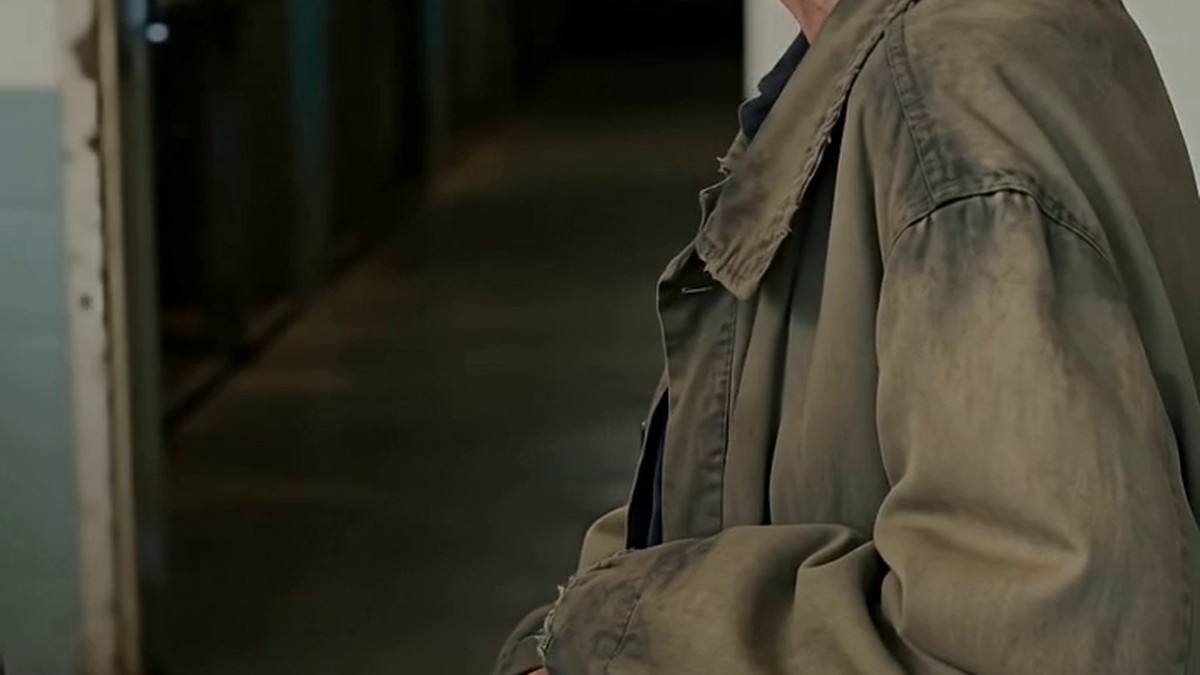
The woman looked to be in her mid-sixties. She had graying hair pulled into a frayed knot, a wind-burned face, and worn sneakers with mud caked deep into the treads. Her khaki jacket was faded along every seam. She didn’t smile politely the way visitors do when they’re still deciding. She just met Jenna’s gaze, steady and unhurried, like someone who had already made up her mind a long time ago.
Jenna excused herself and found Beth, the shelter director, in the supply room upending a bag of kibble into steel bowls.
“Beth? There’s a lady out front. She’s asking for the oldest dog we have. On purpose.”
Beth’s hand paused on the scoop. “The oldest?”
“Said the older the better.”
“Interesting. Bring her back.”
—
The woman’s name was Clara Langtree. She sat in the office with her tote on her lap, hands folded. Her fingers were raw-knuckled, the nails clipped short, with tiny cracks at the corners that spoke of scrubbing floors and working outdoors. Beth offered coffee; Clara declined with a small shake of her head.
“Ms. Langtree, you understand that a senior dog comes with certain needs,” Beth began, keeping her tone gentle but guarded. “Vet bills, special food, often chronic illness. Arthritis, kidney failure, heart trouble. It’s emotionally heavy and it isn’t cheap.”
“I understand.”
“And you’ve had animals before?”
“I have.”
Beth waited. Clara looked toward the window, beyond which rows of kennels sat in hazy spring light. Then she began to recite, as if reading from a pocket notebook only she could see.
“Right now at home I have Rufus. He’s fourteen, a Lab mix, terrible hips. I got him from a kill shelter in Evansville two years ago when his number was up. Before Rufus, there was Buck — eleven, completely blind from cataracts, nobody would touch him. He lived with me for nineteen months. Before Buck, I had a shepherd mix with hip dysplasia, Sadie. She got eight months. Before that…”
She spoke each name a fraction slower than the rest of the sentence. As if giving each dog one more moment of being spoken aloud.
Beth removed her glasses and set them on the desk. “You deliberately adopt elderly dogs?”
“Yes.”
“May I ask… why?”
Clara’s gray eyes met hers without blinking. “Because everybody fights over the puppies. The young ones. A senior dog just lies in a kennel and waits. She doesn’t understand what she did wrong. She spent her whole life loving someone — sleeping at the foot of a bed, greeting them at the door. Then that someone dies, or moves, or just decides she’s too much trouble, and she lands here. She might have one year left. Maybe two. I don’t think that year should be spent on a concrete floor.”
Behind the office wall, a dog bayed once — low and hollow, the kind of sound that wasn’t aimed at anyone. Just a sound of longing.
Beth rose to her feet. “Come with me.”
—
The kennel block smelled of damp fur, bleach, and the bland mash they cooked in fifty-pound batches. Puddles from the morning hosing reflected a milky sky. Younger dogs threw themselves against the chain link as the two women passed. A pit mix with a missing tail pounded one paw rhythmically against the metal gate, as if knocking on a door nobody would open.
Clara didn’t linger at those kennels. She barely slowed.
Beth stopped at the last pen on the left. “This is Mabel. Thirteen years old, dropped off a month ago. Her owner passed, the daughter said she ‘couldn’t keep her, the kids have allergies.’ Left her in the hallway in a cardboard box that used to hold a TV.”
A large, auburn-coated dog lay on a scrap of carpet in the corner. Her jowls drooped and her eyes had the hazy blue cast of age. Her muzzle was completely white, as though dipped in flour. Her hind legs stretched out at an awkward angle, and you could see just by looking that standing up cost her something.
Clara crouched slowly in front of the chain link. “Hey, Mabel.”
The dog lifted her head. She didn’t get up. She just looked over, her tail making one heavy, laborious wag before it stilled.
“She has kidney issues,” Beth said quietly. “And an enlarged heart. The vet thinks maybe a year, a year and a half, with excellent care and daily meds.”
Clara kept her eyes on Mabel. The dog shifted her weight with a soft groan, then pulled herself up — front paws first, back end a struggle — and took three stiff steps to the fence. She pressed her nose, dry and warm, against the metal.
Clara slipped two fingers through the links and stroked the bridge of Mabel’s nose, slow as a lullaby. The dog closed her eyes.
“I’ll take her,” Clara said.
—
The paperwork took thirty minutes. Jenna stamped the forms and kept glancing out the window. Clara was sitting on a bench in the yard with Mabel on a leash, pressed against her thigh. The big dog wasn’t moving except for her nose, which traveled methodically over the knee, the jacket hem, the crusted shoelaces, the fingers resting on her back.
“Beth,” Jenna said under her breath. “Is she… I mean, is she okay?”
Beth walked over and watched through the glass. “More than okay.”
“But why does she do it? Doesn’t it destroy her when they die?”
Beth crossed her arms. “I’ve run this shelter for twenty years. I’ve seen people bring dogs back because the dog chewed a couch cushion, or they’re moving to a no-pets apartment, or they just got bored. That woman out there isn’t choosing a pet. She’s choosing the ones everyone else already threw away. That’s not crazy, Jenna. That’s a very clear kind of love.”
Jenna’s throat tightened. She finished signing the adoption papers and walked them outside.
“All set. Here’s the medication schedule — kidney pills twice a day with food, heart meds once on an empty stomach. And the vet wants to see her in two weeks.”
Clara took the papers, folded them, and tucked them into her bag. She produced an old, soft canvas collar with a heavy brass buckle and carefully swapped it for the nylon one from the shelter.
“This won’t rub her neck,” Clara said. “I buy them for all my dogs.”
Jenna watched them go. Clara matched her pace to Mabel’s halting, short-stride gait. At the gate, the woman bent and adjusted the collar slightly, then murmured something directly into the dog’s ear. Mabel lifted her white muzzle and swiped Clara’s hand with her tongue.
Then they turned toward the bus stop and disappeared past the hedge.
—
A month later, Beth’s phone buzzed with a photo.
Mabel was stretched across a plaid fleece blanket, paws dangling, beside a water bowl and a one-eyed stuffed duck. Her eyes were still milky, but they looked clearer, somehow — brighter. Her tail was a caramel blur.
The message read: *Mabel’s settled in. First week she was scared, pressed against the wall. Then at 2 a.m. one night she climbed into bed with me and hasn’t slept on the floor since. Has decided she hates the right ear being touched but the left one is her favorite. Kidneys are stable — vet’s pleased. Rufus accepted her without a fuss. They lie together on the sunny patch by the back door. Thank you for everything.*
Beth read it, then read it again. She set the phone down and stared at the water-stained ceiling. On her desk was a list of dogs to transfer to another building — twenty-three names, all young, all adoptable. At the very bottom, penciled in by hand, was one more: Hank. Fourteen years old, hound mix, surrendered after his owner died. Deaf in one ear. Slow-moving. Picky eater. In the column marked “Visitor Interest,” there was a dash.
She picked up her phone and typed: *Clara, we have a dog named Hank. He’s 14, very quiet, very gentle. No rush, but if you’re ever able…*
Four minutes later, the reply landed: *I’ll be there Saturday. I’ll get his spot ready.*
Beth smiled and pocketed the phone. From the kennels, old Hank let out a muffled *whuff* in his sleep, dreaming of something that must have smelled like home.
—
Saturday morning, Clara walked through the shelter doors at ten o’clock sharp — same sneakers, same tote, same look of quiet purpose. Jenna was ready at the front desk but didn’t bother with formalities. She just nodded.
“The last kennel on the right. We call him Hank.”
As they walked, Jenna’s voice dropped. “Can I ask you something? When they pass — isn’t it… isn’t it just too hard?”
Clara’s steps didn’t falter. “Yes.”
“And you keep doing it?”
“Yes.”
“Why?”
Clara paused and turned. Her face was unguarded, the way it gets when a person has stopped performing for other people a long time ago.
“When Sadie was dying,” she said, “she was on my lap, on a clean blanket, in my living room. I stroked her head all night, until the very end. She could’ve died here, in a cage, on a cold floor by herself. I was heartbroken after — I’m still heartbroken when I think about her. But *she* wasn’t. She was at peace. I saw it in her eyes, the way her breathing eased, the way her legs finally relaxed. The point isn’t me, honey. The point was Sadie. And Rufus. And Buck. And now Mabel. The point is them.”
Jenna blinked rapidly and turned away, busying herself with the latch on the kennel gate.
—
Hank was a solid, liver-colored hound with a sagging belly and a gray beard dusting his lower jaw. One ear drooped; the other stood at alert — the only one that still worked. He didn’t rise when they approached. He simply lifted his head a few inches and fixed his dark, resigned gaze on the gate.
Clara crouched and pulled a napkin-wrapped piece of boiled chicken from her tote. She held it through the chain link. Hank sniffed once, then took it with the exaggerated carefulness of an old dog who’s learned not to rush anything. He chewed slowly.
Clara ran her palm over his forehead, rubbing the coarse fur along the bridge of his nose. She found the little bumps above his brows and scratched them gently. Hank’s tail gave a single, slow thump against the floor.
“All right then,” Clara murmured. “Let’s go home.”
—
The first week was the hardest.
Hank followed Clara everywhere like a tired shadow, but he refused the plush bed she’d set up in the corner. He wouldn’t eat the first two days unless Clara sat on the linoleum beside him and hand-fed him pieces of kibble mixed with warm broth. He startled at the refrigerator motor. He whined faintly at night until Clara moved his bed — a thick folded blanket — right to the side of her mattress, where she could let her hand dangle down and rest it on his side while they both slept.
Mabel and Rufus gave him space. The three of them moved around the small house like old roommates who’d known each other for decades, stepping carefully, sharing the sunny patch by the back door, never greedy for attention.
By the end of the month, Hank had put on two pounds. His coat was glossier. He had learned to nose Clara’s calf when he wanted to go outside, and he’d even stolen the one-eyed stuffed duck from Mabel’s blanket once, before looking deeply ashamed and dropping it at Clara’s feet.
Then, one night in late November, everything tilted.
—
Clara woke to a sound she knew too well — a harsh, rattling gasp. She found Hank on his side in the hallway, legs paddling weakly, gums pale and tacky. His breathing was shallow and fast, his eyes open but unseeing.
She was on the floor immediately, pulling his heavy body gently onto a blanket, calling his name. “I’m here, Hank. Right here. Stay with me.”
The nearest emergency vet was forty minutes away. Clara didn’t have a car. She called the one-on-call number from the refrigerator door, voice steady but urgent, and then she sat with Hank’s muzzle cradled in her lap, stroking the flat space between his eyes the way he liked. Rufus and Mabel stood in the doorway, watching in the heavy, knowing silence of animals who understand something is wrong.
The vet, a young woman named Dr. Espinoza, arrived in twenty-eight minutes with a bag of supplies. She knelt in the hallway, shined a light in Hank’s eyes, listened to his heart.
“Pulmonary edema,” she said quietly. “Fluid in his lungs. His heart’s working too hard. It’s common at this age.”
“Can you help him?”
Dr. Espinoza met Clara’s eyes. “I can give him a diuretic injection and some oxygen. It might buy him a few days. Maybe a week. But we’re at the edge, Ms. Langtree.”
Clara looked down at Hank. The hound’s flank quivered with each labored breath. His cloudy eyes found her face, and his tail made the smallest movement — nothing more than a twitch.
“He’s not in pain if we treat him now,” the vet added gently. “But he’s very tired.”
Clara nodded slowly. She leaned close to Hank’s ear, the good one, and whispered something no one else could hear. Then she looked up. “Do what you can to make him comfortable. He’ll tell me when it’s time.”
They worked for an hour. The injection eased the fluid. Hank’s breathing steadied into a shallow but peaceful rhythm. Dr. Espinoza set up a makeshift oxygen tent in the corner of the living room out of a plastic storage bin and a tube, and she promised to return in the morning.
Clara didn’t sleep. She sat cross-legged on the floor with Hank’s head on a cushion in her lap, one hand over his heart so she could feel each beat. Mabel shuffled over and lay down pressed along Hank’s spine. Rufus took the other side, resting his graying muzzle on Hank’s hip.
The house was silent except for the hiss of the oxygen and the quiet chorus of old-dog breaths — the steady, fragile soundtrack of a life being held together by nothing but love.
When dawn crept through the blinds, Hank opened his eyes. He looked up at Clara, and there was something different in his face — a release, a clarity. His tail wagged twice, fully and firmly, as if he were saying *thank you* and *goodbye* at the same time.
He took one deeper breath and let it out slowly. Then he didn’t take another.
Clara pulled him closer, burying her face in his warm neck, and for a long while she just held him as the sun climbed higher over the little house.
—
On Monday, Clara walked back into Second Chance Animal Shelter.
Jenna saw her through the window and felt her heart drop. “Oh no. Are you…”
Clara’s eyes were rimmed red, but her posture was as straight as ever. “Hank passed Saturday morning. He was at home, with me and the others. He wasn’t alone.”
Beth came out from the office and simply stood there, giving Clara the space to speak or not speak.
Clara took a breath. “I’m not here for another dog. Not yet. Mabel and Rufus need some time. But I wanted you to know that Hank’s last months were good. He had a blanket that smelled like all of us, and he got to steal a stuffed duck exactly once. That’s not nothing.”
Beth’s throat worked. “No, it’s not nothing.”
Clara reached into her tote and pulled out a small jar — a painted ceramic canister sealed with a rubber gasket. “I’ve been putting aside a little every month. It’s not much, but I’d like it to go toward the vet fund for the senior dogs. For the ones who are still waiting.”
Beth took the jar. It was heavy with coins and folded bills — the kind of money that came from skipping things, from fixed incomes, from quiet sacrifice.
“Ms. Langtree…” Beth started, but her voice broke.
Clara reached out and patted her hand the way you might pat a nervous child’s. “When you get another one — the one nobody wants, the oldest one in the back corner — you call me. I’ll be ready.”
She turned and walked toward the door, then paused. “I should tell you — I was a hospice nurse for forty years. Every day I sat with people who were crossing over. Some had whole families around them. Some had no one. The ones with no one? They were the most scared. I made sure they weren’t alone at the end. I guess I never really retired.”
Then she was gone, the door swinging shut behind her.
Jenna stood frozen. She’d seen hundreds of adoptions, celebrated hundreds of “gotcha day” photos. But this was something else — a quiet, wrenching kind of goodness that didn’t announce itself or demand applause.
Two weeks later, Beth texted Clara a photo of a twelve-year-old terrier mix named Otis. He was missing half his teeth and most of his hearing, and he looked like a dusty throw pillow. In the shelter’s records, his “adoption prospects” had been marked as “None.”
Clara’s answer arrived in three minutes.
*I’ll take him. I’ll be there Friday.*
Beth smiled, set the phone aside, and pulled out a new nameplate for the empty kennel in the back corner. Along the top it said **SENIOR SANCTUARY SUITE**, and beneath it she wrote in neat marker:
*This kennel sponsored by Clara L., who reminds us that every dog deserves a soft landing.*