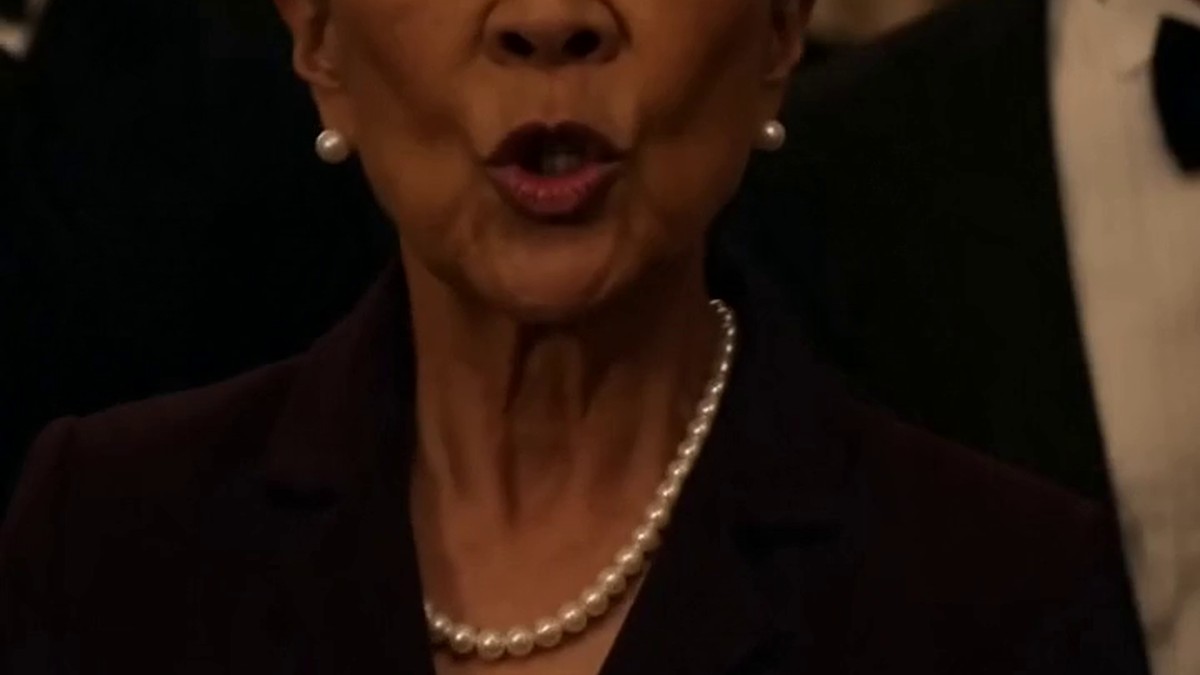
“Baby girl… who did that to your face?”
Ernesto Salgado’s voice cut through the room the instant he stepped through the front door. Quiet. Measured. Precise as a scalpel.
The party froze.
Julián stood motionless behind the birthday cake, the silver knife hovering mid-air like he’d forgotten what hands were for. The candles kept flickering — indifferent, cheerful, obscene. Even the mariachi band Ofelia had hired for the occasion slowly lowered their instruments, eyes darting toward the floor, toward the walls, toward anywhere that wasn’t this.
Valeria’s fingers moved on instinct to her left cheek. She’d spent forty minutes that morning blending concealer over the bruises — deep purple, the color of overripe plums — and she’d almost convinced herself they weren’t there anymore. Almost. She wore an emerald dress with long sleeves despite the brutal August heat. Nobody had asked why. Nobody ever asked why.
Her husband pushed himself off the granite bar, raised his glass of tequila, and smiled like a man who had never once been held accountable for anything.
“I did.”
He took a slow sip.
“Gave her an early birthday present. A slap instead of a card.”
A few of his friends laughed — the kind of laugh people produce when they’re too cowardly to choose a side. Nervous, hollow, ugly.
Ofelia pressed two fingers to her collarbone in theatrical distress.
“Julián, don’t joke like that. People always assume the worst.”
But Ernesto Salgado was not people.
He had raised Valeria alone after her mother died — changed diapers and helped with homework and sat through every nightmare and fever and heartbreak for twenty-eight years, just the two of them against the world. Before retiring, he had spent nearly three decades as a prosecutor, and in his final years had become one of Guadalajara’s foremost specialists in domestic violence cases. He had seen what cruelty looked like when it was dressed up in excuses. He had learned to read the architecture of it — the long sleeves in summer, the flinching at raised voices, the way a woman’s eyes check a man’s face before she speaks.
He never raised his voice when he was truly angry.
He got quieter.
And every word that came out sounded like evidence being submitted to a court.
He didn’t look at her cheek. He looked directly into her eyes.
Valeria gave the smallest possible nod — barely a breath, barely a movement. A signal so slight it was almost invisible.
Nobody else caught it.
—
For the better part of a year, Julián and his mother had been running a quiet, grinding campaign to erase Valeria from herself.
Too emotional, they said. Too clumsy. Ungrateful. Difficult.
Julián monitored her phone. He reviewed her bank statements line by line. He decided which friends were acceptable and which weren’t, which family members she could call, how long she was allowed to be on the phone when she did. Ofelia coached from the sideline, insisting that a respectable wife protected her husband’s reputation — even from her own memories of what he’d done to her.
This birthday party had never been a celebration.
It had been designed as a performance — one where Valeria was meant to stand in the center of her own humiliation and smile and cut the cake and thank everyone for coming. Where the people who’d watched her diminish over twelve months would witness the final act of it and call it a lovely party.
Ernesto crossed the room slowly.
He removed his steel watch and set it on the entry table without looking away from Julián. The small, deliberate sound of it against the wood seemed louder than it had any right to be.
“Go to the garden, sweetheart. Right now.”
Valeria’s throat tightened.
“Papa—”
“The garden.”
Julián set the cake knife on the table and laughed — the loud, performative laugh of a man performing confidence.
“What’s next, Mr. Salgado? A duel? She’s my wife. She stands exactly where I tell her to stand.”
The older man turned his head a fraction of an inch.
“You just admitted, in front of thirteen witnesses, that you struck my daughter.”
The laugh cracked. Just for a second — just a hairline fracture — but it was there.
Ofelia moved immediately, stepping between the two men like she’d rehearsed it, the diamond necklace around her throat catching the light. Valeria recognized that necklace. She’d watched it get charged to her own credit card without being asked.
“Marital matters stay within the family,” Ofelia said tightly. “Don’t make a circus out of this.”
Ernesto held her gaze without blinking.
“You already did that.”
“I’m just closing the show.”
—
Valeria walked to the terrace on legs that barely felt like hers. The afternoon light hit her face hard the moment she stepped outside — honest and unfiltered, the kind of light that doesn’t allow for pretending.
Through the glass doors, she watched.
Cream-colored balloons drifted against the kitchen ceiling. Fragile. Pretty. Completely wrong for a house that had smelled like fear for nearly a year.
She saw her father take one slow step toward Julián.
And then Ofelia broke.
Not gradually. All at once.
The composure she’d spent decades constructing simply fell off her face. Her eyes snapped toward the hallway, then to the coat closet near the back wall — the one where they kept the recycling bags. Without caring who was watching, she dropped to her knees on the polished floor and began scrambling toward it, shoving boxes aside, reaching desperately for something hidden at the back.
Valeria knew exactly what she was going for.
The night before, unable to sleep, she had watched through a cracked door as her mother-in-law opened a bank envelope and tucked it carefully behind those boxes. Inside it: copies of a fraudulent loan application bearing Valeria’s forged signature. Property documents for a house Ernesto had purchased years before the marriage — a house that someone had been quietly trying to fold into a financial scheme that would have left Valeria indebted and dependent and trapped forever.
Ofelia needed those papers gone.
She didn’t get them.
Because at that moment, the study door opened.
Two plainclothes investigators walked in first, measured and unhurried. Behind them came an advocate from the Women’s Justice Center, her expression calm and practiced. And last — pulling on latex gloves as she crossed the threshold — a forensic examiner.
The room stopped breathing.
Julián’s smile didn’t fade. It simply ceased to exist, like a light switched off.
Ofelia froze on her knees on the floor, one hand still reaching toward the closet, surrounded by scattered boxes and her own desperation.
Ernesto Salgado had not come alone.
He had never been coming just to confront them.
The party — every detail of it, the balloons and the mariachi and the cake and the guests — had been a stage. Carefully, methodically constructed to draw out exactly this: a public confession, a panicked destruction of evidence, and thirteen unimpeachable civilian witnesses to document all of it.
One of the investigators crouched beside Ofelia and calmly removed the envelope from her hands.
“Ma’am, please don’t move.”
Julián turned to Ernesto with something new in his face — not anger, not arrogance. Something smaller. Something closer to the thing he’d always made Valeria feel.
“You can’t do this,” he said. “This is my house.”
“No,” Ernesto said simply. “It’s hers.”
—
Outside on the terrace, Valeria heard everything through the glass.
She didn’t go back inside. Not yet.
She stood in the garden where her mother’s roses still grew — wild and thorny and stubbornly alive — and she pressed her palm flat against the warm stone wall, and she let herself breathe. Really breathe. The kind of exhale that had been building for three hundred days.
The advocate came to her twenty minutes later, stepping carefully across the patio stones.
“We have everything we need,” she said quietly. “You don’t have to go back in there if you don’t want to.”
Valeria looked through the glass one last time.
Julián was sitting in one of the dining chairs, rigid, while an investigator spoke to him in a low, professional tone. Ofelia had stopped crying. She sat on the floor exactly where she’d fallen, staring at nothing, the diamonds at her throat suddenly looking like what they were — props in a story that had finally run out of audience.
“I know,” Valeria said.
She turned away from the glass.
Her father appeared in the doorway behind her — no watch on his wrist, his jacket slightly rumpled, looking older than she wanted him to look and steadier than anyone she’d ever known. He crossed the terrace and put his arms around her without a word, the way he had when she was seven years old and the world had felt too big and too rough.
She let herself cry.
Not because she was broken.
Because she was finally, irrevocably safe.
The birthday candles had long since melted down to nothing by the time the investigators finished. The mariachi went home without playing a single song. The balloons slowly lost their air.
But Valeria Salgado walked out of that house standing upright, her father’s hand on her shoulder, into an evening that smelled like rain and possibility and the very first day of the rest of her life.