The graduation gala at Crestview Academy was the kind of night that glittered. Crystal chandeliers threw light across the ballroom. Professors in pressed suits. Business owners and local politicians. Families with cameras pressed to their chests. And the students—beaming, breathless, ready to close one chapter and tear open the next.
Sophia Reyes stood backstage, her hands trembling against the hem of her gown. She had spent years clawing toward this moment, juggling two part-time jobs, studying on buses, falling asleep with highlighters still clutched in her fingers. When the dean called her name—valedictorian of the graduating class—the room erupted in applause. Sophia walked to the stage, tears burning in her eyes, and took the microphone. She waited until the clapping faded, then spoke.
“Everyone in this room thinks I got here on my own.”
The silence was immediate. A few faculty members exchanged glances.
“But there is one person without whom I never would have graduated.”
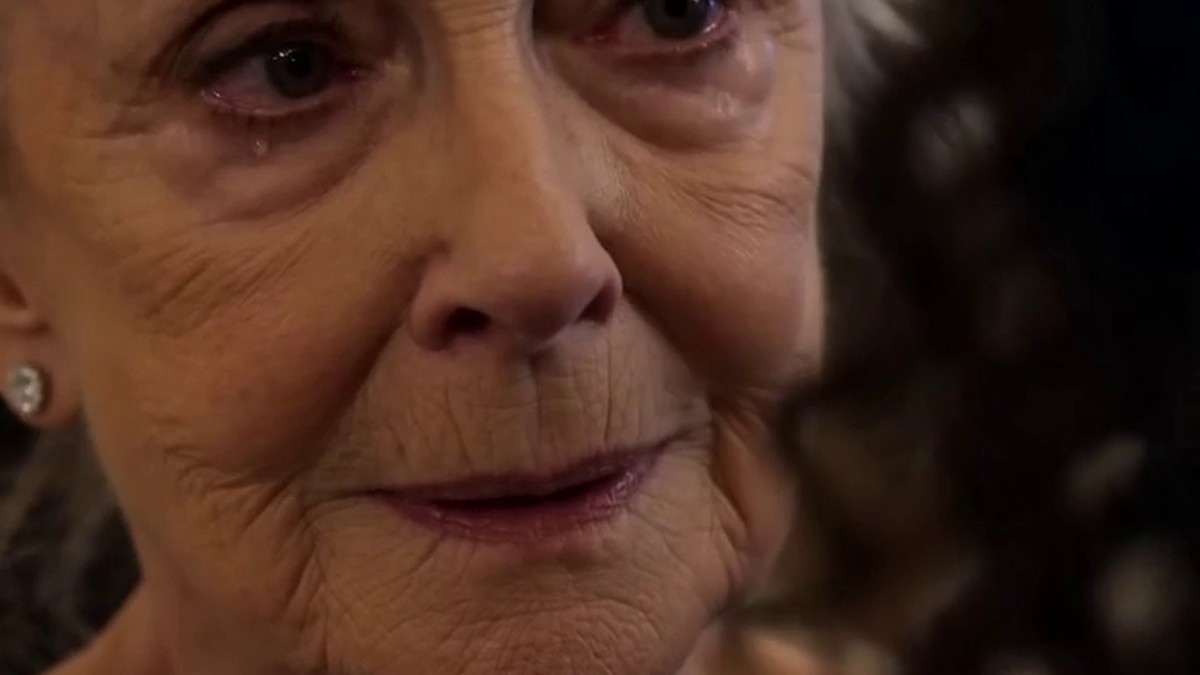
Camera phones lifted. Necks craned. Sophia pointed toward a table tucked near the back wall, half-hidden behind a floral arrangement. At that table sat an old woman in a simple navy dress, her silver hair pinned into a bun that had come slightly undone. She looked like she was trying to shrink into the upholstery.
“When my uniform tore and I couldn’t afford a replacement, she stayed up all night mending it for free.”
The old woman’s gaze fell to her lap. A few guests began to murmur.
“When I had nothing to eat at lunch, she’d split her own meal and pretend she wasn’t hungry.”
Someone near the front let out a small, choked sound. Sophia’s smile trembled.
“And when I was ready to drop out—when I’d packed my things and convinced myself I didn’t belong here—she’s the one who sat me down on her threadbare couch and made me promise not to give up.”
Tears slid down the old woman’s cheeks. One by one, people rose to their feet and applauded her.
Sophia raised her hand, and the applause fell into an expectant hush. “But that’s not all,” she said, her voice cracking. “I found out from the headmaster why this gala exists tonight. It was weeks from being canceled. Dozens of families at this school couldn’t afford the celebration. And then Mrs. Elena walked into the office and wrote a check that covered everything—the ballroom, the flowers, the dinner. Every cent. She asked only that no one ever know it was her.”
The whole room drew breath. A cell phone chimed and was hastily silenced. Before anyone else could speak, a woman in the front row stood. She was a trustee, diamond studs glinting in her ears, but her polished composure had cracked. She crossed the floor toward the back table, and when she reached the old woman, her voice was thin and wondering.
“I remember you now. You altered my Annie’s wedding gown ten years ago. I tried to pay you three times, and you shook your head and said you didn’t need the money. I never understood—until this moment.”
The old woman—Elena—did not lift her eyes. Her hands were folded tight in her lap, as though bracing against a wind only she could feel.
Sophia rushed down from the stage, nearly tripping over the hem of her gown, and threw her arms around Elena before anyone could take another photograph. As she buried her face in the old woman’s shoulder, she remembered a faded photograph that hung above the sewing machine in the tiny apartment over the alterations shop—a little girl with dark curls, taken four decades ago. The story Elena had never told was suddenly clear: a daughter, a loss, a dress shop sold long ago, and a woman who now chose to live on almost nothing so that every spare dollar could hold up someone else’s child.
Elena’s hand came up, trembling, and stroked Sophia’s hair. “I only did what any mother would have done.”
Later that night, when the music swelled and the graduates danced, Elena slipped toward the exit. A few people caught her arm, tried to press her hands in gratitude, but she simply smiled and shook her head. She walked out into the cool June air and disappeared down the sidewalk, past the bakery and the laundromat, toward the small apartment above the tailor shop. Through the ballroom window, Sophia watched the light flick on in the window, saw the silhouette of a sewing machine against the glass.
She understood now—this had never been about a moment on a stage. It was about the thousands of invisible stitches that hold a person together when no one is looking.