The Tabby Cat Disappeared From Her Shed Without a Trace. Two Weeks Later, She Returned With Someone Nobody Expected
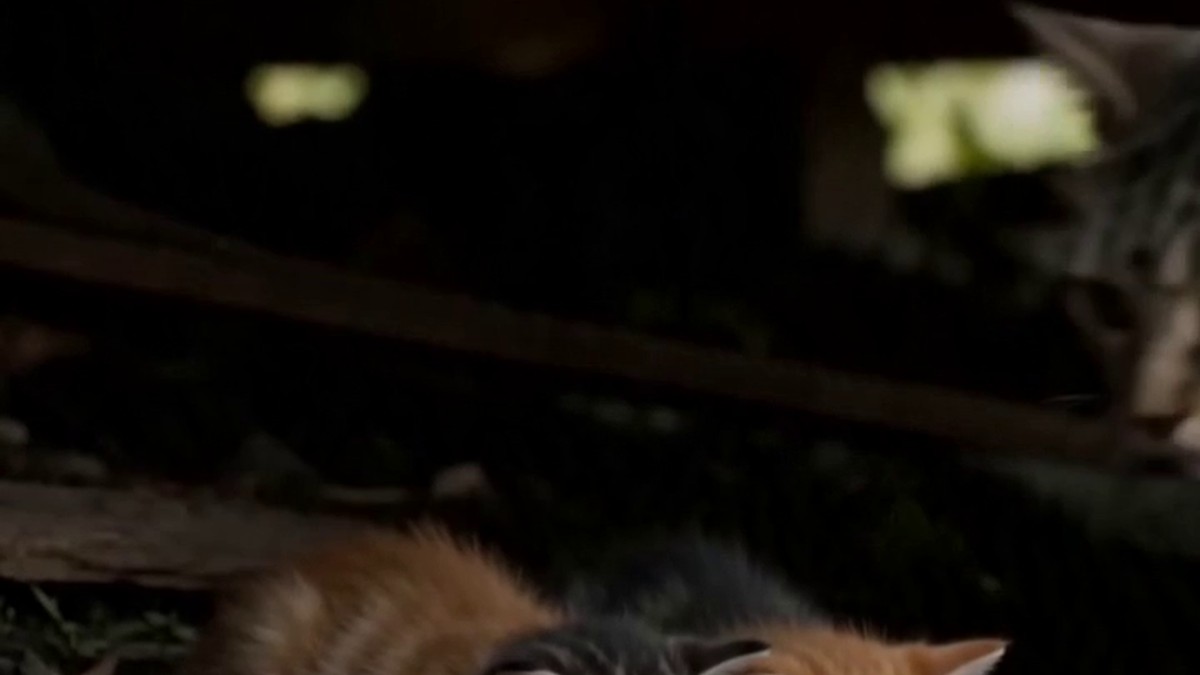
Maggie Harper set her coffee mug down on the porch railing, the ceramic clinking against the wood as her hand trembled. The grey tabby she hadn’t seen in twelve days was sitting squarely in front of the gate. She was a patchwork of matted fur and visible ribs, dirt caked into her stripes like old paint. But that wasn’t what clawed at Maggie’s chest. It was the orange kitten pressed against the tabby’s flank, stumbling to keep up on a hind leg that buckled with every step. The kitten’s ear was torn, the tip missing, and its eyes were sealed almost shut with something yellow.
The tabby let out a short, low meow. Not a plea—a statement. She looked at Maggie, then back at the kitten, then at the door, as if to say, *We’re back. Let us in.*
Two weeks earlier, the world had been smaller. Maggie had opened her garden shed behind the cedar-shingled house in Cedar Grove, New York, to grab a trowel, and stopped breathing. Curled on a faded quilt she’d meant to throw out after her husband passed was the same grey tabby, belly swollen with milk. Three blind kittens—little question marks of fur—nudged against her side. The cat’s green eyes had held no fear, only a weary, ancient exhaustion. Maggie had backed out slowly, closed the door, and stood in the afternoon sun while a quiet war fired inside her head. Seventy-two years old. Widowed half a decade. Mark was in Chicago, Lisa in San Francisco, the grandkids faces on a screen every other Sunday. The house had become a museum of silences. And now, a stray had walked in and claimed the one dusty corner that still smelled like life.
She’d brought a saucer of canned tuna that first night. The cat ate like a starved ghost, never breaking eye contact with the kittens for more than a breath. “You’ve been surviving on garbage for weeks, haven’t you?” Maggie had murmured. The shed had become her evening ritual, the soft mewling a replacement for phone calls that came on a schedule. On the ninth morning, the ritual shattered. The quilt was still warm, the kittens were still there, but their mother was gone. Maggie waited until sunset, then sunrise. The kittens grew weak, their cries thinning. So she dug out an old eyedropper from the bathroom cabinet, warmed kitten formula she’d ordered online, and dripped life into three tiny pink mouths. She moved them inside, a cardboard box in the sunroom, because the shed felt too empty now.
When her neighbor Helen Kruger stopped by for the spare basil, she glanced at the box and sighed. “Maggie, you’re not thinking of keeping them, are you? The shelters on Oak Street are reputable. You’re not thirty anymore.”
“Their mother vanished. I’m not tossing them out to die.”
Helen shook her head. “Mark and Lisa will have a fit with the kids’ allergies. And honestly, three cats? It’s a lot.”
Maggie knew Helen meant well, but the words burrowed in anyway. That night, she lay awake and listened to the nothing. The house used to creak with footsteps; now the only sound was the clock on the mantel, the same one that had been ticking since her wedding day.
The next morning, the tabby was back—and the orange kitten was with her.
Maggie stepped off the porch, and the cat turned, nudging the kitten along the fence line as if she expected to be followed. The tabby led her past three properties, past Helen’s tomato trellis, right up to the abandoned bungalow that had once belonged to old Mr. Henderson. The porch sagged. Weeds snarled the steps. And from underneath, a pitiful mewling leaked into the air. Maggie knelt, her knees cracking, and pulled aside a tangle of wet newspaper. Two more kittens. Their eyes were crusted over, their sides heaving. The orange one limped over and collapsed against them.
The tabby rubbed against Maggie’s shin and sat down, staring up at her with that same unnerving calm. She hadn’t come back for her own kittens. She’d brought a stranger’s baby and led a human to two more.
“I can’t take all of you,” Maggie whispered, but her hands were already reaching for the filthy scraps of fur. “I don’t have the strength.”
Her heart, however, had stopped caring what her mind said.
She filled a cat carrier, then a laundry basket, with all three. The tabby walked beside her the whole way home, tail high, like she was escorting a procession. By sundown, the sunroom looked like a field hospital: towels spread across the floor, bowls of watered-down pâté, a heating pad under the box. The tabby—Maggie had started calling her Vera, a name that meant faith somewhere in another language—lay in the middle, washing everyone equally. Her three original kittens, the orange stray, the two from under the porch. She didn’t distinguish. She just kept licking, nudging, purring through her exhaustion.
Maggie sank into the wicker chair and watched. Six rescued souls in her sunroom, and for the first time in half a decade, she didn’t feel like the house was empty. It felt pulled tight, brimming, the way a quilt is warmest when it’s shared.
Helen’s mouth fell open when she saw them. “You’ve lost your mind. Six? Six cats, Maggie?”
“Temporarily. I’ll nurse them up, find good homes.” Maggie wiped a smear of formula off her sleeve. “I’m not running a shelter.”
“Of course you are,” Helen said, but there was something softer in her voice now.
Maggie did exactly what she promised. She posted photos on the local Facebook page. She drove the orange kitten—she’d named him Rusty—to Dr. Rivera, who stitched his torn leg and prescribed antibiotics. The two kittens from under the bungalow went to a young couple with a three-legged dog and a lot of patience. The third from that batch was taken by a little girl from the next block who’d been praying for a cat of her own. The original three were harder. Maggie let families come over, and every time, something in her gut tightened. The woman who showed up smelling like mothballs, the teenager who said his mom would “get used to it,” the pair who asked if the kittens were “hypoallergenic.” She turned them all down with a polite, “I’m so sorry, I don’t think they’re the right fit.”
Three weeks later, she still had Vera, Rusty, and all three of the tabby’s biological kittens. Five cats. She looked at the calendar. August. Mark was coming down from Chicago.
He walked through the back door on a Friday afternoon, dropped his weekend bag, and stopped dead in the hallway. An orange blur shot past his ankles, chased by a grey fluffball. Two more kittens were wrestling on the rug, and Vera was perched on the windowsill, surveying her kingdom with half-closed eyes.
“Mom.” Mark’s voice was a careful mix of bewilderment and concern. “Are you serious? Five cats?”
“Four kittens and a mama,” Maggie said, already pouring him a glass of sweet tea. “Yes, I’m serious.”
He rubbed the back of his neck. “The kids’ allergies, the vet bills, the… I mean, isn’t this a little ridiculous?”
Maggie set the glass down hard. “Ridiculous? You want to talk about ridiculous? Ridiculous is a seventy-two-year-old woman who hasn’t heard a sound in her own house for five years except the grandfather clock. Ridiculous is talking to myself at supper because the silence gets too heavy. These animals—this cat—she found me. She showed up in my shed, led me to a dying litter that wasn’t even hers, and refused to leave me alone until I had a house full of life again. So no, Mark, I don’t think it’s ridiculous.”
He stared at her, and then something cracked behind his eyes. He looked at the kittens—really looked, the way you watch a candle sputter back to flame. Vera hopped down and trotted over to Maggie, winding through her ankles. Rusty limped over, purring like a small motor, and planted himself against Mark’s shoe.
Mark exhaled, a long release of air he’d been holding in his shoulders. “You haven’t raged like that since Dad tried to fix the plumbing in ’99.” He smiled, tired and tender. “You look… honestly, Mom, you look more yourself than I’ve seen in years. If these furballs do that for you, then I’ll deal with the allergies. We’ll keep the kids on the other side of the house.”
Maggie didn’t cry, but she hugged him tight enough to make up for it.
That evening, as the sun bled orange across the sunroom floor, Maggie sat with a quilt over her lap—the same quilt she’d intended to throw away—and watched Vera do her evening rounds. The tabby washed Rusty’s ruined ear with infinite care. She nudged her own grown kittens toward the food dish. She offered no distinction between blood and foundling. To Vera, each heartbeat in this room was hers to protect.
Maggie ran her hand over the worn fabric. That quilt had been a wedding gift decades ago, stitched by her own grandmother. She’d almost tossed it because it reminded her of everything she’d lost. Now it was covered in cat hair and warmth. Sometimes you don’t throw things away—you just find a new purpose for them.
A couple of months later, a local rescue group asked Maggie if she could foster a litter of orphaned kittens found behind the diner on Main Street. She said yes before she’d even finished reading the message. The sunroom gained a second box, then a third. Mark called every now and then, and the first question he asked wasn’t “How are you?” but “How many now?” He always laughed when she answered.
Vera still sits on the porch every morning, surveying the yard like a general. And every time a new set of tiny paws shows up in a carrier, she walks right over, sniffs them, and begins to wash them. No questions. No distinctions.
The lesson the stray tabby taught a lonely widow in Cedar Grove was this: family isn’t a list on a birth certificate. Family is who you keep breathing for when the world turns cold. It’s the ones you feed, the ones you shelter, the ones you refuse to leave behind even when nobody would blame you.
Maggie’s house isn’t quiet anymore. It’s full of purring and spilled food bowls and the soft, insistent rhythm of lives that need her. And she is needed. Deeply, daily, without reservation. Just like Vera knew she would be.