Margaret set down her garden trowel and stared.
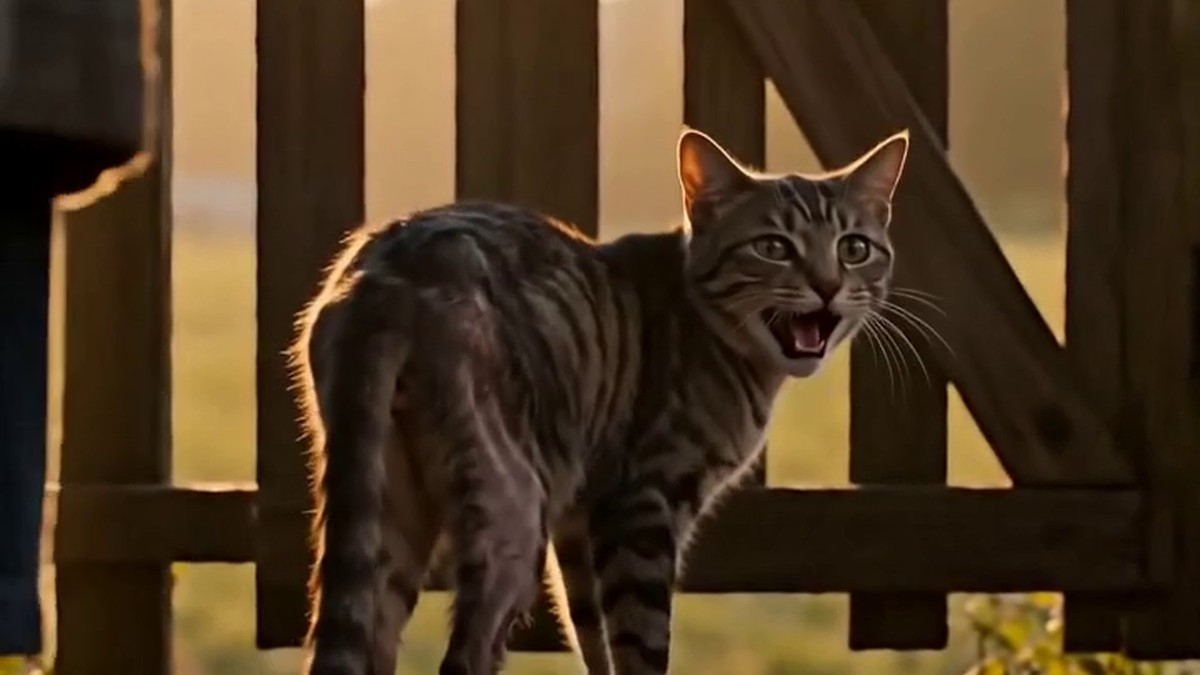
In the far corner of the shed, nestled on a pile of mildewed drop cloths she’d meant to throw out since last spring, a gray-striped cat lay curled around three tiny, squirming bodies. The kittens were blind, pink-nosed, and utterly oblivious to anything but the warmth of their mother. The cat lifted her head and fixed Margaret with a steady green gaze. No hissing. No flattened ears. Just a silent question.
Margaret pulled the door shut and walked back to the house, her heart thudding. She was seventy-two years old. Her husband, Tom, had been gone for five years. The house felt like a museum of a life that used to be loud: Andrew was in New York, Laura in Boston, and the grandkids appeared on holidays and video calls. She couldn’t take on a stray. She couldn’t.
That evening, she carried a bowl of warm milk and some flaked tuna to the shed. The cat waited until Margaret retreated, then ate in quick, desperate gulps, pausing only to glance back at her litter. Margaret’s throat tightened. She knew hunger when she saw it.
By the end of the week, the kittens’ eyes had opened and the mother’s coat had softened. Margaret caught herself looking forward to those trips to the shed—someone needed her, not because the calendar said to call on Sunday, but right then, right there.
Then, on the ninth morning, the cat was gone.
Margaret found the kittens mewling in a heap, the morning milk untouched. She waited until dark, then again at dawn. Nothing. The little ones grew weak, too listless to crawl. She had no choice. She fetched an old eyedropper and mixed kitten formula from memory, the way she’d done twenty years ago when Andrew dragged home a bedraggled stray. One drop at a time, she coaxed life back into them.
A week passed. The kittens learned to lap from a saucer. Margaret moved them into the house, setting up a box on the screened porch. Her neighbor, Betty, came by for onions and raised an eyebrow.
“You can’t keep all three, Maggie. Take them to a shelter.”
“Their mother didn’t abandon them. She’s probably dead on the highway.”
“Exactly. Don’t get attached.”
Margaret didn’t answer. She’d already named them in her head.
That night she lay awake, listening to the clock tick and the absolute silence beyond it. The house had once been full of Tom’s snoring, the kids’ whispers, the thump of the old tabby, Jasper, patrolling the hall. Now there was only the clock. She promised herself she’d drive to the shelter in the morning.
At first light, she opened the front door and froze.
By the gate sat the gray-striped cat. Bedraggled, fur matted, ribs visible. And beside her, a scrawny ginger kitten, maybe four months old, with a torn ear and a hind leg that dragged. The cat looked at Margaret and gave a sharp, impatient meow. Then she turned, limped a few steps toward the gate, and looked back. A command.
Margaret followed.
The cat led her three houses down, past Betty’s greenhouse, to the old Gallagher place. The house had sat empty for years, its porch sagging, weeds swallowing the walk. Under that porch, two more kittens huddled in the dirt. Their eyes were crusted shut, their sides heaving. The mother cat rubbed against Margaret’s ankle and then sat, waiting.
*Here they are. Take them.*
Margaret knelt in the damp grass, her hands trembling. “I can’t take them all,” she whispered. “I can’t.”
But the cat just watched her, green eyes steady.
She went home, fed her three porch kittens, and sat at the kitchen table with her head in her hands. That cat had crossed three yards. She’d remembered exactly which door had opened, exactly whose hands had brought food. She’d gone out into the world, found a wounded orphan, and carried him back. Then she’d gone farther and found two more. She wasn’t asking. She was showing Margaret the way back to her own soul.
By noon, Margaret had a carrier and a bundle of old towels. She scooped up the two sick kittens without resistance—they had nothing left. The ginger limped behind her as she walked home, the mother cat flanking them like a guard. On the porch, she set out food, water, and soft bedding. The mother ate slowly, eyes scanning her growing brood, checking each small head.
“Well,” Margaret said, sinking into the wicker chair. “That makes six.”
Betty came by that evening and threw her hands up. “You’ve lost your mind.”
“I’ll find homes,” Margaret said. “I just need to get them healthy.”
She meant it. She really did. Her granddaughter Maisie helped her post pictures online. The two porch kittens from the Gallagher house were the first to go—a young couple from town took them both, eager to nurse them back to health. The neighbor girl, Lily, begged for the ginger, but her mother was firm: no pets. So the ginger stayed. And the three original kittens? Margaret found reasons to turn down every inquiry. She didn’t like their tone. They wanted a barn cat. They’d never owned an animal before. The instinct that whispered *wait* grew louder each time.
A month later, the porch still held four kittens and a mother cat. Margaret sat among them, watching the gray tabby wash the ginger’s torn ear with the same slow tenderness she gave her own. She didn’t distinguish. To her, these were all her children.
“You’ve taught me something,” Margaret said quietly. “Family isn’t blood. It’s who you show up for.”
In late August, her son Andrew came up from the city. He walked out to the porch, surveyed the tangle of fur and whiskers, and set down his coffee.
“Mom. Five cats?”
“Four kittens and their mother,” Margaret said, refilling his mug. “And yes. I’m keeping them.”
Andrew studied her for a long moment. Then he smiled, a gentle, knowing thing she hadn’t seen since Tom’s funeral. “You know,” he said, “you haven’t looked this alive in years. Keep ‘em.”
And she did. The house was never silent again. Not with the thunder of tiny paws at dawn, not with the purr that vibrated through her lap in the evening, not with the steady, certain presence of the gray-striped cat who’d once been given a chance and decided to pass it on. She’d crossed a road and changed everything—not by asking, but by believing that the door that had opened once would open again. And that was enough.