Leo first saw Nora in the dim hallway outside the biology lab at Jefferson High. She was leaning against the locker bank, laughing at something her friend said, and the sunlight from the grimy window caught the metallic threads in her hair. Copper. Real copper, like a brand-new penny. He was fifteen, a sophomore with braces and a bad haircut, and he froze mid-step. Just stood there in the middle of the hallway with his mouth slightly open until some junior shoved past him and knocked his textbook to the floor.
That was how it started. Four years of watching her from three rows back in homeroom. Four years of memorizing the exact way she tucked her hair behind her left ear, the way she chewed on her pen cap during tests, the way her brown eyes went distant and thoughtful when she stared out the classroom window. He built entire conversations in his head, movie-length fantasies where he actually had the guts to walk up to her and say something. Anything.
He never did.
She was Nora Callahan. Varsity soccer, student council, the kind of girl who made teachers smile just by showing up. He was Leo Fischer. The silent kid who sketched in the margins of his notebooks and worked weekends at his uncle’s auto shop. They occupied the same building for four years and might as well have lived on different planets.
Twice she spoke to him. Once to ask if she could borrow a pencil. Once to say she liked the drawing on his binder. Both times his throat locked up and he muttered something unintelligible and she smiled politely and walked away and he hated himself for the rest of the day.
Graduation came and went. Leo packed his stuff into a beat-up Honda Civic and drove twelve hours to a state college he didn’t really care about. He told himself it was time to grow up. Time to stop being the quiet kid who never took a shot. He dated a few girls. Nothing stuck. Every relationship fizzled out after a few months, and he couldn’t quite explain why, not to them and not to himself.
Ten years passed. He moved back to town to take over his uncle’s garage, now a proper repair business with six bays and a steady stream of customers. He grew into himself, filled out, learned to talk to people without stumbling over his words. On the outside, he was a functional adult. But sometimes, late at night, he still thought about copper hair and a smile he’d never earned.
—
The news came through Tommy, his old high school lab partner. They’d stayed loose friends over the years, the kind who grab a beer every few months and talk about nothing important. Tommy showed up at the garage one Tuesday afternoon, leaned against a tool chest, and said, “You hear about Nora Callahan?”
Leo’s hand slipped on the wrench he was holding. “What about her?”
“She was in a bad wreck. Her and her dad, driving back from some lake up north. Semi crossed the median.” Tommy shook his head. “Her dad didn’t make it. Nora’s been in a wheelchair for the last eight months. They’ve got her scheduled for some big spinal surgery next month, but the doctors aren’t making promises.”
The garage suddenly felt very quiet. Leo set the wrench down. He didn’t say anything for a long moment.
Tommy shifted his weight, looked down at the oil-stained floor. “Look, man, I gotta tell you something. Something I should’ve told you ten years ago.”
“What are you talking about?”
“Prom night. After the dance, I found Nora out by the parking lot. I was a little drunk, thought I’d shoot my shot. Told her I’d had a thing for her all senior year.” Tommy’s jaw tightened. “She let me down easy. Then she started asking about you. Where you were going to college. Whether you’d said anything about her. She told me she’d been hoping you’d ask her to prom.”
Leo felt the blood drain from his face. “Bullshit.”
“It’s not bullshit. She had a thing for you. I don’t know, the quiet artist guy or whatever. She said she tried to talk to you a couple times but you always clammed up, and she figured you weren’t interested.” Tommy finally looked up, and there was something raw in his expression. “I never told you. I was pissed off and jealous, and then we all went our separate ways and I figured it didn’t matter anymore. I’m sorry. I should’ve said something.”
Leo didn’t respond. He walked out of the garage, got into his truck, and sat in the driver’s seat for ten minutes with the engine off, gripping the steering wheel.
Then he drove straight to her apartment.
—
Her mother answered the door. She looked exhausted, ten years older than the last time Leo had seen her at a parent-teacher night. He introduced himself, fumbled through an explanation, and she let him in with a tired nod, like she’d stopped being surprised by anything a long time ago.
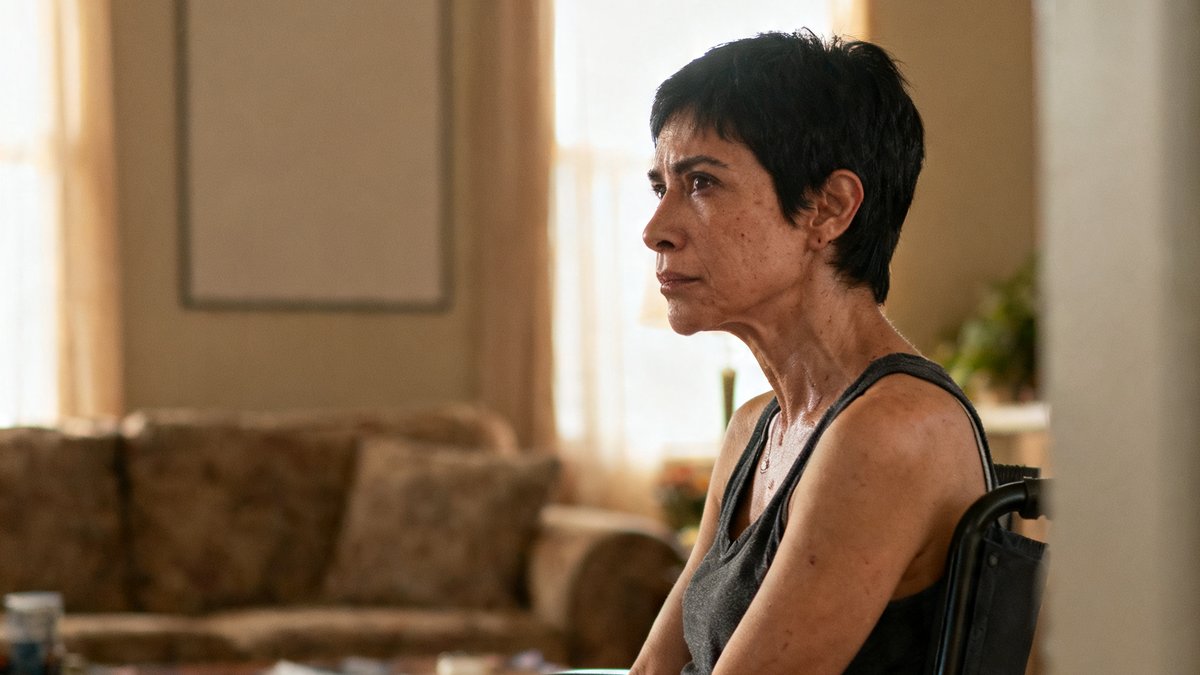
The apartment was small and cluttered with medical equipment. A walker, a stack of therapy bands, a ramp modification on the bathroom door. And there, by the living room window, was Nora. She sat in a wheelchair with a blanket across her lap, her hair cut short now, her face thinner and paler than he remembered. But her eyes were the same. Deep brown, sharp, watching him with open suspicion.
“Leo Fischer,” she said flatly. “It’s been a minute.”
“Hi, Nora.”
“You here to sell me something? Because I’m not really in the market.”
He didn’t smile. He pulled up a chair and sat across from her, close enough that she couldn’t pretend he wasn’t there. “I came because I heard about the accident.”
Her mouth tightened. “Great. Another pity visit. You can tell whoever sent you that I’m doing fine.”
“Nobody sent me. I came because I wanted to.”
“Why? We barely knew each other.”
Leo leaned forward, elbows on his knees. His heart was pounding, but for the first time in his life, the words didn’t stick in his throat. “I knew you. I just never had the guts to say it. I had a thing for you since freshman year. Big, stupid, lock-up-my-voice-every-time-you-looked-at-me kind of thing. And I found out tonight that you might’ve felt something too, and I’ve spent the last ten years thinking I was invisible to you.”
She stared at him. The tough mask on her face cracked, just a little, around the eyes.
“Tommy told you,” she said quietly.
“Yeah. A decade late.”
“And now you’re here. Now. When I’m stuck in this chair.”
“I’m here because I should’ve been here a long time ago. I can’t fix that. But I’m not leaving now.”
Her jaw trembled. She turned her face toward the window, but he saw the tears spill over anyway. “You don’t owe me anything, Leo. You don’t have to be a hero.”
“I’m not trying to be a hero. I’m trying to be the guy who finally stops running.”
She didn’t answer. But she didn’t tell him to leave, either.
—
He came back the next day. And the day after that.
The first few weeks were hard. Nora didn’t trust easy—she’d been through too much, lost too much. Sometimes she snapped at him for no reason, accused him of playing saint, of getting some kind of ego boost from being the loyal visitor. He took it. He’d sit with her through the bitter silences, bring her coffee the way she liked it, and wait.
Eventually, the walls came down. He drove her to physical therapy appointments and sat in the waiting room for two hours at a time. He pushed her wheelchair through the park on good days and stayed on her couch watching old movies on the bad ones. They talked about everything—high school, her father, the years he spent in a nowhere job in a nowhere town before coming back. She told him about the night of the crash, the headlights coming at them, the sound of metal tearing, the three days she spent in a coma. She told him she still had nightmares where she could walk, and then she’d wake up and the loss would hit her all over again, fresh as the first time.
The night before her spinal surgery, he sat next to her hospital bed. She was pale, her hands shaking slightly despite the pre-op sedatives.
“What if it doesn’t work?” she whispered. “What if this is it for the rest of my life?”
“Then I’ll still be here.”
“You keep saying that.”
“Because it’s true.”
She looked at him for a long time. “You really loved me back then. All those years.”
“I never stopped.”
The surgery took seven hours. Leo paced the waiting room the entire time, drank four cups of terrible hospital coffee, and wore a groove into the linoleum. When the surgeon finally came out and said the words “no complications,” he had to sit down because his legs wouldn’t hold him anymore.
Recovery was a marathon. The surgery had repaired the structural damage, but Nora’s muscles had atrophied from months in the chair. Relearning to stand took three weeks. Her first shaky steps, gripping parallel bars with both hands, took another month. Leo was there for all of it—holding her up when her legs buckled, catching her when she fell, crying like an idiot the first time she walked three steps on her own.
A year after the surgery, she walked down the aisle. No cane, no assistance. Just a slow, deliberate stride, her copper hair grown back to her shoulders, her eyes locked on his.
Their wedding was small. Twenty people in her mother’s backyard, fairy lights strung through the oak trees, a barbecue and a rented speaker system. Leo couldn’t stop smiling. It felt like a debt finally paid, years of silence finally broken.
—
The news came six months into the marriage. The crash had done more damage than they realized. Internal scarring, the doctors said. The surgeries, the trauma, the months of immobility—it had all taken a toll. Nora couldn’t carry a pregnancy to term. Chances were slim to none.
She took it hard. Harder than anything since the crash itself. She locked herself in the bedroom for two days and when she finally came out, her eyes were red and hollow.
“You should go,” she said. “Find someone who can give you kids. I won’t hold it against you.”
Leo took her face in both hands. “I didn’t wait fourteen years for a uterus. I waited for you. We’ll figure it out.”
“It’s not that simple.”
“It’s exactly that simple. You’re my family. Everything else is details.”
She cried into his chest for an hour. He held her and didn’t let go.
They didn’t talk about it again for weeks. Then one night, lying in bed in the dark, Nora spoke.
“There are kids out there who need someone. Right now. Tonight. While we’re lying here feeling sorry for ourselves.”
He turned his head on the pillow. “You thinking about adoption?”
“I’m thinking maybe family isn’t about biology. Maybe it’s about showing up.”
He found her hand under the covers and squeezed.
—
The process took months. Paperwork, home visits, interviews, background checks. The social worker was a tired woman named Elaine who asked uncomfortable questions and wrote everything down in a worn spiral notebook. She approved them anyway.
The day of the first visit, Leo left the garage early and drove home to pick up Nora. She was already waiting on the porch, fidgeting with the collar of her shirt.
“You nervous?” he asked.
“Terrified.”
“Me too.”
The group home was a converted Victorian on the east side of town, cheerful and brightly painted, with a play structure in the backyard. Elaine met them at the door and led them to a sunlit playroom where four kids were scattered across the floor with toys and coloring books.
In the corner, away from the others, a little girl sat on a small rug. She wasn’t playing. She was just holding a stuffed rabbit and watching the door with big, guarded eyes.
Her hair was copper. Not auburn, not strawberry blonde—copper, that exact metallic red-gold that Leo had first seen in a high school hallway sixteen years ago.
Nora stopped walking. Her hand found Leo’s arm and gripped it tight.
“Her name’s Maya,” Elaine said quietly. “She’s four. She’s been here for almost eight months. Very quiet. Keeps to herself.”
The girl—Maya—looked up at them. Brown eyes. Deep and cautious and too old for a four-year-old face. She studied Nora for a long moment, then Leo. Then, very slowly, she stood up. She took two steps forward, hugging the rabbit to her chest.
“Are you here for somebody?” she asked. Her voice was small but clear.
Nora knelt down. She didn’t seem to notice the tears running down her cheeks. “Yes,” she said. “We’re here for you.”
Maya looked at her for a long time. Then she stepped forward and wrapped her arms around Nora’s neck. The rabbit dropped to the floor.
Leo stood there in the sunlit room, watching his wife hold a copper-haired little girl, and thought about all the years he’d spent too afraid to speak. All the time they’d lost. All the impossible odds that had somehow led them here, to this exact moment, in this exact room.
It wasn’t the life he’d imagined. It was better.
Six weeks later, Maya came home. Her room was painted pale yellow, the color she’d pointed to in the hardware store paint samples. Her stuffed rabbit sat on the bed. And on her first night in the house, she asked Nora to read her a bedtime story, then fell asleep halfway through, one small hand still gripping Nora’s sleeve.
Leo stood in the doorway, watching them. Nora looked up, caught his eye, and smiled.
Neither of them said a word. They didn’t have to.