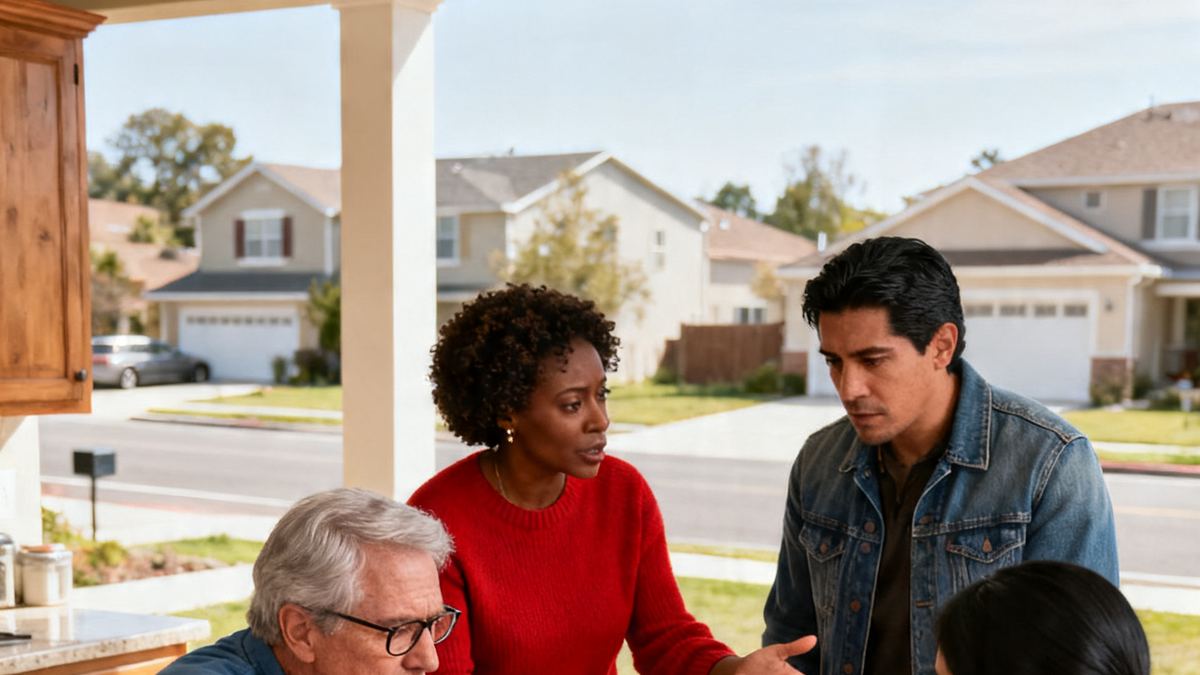
The front door of our family home in Boone swung shut behind me, and the warmth of the cedar-paneled living room did nothing to chase the chill from my bones. My mother, Patricia, had already arranged herself in Dad’s recliner like she’d been sitting in it for years instead of six weeks. My older brother, Michael, perched on the armrest of the sofa next to his wife, Jessica. A thick leather binder sat on the coffee table between them. A man in a gray suit I’d never seen before jotted notes on a legal pad.
Patricia folded her hands. “The house, the construction business, the savings accounts, the investments—your father’s entire estate totals just over two point three million dollars. His final instructions were crystal clear.” She paused and looked straight at Michael. “Everything goes to you, sweetheart. You’re to manage it all for the family.”
Jessica let out a breathy little gasp and pressed a hand to her chest, but her eyes were already doing inventory on the room.
I just stood there, still in my work scrubs from the ten-hour shift I’d pulled at Appalachian Family Health before driving two hours up the mountain. Nobody offered me a seat.
Patricia reached beneath the side table and lifted a small wooden box. She opened it and slid it across the coffee table toward me. Inside, on a bed of faded felt, lay Dad’s old wristwatch—a 1953 Hamilton Yorkshire with a steel case scratched to hell, the leather strap cracked and worn thin as a dime.
“This is the only memento your father wanted you to have,” she said. Her voice was calm, the same tone she used to order decaf coffee at the diner. “He said it suited you. That should be enough.”
The word “suited” landed like a slap. Not “sorry.” Not “you deserved better.” Suited.
Michael cleared his throat. “Emily, Dad made this decision before he passed. I know you sacrificed a lot, but please don’t make this harder than it has to be.” His voice was soft, but his arm stayed locked over the binder like a bear trap. Jessica was already sliding a brand-new pen across the table, the price sticker still clinging to the clip. “Here, you can use this.”
The attorney flipped open the documents. Six pages. At the top, a standard release: I, Emily Harper, acknowledged no claim to assets already distributed per the will and agreed not to contest the estate. Patricia tapped the signature line. “We just need this to finalize probate. It’s what your father wanted, dear. Your brother has a family to support.” I read every word while my aunt Lucy stirred her tea in tiny, nervous circles and my uncle stared out the window at the gray November ridgeline. Nobody looked at me. Nobody spoke up. When Patricia had called this meeting, she’d told them I’d already agreed.
I took the pen. Signed my name. The moment I dotted the last loop of the y, Jessica slid the papers back so fast her wedding ring clicked against the table.
Patricia rose and gave my shoulder a feather-light pat. “See? Family doesn’t need to fight. Your father loved that old watch. Now it’s where it belongs.”
She headed to the kitchen to check on the roast she’d been bragging about since I walked in—a cut of dry-aged prime rib that cost more than my eight-fifty-a-month studio. Michael and Jessica followed her, already murmuring about refinishing the hardwood floors. I was left alone with the box, the quiet tick of the Hamilton louder than anything in the room.
I didn’t open it right then. I didn’t cry either. I just pushed my fist against my sternum and breathed through my nose, the way I’d learned to keep a clean face during a shift when a patient’s chart went bad. My fingers were cold but my throat felt like I’d swallowed a pebble. I slipped the watch into the pocket of my jacket and walked out the back door, past the woodpile Dad had taught me to stack when I was nine.
It started drizzling as I climbed onto the last bus heading down the mountain toward my apartment in Lenoir. I took a seat in the back, alone except for an old man asleep under his cap. The watch pressed against my chest with every bump in the road. I pulled it out.
In the pale overhead light, I ran my thumb across the back. For eight months, while Dad was dying in the cancer ward at Mission Hospital in Asheville, I’d held his hand and watched that Hamilton circle his wrist, thinner and thinner each week. Four times Michael visited. I counted. Four. I’d sold my Corolla, run up $5,800 on a Chase card, another $3,200 on a Discover, slept on a plastic chair in the hallway when the nurses pretended not to notice. Mom’s words never left my throat: “Your brother has a family to support, Emily. You’re not even married. You have fewer expenses.” I made fourteen-fifty an hour. She never asked how I was paying for the gas.
Now I traced the edge of the back plate and felt it—a tiny, almost invisible slot where the metal didn’t sit quite flush. A single loose screw at the bottom. I worked it with my thumbnail. It turned, then a second. The plate lifted, just a millimeter.
My hands shook enough that I had to press the watch against my thigh to steady it. I slid the plate open the rest of the way.
Inside, folded so tightly it was no bigger than a postage stamp, was a thin slip of paper. The ink was faded blue, the handwriting pinched but steady—Dad’s handwriting. The same hand that had scribbled math equations on the backs of lumber invoices, the same hand that had pressed the watch into my palm three nights before he died and whispered, “Don’t lose this. Some things a man hides not to protect money, but to protect a promise.”
I unfolded it. Three lines.
*Em, if you’re reading this, they did exactly what I figured they would. Go to First Mountain Trust in Boone. Box 211. The code is the day you first beat me at checkers. I made sure you were taken care of. —Dad*
P.S. – If you’re not reading this, old Ted Keller at the bank has a sealed letter with your name on it and a deadline. Tell him I said the fishing’s still lousy.
The day I beat him at checkers. I was seven. September second. 0902. He’d laughed and tipped over his king and said, “There you go, kiddo. The crown’s all yours.”
It took me two hours to get back to Boone. The bank was closed for the day, so I spent the night in my truck, wrapped in an old quilt I’d grabbed from the apartment, watching the fog roll over the Blue Ridge. When the doors opened at nine the next morning, I made myself walk in with the watch on my wrist and the folded paper in my pocket.
A young teller led me into a small room. She slid the deposit box onto the table and left me alone. I entered the code. The lock clicked.
Inside, there were no gold bars, no sacks of cash. Just a single manila envelope, thick and heavy. I opened it and pulled out a property deed, already recorded in my name. A fully paid-off deed to five acres of wooded land on the far side of Grandfather Mountain, the kind of place where the creek runs clear and the only sound at dawn is the wind through the balsam firs.
Behind the deed was a bankbook for a separate account with a balance of just over four hundred thousand dollars. A sticky note on top said, *Taxes paid. House is finished. Keys are in the box at the gate. You’ll know which one.*
At the bottom of the envelope, a letter on the same thin paper.
*My girl, I watched your mother and brother for thirty years. I knew exactly what they’d do the moment I closed my eyes. I couldn’t hold them back, but I could hold on for you. Every extra dollar I made on side carpentry, every penny I stashed—I put it into a place they couldn’t touch. I put that Hamilton in the will because I knew your brother would never want it. But I also knew you’d open it. You always did pay attention to the small things. I’m sorry I couldn’t give you this in the light, but I hope it shines for you now. All my love, Dad.*
I sat in that cold bank room for a long time, tracing the letters of my name on the deed with a fingertip that left a smudge. A laugh hitched out of my throat, half-sob, and I didn’t bother wiping my nose.
That afternoon, I drove the winding gravel road to the property. The gate was simple wood, carved with a small mountain laurel. I found the lockbox behind the post, punched in the same code 0902, and let myself in. The house was modest—a log cabin with a wraparound porch, a stone fireplace, and a kitchen window that faced west toward the sunset cresting over the ridges. It smelled of cedar and fresh paint, with a trace of coffee grounds from a bag someone had left on the counter. I stood in the doorway and let the screen door slap shut behind me three times before I could move.
Three days later, I pulled up in front of the family house one last time. Patricia was in the garden, Michael and Jessica on the porch with a contractor, flipping through paint swatches. They all looked up when my truck crunched into the driveway, the same beat-up Chevy they’d clucked their tongues at for years.
I stepped out, wearing Dad’s Hamilton on my wrist.
Patricia walked to the railing, brow furrowed. “Emily? What do you want? We’re busy.”
I let my shoulders drop and felt my jaw unclench for the first time in weeks. “Nothing. I’m just letting you know I moved.”
Michael set down his swatch. “Moved? To where? You have nothing.”
I held up my wrist, the watch catching the afternoon glare. “Dad left me more than his watch. A little piece of land. A cabin.” The corner of my mouth tugged up. “He knew what he was doing.”
Jessica’s mouth opened, but no sound came out.
Patricia stepped forward, her voice sharp. “What are you talking about?”
“I’m talking about a life you’ll never get your hands on,” I said. I didn’t yell. I didn’t explain. I just climbed back into my truck, turned up the gravel drive, and didn’t look in the rearview mirror until the house had vanished behind the pines.
The road climbed and climbed until the air turned crisp and the world opened up into a sea of ridges draped in autumn gold. When I reached my front porch, I sat on the steps and watched the light fade. The watch had stopped ticking somewhere on the drive. I popped out the crown and wound it slowly until I felt resistance, then held the case to my ear. The tick restarted, thin but steady. I set my mug of instant coffee on the porch railing and watched the steam curl into the cold mountain air.