My grandmother always said, “Don’t pass a dime without picking it up. You never know when something small becomes the piece that holds everything else together.” I was six when she first told me that, crouching down on the cracked sidewalk outside her house, plucking a silver coin from near a dandelion crack. She pressed it into my palm like a secret. After she died, I kept picking up dimes. Every single one. It made me feel like she was still somewhere, whispering the same thing.
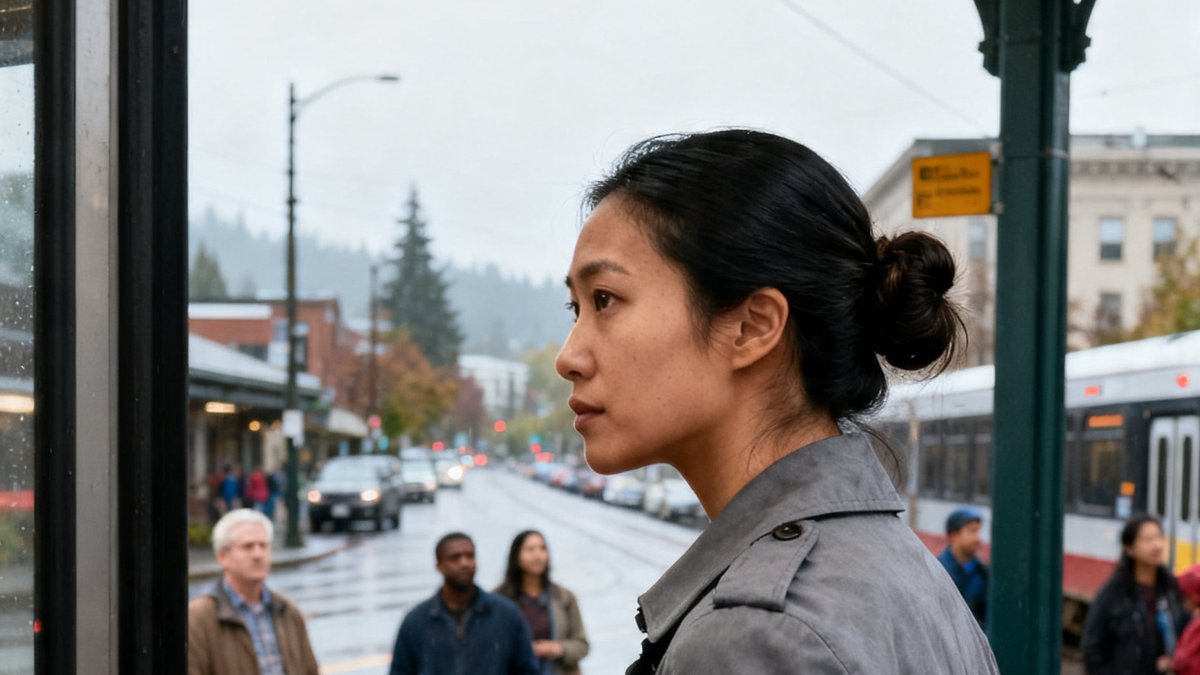
Years later, I was walking through downtown Portland on a drizzly Tuesday morning when a dime caught the light near a MAX train stop. My hand moved before my brain did. I flipped it, brushed off the rain, and slid it into my coat pocket. A woman in a yellow raincoat, waiting for the light to change, smiled at me. “My dad did that with buffalo nickels. Never saw him walk past one.” We traded one of those quick, easy laughs you only get from strangers who recognize the same old habit, then the crosswalk signal turned and we went opposite directions. The whole thing lasted maybe twenty seconds. But it left a warmth that stuck.
That afternoon, I ducked into a coffee shop on Hawthorne to shake off the damp. The place smelled like roasting beans and cinnamon. Students tapped on laptops. A couple in the corner argued quietly over a shared scone. I was queued up behind an older woman with a neat silver bun and a wool coat the color of blueberries. She ordered a chai latte and a slice of banana bread. When she rummaged through her wallet, she came up a dollar and change short. Her jaw tightened. She started to tell the barista to leave off the banana bread, but I stepped forward.
“I’ve got the rest.”
She turned. “Oh, honey, you don’t have to do that.”
“I know.” I handed the barista two dollars. “I want to.”
She pressed her lips together, and her eyes did that thing where gratitude looks a lot like holding back tears. “You’re very kind.”
We took our drinks to opposite sides of the shop. I read a book. She worked on a Sudoku puzzle. I didn’t think about it again.
The following Saturday, I went to the PSU Farmers’ Market. I was squeezing avocados and listening to a busker play cello near the honey stall when someone touched my elbow. It was the woman from the coffee shop.
“I was hoping I’d run into you again.” She introduced herself as Miriam. Before I could say much, she pressed a small paper bag into my hands. Inside were five cookies, still faintly warm. Lavender shortbread.
“I baked these this morning. My wife always said ‘thank you’ tastes better homemade.” She said the words with an ease that told me she wasn’t fishing for a reaction, just stating a fact. I liked her immediately.
“They smell incredible.”
“They’re her recipe. I’ve been baking my way through her old recipe box. Keeps the kitchen from feeling empty.”
I nodded. I knew exactly what she meant.
We talked for half an hour between the produce stands. Miriam told me she spent Thursday evenings at a community baking club in the basement of a Unitarian church off Belmont. “You should come,” she said. “Next week we’re tackling sourdough. I think you’d enjoy it.”
I almost said no. I wasn’t a baker. I could burn boiling water. But there was something about the way she asked—not politely, but hopefully—that made me say yes instead.
The following Thursday, I walked down a flight of stairs into a warm, flour-dusted room with mismatched tables pushed together into a long U-shape. Fifteen people, maybe a few more, were already covered in flour up to their elbows. Loaves of ciabatta rested under tea towels. A woman with pink hair was rolling out pie crust while explaining the science of cold butter. Someone’s toddler sat under the table, drawing on a brown paper bag with a crayon. Miriam waved me over to a station where a bowl of starter waited, bubbling sour and alive.
The first thing I attempted was a basic country loaf. It came out of the oven lopsided, more like a slightly deflated football than anything recognizable. Miriam studied it, tilted her head, and said, “It’s got character. Slice it up—taste beats symmetry every time.”
Everyone laughed. By the end of the night, we’d torn apart every loaf, spread them with butter and jam, and traded notes. I left with flour under my nails and the strange, fizzy feeling of having found something I didn’t know I needed.
By the third week, someone suggested we bring the extra baked goods to a nearby women’s shelter. The idea ignited. Every Thursday after that ended with baskets lined with towels, filled with muffins, scones, braided challah, focaccia, and little handwritten tags that just said, “Thinking of you.” No fanfare. No photos. Just anonymous warm things delivered to a door by two of us after cleanup.
One evening, the shelter coordinator—a woman with tired eyes and strong hands—stopped us before we left. “You know,” she said, “Thursdays are the night they talk about all week. It’s not just the food. It’s that someone thought to make something with their own hands for people who feel invisible.”
Miriam and I walked to our cars in silence. Then she said, very quietly, “See what small things do?”
I thought about my grandmother’s dime, still sitting in my coat pocket from that rainy morning. Maybe she wasn’t talking about money at all.
As autumn chilled the mornings, the baking club decided to host a neighborhood bread social in Laurelhurst Park. Everyone was asked to bring one loaf and one folding chair. Sourdough, rye, pumpernickel, olive, chocolate cherry. The table stretched longer than any of us expected. Kids chased each other around the oak trees while old men traded starter care tips. People who’d only ever waved from driveways sat on picnic blankets and shared food.
Late in the afternoon, a young woman in her early twenties approached Miriam. She had flour on her collar. “My abuela taught me to bake when I was little. I haven’t made pan dulce since she passed.” Her voice cracked a little. “I didn’t realize how much I missed it until I smelled the bread.”
Miriam put a hand on her arm. “Come next Thursday. We’ll make pan dulce together.”
She came. And the Thursday after that. And soon she was the first one unlocking the door every week, bringing handwritten recipes stained with vanilla and stories.
By December, we needed more tables. Someone’s husband built a wooden recipe box with a slot on top, and everyone began contributing family favorites. One person designed little cards with a line at the bottom: “The story behind this recipe.” That quickly became everyone’s favorite part. A focaccia recipe traveled from a great-aunt in Tuscany through three generations to a craftsman bungalow in Southeast Portland. A brownie recipe had a tiny, faded chocolate fingerprint on it from a daughter who’d stirred the batter forty years ago. These weren’t just instructions. They were memory, handed over in flour and butter.
On the last Thursday before Christmas, Miriam handed each of us a small envelope. Inside, taped to a card, was a shiny dime.
I read her neat handwriting on the front: “Never pass up a dime.”
The back said: “You reminded me that kindness starts in the smallest pockets. Thank you for paying the rest that day.”
I couldn’t speak for a long moment. I just held that dime between my thumb and forefinger, the way my grandmother used to hold one before she gave it to me.
That dime now lives in a little ceramic dish on my kitchen windowsill, next to a succulent plant and the flour canister. Every morning, the light catches it just as the coffee brews. I see it and think of my grandmother bending down on a cracked sidewalk. I think of a rainy MAX stop, a stranger in a yellow raincoat, a cup of chai, a lopsided loaf, and a church basement filled with the sound of laughter and the smell of rising dough.
I still pick up dimes. Most people probably think I’m just cheap. But I know better. Every small act—every held door, every covered shortage, every handwritten note tucked into a basket—is its own thin silver piece. Alone, it’s almost too easy to ignore. But watch what happens when you start stringing them together. They become a table that stretches longer than anyone expected. They become a Thursday night that someone looks forward to all week. They become the part of our lives that feeds us, long after the flour is washed off.
And sometimes, the very smallest things—the ones you might walk right past—end up being the richest after all.