The grand ballroom of the Hotel Cristal shimmered like a jewel box. Crystal chandeliers scattered light across tables draped in ivory linen, where the city’s most powerful entrepreneurs, celebrated artists, and high-ranking officials had gathered for the annual charity gala. Champagne flutes clinked, laughter sparkled, and the air hummed with the currency of influence.
At the center of the stage sat Sofía, a nineteen-year-old girl with luminous dark eyes and an embroidered gown that cascaded over the motionless legs she hadn’t used in six years. A degenerative nerve condition had stolen her ability to walk when she was thirteen, binding her to a wheelchair. Tonight, they had crowned her queen of the event—a pity diadem on a head that dreamed of pirouettes.
The applause was a velvet thunder. Sofía gripped the armrests of her chair, forcing a smile that felt like porcelain. She was grateful, truly, but the ache beneath the glitter never faded.
Then the murmuring began.
A woman had entered at the far end of the ballroom, moving with a slow, deliberate grace that didn’t belong in a room full of designer gowns and polished shoes. Her clothes were simple—faded cotton, a shawl frayed at the edges, scuffed flats that whispered against the marble floor. Strands of gray hair escaped a loose braid. Guests turned, brows furrowed, lips pursed in distaste. A couple of security guards exchanged glances.
The woman ignored them all. She wove through the sea of silk and judgment, her eyes fixed only on the stage. When she reached the edge, she didn’t hesitate. She stepped up, her presence utterly calm, and stopped directly in front of Sofía.
A hush fell over the room.
With a smile that held both sorrow and fierce tenderness, the woman leaned down and made her quiet, impossible proposal.
Sofía’s breath caught. The music from the orchestra pit seemed to fade, replaced by the thudding of her own heart. She stared at the woman’s weathered face, at the kindness etched in every wrinkle, at the deep, knowing light in her eyes.
“You want me to… dance?” Sofía whispered, the word feeling foreign on her tongue.
“Not just dance,” the woman said, her voice like a lullaby and a battle cry woven together. “I want to give you the *Milagro*—the miracle waltz my grandmother gave to me when I lost everything. One night. One dance. Your body will remember what your soul has never forgotten.”
A security guard climbed onto the stage, his jaw tight. “Ma’am, you need to leave. This is a private event.”
Sofía’s mother, seated at a front table in a sapphire dress, rose with alarm. Sofía’s longtime doctor, who had accompanied the family, set down his champagne glass and moved toward the stage, his expression sharp with concern.
“Sofía, don’t,” her mother pleaded. “The doctors said any physical strain could make things worse. Please, corazón.”
The doctor reached the edge of the stage. “This is medically reckless. Even attempting to bear weight could trigger a severe autonomic response. I must advise against it.”
Sofía’s hands tightened on the armrests. She had spent years being treated like fragile glass, years of people deciding what she could and could not attempt. Something inside her ignited, a spark she had almost forgotten was there. “Wait,” she said, and her voice carried an edge that silenced even the murmurs.
The director of the gala, a sleek man near the edge of the stage, gestured discreetly for more security, but a cluster of guests had begun recording on their phones, and he clearly did not want a scene. He kept his voice low, telling an aide, “Get this handled.”
Sofía didn’t look at him. She looked only at the woman. “I want to try.”
Her mother pressed a hand to her mouth, tears spilling. The doctor shook his head. “Sofía, if something goes wrong—”
“Then I’ll be right back here,” Sofía said. “But I’m tired of being a queen who never gets to leave her throne.”
The woman nodded once. No triumph, just solemn understanding. She knelt, placed a small, tarnished music box on the floor—its lid engraved with a crescent moon—and wound the tiny brass key. A soft, haunting melody spilled out, notes that seemed older than the chandeliers, older than the hotel, aching with loss and hope in equal measure.
The first notes touched Sofía like a current. A phantom sensation prickled down her spine, through her hips, into her thighs. She gasped, but the strength that answered the music was her own—the stored-up longing of six years that had silently preserved the memory of motion. She did not wait to be lifted. She planted her feet on the floor with a slow, deliberate act of will.
“Stand when the music calls you,” the woman said, opening her arms. “I will be your partner.”
Sofía gripped the armrests, and for the first time in six years, she pushed herself upright. Her legs trembled, muscles wailing at the forgotten command. The woman steadied her with one hand on Sofía’s waist and the other clasping her fingers, but the force that held Sofía up was the fierce refusal to remain seated. “I have myself,” she breathed, and began to move.
Step, glide, turn. The music wrapped around them, a cocoon of sound that muted the gasps and whispered objections. Sofía’s gown swirled, the crystals catching the light like scattered stars. Her body remembered the dances she had only conjured in her imagination, lying awake at night, tracing steps on the ceiling with her eyes. Now her feet traced them on marble.
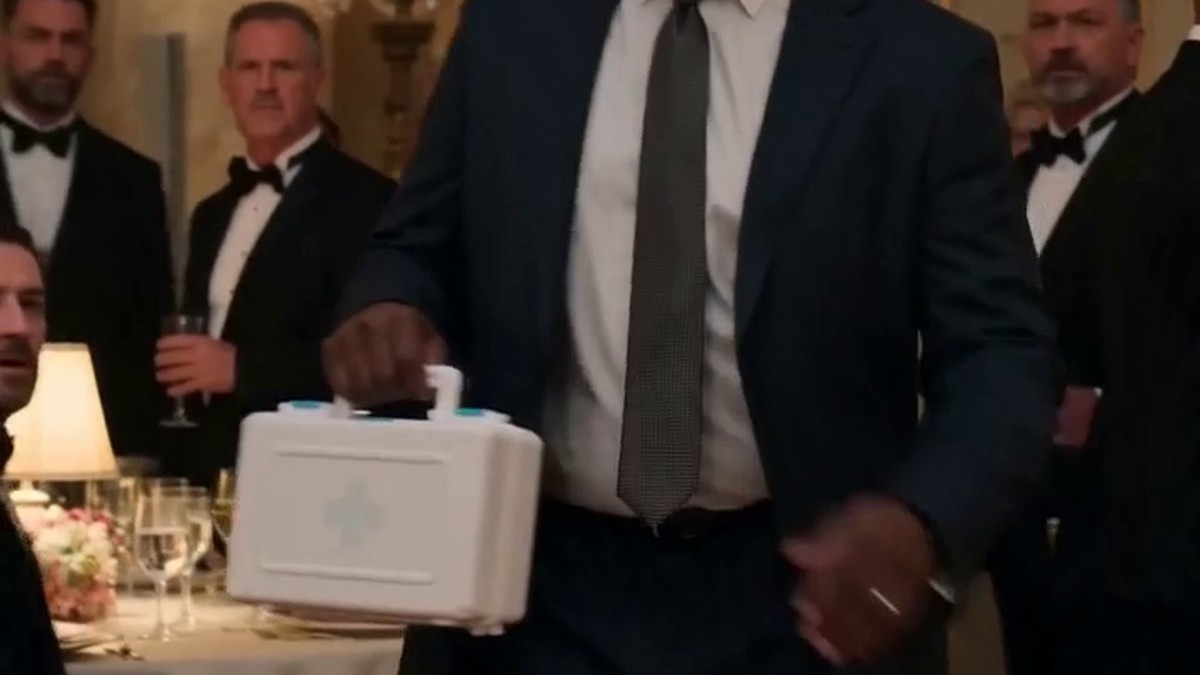
The doctor stepped forward. “This could trigger a cardiovascular collapse! I have to intervene.” He held a small medical kit, his knuckles white.
The woman, still dancing, guided Sofía in a sweeping arc that placed the girl momentarily between them, and the doctor hesitated—not because of the woman’s gaze, but because Sofía’s radiance held him still. Her laughter trembled on the air, breathless and fierce.
“Doctor,” Sofía said between turns, her voice gaining strength, “you gave me care. You never gave me this. Let me have it.”
The music gained speed, a furious, beautiful waltz. The woman spun Sofía into the center of the stage and released her. Sofía stood alone, shaking, alive. Her hands rose above her head in an instinctive arabesque. She was dancing. *Alone*. The wheelchair glittered uselessly in the corner.
The director’s voice cut through the swell of sound: “This is a security risk, I want her removed—” But his words were swallowed by the applause that broke from the crowd, a wave of bewildered, tear-streaked clapping. The mother sank into her chair, weeping without shame. The doctor, his kit lowering, could only stare.
As the final notes trembled in the air, the woman stepped back into the shadows at the edge of the stage. Her shawl slipped from her shoulders, pooling on the floor. The music box gave one last, resonant chime and fell silent.
Sofía lowered her arms, chest heaving, and looked around for her partner. But the woman was gone. Only the shawl and the silent music box remained, as if she had never been there at all.
Silence. Then a thunder of applause rose, raw and cathartic, nothing like the polite ovation from before.
Sofía’s knees buckled. Her mother and the doctor rushed forward, catching her before she fell. They eased her back into the wheelchair, but something was different. The girl’s eyes, once guarded and weary, now blazed with a fierce, quiet fire.
“Check her vitals,” her mother begged the doctor, who fumbled for his stethoscope, face pale with confusion.
Sofía caught her mother’s wrist. “I’m okay, Mamá. Better than okay.” She looked toward the empty stage, at the music box now cradled in her younger brother’s hands after he’d retrieved it. “She wasn’t a charlatan. She was a mirror.”
The director approached, lips pursed as if formulating a complaint, but Sofía met his eyes before he could speak. “You wanted a queen for your gala,” she said quietly. “A queen doesn’t need permission to dance.”
He closed his mouth. The city councilman who had muttered earlier studied his champagne flute. The security guards, still dazed, stepped aside.
In the days that followed, videos of the dance went viral. Sofía’s condition remained unchanged, the doctors confirmed with baffled relief and a touch of disappointment. Yet she became a different woman. She volunteered at rehabilitation centers, told her story, and always, always kept the music box on her nightstand—its melody a private anthem of the night her soul broke free.
The woman was never found. She had simply walked into the night as mysteriously as she had come. But Sofía knew. She had learned the secret of the miracle waltz: that the greatest healing is sometimes not in the body, but in the story you choose to tell yourself afterward. And she danced that story until her last breath, whether in a wheelchair or beyond the stars.