Vera laid the blueprint flat on the dining table, tracing the spot with her pencil where her very first real kitchen table would stand. Fourteen days until the wedding. Fourteen days until she walked into this apartment not as a guest, but as its owner. Her gaze lifted. Across from her, Oleg polished his glasses on the hem of his shirt and looked anywhere but at her. That silence of his was a language she’d learned to translate over the last month: guilt, buried and festering.
“Oleg, let’s be straight,” she said softly, putting the pencil down. “I’m not starting our marriage carrying your resentment. Tell me.”
He gave a weak laugh. “No resentment. Just thinking.”
“About Lida?”
A pause. “And other things.”
“Then say it. I’d rather hear the ugly truth now than spend years guessing.”
He put his glasses on and met her eyes at last, apologizing in advance for every syllable he was about to speak. “My sister has nowhere to go. She’s been in that rental for two years, trying to figure things out. I pay the rent, I bring groceries. If I stop, she’ll crash and burn.”
“She’s twenty-six, Oleg.”
“Age isn’t the point.”
“It’s exactly the point.” Vera reached across the table and covered his hand. “I’m not cruel. I just need to know what we’re signing up for.”
She didn’t raise her voice. Every word landed with the weight of a brick. Vera had grown up in a dormitory where people counted kopeks, not dreams. She had clawed for this apartment through a decade of solitary struggle, and she wasn’t about to turn it into a hostel for other people’s broken ambitions.
“I respect that you help her,” she continued. “But there’s a difference between help and a permanent life-support machine.”
“She’s trying. She’s in a rough patch.”
“A patch that’s lasted two years? She sleeps past noon every day. That’s not a patch, Oleg. That’s a lifestyle.”
“You don’t even know her.”
“I know enough. I see how you’ve been walking around since you proposed—like a man who robbed someone and can’t admit it. Who did you rob?”
“No one.”
“Yourself. You robbed yourself because you let everyone sit on your shoulders until your knees gave out.”
He fiddled with the earpiece of his glasses. “So what do you want me to do?”
“An adult decision. Lida goes back home. You buy her a ticket, give her a month’s cash so your conscience is clean, and then she lives her own life.”
“That sounds brutal.”
“Brutal is keeping a person in a wheelchair when their legs work fine,” Vera shot back. “You’re not helping her. You’re keeping her small.”
“I’ll think about it.”
“Don’t think for a week. Think right now. I won’t be a second mother to a grown woman.”
He removed his glasses, then put them back on. “Fine,” he exhaled. “I’ll talk to her tomorrow.”
“Today, Oleg. Problems don’t age like fine wine. The longer you wait, the more expensive they become.”
That evening, Oleg made the call. Vera moved to the kitchen to give him space, but Lida’s voice pierced the door—high-pitched, wounded, a weapon honed by years of practice. Oleg kept his voice low and steady, and that steadiness alone was a victory.
“Lida, listen. Vera and I are starting our life together. I’ll buy you a ticket home and give you money for the first month.”
“So you’re kicking me out?” The voice in the receiver went shrill. “Because of her?”
“Not because of her. Because it’s the right thing.”
“Right thing?! I’m your sister, and now some city princess is calling the shots?”
“Nobody’s calling shots.”
“You’re already under her heel! You know what? I’m calling Mom. Let her explain to you that blood is thicker than some outsider.”
“Lida, don’t drag—”
“I will! Let’s see how brave you are then.”
The line went dead. Oleg trudged into the kitchen like a man who’d just fought a river’s current and barely survived. He dropped onto a stool.
“Heard it all,” Vera said, setting a cup of tea in front of him. “You did well. Stand your ground.”
“She said I’m a traitor.”
“A traitor is someone who promises one thing and does another. You promised her help twenty times, and you delivered twenty times. Where’s the betrayal?”
“She’ll go crying to everyone.”
“Let her cry. Tears aren’t arguments. They’re noise.”
“You act like you’re not afraid of anything.”
“I’m terrified,” she said, shrugging. “I’m terrified of waking up one morning and finding my home filled with five strangers and their grudges. That’s what keeps me up at night.”
The call from Tamara Igorevna came within the hour. Vera saw the name flash on Oleg’s screen and handed the phone to him. He took it, set it to speaker, and placed it on the table between them. From the first syllable, it was clear the wedding was off the table as a subject of joy.
“Olezha, what’s going on over there?” His mother’s voice was honey laced with steel. “Lidochka’s been crying. She says she’s being thrown out.”
“No one’s throwing her out. She’s going home. That’s normal.”
“Normal, normal,” the voice cut in. “Here’s what’s going to happen. For the wedding, the whole family comes. I’ve already invited everyone. We’ll stay with you; no point wasting money on hotels. You’ve got the apartment—we’ll squeeze in.”
Vera and Oleg exchanged a look. Vera leaned closer. “Tamara Igorevna, this is a one-bedroom apartment.”
“So what? We’re not royalty. And one more thing,” the honey thickened, “we need to settle Artyomushka. The boy’s talented. Let him live with you for a while, find a job. The city’s big enough for everyone.”
“The city is big,” Vera repeated slowly. “But it doesn’t owe anyone a free pass. Nobody sleeps on a couch here without working.”
The older woman laughed, but it was a sound that carried a warning. “Oh, what a businesswoman. Oleg, do you hear how your fiancée talks to me?”
“Loud and clear,” Oleg said quietly. “And honestly, she’s right.”
Silence. In the long pause that followed, Vera could hear Tamara Igorevna drawing breath for a second assault. She pulled the phone a little closer and spoke before the storm hit—even, unshaken, each word a brick in the wall she was building.
“Tamara Igorevna, let me be honest. You can decide whether to be offended or not.”
“Go ahead. Let’s hear your big-city wisdom.”
“Thank you for Oleg. You raised a decent man, and I value that. But I will not support the entire family.”
“Is that so?”
“Yes. Lida goes home or she gets a job and pays her own rent. That’s already decided. Artyom stays where he is—he’s a grown man, fully capable of finding his own place and his own paycheck. You, I am inviting to the wedding. Just you. I’ll pay for a hotel room myself so you’re comfortable.”
“You’d put me, the mother of the groom, in a hotel like some stranger?!”
“So you’ll be comfortable,” Vera repeated calmly, “and so will we. Six people in a one-bedroom apartment guarantees misery for everyone.”
“How dare you say that!”
“Easily. I’m telling the truth. Telling the truth is simple. ”
The mother’s breathing turned ragged, a whole ocean of outrage boiling over. “Then listen closely. From this moment on, you are my enemy. My enemy, do you understand? Oleg, do you hear what you’ve brought into your home?”
“I hear,” Oleg said, his voice quieter but harder than before. “And I didn’t bring anyone. This is my home and my wife. I won’t play this war game.”
The line clicked dead. Tamara Igorevna had hung up, leaving behind what she believed was the final thunderclap. Oleg set the phone down and looked at Vera as if he’d just crawled out of freezing water onto dry land.
“Am I a terrible son?” he asked, voice hollow.
“You’re a normal son,” Vera said, sitting beside him. “You just said ‘no’ for the first time, and they’re not used to it.”
“I feel sorry for them. All of them—Lida, Artyom, Mom.”
“Pity and love aren’t twins, Oleg.” She took his hand. “Pity says: carry everything until you collapse. Love says: I’m here, but I won’t fall in your place.”
“Sounds poetic.”
“It’s not poetry. It’s scar tissue. If we’d agreed to their plan, in six months we’d be sleeping on the kitchen floor, feeding four grown people, and quietly hating each other. Their pity would have dissolved us both.”
“And now?”
“Now we have a chance. All of us. Lida gets to grow up. Artyom gets to stand on his own feet. Your family gets to learn how to ask instead of demand.”
He was silent for a long moment, then let out a dry laugh. “You always decide so fast.”
“I don’t decide fast. I just don’t let problems grow roots like weeds. Pull them early and the garden stays clean.”
“I’m afraid the garden’s overgrown with resentment now.”
“Resentment is their choice. We offered honesty: help without enabling. Whoever wants it can take it. Whoever doesn’t can stew in their own bitterness. That’s not our responsibility anymore.”
The wedding day arrived with a quiet, sunlit grace Vera had prayed for. Tamara Igorevna came alone, sat at the edge of the room, and wore the entire evening an expression of someone who had been deeply wronged. But towards the end, when Oleg approached her with a glass of wine and murmured something close to her ear, she took a sip and gave a single nod.
“Thank you for coming,” Vera said, settling onto the chair beside her. “I know this isn’t easy.”
“It isn’t,” the older woman said drily. “You tore my family apart.”
“No. I drew a line. A line isn’t a wall—it’s a door with a lock on the inside.”
“You speak very prettily.”
“I speak the truth. If you want to visit, you’re welcome. We love guests. But not permanent housemates who refuse to leave.”
Tamara Igorevna held her gaze for a long, sharp moment, and something shifted in her face—not warmth exactly, but a reluctant flicker of respect.
“Is Oleg happy?”
“Ask him.”
“I’m asking you.”
“Then yes,” Vera said, not looking away. “And I’ll do everything in my power to keep it that way.”
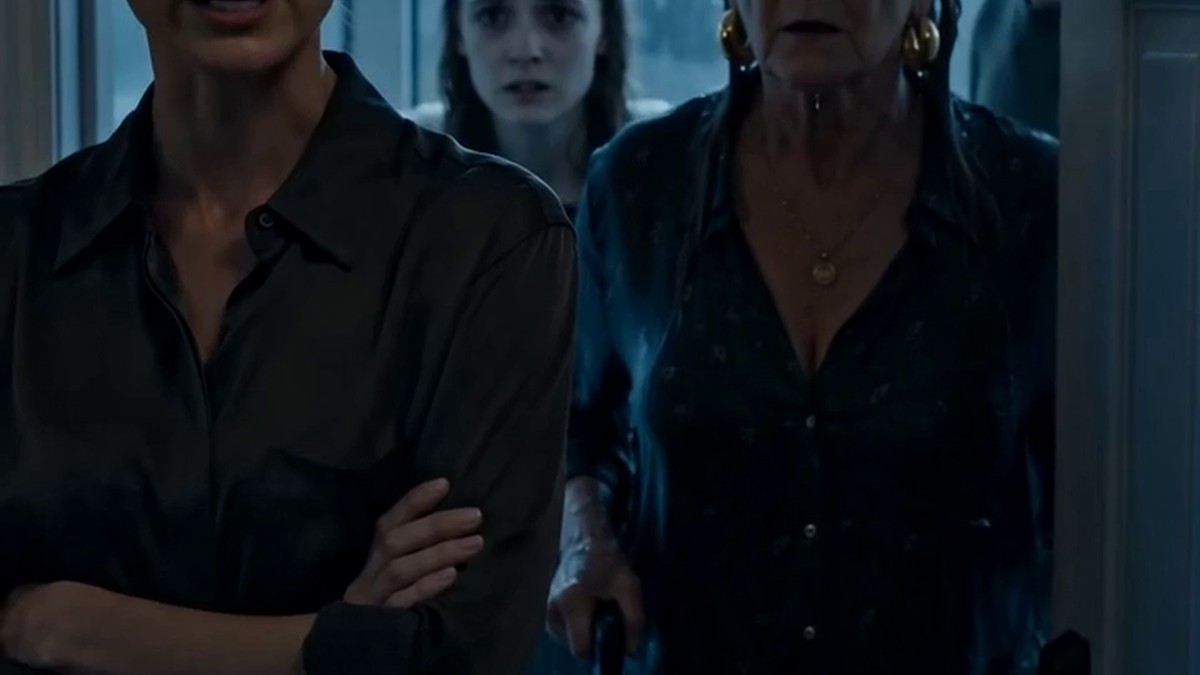
The true test came three weeks later, on a rain-soaked Tuesday evening. A pounding at the door yanked them from dinner. Oleg opened it to find his mother on the threshold, Lida beside her clutching a wet suitcase, and behind them, Artyom swaying slightly with the reek of cheap alcohol on his breath.
“We’ve come to help,” Tamara Igorevna announced, pushing past him into the apartment. “Lidochka lost her job, so she’s moving to the city properly now. We’ll stay here until she finds something. Artyom needs a fresh start too.”
Vera rose from the table and placed herself directly in their path, a solid barrier of calm. “No.”
“What do you mean, no?” the mother snapped. “This is my son’s home.”
“This is our home,” Vera corrected, voice low. “And I said no. Guests give notice. They don’t break down doors.”
Lida’s face crumpled into theatrical tragedy. “See, Mom? She’s throwing us into the street in the rain.”
“There is no street,” Vera said. “There’s a hotel down the block. I’ll pay for three nights. That gives you time to figure out an adult plan.”
“You heartless woman,” Tamara Igorevna hissed. “Oleg, are you going to let this happen?”
All eyes turned to Oleg. He stood in the doorway, rain dripping from his hair, staring at the three people who had, for his entire life, demanded everything and offered nothing but guilt in return. He walked over and stood next to Vera, his shoulder brushing hers.
“Yes,” he said. “I am.”
“I knew it,” Lida shrieked. “She’s brainwashed you.”
“No, Lida.” Oleg’s voice was impossibly gentle. “For the first time, my brain is working. I love you, but I won’t carry you anymore. You’re a grown woman. Act like one.”
Artyom let out a bitter laugh and lunged forward, grabbing the edge of the table. “So the big brother’s too good for us now? Too good for your own blood?”
Oleg didn’t flinch. He caught his brother’s arm, not with anger but with a firmness that froze Artyom mid-swing. “I’m not too good for you. I’m too tired for this circus. You want help, Art? Real help? Then get sober. We’ll pay for a clinic, but not a drop of vodka, not a ruble of cash, until you do the work yourself.”
“You’re throwing us all out,” Tamara Igorevna said, her voice finally breaking. “Your own family.”
“No,” Vera said, and she took Oleg’s hand. “We’re offering you a door. Use it like adults, and you’re welcome. Use it to dump your weight on us, and it stays locked. The choice is yours.”
The confrontation hung in the air like a held breath. Lida’s lip trembled. Tamara Igorevna’s eyes glistened with furious tears. Artyom stood frozen, the fight draining out of him as Oleg’s grip remained steady. For a long, silent beat, no one moved. Then, slowly, the mother turned. Lida grabbed her suitcase and followed. Artyom pulled his arm free and stumbled after them without a word. The door shut with a quiet click.
Weeks later, the phone rang at midnight. The police had picked up Artyom, drunk and belligerent in a subway station. Oleg and Vera went together. They found him slumped on a bench, filth on his coat, shame burning in his eyes. Vera didn’t speak; she simply stood back and let Oleg handle it. Oleg knelt in front of his brother and held out his hand—not with cash, but with a brochure for a thirty-day rehabilitation program.
“I’ll pay for this,” Oleg said. “Every cent. But after that, you pay your own way. I’ll help you find a job, I’ll be there, but I will never, ever carry you again. Deal?”
Artyom stared at the brochure for a long time, then took it with a trembling hand. “Deal,” he whispered.
On the ride home, the city lights blurred past the taxi window. Vera leaned her head against Oleg’s shoulder.
“That was the last storm,” she murmured.
“You don’t know that.”
“I do. They know now. The free ride is over, and we’re still here. That’s what love really is—a harbor, not a life raft they can pop with a needle of guilt.”
Oleg kissed her hair. “I used to think loving my family meant letting them bleed me dry. Now I know it means giving them the chance to stand on their own. Even if they hate me for it.”
Vera closed her eyes. Far below, the city hummed—indifferent, vast, promising nothing. But in their tiny apartment, behind a door that finally had a functional lock, two people had built something stronger than steel. A home where pity didn’t live, and where love was a hand up, not a crutch.