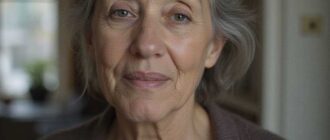
They Took Me to the Beach “So Grandma Could Rest.” Then I Heard What My Daughter Said on the Balcony
They brought me to Cape May “so Grandma could finally breathe.” For two weeks, I woke up at six with the children, cooked in a tiny rental kitchen, washed sandy swimsuits, and put sunscreen on little shoulders while my daughter and her husband slept in.
On the last morning, while I was folding towels and picking crayons out from under the sofa, I heard Sarah laughing on the balcony.
“See?” she told Mark. “You were worried Mom couldn’t handle both kids. I told you, she’s happiest when she has something to do.”
I stood there with a damp towel in my hands.
And something inside me went quiet.
Not loud. Not dramatic. Just quiet, the way a cup cracks in the cupboard and you only notice when tea starts leaking through it.
At first, I told myself I was only tired. Of course I was tired. I was sixty-two, sleeping on a pull-out sofa that squeaked every time I moved. My knees hurt from climbing the stairs to the rental apartment. My back ached from carrying beach bags, groceries, and three-year-old Noah when he decided his legs “didn’t work anymore.”
Every morning started the same. Noah would climb onto me before sunrise, whispering directly into my face, “Grandma, I’m hungry.” Then Lily would wake up crying because her purple bucket was missing, or because she wanted pancakes shaped like hearts, or because the tag in her swimsuit scratched her neck.
I loved them. Oh, how I loved them.
But love still gets tired.
By eight, I had made breakfast, dressed them, found hats, rubbed sunscreen onto noses and ears, packed crackers, filled water bottles, and reminded everyone not to leave wet towels on the floor. Sarah and Mark would appear around ten, sleepy and smiling.
“Mom, you’re a lifesaver,” Sarah would say, kissing the air near my cheek.
Then they would go for a walk “just the two of them.” Or to the beach “for a quick swim.” Or to a little café Mark had found, because “when do we ever get time as a couple?”
They came back sun-kissed and happy around two, exactly when lunch was ready.
“Your chicken soup tastes better here than at home,” Mark said one day, taking a second bowl.
I smiled because I had been trained to smile.
That is what mothers do. That is what grandmothers do. They help. They don’t complain. They don’t make things awkward. They don’t ruin a family vacation by saying, “I haven’t sat on the sand once.”
On the train back to Queens, Sarah scrolled through her photos.
There were pictures of Lily with shells. Noah chasing gulls. Mark holding two ice creams. Sarah with her hair brightened by the sun, laughing into the wind.
I was in none of them.
Not one.
“Mom,” Sarah said, still looking at her phone, “you had a good time, right? Better than sitting alone in that apartment.”
That sentence went through me like cold water.
Better than sitting alone.
As if my life was an empty room waiting for them to fill it. As if being used was a gift. As if loneliness made every request a blessing.
I said nothing. I turned my face toward the window and watched New Jersey blur into gray stations and tired trees.
My husband, Daniel, had been gone for seven years. Pancreatic cancer took him fast, in a way that still made me feel robbed. After the funeral, Sarah came every Sunday. Then every other Sunday. Then once a month, usually with a favor tucked inside her purse.
“Mom, can you pick Lily up Thursday?”
“Mom, Noah has a cough. Could you take him tomorrow?”
“Mom, can you bake Mark’s birthday cake? You know he hates store-bought.”
I always said yes.
Because after Daniel died, those little hands around my neck gave shape to my days. Because a quiet apartment can swallow a woman whole if she is not careful. Because I thought being needed was the same as being loved.
But somewhere along the way, nobody saw me anymore.
They saw the hands that cooked.
The feet that walked children to school.
The back that bent over bathtubs.
The woman herself had disappeared.
When I got home, I left my suitcase in the hallway and sat at the kitchen table in the dark. My neighbor Ruth called.
“How was the shore, Ellie? Did you rest?”
I almost laughed.
Instead I said, “It was lovely.”
Because that is what women like me say before we learn how to tell the truth.
Three days later, Sarah called.
“Mom, I hate to ask, but can you take the kids this weekend? Mark and I got invited to this thing in the Hamptons. Just two nights.”
My heart began to do what it always did: soften, surrender, prepare the bed, check the fridge, forget myself.
But then I saw the suitcase still half-unpacked in the corner. I saw the book I had carried to Cape May and never opened. I saw my swollen ankle resting on a pillow.
“No,” I said.
There was silence.
“What do you mean, no?”
“I mean no, sweetheart. I’m not available.”
“Do you have an appointment?”
“No.”
“Then what are you doing?”
I looked out the window at the small square of evening sky.
“I’m resting.”
Sarah laughed once, sharp and nervous. “Mom, seriously.”
“I am serious.”
Her voice changed. “Wow. So now you’re punishing us?”
“No,” I said, and my own voice trembled, but it stayed standing. “I’m remembering that I am a person.”
She hung up on me.
For two weeks, she barely called. I cried the first night, then the second. I nearly called her to apologize. My hand hovered over the phone more than once.
But instead, I did something strange.
I opened the book from the beach.
Then I went to the community center on 37th Avenue and signed up for a watercolor class. The first time, my hands shook so badly I painted the sea the color of dishwater. A woman named Janet leaned over and said, “Honey, that’s still better than my sky.”
I laughed so hard I had to wipe my eyes.
On Sunday, I took the subway to Coney Island alone. I bought tea in a paper cup, sat on a bench, and watched the water move. No buckets. No sunscreen. No sandwiches cut into triangles. Just me and the gulls and the wind pulling at my scarf.
A stranger offered to take my picture.
This time, I didn’t delete it.
Sarah came over at the end of the month. She looked tired. Not angry anymore, just tired in the way young mothers are when life finally catches them by the sleeve.
The children ran to me first. Lily wrapped around my waist. Noah handed me a drawing.
It was me, apparently. I was sitting on a beach chair under a huge yellow sun.
“Where are Mommy and Daddy?” I asked.
“At the store,” Noah said. “You’re resting.”
Something broke in me again, but this time it didn’t hurt.
Sarah stood in the doorway, twisting her wedding ring.
“Mom,” she said quietly, “I didn’t realize.”
I wanted to say, “Of course you didn’t.” I wanted to tell her every forgotten birthday, every careless joke, every time she treated my time like old furniture nobody had to ask permission to use.
But her eyes were wet.
So I said, “I know.”
She sat across from me at the kitchen table, the same table where she had once done homework with a chewed pencil and a ponytail slipping loose.
“I’m sorry,” she whispered. “I thought you liked it. I thought… because you always said yes.”
That was the hardest truth.
“I did like being with them,” I said. “I still do. But, Sarah, I don’t want to be invited as the help. I want to be invited as your mother.”
She covered her face.
And for the first time in years, my daughter cried not because she needed something from me, but because she finally saw me.
Things did not become perfect. Real families don’t change like curtains. They change slowly, awkwardly, with old habits tugging at everyone.
But now Sarah asks.
“Mom, are you free?”
“Mom, would you like to come with us?”
“Mom, do you want a beach day where you don’t cook?”
And sometimes I say yes.
Sometimes I say no.
Last summer, we went to the shore again. Same children, same sand in the shoes, same gulls screaming over the waves. But this time, Sarah packed lunch. Mark washed the dishes. I sat under a blue umbrella with my book open on my lap.
Lily came running with a shell in her hand.
“Grandma, look!”
I looked. I smiled. I kissed the top of her salty little head.
Then I leaned back in my chair and let the sun warm my knees.
For the first time in years, I was not useful.
I was loved.